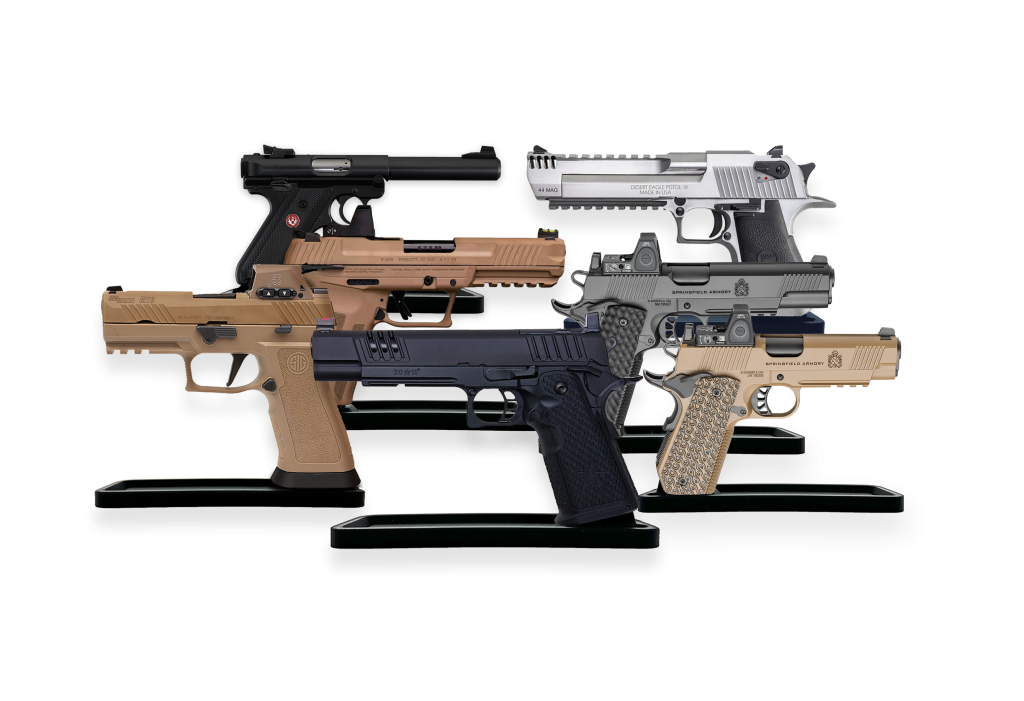






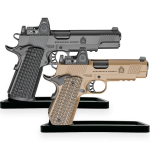

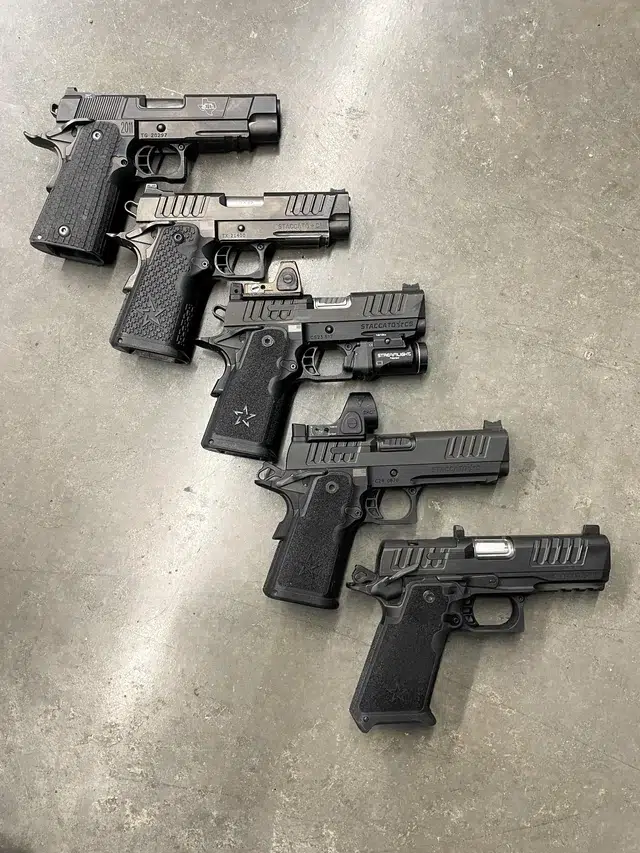

The story of the modern 2011 pistol cannot be told without understanding the transformation from STI International to Staccato. What began as a competition-dominating platform evolved into one of the most respected duty and defensive pistols in the world.
This evolution reshaped the perception of the double-stack 1911-style platform and helped push the 2011 into mainstream popularity.
The Birth of STI and the 2011 Platform
In the early 1990s, STI International (Strayer-Tripp International) revolutionized competitive shooting by developing a modular, double-stack 1911-style pistol frame. This design eventually became known as the 2011 platform.
What Made the Original 2011 Different?
- Modular steel frame with polymer grip module
- Increased magazine capacity
- Single-action trigger system
- Enhanced recoil management
- Competition-ready performance
The platform quickly became dominant in USPSA and IPSC competitions, particularly in Limited and Open divisions.
STI’s Competition Era Dominance
Throughout the 1990s and 2000s, STI built a reputation for high-performance competition pistols. Shooters prized the platform for:
- Fast follow-up shots
- Precise trigger breaks
- High-capacity magazines
- Customization options
However, STI pistols were largely seen as niche products — primarily for serious competitors. Pricing and availability kept them out of the broader defensive market.
The Industry Shift Toward Duty & Defensive Use
As red dot optics gained popularity and tactical applications evolved, demand grew for pistols that combined:
- Competition-level shootability
- Duty-grade reliability
- Modern optics mounting systems
- Accessory rail compatibility
The 2011 platform had the performance — but needed a broader identity.
The Rebrand: STI Becomes Staccato (2019)
In 2019, STI officially rebranded as Staccato. This was more than a name change — it marked a strategic shift in focus.
Key Changes During the Transition:
- Streamlined product lineup
- Improved quality control processes
- Duty-focused models like the Staccato P and C2
- Enhanced optics-ready systems
- Increased focus on law enforcement partnerships
The company aimed to make the 2011 platform accessible beyond competition shooters.
The Rise of the Staccato P
The Staccato P became a defining model in the brand’s transformation.
- 4.4” barrel configuration
- Optics-ready slide options
- Accessory rail for lights
- Balanced weight for recoil control
The model gained adoption among law enforcement agencies and elite units, significantly increasing credibility in the duty market.
Engineering Improvements in the Modern 2011
Under the Staccato name, several refinements helped modernize the platform:
1. Enhanced Reliability
Improved magazine design and tighter quality standards addressed earlier reliability concerns sometimes associated with high-capacity 1911-style systems.
2. Optics Integration
Factory optics-ready slides eliminated the need for aftermarket milling.
3. Better Ergonomics
Updated grip textures and modular designs improved shooter comfort and control.
4. Duty-Grade Durability
Coatings and materials were refined to handle professional use environments.
Changing Public Perception of the 2011
Before the rebrand, many viewed the 2011 as a “race gun” platform only suited for competition.
Today, the modern 2011 is recognized as:
- A viable duty pistol
- A premium defensive option
- A competition powerhouse
- A high-end enthusiast platform
The STI to Staccato evolution helped bridge the gap between competitive shooting and practical applications.
Influence on the Broader Market
Staccato’s success sparked increased interest in double-stack 1911-style pistols across the industry.
Manufacturers began introducing:
- More affordable 2011-style models
- Optics-ready production pistols
- Hybrid competition/duty configurations
The 2011 platform is no longer niche — it is now a rapidly growing segment of the performance pistol market.
STI vs Staccato: What’s the Real Difference?
While mechanically similar at their core, the biggest difference lies in mission and branding:
- STI: Competition-focused heritage brand
- Staccato: Duty-ready, modern performance brand
The rebrand clarified the company’s direction and broadened its audience dramatically.
The Future of the 2011 Platform
Today, the 2011 continues to evolve with:
- Advanced optics systems
- Improved materials and coatings
- Greater accessibility for first-time buyers
- Expanded law enforcement adoption
What started as a competition innovation has become one of the most refined pistol platforms available.
Final Thoughts
The journey from STI to Staccato represents more than a corporate rebrand — it marks the maturation of the modern 2011.
By blending competition heritage with duty-grade reliability, Staccato helped redefine what a high-performance double-stack 1911-style pistol could be.
Today’s 2011 platform stands as a symbol of precision, evolution, and modern engineering — and its growth shows no signs of slowing.