






A practical, real-world look at Ruger’s GP100 revolver—what it does well, where it shines, and how to accessorize it for your needs.

Quick Take: Why the GP100 Still Matters
The Ruger GP100 is one of those rare revolvers that earned its reputation the old-fashioned way: by being tough, consistent, and easy to live with. If you want a wheelgun that’s comfortable on the range, dependable for home roles, and supported by an ocean of accessories, the GP100 keeps showing up on the shortlist.
This review focuses on three things buyers actually care about: durability (will it hold up?), accuracy (can you shoot it well?), and accessories (can you tailor it to your hands and your carry or storage setup?).
GP100 Overview: Models, Capacity, and What You’re Really Buying
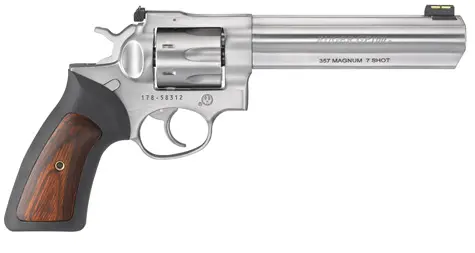
“GP100” isn’t a single revolver—it’s a family. You’ll find different barrel lengths, finishes, and cylinder capacities depending on the exact model. In the .357 Mag lineup, common options include 6-shot and 7-shot cylinders, with barrel lengths often ranging from compact to full-size. (You can browse current Ruger GP100 variants here: Ruger GP100 models.)
Typical spec highlights to know before you shop
- Chambering: Many popular GP100 models are .357 Mag and also run .38 Special.
- Capacity: 6-shot is common, and Ruger also offers 7-shot variants in .357 Mag.
- Sights: Many models use an adjustable rear sight; front sights can vary by model and are upgradeable.
- Frame: Built as a robust, heavy-duty revolver—weight helps with recoil comfort and steady aim.
If you want a concrete reference point, here’s an example Ruger spec sheet for a popular stainless model: GP100 Spec Sheet (example model). Use the spec sheet links on Ruger’s site to confirm exact barrel length, weight, and sight setup for the specific model number you’re considering.
Durability: Built Like a Workhorse (Because It Is One)
The GP100’s reputation is simple: it’s hard to wear out in normal use. The frame is substantial, the lockup is confidence-inspiring, and the overall design feels purpose-built for long-term ownership. This is the kind of revolver you can buy once, maintain reasonably, and pass down.
What durability looks like in daily ownership
- High round-count friendliness: The GP100’s heft isn’t just for looks—mass helps reduce wear and “shooting fatigue.”
- Stainless practicality: Stainless models are popular because they’re easier to keep looking good with basic care.
- Simple maintenance: Revolvers are straightforward to keep clean, and the GP100 platform is well-supported with parts and springs.
One honest note: durability often comes with a tradeoff—weight. The GP100 is not a featherweight. If you plan to carry it regularly, your holster choice and belt setup matter (more on that below).
Accuracy: How the GP100 Shoots (and Why Many People Shoot It Well)
“Accuracy” with a revolver is a blend of mechanical consistency and shooter interface. The GP100 tends to score well on both: it’s typically rigid and stable in the hand, and many variants come with adjustable rear sights that help you dial in point of impact.
What helps the GP100 feel accurate
- Weight and balance: A heavier revolver can be easier to hold steady and track through recoil.
- Practical sights: Adjustable rear sights are a big deal for real-world accuracy.
- Grip fit: Your grip is your “interface”—the right grip can reduce perceived recoil and improve trigger control.
If you’re comparing barrel lengths, think about your goal: shorter barrels are quicker and more compact, while longer barrels often feel steadier and can be easier to shoot precisely. There’s no “best”—there’s only what fits your use.
Trigger Feel: The Most Common “Upgrade Path”
A lot of owners enjoy the GP100 out of the box, but the most common refinement is improving trigger feel. Some people do this through careful practice and break-in; others choose spring kits from reputable makers.
For example, Wolff offers GP100 spring packs intended to let you tune trigger return and hammer spring weights: Wolff GP-100 spring pack. If you go down this road, prioritize reliability and test thoroughly—lightening springs too much can create inconsistent ignition.
If you’d rather keep things simple, you can skip spring changes entirely and focus on grip fit + sight visibility first. Those two upgrades typically deliver the biggest “felt” improvement for most shooters.
Accessories That Actually Make Sense for the GP100
The GP100 has a deep accessory ecosystem. The trick is choosing upgrades that match your goal rather than buying a pile of random add-ons. Below are the most practical categories—plus reputable examples to get you started.
1) Grips: The fastest way to change comfort and control
A grip swap can make the GP100 feel like a different revolver—especially if you’re dialing in finger reach, recoil comfort, or texture. Hogue offers multiple GP100-compatible grip options (rubber, G10, hardwood, and more): Hogue GP100 grips.

2) Sights: visibility upgrades you’ll appreciate immediately
If your front sight is hard to pick up quickly, a fiber-optic upgrade is a high-value improvement. HiViz makes a LiteWave front sight designed for GP100 models with an adjustable rear: HiViz LiteWave GP100 front sight. Ruger also sells a GP100 LiteWave front sight set through the Ruger Shop: Ruger Shop GP100 LiteWave front sight set.
3) Reloading aids: speedloaders and speed strips
If you want faster reloads at the range, look at proven options like the Safariland Comp II speedloader: Safariland Comp II. For a flatter, pocket-friendly option, Bianchi Speed Strips are a classic: Bianchi Speed Strips.
4) Holsters: match the holster to the barrel length and your lifestyle
The GP100’s weight makes holster choice especially important. A quality holster plus a supportive belt can make carry feel dramatically better. Galco has a dedicated GP100 holster options page organized by barrel length: Galco GP100 holster options.
Consider these practical matchups:
- Range / general use: outside-the-waistband (OWB) for comfort and easy re-holstering.
- More discreet: inside-the-waistband (IWB) can work, but the GP100’s size demands a great belt and holster.
- Hiking / backpacks: some people prefer chest-style carry to keep the revolver accessible with pack straps.
Real-World Pros and Cons
| Pros | Cons |
|---|---|
| Excellent durability and long-term reliability reputation | Heavier than many alternatives, especially in longer barrels |
| Often easy to shoot well thanks to weight, balance, and sight options | Trigger feel varies by individual revolver; some owners want refinement |
| Huge accessory market: grips, sights, holsters, reload aids | Carry comfort depends heavily on holster + belt quality |
| Multiple models and configurations to fit different needs | Choosing “the right” model can be confusing without comparing spec sheets |
Which GP100 Is Right for You?
Here’s a simple way to decide without overthinking it:
If you want the most versatile “do-it-all” setup
Many people gravitate toward a mid-length barrel and an adjustable rear sight. It’s a comfortable balance of shootability and practicality, and it’s supported by the widest range of holsters and aftermarket parts.
If this is primarily a range revolver
A longer barrel can feel steadier and more forgiving, especially for slow-fire accuracy work. Pair it with a high-visibility front sight and a grip that fits your hand shape.
If you prioritize compactness
Shorter barrels reduce overall size and can be quicker to handle, but they can be more demanding to shoot well at distance. If you go compact, prioritize a great holster and strong front-sight visibility.
When in doubt, compare exact models on Ruger’s site and open the spec sheet for each: GP100 model list. It’s the fastest way to confirm capacity, barrel length, sight type, and finish before you buy.
Care & Ownership Tips (Simple and Practical)
- Keep it clean: A basic wipe-down and routine cleaning goes a long way—especially after range trips.
- Use the right grips: Comfort and control are often more “upgradeable” than the revolver itself.
- Buy accessories for your specific model: Holsters, speedloaders, and sights can be barrel-length and frame-specific.
- Function-test any changes: If you adjust springs or sights, verify everything works consistently.
Bottom Line: Is the Ruger GP100 Worth It?
If you want a revolver with a well-earned reputation for durability, dependable accuracy potential, and a huge accessory ecosystem, the Ruger GP100 is easy to recommend. Its biggest “cost” is weight—but that same weight is part of why it’s so comfortable to shoot and so steady on target.
Build it smart: start with grips and sight visibility, then add a holster and reload aids that match your real use. Do that, and the GP100 becomes less of a purchase and more of a long-term platform.