



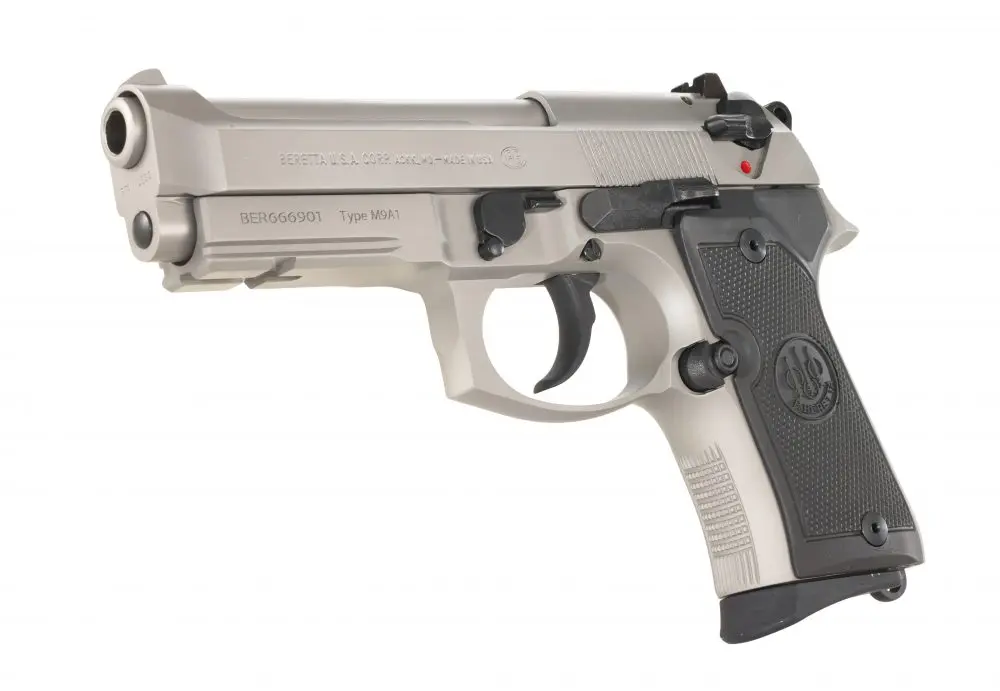

A classic full-size 9mm that’s still winning fans for its smooth shooting, iconic styling, and long-running reputation for dependable cycling.

Quick Take: Why the Beretta 92FS Still Matters
The Beretta 92FS is one of those “reference point” pistols: big enough to feel stable, smooth enough to feel refined, and proven enough that most shooters have at least handled one—or want to. It’s a full-size, metal-framed 9mm with a traditional double-action/single-action (DA/SA) trigger system and a slide-mounted safety/decocker. In plain terms, it’s built for predictable function, repeatable accuracy, and long-term durability.
What keeps the 92FS in the conversation isn’t nostalgia alone. It’s the way this pistol shoots: a soft, steady recoil impulse for its class, a generous sight radius, and a design that’s been refined across decades. If your priorities are reliability, shootability, and a time-tested platform, the 92FS is still a strong contender.
Beretta 92FS Specs (At a Glance)
Specs can vary by region and SKU, but here are the core dimensions listed by Beretta for the 92FS platform. Always verify your exact model and configuration before ordering accessories. (Official product page)
| Barrel length | 4.9″ |
|---|---|
| Overall length | 8.5″ |
| Unloaded weight | 33.3 oz |
| Frame size | Full Size |
| Action | DA/SA |
Reader note: Magazine capacity depends on local rules and which magazines you purchase. The platform is commonly seen with 15-round magazines, but compliant 10-round options are also widespread. (If you’re unsure, check your local regulations and buy accordingly.)
Design Highlights: What Makes the 92FS “The 92FS”
1) Open-slide profile and consistent cycling
The 92-series profile is instantly recognizable thanks to its open-top slide. Beretta states this design helps promote reliable cycling and reduces stoppages like stovepipes by leaving more room for ejection. (Beretta 92FS page) Many experienced shooters also point to the platform’s long-standing reputation for dependable ejection patterns—especially with quality magazines and ammo.
2) Locking-block system and smooth feel
The 92FS uses a short-recoil system with a locking block (rather than the more common tilting-barrel approach). The practical “feel” for many owners is a pistol that tracks smoothly during recoil and returns to target in a predictable way. Beretta describes the system as contributing to fast cycling and consistent function over high round counts. (Beretta technical description)
3) Slide-mounted safety/decocker
The 92FS includes a manual safety/decocking lever intended to safely lower the hammer. In the Beretta manual for the 90-series, the safety/decocker is described as allowing safe hammer lowering over a chambered round and interrupting the firing pin unit from hammer strike. (Beretta 90 Series manual (PDF)) If you’re new to this style of control, it’s worth reading the manual carefully and practicing safe handling habits before any live use.
4) 92FS “FS” safety update
The “FS” designation is associated with a safety-oriented slide retention feature (often summarized as an enlarged hammer pin interface intended to reduce the risk of a slide traveling rearward in an extreme failure). For a high-level overview of variants and history, Wikipedia’s Beretta 92 entry includes a plain-language explanation of the 92FS change. (Beretta 92 overview)
How It Shoots: Recoil, Balance, and Real-World Comfort
Full-size metal pistols tend to feel “calmer” in the hand, and the 92FS is a textbook example. The added mass compared to many polymer compacts helps reduce sharpness, while the long sight radius supports precise aiming. In rapid strings, a lot of shooters find the 92FS easy to keep level—especially once you learn where your hands naturally land on its wide grip.
Balance is a major part of the 92FS experience. It generally feels neutral to slightly muzzle-forward, which many people like for steady tracking. If you’re coming from a smaller carry-oriented pistol, the 92FS can feel “large” at first, but it often becomes more comfortable as you settle into the grip and trigger rhythm.
Accuracy expectations
With quality ammunition and a consistent trigger press, the 92FS is known for strong practical accuracy. This is not a niche match pistol, but it’s absolutely capable of tight groups at common range distances. For most owners, accuracy is limited far more by trigger control and sight management than by the pistol itself.
The Trigger: DA/SA Benefits (and the Learning Curve)
The DA/SA trigger system is one of the biggest reasons people either love the 92FS or choose something else. The first trigger press in double-action is longer and heavier; after the first shot, the trigger typically becomes shorter and lighter in single-action. That transition is a skill, not a flaw—once you learn it, it can be extremely consistent.
For range use, DA/SA can be rewarding because it teaches fundamentals: grip stability, deliberate pressure, and follow-through. For new shooters, the first pull may feel demanding until you build repetition. Either way, the platform is widely supported with training resources and long-term parts availability.
Tip: If you’re evaluating the 92FS, dry practice (with a triple-checked unloaded pistol and in a safe direction) helps you understand the DA/SA transition quickly. Always follow the owner’s manual and your local safety guidelines. (Owner’s manual (PDF))
Reliability: Why the 92FS Earned Its Reputation
The 92FS has a long track record of service and civilian use, and its reputation is tied to two things: a proven mechanical design and an ecosystem of widely available magazines, holsters, and spare parts. Beretta specifically calls out the open-slide concept and operating system as contributors to “exceptional accuracy and reliability,” including reliable cycling even after very high round counts. (Beretta 92FS product description)
That said, no pistol is magic. Reliability still depends on basics:
- Quality magazines: Most “mystery” malfunctions trace back to worn or low-quality mags.
- Reasonable maintenance: Keep it clean enough to function and replace wear parts on schedule.
- Ammunition consistency: Some loads just run better than others in certain pistols.
If your goal is a dependable, full-size 9mm that can go the distance, the 92FS is one of the safer “bet-your-range-day” options.
Ergonomics: Fit, Grip Width, and Controls
Ergonomics on the 92FS are polarizing in one main way: grip width. Many hands love the full, rounded feel. Some hands find it a stretch—especially for reaching the trigger comfortably in double-action. If you have smaller hands, consider trying one in person before committing.
Controls are generally easy to locate, but the slide-mounted safety/decocker is a distinct manual of arms compared to frame-mounted designs. If you’re used to thumb safeties on the frame, expect a small learning period to build consistent habits.

Ownership & Maintenance: Keep It Running for the Long Haul
One of the quiet advantages of the 92FS is that it’s a mature platform. Routine upkeep is well-documented, and parts support is broad. For maintenance guidance, the best starting point is always the official manual: Beretta 90 Series manual (PDF).
If you’re building a simple range kit, a basic 9mm cleaning kit is usually plenty for periodic cleaning and inspection. Beretta lists compatible accessories on its product pages (including cleaning kits and 92-series parts), which is a safe way to confirm fit. (Compatible accessories list)
Safe storage matters
Responsible storage is part of ownership. If you keep any pistol in your home, take secure storage seriously—especially if children or unauthorized persons could ever access it. The National Shooting Sports Foundation (NSSF) publishes guidance on secure storage and safe handling rules. (Secure storage guidance and safe handling rules)
Pros & Cons
Pros
- Smooth shooting full-size feel: Mass and geometry help keep recoil comfortable.
- Proven reliability reputation: Long-running platform with consistent cycling characteristics.
- Excellent practical accuracy: Long sight radius and steady balance support precision.
- Robust ecosystem: Parts, magazines, holsters, and accessories are widely available.
- Iconic design: If you like classic metal pistols, the 92FS scratches that itch.
Cons
- Wide grip: Can be a reach in double-action for smaller hands.
- DA/SA transition: Requires practice for consistent first-shot placement.
- Large and heavy for carry: Great on the range, less convenient for everyday concealment.
- Control style learning curve: Slide-mounted safety/decocker is different than many modern designs.
Who the Beretta 92FS Is Best For
The 92FS is a strong pick if you:
- Prefer full-size pistols for comfort and shootability.
- Want a classic, metal-framed 9mm with decades of reputation behind it.
- Enjoy the discipline of DA/SA trigger management.
- Value a platform with deep parts and accessory support.
You may want to consider other options if you:
- Need a lighter pistol for all-day carry.
- Strongly prefer a consistent trigger press on every shot.
- Have small hands and can’t comfortably reach the trigger in double-action.
Beretta 92FS vs. “Modern” 9mm Pistols
Modern striker-fired pistols often win on weight, simplicity, and consistent trigger feel. The 92FS wins on classic ergonomics (for those it fits), soft shooting behavior, and a long-standing platform identity that many shooters find confidence-building.
The “right” choice depends on your use. If this is primarily a range pistol and you want something that feels stable, cycles smoothly, and has a strong legacy, the 92FS makes a compelling case. If your priority is minimal weight and maximum simplicity, a modern polymer option might fit your needs better.
Frequently Asked Questions
Is the Beretta 92FS reliable?
It has a long reputation for dependable cycling, and Beretta specifically highlights design features intended to promote reliability in the 92FS platform. (Beretta product description) Like any pistol, results depend on magazines, ammunition, and maintenance.
Is the 92FS good for beginners?
It can be, especially as a range pistol, because the full-size platform is comfortable and the DA/SA system teaches good trigger discipline. However, the wider grip and the DA first pull may feel challenging for some new shooters.
What’s the best way to learn the controls?
Start with the owner’s manual and build safe habits from the beginning. (Beretta 90 Series manual (PDF)) If possible, take a basic safety class from a reputable instructor and practice under supervision.
How should I store it safely at home?
Use secure storage and follow safe handling rules. NSSF provides clear guidance on both. (Secure storage guidance, safe handling rules)
Final Verdict: A Full-Size Classic That Still Delivers
The Beretta 92FS remains a standout choice for shooters who want a full-size 9mm with a smooth, stable feel and a platform reputation built over decades. It’s not the lightest, not the smallest, and not the simplest—but it is iconic, shootable, and supported by a deep ecosystem.
If your priority is range performance, reliability-minded design, and long-term ownership confidence, the 92FS is still an easy pistol to recommend. Just make sure the grip fits your hand, learn the DA/SA rhythm, and treat safe storage as non-negotiable.
Next step: Compare the official 92FS specs and documentation here: Beretta 92FS product page | Owner’s manual (PDF)