



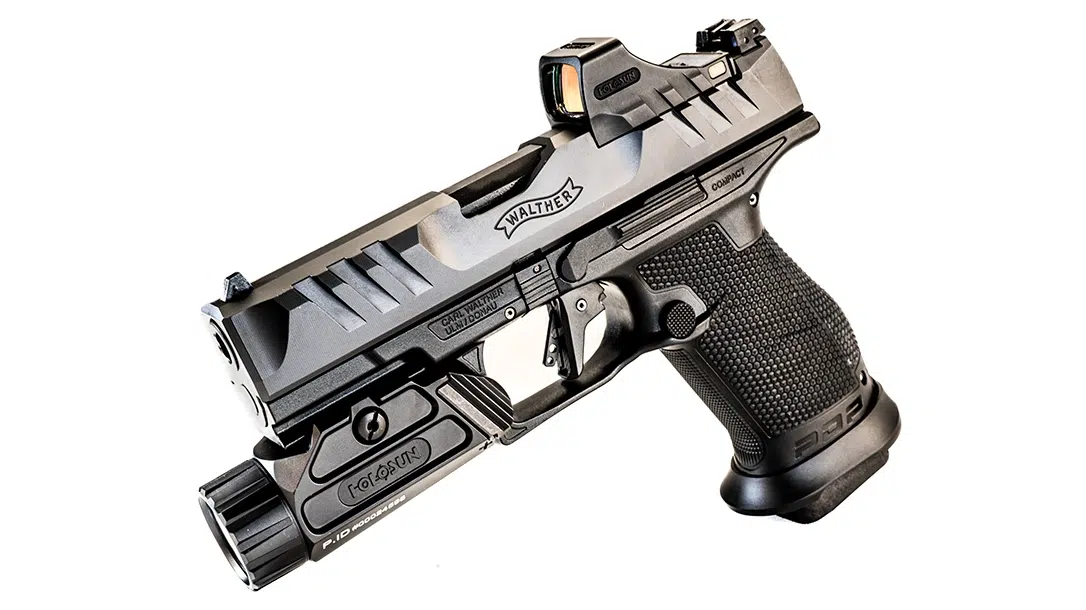

Is the Walther PDP the “do-it-all” 9mm for range days, training, and everyday carry? Let’s break down how it feels, how it shoots, and what to know before you buy.

Quick Take: What the Walther PDP Does Best
The Walther PDP (Performance Duty Pistol) has earned a reputation for doing three things extremely well: it’s easy to grip, fast to run, and surprisingly accurate for a striker-fired duty-style platform. The moment you pick one up, the ergonomics stand out—especially the texture, the beavertail shape, and the way the frame fills your hand without forcing an awkward wrist angle.
If you’re shopping for a modern 9mm that balances comfort with performance, the PDP is one of the strongest options in its class. And if you plan to mount a red dot, the PDP lineup is built with optics compatibility in mind.
Walther PDP Overview
The PDP is Walther’s modern duty-focused 9mm platform with multiple frame sizes and slide lengths. You’ll commonly see it in two main frame sizes: Full Size and Compact, plus the PDP F-Series which is designed around a different grip geometry to better fit smaller hands.
Walther positions the PDP as a performance-forward pistol with features like aggressive slide serrations and a duty-tuned trigger system, and it’s offered in several configurations that can match anything from concealed carry to training classes and competition-style range use. :contentReference[oaicite:0]{index=0}
If you want to browse current models and configurations from Walther’s official U.S. store, start here: Walther Arms USA online shop. :contentReference[oaicite:1]{index=1}
Ergonomics & Comfort: Why the PDP Feels “Right”
Comfort is where the PDP separates itself. Walther has long been known for excellent ergonomics, and the PDP continues that tradition with a grip shape that feels natural under recoil and during rapid strings.
Grip texture that actually helps
The PDP’s grip texture is “locked in” without being cheese-grater aggressive. For many shooters, it’s the sweet spot: secure during sweaty range sessions, yet still comfortable for extended practice. You get solid contact in the palm and along the sides, which helps keep the muzzle stable as you press the trigger.
Beavertail and undercut: more control, less fatigue
The frame shape encourages a high grip. That means more leverage over recoil and less “work” required to keep sights aligned. Over a long range day, this matters—comfort isn’t just about softness; it’s about reduced strain and consistent control.
F-Series option for smaller hands
If many compact/duty pistols feel too “blocky,” the PDP F-Series is worth your attention. It’s built around a geometry that’s friendlier to smaller hands, which can translate into better trigger reach and more consistent grip pressure. :contentReference[oaicite:2]{index=2}

Trigger & Shootability
The PDP uses Walther’s duty-oriented trigger system, and most shooters describe it as crisp for a striker-fired platform—especially the reset, which makes it easy to run fast once you learn the break point. In practical terms, the PDP tends to reward good fundamentals: a clean press produces a clean shot.
The bigger story is how the trigger “pairs” with the ergonomics. When a pistol fits your hand, your trigger press is naturally straighter and more consistent. That’s one reason many owners report strong accuracy results—comfort and accuracy aren’t separate categories; they’re connected.
Accuracy: What You Can Expect on Paper and in Practice
Out of the box, the PDP is capable of excellent accuracy for a duty-style 9mm. With quality ammo and a consistent grip, it’s common to see tight groups at typical training distances. The sight picture is clean, and the overall balance of the pistol helps reduce wobble as you settle in.
If you move beyond slow-fire groups and into practical drills (draws, transitions, controlled pairs), the PDP continues to shine: it tracks well and returns to target quickly, which is exactly what you want for skill-building range time.
Slide Serrations & Handling: “SuperTerrain” in the Real World
Walther’s PDP slide design is known for its bold, angled serrations that provide traction for press checks, manipulations, and racking under less-than-perfect conditions. Whether you love the look or not, the functional benefit is simple: it’s easier to get purchase on the slide.
This is especially useful if you train with wet hands, wear gloves, or just prefer a confident, non-slip manipulation surface. :contentReference[oaicite:4]{index=4}
Optics Readiness: Mounting a Red Dot the Smart Way
Many PDP models are optics-ready, and that’s one of the platform’s biggest advantages if you plan to run a red dot. The key is doing it correctly: use the proper plate, correct screws, and confirm torque spec recommendations from the optic manufacturer and your PDP documentation.
Optic plate request (Walther)
Walther provides an optic plate request page for eligible models. If you’re setting up a PDP for a red dot, that’s often the first stop: Walther Optic Plate Request. :contentReference[oaicite:5]{index=5}
Aftermarket plate + sight options
If you prefer an aftermarket solution or a plate/sight bundle approach, options exist from accessory manufacturers. For example: XS Sights Walther PDP optic plate & sight bundles (RMR fit). :contentReference[oaicite:6]{index=6}
Note: optics-ready cuts and plate “versions” can vary. Always verify your exact PDP configuration before ordering plates or screws. :contentReference[oaicite:7]{index=7}
Variants: Full Size vs Compact vs F-Series (Which One Should You Choose?)
Choosing the “best” PDP usually comes down to how you’ll use it and how it fits your hand.
PDP Full Size
- Best for: training, range volume, home setup, duty-style handling
- Why: more grip area and often higher capacity options depending on configuration
- Tradeoff: harder to conceal for many body types
PDP Compact
- Best for: concealed carry + training balance
- Why: shorter grip and slide options while still feeling “duty capable”
- Tradeoff: slightly less control than a longer/heavier setup for some shooters
PDP F-Series
- Best for: shooters who want a more accommodating grip/trigger reach
- Why: geometry designed to improve fit for smaller hands
- Tradeoff: not a negative—just a fit-focused option that many people overlook
Walther’s official listings show PDP family options and configurations across frame sizes and variants. :contentReference[oaicite:8]{index=8}
Reliability & Maintenance Basics
The PDP is built as a duty-style platform, and basic upkeep is straightforward: keep it clean, lightly lubricated per manufacturer guidance, and inspect wear points over time (especially if you’re putting high round counts through it).
If you want the official instructions and warnings for the PDP platform, you can reference the PDP manual here: PDP Safety & Instruction Manual (PDF). :contentReference[oaicite:9]{index=9}
Safety note: Always follow local laws, safe storage practices, and the manufacturer’s handling and maintenance instructions.
Pros & Cons
Pros
- Excellent ergonomics: one of the most comfortable grips in the category
- Very shootable: tracks well, returns to target quickly
- Optics-friendly: strong platform choice for red dot setups
- Good trigger feel: consistent press and useful reset for practical drills
- Multiple variants: Full Size, Compact, and F-Series to match different hands and uses
Cons
- Plate/version confusion: optics-ready setups require attention to the correct plate and screws
- Size for concealment: some Full Size configurations can be bulky for everyday carry
- Preference factor: some shooters prefer a different trigger feel or grip texture—hands vary
Who the Walther PDP Is For
The PDP is a strong match if you want a modern 9mm that feels comfortable from the first range trip and scales well as your skills improve. It’s especially appealing if:
- You care about ergonomics and want a grip that naturally supports recoil control.
- You plan to train seriously and want a platform that stays comfortable over long sessions.
- You want a red dot-ready setup without switching to a different model line.
- You want a “one pistol” solution that works for range time, training, and practical use.
Recommended Accessories (General Guidance)
Accessory choices depend on your intended use, but these categories are commonly worth considering:
- Red dot optic + correct mounting plate: confirm compatibility first, then mount and test for reliability.
- Spare magazines: useful for training volume and minimizing reload downtime.
- Quality holster: if carrying or training from the draw, choose a reputable maker with a model-specific fit.
- Range belt/pouch setup: makes practice more efficient and more fun.
For optics plate support directly from Walther, visit: Walther Optic Plate Request. :contentReference[oaicite:10]{index=10}
Walther PDP FAQ
Is the Walther PDP good for beginners?
Yes—especially because the grip and controls tend to feel intuitive. Beginners still benefit most from instruction and consistent practice, but the PDP’s comfort and shootability can make learning easier.
Is the PDP accurate?
In practical use, the PDP is widely considered accurate for its class. With a steady grip and clean trigger press, it can produce excellent groups and performs well in drills.
Is the PDP optics-ready?
Many configurations are optics-ready, but you must confirm the exact model and use the correct plate for your optic footprint. Walther’s plate request page is a helpful starting point. :contentReference[oaicite:11]{index=11}
What’s the difference between the Compact and Full Size?
Generally, Compact models are easier to conceal and can feel quicker in the hand, while Full Size models offer more grip area and can be easier to control during high round-count practice.
What’s the PDP F-Series?
The F-Series is a PDP variant built around a grip/geometry intended to better fit smaller hands and improve trigger reach for many shooters. :contentReference[oaicite:12]{index=12}
Final Verdict: Performance Meets Comfort
The Walther PDP is one of the most comfortable, shootable striker-fired 9mm options available in the duty-style category. Its standout ergonomics help shooters stay consistent, and that consistency often turns into better accuracy and faster follow-up shots. If you want a platform that feels great in the hand and adapts well to optics, the PDP is easy to recommend—just take your time verifying the correct optic plate and setup.
Ready to explore current options? Start with Walther’s official shop: Walther Arms USA online shop.