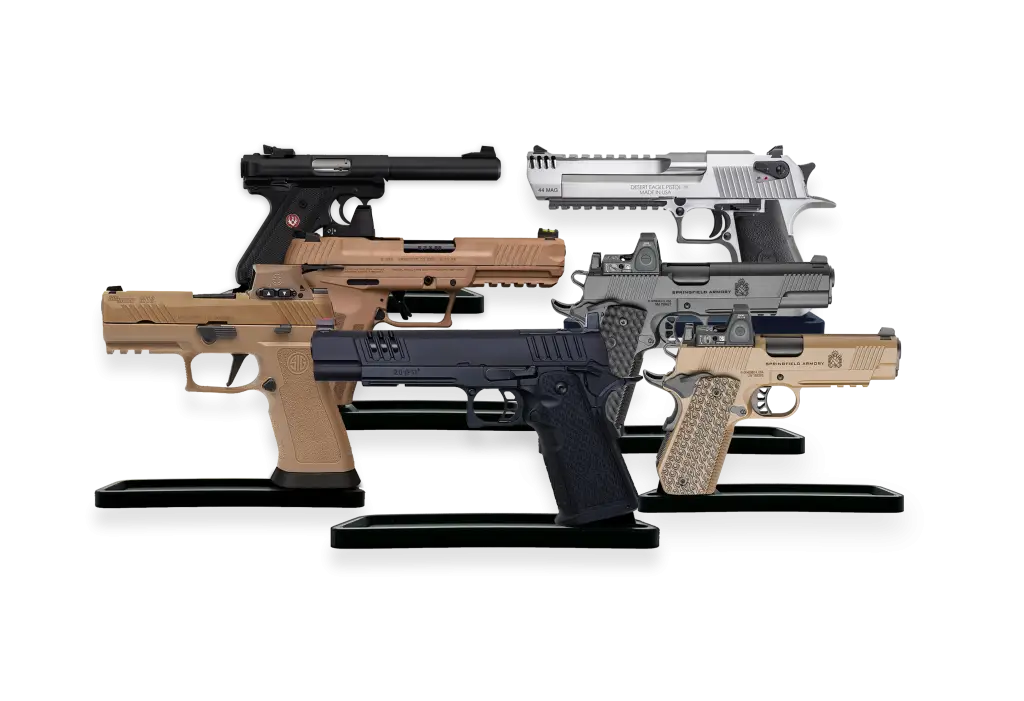





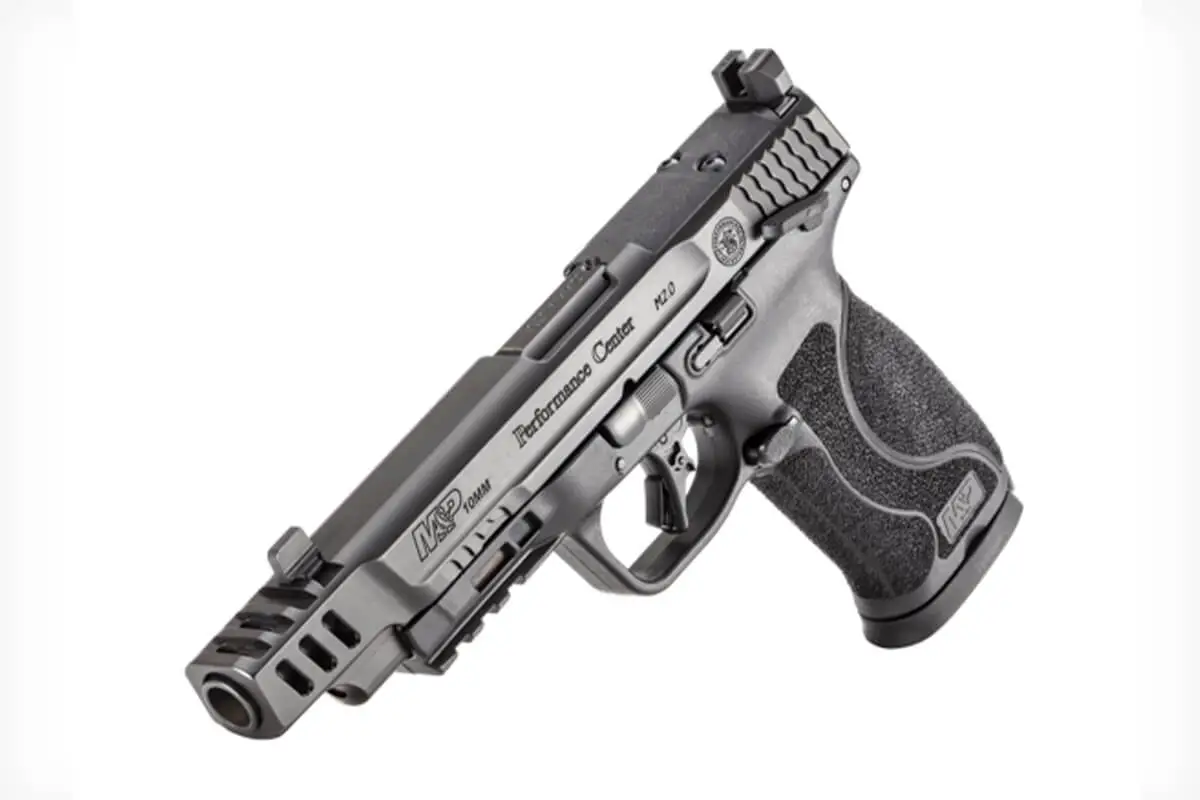

If you’ve ever handled a standard production model and thought, “I love it… but I wish it felt a little smoother, a little tighter, a little more finished,” then you already understand the appeal of the Smith & Wesson Performance Center. The Performance Center (often shortened to “PC”) is where Smith & Wesson takes proven platforms and adds the kinds of upgrades that typically send people to a custom shop: refined triggers, enhanced sights, specialized barrels, compensators/ported setups on certain models, and detail work that aims to boost confidence and consistency on the range.
In this review, we’ll focus on what matters most: shootability. Not marketing. Not hype. Just how these upgrades translate into trigger feel, recoil control, accuracy, reliability, and overall user experience—and whether that premium price is justified for your goals.

Browse the Performance Center lineup (official): Smith & Wesson Performance Center
What Is the Performance Center, Really?
Think of the Performance Center as the space between “factory standard” and “full custom.” Smith & Wesson uses the Performance Center label for models that ship with enhanced components or finishing work from the factory—often including a tuned action, upgraded sights, and features aimed at competition or refined handling. You can browse current Performance Center models directly from Smith & Wesson’s catalog. Official catalog here.
In addition to complete models, Smith & Wesson also lists Performance Center Precision Gunsmithing services for certain requests, which can be relevant if you already own a Smith & Wesson and want a factory-supported upgrade path. Performance Center Precision Gunsmithing (official).
Performance Center Upgrades That Actually Affect Shootability
Not every “upgrade” changes how a model shoots. For shootability, these are the features that typically matter most:
- Action/trigger refinement: A cleaner break, more predictable wall, more tactile reset, and less grit—especially noticeable during slow-fire accuracy work or rapid strings.
- Recoil management features: On certain models this can include compensators or porting-style setups, which can reduce muzzle rise and help you track sights faster. (It’s not magic—but it can be meaningful, particularly with higher-energy loads.)
- Sight systems & optic readiness: Better irons and/or optics-ready configurations can improve practical accuracy—especially under time pressure or in varied lighting.
- Ergonomics and grip control: Texture, grip shape, and control placement matter more than people admit. “Shootability” is often “how easily I can repeat good reps.”
- Barrel and fit consistency: Tighter tolerances, better crowns, match-style barrels (model dependent), and overall refinement can improve consistency.
Real-World Shootability: What You Notice on the Range
1) Trigger feel: the “confidence upgrade”
A refined trigger doesn’t just make groups smaller—it makes your decision-making cleaner. When the take-up is consistent and the break is predictable, you stop “timing” the shot and start letting it happen. That’s the biggest Performance Center win for many shooters: less mental noise.
On some Performance Center listings from major retailers, you’ll see language about a tuned action and lighter trigger characteristics—features that align with the Performance Center’s reputation for “smoother out of the box” shooting. (Example retail listing: Cabela’s product page.)
2) Recoil control and muzzle rise: faster sight return
If you’ve ever tried to shoot fast while staying accurate, you know the real limiter isn’t “recoil”— it’s how quickly the sights return to where they need to be. Performance Center builds that incorporate compensator/ported approaches aim to reduce muzzle climb so your eyes can stay “connected” to the sight picture.
Practical takeaway: the biggest benefit often shows up during repeatable strings—controlled pairs, transitions between targets, or timed drills. If your shooting is mostly slow-fire bench work, the improvement may feel smaller. If your shooting includes speed + accuracy, the improvement can feel obvious.
3) Accuracy: “mechanical” vs “practical”
Mechanical accuracy is what a platform can do in ideal conditions. Practical accuracy is what you can do repeatedly. Performance Center enhancements tend to help practical accuracy more than they help “one perfect group.” Better triggers and sighting systems mean fewer pulled shots and more confidence at distance.
4) Handling: balance, texture, and control
This is where opinions diverge. Some shooters love aggressive grip texture and a “locked-in” feel. Others prefer smoother ergonomics. Performance Center models often feel purpose-built: more “intentional,” sometimes more “serious.” If your hands get sweaty, or you shoot in heat/cold, those small details become big details.
5) Reliability: what a premium model should deliver
A premium build should feel premium and run premium. In general, factory-built enhanced models are designed to be reliable with common, quality ammunition. The more “specialized” a setup becomes (very light triggers, tighter tolerances, niche configurations), the more important it is to test thoroughly with your preferred loads.
Safety note: Always follow all local laws, range rules, and safe handling practices. If you’re not sure about function or setup, consult a qualified professional.
Model Spotlights: Where the Performance Center Shines
The Performance Center catalog includes a wide variety of builds—ranging from compact carry-oriented options to competition-focused rimfire and revolver platforms. Here are a few standout categories that clearly connect to shootability.
Performance Center SW22 Victory Target models (competition-friendly rimfire)
If you want a platform that rewards fundamentals—grip, sight alignment, trigger press—rimfire target models can be pure value. Smith & Wesson’s Performance Center SW22 Victory Target line is designed with target shooting in mind and has been described in press materials as “competition-ready,” including upgraded features like target barrels, muzzle devices, and trigger refinement. (See the Smith & Wesson press release PDF: Performance Center SW22 Victory announcement.)
Smith & Wesson also publishes spec sheets for certain models that list feature details like flat-face triggers, muzzle brakes, optic rails, and more. Example spec sheet PDF: SW22 Victory Performance Center spec sheet.
Official SW22 Victory series page: SW22 Victory lineup
Performance Center carry-comp style builds (recoil control + speed)
Carry-comp oriented models are often about one thing: helping you keep the dot or front sight flatter during fast strings. Smith & Wesson has a dedicated Carry Comp category showing multiple Performance Center options. Carry Comp models (official).
If your shooting style is “controlled speed,” these are the builds most likely to feel like an immediate upgrade. If your shooting is mostly casual slow-fire, you may still enjoy them—just don’t expect the same “wow” factor.
Performance Center revolvers (refined action + specialized setups)
Revolver shootability is heavily influenced by trigger smoothness and consistency. That’s where a tuned action can feel transformative. As one example in the broader Performance Center world, the Model 627 family includes Performance Center variants listed by Smith & Wesson. Model 627 series page (official).
For a third-party listing that shows the sort of specs often highlighted (capacity, barrel length, sights), see: Sportsman’s Warehouse listing example. (Retail pages can change; always confirm details on the manufacturer page when possible.)
Is the Performance Center Worth the Price?
Here’s the most honest answer: it depends on how you shoot and what you value. The Performance Center is most “worth it” when:
- You care about a refined trigger and can actually feel the difference.
- You shoot enough that small improvements compound over time.
- You want factory-backed upgrades without building a custom project from scratch.
- You shoot drills, competition, or structured practice where recoil control and fast sight return matter.
- You’d otherwise pay to add sights/trigger work/parts separately—then pay again for installation/tuning.
It may be less worth it if:
- You rarely shoot and mostly want something that simply works.
- You don’t notice (or don’t care about) trigger feel and minor handling refinements.
- You enjoy doing a personal build and want to choose every component yourself.
How to Choose the Right Performance Center Model (Without Regret)
Use this quick framework before buying:
Step 1: Define the “primary win” you want
- Speed & control: prioritize carry-comp/ported style configurations and optics-ready setups.
- Precision practice: prioritize target models with strong sight systems and clean triggers.
- Classic handling & trigger feel: prioritize revolver PC models with tuned actions.
Step 2: Confirm support gear availability
Holsters, magazines, optic plates, and spare parts matter. Before you buy, confirm the ecosystem exists for the exact SKU/configuration you want. Manufacturer pages and major retailers are your best starting points: Official catalog.
Step 3: Decide if factory refinement beats DIY
If you enjoy tinkering, you might prefer a standard model + upgrades. If you want “open the box and smile,” Performance Center models are often the cleanest route.
Pros & Cons (Shootability-Focused)
Pros
- Refined triggers/actions that can improve consistency and confidence.
- Recoil-control enhancements on select models that help with fast follow-up shots.
- Better sights / optic-ready options on many configurations.
- Factory-built and supported—often simpler than coordinating multiple aftermarket steps.
- Higher “finished” feel compared to baseline production in many cases.
Cons
- Cost—the premium can be significant.
- Diminishing returns if you shoot infrequently or casually.
- Specialized configurations may require more careful ammo testing or setup familiarity.
- Not one-size-fits-all—some people prefer the feel of a simpler setup.
FAQ: Smith & Wesson Performance Center
Does the Performance Center guarantee better accuracy?
Not automatically. The biggest gains are often in practical accuracy—trigger control, sight usability, and how repeatable your performance becomes. Mechanical accuracy can improve depending on the model and configuration, but the “felt difference” is usually about control and consistency.
Are Performance Center models good for competition?
Many are clearly oriented that way. For example, Performance Center SW22 Victory Target models have been positioned as designed for competitive target shooting in official materials. (See: official press release PDF.)
Can I get Performance Center work done on a model I already own?
Smith & Wesson lists Performance Center Precision Gunsmithing information on their site. Start here: official page.
What’s the best “first” Performance Center model?
The best first choice is the one that matches your use case. If you want low-cost repetition and fundamentals: look at SW22 Victory Performance Center target options. If you want faster sight return and modern handling: browse Carry Comp configurations. If you value trigger feel above all: consider Performance Center revolver options. Use the official catalog as your reference point: Performance Center lineup.
Final Verdict: Who Should Buy a Performance Center Model?
A Smith & Wesson Performance Center model is for the shooter who wants refinement without the project. If your goals include tighter repeatable groups, better control in fast strings, cleaner trigger behavior, and an overall “premium-ready” feel out of the box, Performance Center models can deliver real shootability improvements—especially when you choose a configuration that matches your style of shooting.
If you’re purely casual, or you love building a platform piece-by-piece, you might enjoy a standard model more. But if you want to open the case and immediately feel that factory-tuned difference, the Performance Center is often exactly what it promises: a more finished, more shootable version of a proven platform.
Next step: Browse the current models and compare specs side-by-side: Smith & Wesson Performance Center (official).
Optional: Image & Product Link Pack (Easy WordPress Inserts)
Want to add more visuals? Here are a few manufacturer pages and PDFs that typically include images/specs you can pull into your media library and credit appropriately: