




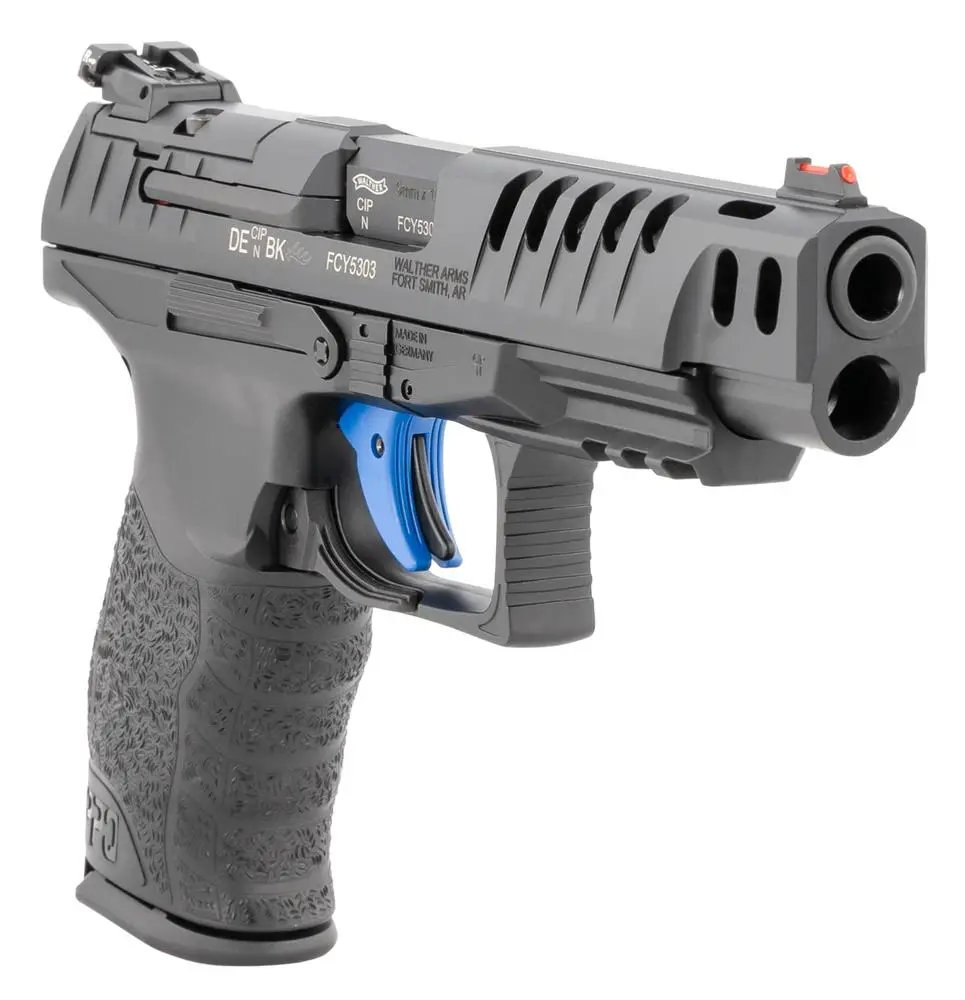

If you want a production-class pistol that feels like it was designed by people who actually shoot matches, the Walther PPQ Q5 Match is one of the most “ready out of the box” options in its lane.

Competition pistols tend to fall into two camps: “race-ready” builds that are incredible but expensive, and practical production-style guns that you can actually show up with and run hard week after week. The Walther PPQ Q5 Match sits in a sweet spot—built on the PPQ platform, but tuned with features that matter when the timer starts: an optics-ready slide, a long sight radius, a crisp trigger feel, and ergonomics that help you stay fast without getting sloppy.
In this guide, we’ll break down the competition-ready features that make the Q5 Match stand out, how each feature helps on the clock, and what to pay attention to if you’re choosing between iron-sight shooting and a slide-mounted optic. Whether your goal is clean stages, tighter groups, or simply a pistol that feels “locked in” during rapid strings, the Q5 Match was built for that job.
Quick Snapshot: What the Q5 Match Is Built to Do
The Q5 Match is a PPQ-series pistol configured for competitive shooting right from the factory. Think of it as: a longer-slide, longer-barrel PPQ with competition-focused sights, an optics-ready cut, and weight-reducing/lightening-style slide features that help it cycle quickly and track flatter in rapid fire.
- Mission: deliver practical match performance without requiring immediate custom work.
- Strengths: shootability, ergonomics, and “match setup” features included from the start.
- Who it fits: action-pistol shooters, range-focused accuracy junkies, and anyone building a reliable, repeatable setup.
Now let’s get specific—because the Q5 Match isn’t defined by just one part. It’s the stack of small advantages that add up to a smoother, faster shooting experience.
1) Optics-Ready Slide: The Biggest “Match-First” Feature
One of the most important modern competition upgrades is an optics-ready slide. The Q5 Match is known for being optics-ready, meaning it’s designed to accept a slide-mounted red dot (typically via adapter plates, depending on the exact variant and optic footprint). That matters because in real match conditions, a dot can help you stay target-focused and track your aiming reference through recoil—especially on partials, transitions, or when you’re shooting at speed.
Why optics-ready matters in competition
- Faster visual processing: many shooters find it easier to “see what they need to see” with a dot—especially on movement-heavy stages.
- Cleaner accountability: a dot makes it very obvious when you’re yanking shots or breaking early.
- More consistent aiming: once your presentation is trained, you can run very repeatable sight pictures.
That said, optics don’t automatically make you faster—your draw and presentation have to be consistent. The Q5 Match helps because its overall setup encourages repeatability: good grip geometry, predictable trigger feel, and a slide that’s designed for this role.
Pro tip: If you’re new to dots, prioritize a consistent draw and an aggressive grip that returns the pistol to the same index point every time. Dots reward clean mechanics.
2) Competition Sights: Built for Precision Without Being Slow
Not everyone runs an optic, and some divisions (or personal preference) still favor irons. The Q5 Match commonly ships with competition-style iron sights, including an adjustable rear sight on many configurations. Adjustable sights matter because you can fine-tune point of impact for your preferred match load rather than “accepting” whatever your pistol prints at 15–25 yards.
What good competition sights do for you
- Give you a repeatable reference: a clean rear notch and a crisp front blade simplify alignment.
- Support accuracy at distance: when a stage designer tosses in 25–35 yard shots, you can hold confidently.
- Reduce over-confirmation: you can confirm quickly rather than “staring” at the sights too long.
The Q5 Match’s longer slide and barrel also generally provide a longer sight radius, which can make small sight alignment errors less dramatic at distance. The net effect: easier, calmer shooting when the stage demands accuracy.
3) The 5-Inch Barrel: Practical Accuracy + Better “Tracking”
The Q5 Match is widely associated with a 5-inch barrel configuration. In action pistol shooting, that length is a sweet spot: long enough to feel stable and “pointable,” but still quick in transitions.
What a 5-inch setup tends to improve
- Stability during rapid strings: the pistol often feels less twitchy than shorter configurations.
- Confidence at distance: more forgiving sighting geometry and a steadier hold help on longer shots.
- Smoother recoil impulse: the system can feel more controllable when paired with a proper grip.
This doesn’t mean you can’t shoot fast with shorter pistols—you absolutely can. But for many shooters, a 5-inch gun is simply easier to run hard because it “settles” better between shots.
4) Slide Design: Lightening Cuts and Practical Competition Details
A big visual tell on the Q5 Match is the slide styling. You’ll often see lightening-style cuts and aggressive serrations that are clearly intended for performance, not just looks. In competition use, slide features matter for two reasons: how the gun cycles (tracking and return-to-zero feel) and how confidently you can manipulate it during reloads, starts, and problem-solving moments.
Why slide cuts and serrations are useful
- Better purchase during manipulations: front and rear serrations help with press checks and administrative handling.
- Consistent grip in sweat or rain: match days aren’t always clean and dry.
- Potentially quicker cycling feel: some designs aim to reduce reciprocating mass for flatter tracking.
Translation: you don’t want to fumble a slide rack because your hands are slick or you’re rushing. The Q5 Match is built to feel confident in those moments.
5) Trigger System: “Shootable” Matters More Than “Light”
Walther’s PPQ line is frequently praised for a crisp, shootable trigger feel. The Q5 Match typically carries that character forward. In competition, the trigger isn’t about chasing the lightest possible pull—it’s about predictability. A predictable trigger helps you call shots, break cleanly at speed, and avoid the most common miss in matches: rushing the shot as your sights arrive.
What a good competition trigger gives you
- A consistent wall: so you can prep during transitions.
- A clean break: so the gun doesn’t dip or twist at ignition.
- A short, tactile reset: so you can run doubles and controlled pairs without “searching.”
If you’re building skill, this is huge: a predictable trigger is like an honest coach. It tells you immediately whether your grip and press are clean. And because the Q5 Match is designed as a match-forward option, you’re not starting with a “service” trigger that needs immediate replacement to feel competitive.
6) Ergonomics: The Quiet Advantage That Wins Stages
Ergonomics don’t look exciting on a spec sheet, but they matter constantly—every draw, every transition, every reload, every strong-hand/weak-hand string. The PPQ family is known for comfortable grip shaping and natural pointing. The Q5 Match benefits from that lineage: it tends to sit in the hand in a way that supports a high grip and repeatable index.
Ergonomic details that help in competition
- Natural pointing: less correction needed as the sights/dot appear.
- Grip texture and contour: helps maintain control during sweaty, high-round-count sessions.
- Interchangeable backstraps (common on PPQ variants): lets you tune fit to your hand size.
Fit matters because the best recoil control isn’t “muscling” the pistol—it’s creating a stable platform that returns to the same place. When the grip fits, you spend less energy fighting the gun and more energy running the stage plan.
7) Capacity, Mag Changes, and Match Practicality
Depending on your region and model configuration, you’ll see different magazine capacities offered. In match terms, what matters is: do you have enough capacity for your division rules and stage planning, and do reloads feel consistent. A competition-friendly pistol should have magazines that drop free cleanly and a mag release that’s easy to hit without shifting your grip too much.
The Q5 Match is widely used with action shooting in mind, which means it’s meant to support reliable reloads and consistent feeding. If you’re setting up for matches, consider buying enough magazines to avoid “mag juggling” at the range—most shooters eventually prefer having a dedicated set for training and a dedicated set for match day.
Setup tip
Number your magazines with a paint pen. If one starts acting up, you’ll identify it quickly instead of blaming the pistol.
8) How the Q5 Match Compares: “Production-Ready” vs “Custom-Built”
If you’ve ever priced out a custom build, you know how quickly costs stack: milling for optics, upgraded sights, trigger work, extended controls, stippling, tuning, and then the test fire / reliability cycle. The appeal of the Q5 Match is that it starts you near the “end state” many shooters want.
That doesn’t mean you’ll never change anything. Competitive shooters love to tinker. But starting with an optics-ready slide and a competition-forward sight/trigger/ergonomic setup means your first upgrades can be about preference—like choosing your optic, dialing your load, and building your training plan— instead of “fixing” the platform.
9) Dot or Irons? Choosing the Best Path for Your Matches
The Q5 Match is often discussed in the context of optics, but it can be a strong iron-sight competitor too. Your best choice depends on your division and your goals.
Choose a dot if you want:
- better target focus and faster confirmation on awkward positions
- a clearer aiming reference during recoil
- an easier time calling shots at speed (once your presentation is consistent)
Choose irons if you want:
- simplicity and minimal maintenance
- to stay aligned with iron-sight divisions or personal preference
- to build fundamentals that transfer everywhere
Either way, the Q5 Match’s core advantage remains: it’s designed so you can compete without feeling like you’re under-equipped.
10) Training Notes: Getting the Most Out of the Q5 Match
A match-ready pistol still requires match-ready practice. Here are a few training ideas that pair especially well with the Q5 Match’s strengths:
Drill 1: “Draw to first shot” accountability
Set a realistic par time. Your goal is a clean, called shot as your sights/dot arrive. Don’t chase speed first—chase a repeatable, honest draw. Once you can do it cleanly 10 times in a row, then tighten the par.
Drill 2: Transition discipline
Use three targets spaced apart. Fire two on each. The skill isn’t “how fast you can move the gun,” it’s how quickly you can stop the gun and confirm what you need. The Q5 Match’s stability helps you feel that stop.
Drill 3: 25-yard confidence
A lot of match points are lost at distance because shooters get impatient. Spend time at 20–25 yards working slow-fire groups, then graduate to controlled pairs. Your goal is to learn what “acceptable sight picture” looks like for A-zone hits.
Recommended Resources (Links)
- Q5 Match Safety & Instruction Manual (PDF)
- PPQ & Q-Series Manual / Technical Specifications (PDF)
- Image attribution (Wikimedia Commons)
- Q5 Match listing with feature overview (retailer reference)
Final Thoughts: Why the Q5 Match Is “Competition-Ready”
The Walther PPQ Q5 Match earns its reputation by stacking practical advantages that show up on the clock: optics-ready capability, competition-friendly sights, a stable 5-inch format, confident slide serrations, and a trigger feel that supports speed without drama. Put simply, it’s designed so that your improvement curve isn’t blocked by missing features.
If you’re stepping into your first matches, it’s a platform that lets you focus on the real work: stage planning, efficient movement, clean entries/exits, and disciplined shot calling. If you’re already competing, it’s a tool that can keep up with your pace while staying practical and repeatable.
Build a consistent setup, practice the fundamentals, and the Q5 Match will do what a good match pistol should do: disappear in your hands so your performance can take center stage.