





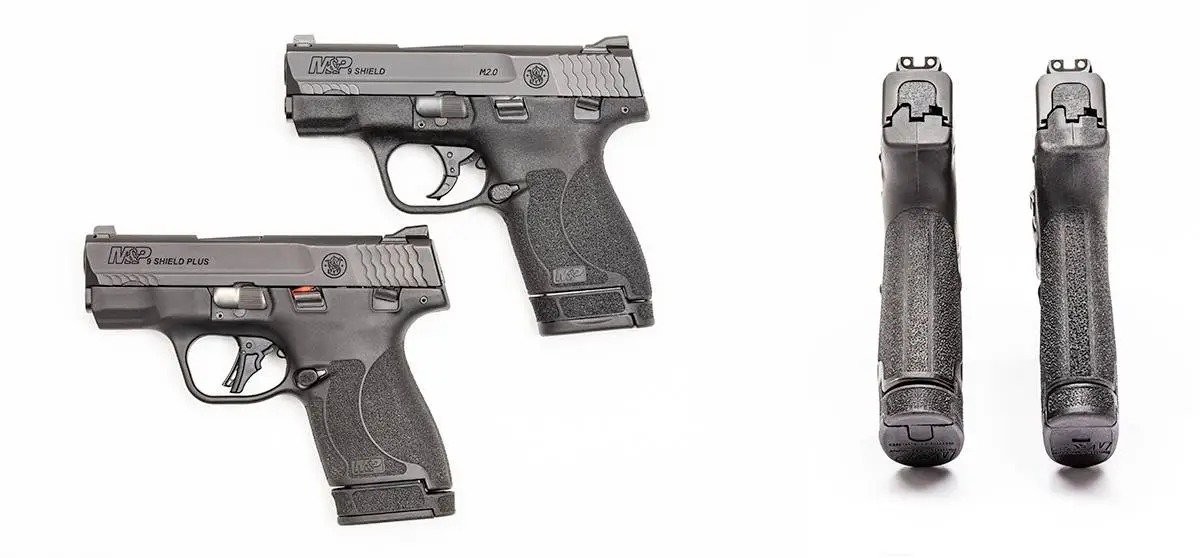

If you’ve carried (or shot) an original Shield for years, the Shield Plus might look familiar at first glance—same general size, same mission, same reputation for being easy to live with. But under the surface, the Shield Plus is more than a small refresh. It was built to answer the biggest complaint about the original Shield platform: capacity—without turning it into a chunky brick.
In this guide, we’ll break down what actually changed, what stayed the same, and how to decide whether upgrading makes sense for your hands, your wardrobe, and your day-to-day carry needs.
Quick Answer: What’s “New” on the Shield Plus?
- Higher capacity in a similar footprint: Shield Plus magazines typically bump you from the original Shield’s 7/8-round setup to 10/13-round options (model-dependent).
- Updated trigger feel: Many Shield Plus variants use a flatter-faced trigger design that a lot of shooters find easier to press straight back.
- Grip and control tweaks: Texture and ergonomics were refined to help manage recoil in a slim pistol.
- More optics-ready choices: Shield Plus has more factory options cut for micro red dots (depending on the exact SKU).
Shield Plus vs Original Shield: Side-by-Side Comparison
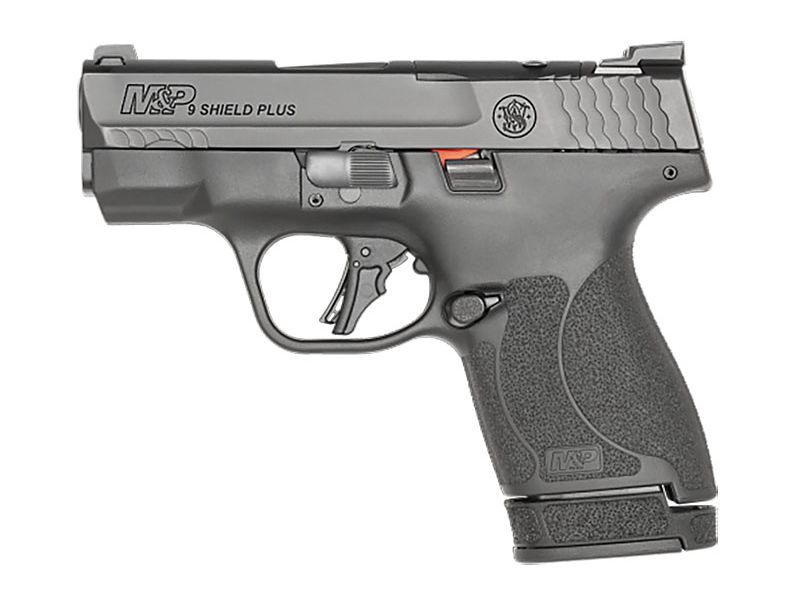
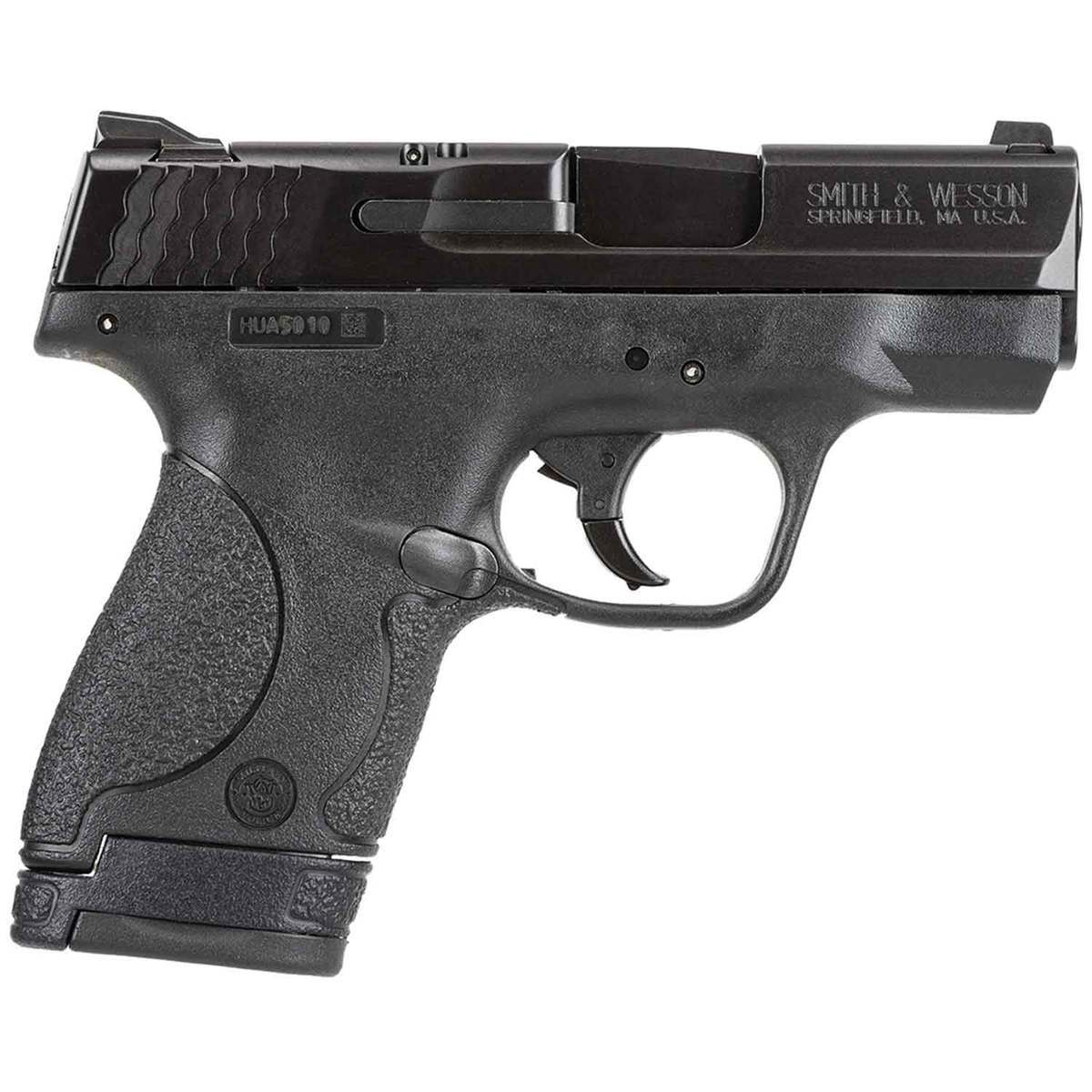
| Feature | Original Shield | Shield Plus |
|---|---|---|
| Capacity (common setups) | Often 7+1 or 8+1 depending on mag/variant | Often 10+1 flush and 13+1 extended depending on mag/variant |
| Grip width / feel | Very slim, classic single-stack feel | Slightly fuller grip to support wider magazines, typically still very carry-friendly |
| Trigger style | Commonly a hinged-style trigger (varies by generation/variant) | Many models use a flatter-faced trigger; tuned feel varies by SKU |
| Optics-ready options | Less common from the factory on earlier models | More factory optics-ready versions available |
| Aftermarket support | Huge: holsters, sights, parts, magazines | Also huge (and growing fast), with many accessories available |
| Best for | Maximum slimness, simple setup, budget-minded buyers | More rounds on board, modern features, “one-and-done” carry setup |
1) Capacity: The Biggest Real-World Upgrade
The original Shield built its fanbase around being thin, light, and easy to conceal. The tradeoff was capacity. For many owners, that wasn’t a dealbreaker—especially when the Shield was competing in a market where “slim” usually meant fewer rounds.
The Shield Plus keeps the same general carry concept but increases capacity significantly by using wider magazines. In practical terms, this usually means:
- Original Shield: commonly 7+1 or 8+1.
- Shield Plus: commonly 10+1 flush and 13+1 extended.
That difference matters because it changes how many people build their everyday setup. With the original Shield, a lot of carriers felt like a spare mag was “mandatory.” With the Shield Plus, some people feel comfortable with a single extended mag, while others enjoy carrying a flush mag in the pistol and an extended mag as the reload.
Important note: Shield Plus magazines generally do not interchange with the original Shield magazines. If you’re upgrading, assume you’re also starting a new magazine stash.
2) Trigger Feel: Flat-Faced vs Hinged (And Why It Matters)
Triggers are personal. Two shooters can try the same pistol and walk away with totally different opinions. But generally, the Shield Plus trigger design is intended to make it easier to press straight to the rear with consistent finger placement—especially during faster strings.
On the original Shield platform, many variants used a hinged-style trigger design. Some shooters love it, some never warmed up to it. The Shield Plus (depending on the model) often leans into a flatter-faced trigger profile that can feel more “direct,” and many owners report it’s simply easier to run well at speed.
If you’re deciding purely on shootability, here’s a quick way to test this in a store (where allowed):
- Get a solid firing grip.
- Slow-press the trigger straight back while watching the front sight for movement.
- Reset and repeat a few times.
- Switch models and do the same test.
Whichever model lets you press with less sight disruption is usually the one you’ll shoot better under pressure.
3) Grip, Texture, and Recoil Control
Ultra-slim pistols carry like a dream, but they can be snappy. That’s physics: less mass and a shorter grip give recoil fewer places to “go” besides into your hands.
The Shield Plus refines texture and grip shape to help you lock in better—especially with sweaty hands or when shooting faster. The grip may feel a bit fuller than an original Shield because the magazine design is different, but the goal is the same: keep the pistol easy to conceal while making it easier to control.
Pro tip: If your pinky hangs off the original Shield with the flush mag, try the Shield Plus with an extended mag and see how it changes your control. Many shooters find their groups tighten up immediately.
4) Optics-Ready Options: A Modern Advantage
Micro red dots have become a normal choice on carry pistols. The Shield Plus lineup includes more optics-ready variants, which can save you time and money compared to milling a slide later (and it keeps your setup factory-clean).
If you’re thinking about going optics-ready, two quick questions help you decide:
- Do you want the option later? If yes, buying optics-ready now can be smarter—even if you start with irons.
- Will you train with it? A dot can be fantastic, but it rewards practice (presentation, finding the dot, and confirmation habits).
Popular micro red dot example: Holosun’s 507K X2 is a common choice in the micro-dot category. Learn more here: Holosun HS507K X2 product page.
5) Concealment: Which One Disappears Better?
This is where the original Shield still shines. If your priority is maximum slimness—especially in light clothing—the original Shield’s “thin-first” design can be easier to hide and more comfortable for long days.
That said, many carriers find the Shield Plus conceals nearly as well in real life. A good belt, the right holster, and correct ride height/cant often matter more than tiny dimensional differences.
If you’re on the fence, focus on these real-world comfort factors:
- Grip printing: The grip is usually the first thing to print, not the slide.
- Holster placement: Small changes (even half an inch) can improve concealment dramatically.
- Ride height and cant: A little forward cant can tuck the grip in closer.
Holster example: The Vedder LightTuck is a popular IWB option with adjustable cant/ride height. Check it out here: Vedder LightTuck product page.
6) Accessory Compatibility: What Carries Over?
Owners of the original Shield often ask: “If I upgrade, can I keep my gear?”
Some items may carry over (especially sights/holsters depending on the exact model), but the safest approach is to verify fit for your exact generation and configuration. The biggest “start over” category is usually magazines. Plan on buying Shield Plus mags if you upgrade.
Light/laser example: Streamlight’s TLR-6 line is designed to fit various subcompact models, including Shield variants. See the official page: Streamlight TLR-6 product page.
Who Should Choose the Original Shield?
- You want the slimmest feel possible for all-day comfort.
- You already own a full setup (holsters, mags, parts) and it’s working great.
- You’re budget-minded and can find a good deal on the original platform.
- You prefer a simpler “classic” configuration with fewer feature decisions to make.
If you already shoot the original Shield well and your concealment is effortless, there’s nothing wrong with sticking to what works.
Who Should Choose the Shield Plus?
- You want more capacity without jumping to a much larger pistol.
- You like the updated trigger feel and want a more modern shooting experience.
- You want optics-ready options without custom slide work.
- You’re buying your first Shield and want the most future-proof option.
For many people shopping today, the Shield Plus is the “why not?” choice—more rounds, modern variants, and still easy to carry.
FAQ: Shield Plus vs Original Shield
Is the Shield Plus harder to conceal than the original Shield?
Not necessarily. Many people find the Shield Plus conceals similarly with a quality holster and belt. Your body shape, clothing style, and holster setup matter as much as the pistol’s dimensions.
Do Shield Plus magazines work in the original Shield?
Typically no—plan on separate magazines for each platform.
Is the Shield Plus “better” for new shooters?
It depends. The Shield Plus can be easier to shoot well for some people due to the updated trigger feel and grip refinements, but any slim micro-compact pistol can feel snappy. If possible, shoot both before you buy.
Should I buy optics-ready if I’m not sure?
If you think you might want a dot later, optics-ready is a smart hedge. You can still run irons now and add a dot when you’re ready.
Recommended Links (Models & Gear)
- Shield Plus series (official lineup)
- Holosun HS507K X2 (micro red dot)
- Streamlight TLR-6 (compact light/laser options)
- Vedder LightTuck (IWB holster)
Final Verdict: Is the Shield Plus Worth Upgrading To?
If you love the original Shield because it’s slim, reliable, and easy to carry, the Shield Plus doesn’t try to replace that identity—it upgrades it. The capacity jump is the headline feature, but the trigger and grip refinements are what many people notice every single range trip.
Upgrade if: you want more rounds on board, you want optics-ready options, or you’ve always wished the original Shield shot just a bit “easier.”
Stick with the original if: your current setup is already perfect for concealment, you have a deep stash of mags/gear, and you don’t feel under-equipped with the original capacity.
Either way, the best choice is the one you’ll carry consistently—and practice with regularly. Try both in hand if you can, and let comfort + performance decide.
Safety note: Always follow local laws, use secure storage, and seek reputable training. This article is informational and not legal advice.