


















The AR-15 is known for its modular design, familiar control layout, and enormous aftermarket support. Owners can personalize nearly every major component, from the barrel and handguard to the stock, optic, grip, and trigger. One increasingly popular area of customization is the use of ambidextrous controls.
An ambidextrous AR-15 is designed so that important controls can be reached from both sides of the rifle. Depending on the model, these controls may include the safety selector, charging handle, magazine release, bolt catch, bolt release, and other components.
Ambidextrous controls are not useful only for left-handed shooters. Right-handed owners may also appreciate being able to operate the rifle from either side, reach controls with different fingers, or maintain access when shooting from an alternate position.
Factory ambidextrous rifles are available from several manufacturers, while many standard AR-15s can be equipped with individual ambidextrous components. However, the term “ambidextrous” does not always mean that every control is duplicated. Some rifles include only an ambidextrous safety or charging handle, while others use a fully redesigned lower receiver with mirrored controls.
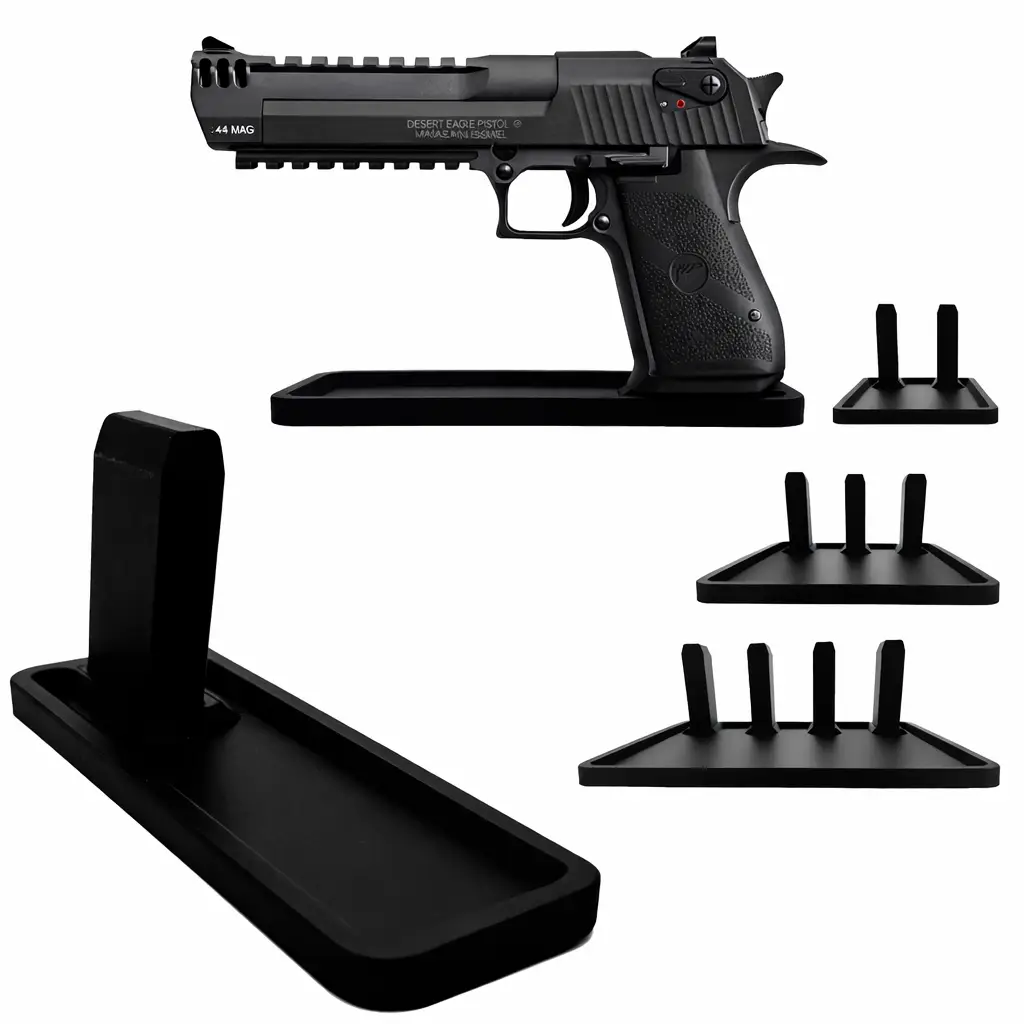
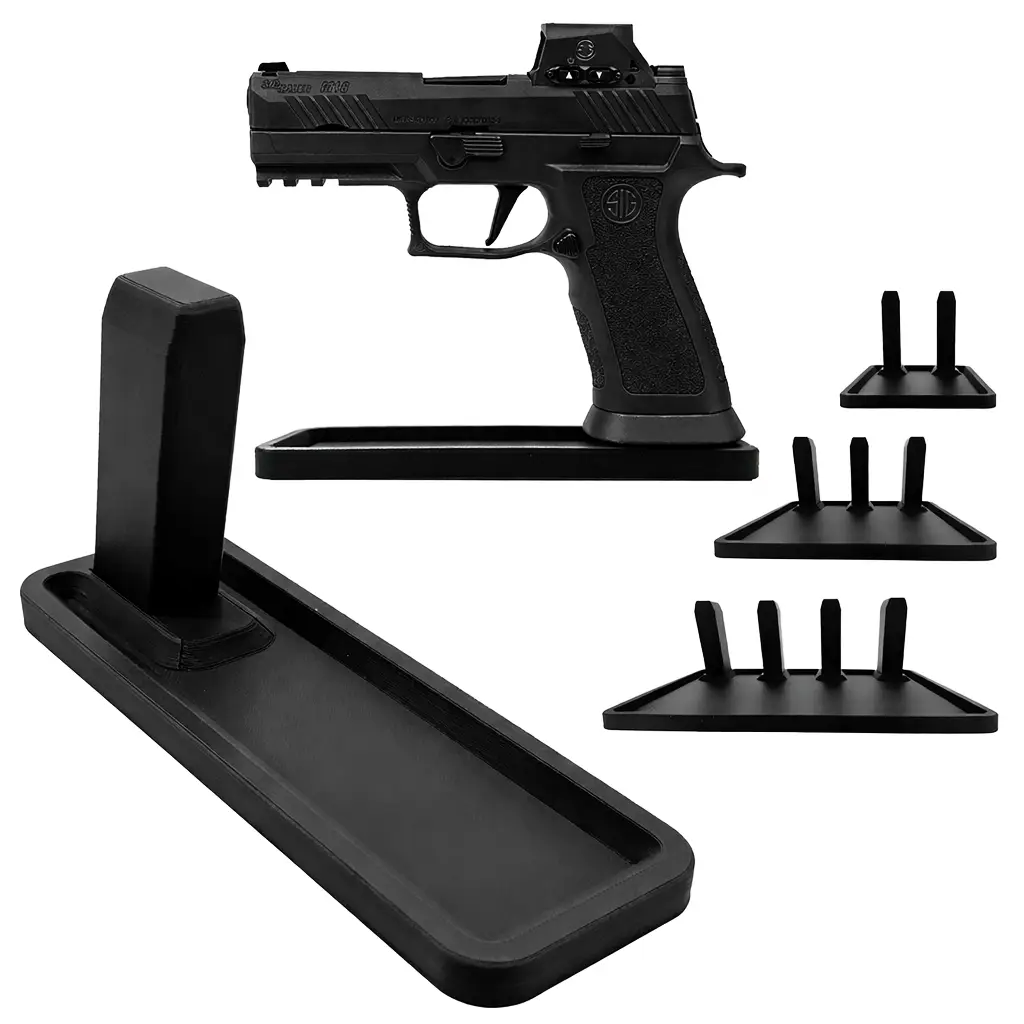
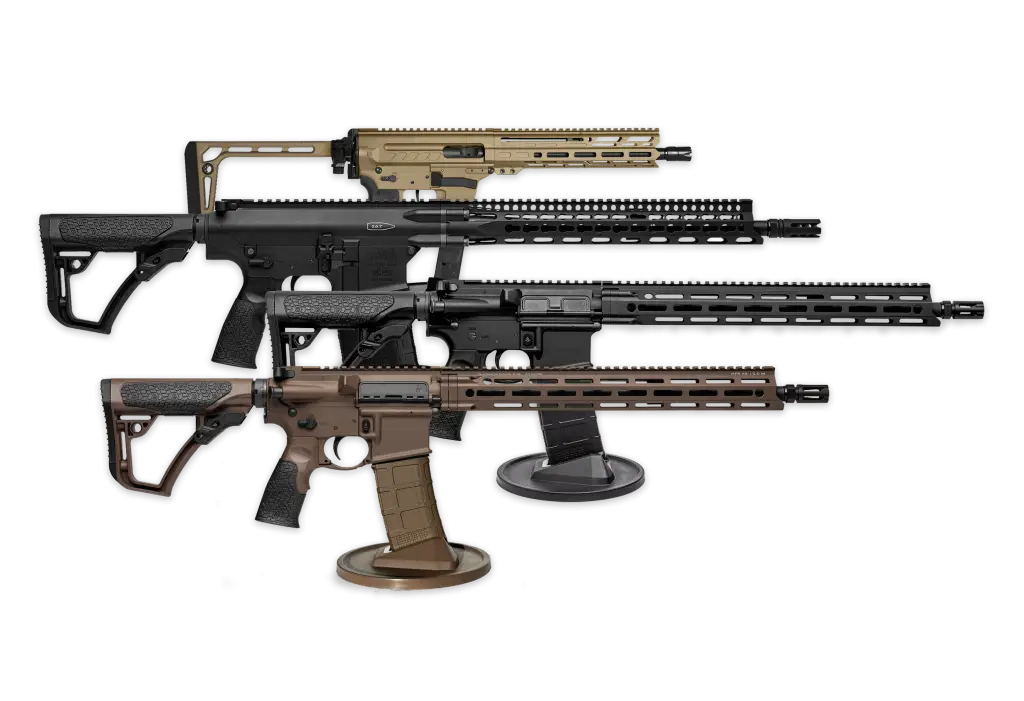
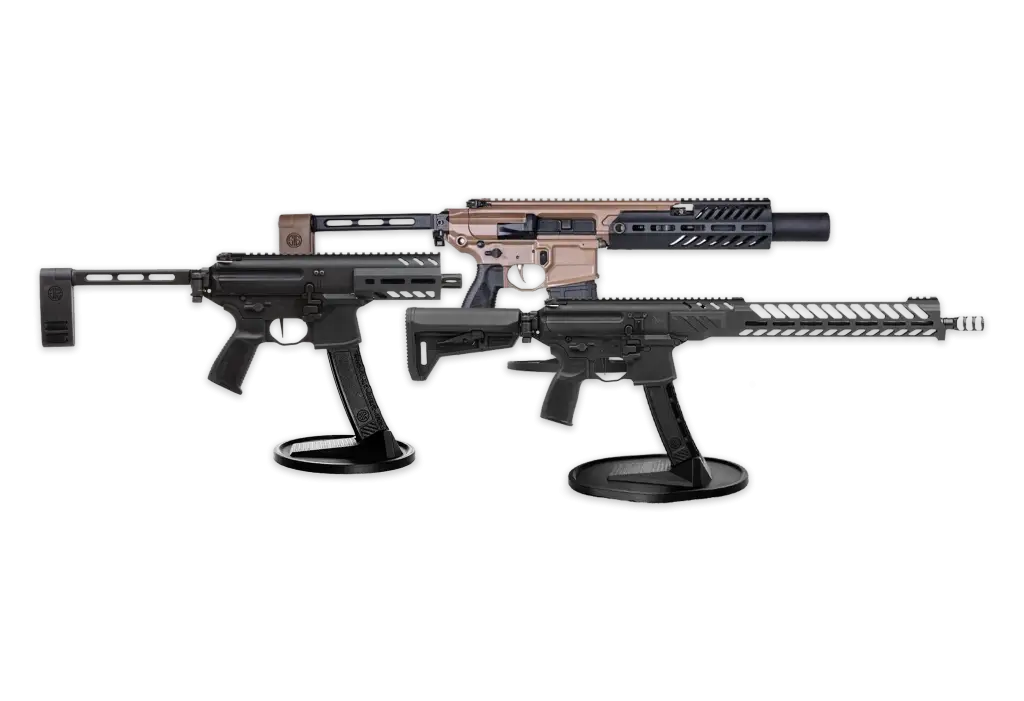
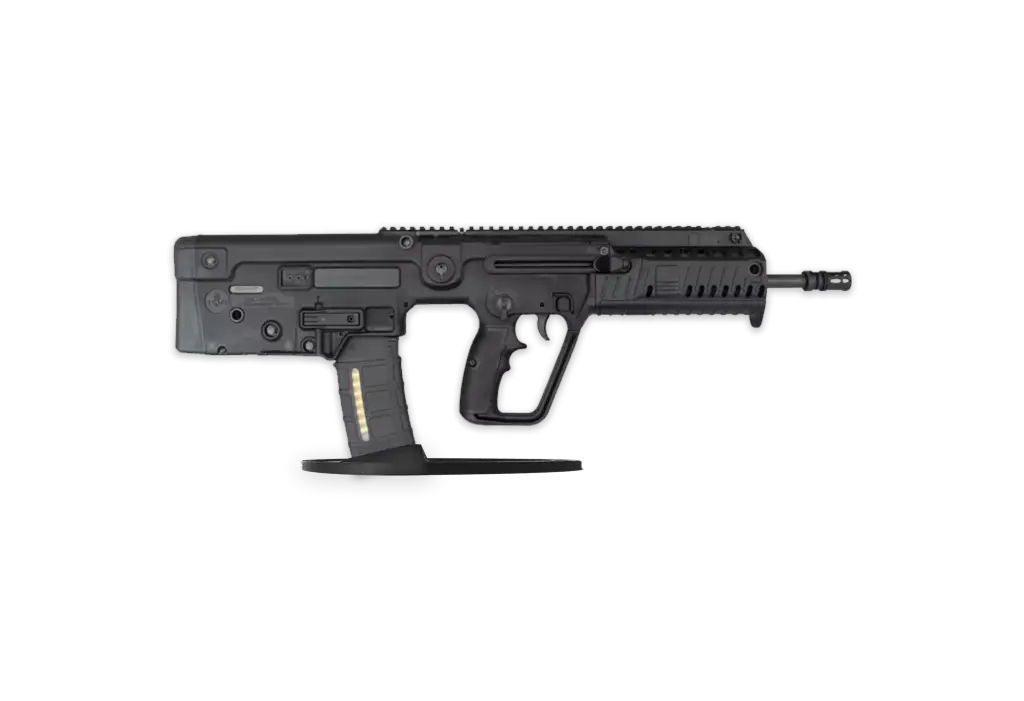
Collectors who own traditional and ambidextrous configurations can display them side by side using a compatible AR15 gun stand, allowing the controls, receiver design, handguard, and other features to remain visible.
What Does Ambidextrous Mean on an AR-15?
Ambidextrous generally means that a control can be operated from either side of the rifle. On an AR-15, this may be accomplished by extending one component across both sides or by adding a separate control that performs the same function.
Common ambidextrous AR-15 components include:
- Safety selectors.
- Charging handles.
- Magazine releases.
- Bolt catches.
- Bolt releases.
- Complete lower receivers.
- Upper receivers designed for alternate-side ejection.
A rifle does not need every one of these features to be marketed as ambidextrous. Buyers should examine the actual control layout rather than relying only on the product name.
Traditional AR-15 Control Layout
The traditional AR-15 control arrangement was designed primarily around right-handed operation.
Standard controls commonly include:
- A safety selector on the left side.
- A magazine release button on the right side.
- A bolt catch and release on the left side.
- A rear charging handle operated from the center.
- An ejection port on the right side.
This layout remains functional and familiar to millions of owners. However, left-handed shooters may need to use different fingers or slightly adjust their grip to access certain controls.
Ambidextrous components attempt to make the controls more equally accessible from both sides.
Ambidextrous Safety Selector
The ambidextrous safety selector is one of the most common AR-15 upgrades. A traditional selector typically has a lever only on the left side of the lower receiver. An ambidextrous model adds a lever on the right side as well.
This allows the safety to be operated using either hand.
Common features include:
- Dual-sided selector levers.
- Interchangeable lever sizes.
- Short and long lever combinations.
- Different lever shapes.
- Textured surfaces.
- Multiple finish options.
Some owners prefer a full-length lever on both sides, while others choose a shorter lever on one side to reduce contact with the trigger finger.
The selector must be compatible with the receiver, trigger assembly, and detent system. Installation should follow the component manufacturer’s instructions.
Ambidextrous Charging Handle
The charging handle is located at the rear of the upper receiver. Traditional models usually place the primary latch on the left side, although the handle itself is positioned near the center of the rifle.
An ambidextrous charging handle includes latches or gripping surfaces on both sides. This allows it to be operated from either direction.
Common advantages include:
- Access from either side.
- Improved use around large optics.
- Multiple latch-size options.
- Better accessibility with gloves.
- More flexible hand positioning.
Ambidextrous charging handles are available in compact, medium, and extended designs. Oversized latches provide more surface area but may catch on cases, equipment, or clothing. The best size depends on the optic, rifle configuration, and owner’s preference.
Ambidextrous Magazine Release
A traditional AR-15 magazine release button is located on the right side of the lower receiver. Right-handed shooters commonly reach it with the trigger finger while maintaining a firing-hand grip.
An ambidextrous magazine release adds a control on the left side or redesigns the release mechanism so it can be reached from either side.
Potential benefits include:
- Improved access for left-handed owners.
- Reduced need to shift the firing hand.
- More flexible control manipulation.
- Similar access from alternate positions.
Because the magazine release interacts directly with the lower receiver and magazine catch, compatibility should be confirmed carefully. Some aftermarket releases fit standard lowers, while others are integrated into proprietary receiver designs.
Ambidextrous Bolt Catch and Bolt Release
The standard AR-15 bolt catch is located on the left side of the lower receiver. It can hold the bolt carrier group open and release it according to the rifle’s design.
Fully ambidextrous lowers may include additional bolt controls on the right side. Some designs provide only a second bolt release, while others allow the bolt to be both caught and released from either side.
This distinction is important.
- An ambidextrous bolt release may only allow the bolt to be released.
- An ambidextrous bolt catch may allow the bolt to be locked open.
- A fully ambidextrous system may support both functions on both sides.
Product descriptions should explain exactly which functions are included.
Fully Ambidextrous Lower Receivers
A fully ambidextrous lower receiver is designed from the beginning to provide major controls on both sides. Rather than adding individual aftermarket parts to a traditional lower, the receiver incorporates the control layout into its structure.
Features may include:
- Dual-sided safety controls.
- Ambidextrous magazine release.
- Right-side bolt release.
- Right-side bolt catch.
- Flared magazine well.
- Integrated trigger guard.
- Enhanced machining.
- Textured control surfaces.
These receivers often cost more than standard models, but they can provide a more integrated design than adding several separate components.
Ambidextrous Upper Receivers
Most ambidextrous AR-15 discussions focus on the lower receiver and controls. However, some manufacturers also produce upper receiver systems designed for left-side ejection or other alternate configurations.
These uppers may use specialized:
- Bolt carrier groups.
- Bolts.
- Upper receiver housings.
- Ejection port components.
- Dust covers.
Left-ejecting upper components should not be assumed to work with standard right-ejecting parts. Proprietary compatibility is common, and replacement parts may need to come from the original manufacturer.
Does Ambidextrous Mean Left-Ejecting?
No. An ambidextrous AR-15 does not automatically eject cases from the left side.
Most ambidextrous rifles still use a standard right-side ejection port. The term usually refers to the accessibility of the controls rather than the direction of ejection.
A left-ejecting rifle is a separate configuration that may use a specialized upper receiver and bolt carrier group.
Why Left-Handed Shooters Choose Ambidextrous AR-15s
Left-handed shooters are the most obvious group to benefit from ambidextrous controls. A standard AR-15 can be operated left-handed, but certain controls may require different hand movements.
Ambidextrous components can provide:
- Easier access to the safety.
- More convenient magazine release operation.
- Improved charging-handle access.
- Better access to bolt controls.
- Less need to shift the firing hand.
- A more symmetrical user experience.
The exact benefit depends on the owner’s hand size, technique, and control preferences.
Why Right-Handed Shooters Choose Ambidextrous Controls
Ambidextrous controls are not limited to left-handed owners. Right-handed shooters may also find them useful.
Potential advantages include:
- Operating controls with either hand.
- Reaching the bolt catch from the right side.
- Using the charging handle from either direction.
- Maintaining access from alternate shooting positions.
- Choosing the most comfortable finger for each control.
- Sharing the rifle with left-handed family members.
Some right-handed owners prefer a right-side bolt control because it allows them to interact with the bolt while maintaining a firing-hand grip.
Benefits for Cross-Dominant Shooters
Some people are right-handed but left-eye dominant, or left-handed but right-eye dominant. This is known as cross dominance.
Cross-dominant shooters may choose to operate a rifle from the side that aligns with their dominant eye. Ambidextrous controls can make that transition more comfortable.
However, equipment is only one part of the solution. Professional instruction can help individuals determine a safe and comfortable setup based on their vision, handedness, and experience.
Benefits for Shared Rifles
A rifle may be used by more than one person in a household, training environment, competition team, or recreational group. If users have different dominant hands, an ambidextrous setup can make the controls more accessible to everyone.
Shared rifles may benefit from:
- Dual-sided safety selectors.
- Ambidextrous charging handles.
- Adjustable stocks.
- Neutral grip designs.
- Controls accessible from either side.
Adjustable furniture and ambidextrous controls can make one rifle more adaptable to different users.
Ambidextrous Controls and Competition Rifles
Competition shooters often select controls based on speed, efficiency, and repeatability. Ambidextrous components may allow a competitor to use the control arrangement that best fits a particular stage or shooting position.
Popular competition-oriented features include:
- Extended magazine-release controls.
- Ambidextrous safety levers.
- Large charging-handle latches.
- Right-side bolt releases.
- Textured control surfaces.
- Lightweight components.
Competition rules vary, so participants should confirm that their equipment is permitted in the appropriate division.
Ambidextrous Controls and Collecting
Collectors may choose ambidextrous AR-15s because they represent the continuing evolution of the platform. Early commercial AR-15 rifles used relatively simple, one-sided controls. Modern rifles increasingly incorporate bilateral designs, enhanced ergonomics, and integrated lower receivers.
A collection may include:
- A traditional right-handed AR-15.
- A rifle with an ambidextrous safety.
- A rifle with an ambidextrous charging handle.
- A fully ambidextrous lower receiver.
- A specialized left-ejecting upper.
Displaying these rifles on a compatible rifle stand makes it easier to compare their receiver designs and control layouts.
Standard AR-15 vs Ambidextrous AR-15
| Feature | Standard AR-15 | Ambidextrous AR-15 |
|---|---|---|
| Safety selector | Usually left side only | Available on both sides |
| Charging handle | Often left-latch dominant | Latches on both sides |
| Magazine release | Usually right side | May be reached from both sides |
| Bolt controls | Primarily left side | May be available on both sides |
| Ejection direction | Usually right side | Usually still right side |
| Parts cost | Generally lower | May be higher |
| Receiver design | Traditional | Standard with upgrades or purpose-built |
Factory Ambidextrous Rifle vs Aftermarket Upgrades
Owners can choose between purchasing a factory ambidextrous rifle and upgrading a standard AR-15.
Factory Ambidextrous Rifle
A factory rifle may use an integrated lower receiver with controls designed to work together.
Potential advantages include:
- Unified design.
- Factory installation.
- Manufacturer warranty.
- Integrated receiver controls.
- Consistent appearance.
Aftermarket Ambidextrous Upgrades
A standard rifle can often be equipped with selected components according to the owner’s needs.
Potential advantages include:
- Lower initial cost.
- Ability to upgrade gradually.
- Large component selection.
- Control over individual features.
- Compatibility with an existing rifle.
The better option depends on budget, compatibility, and whether the owner wants one or every major control duplicated.
Can Any AR-15 Become Ambidextrous?
Many standard AR-15 rifles can accept at least some ambidextrous components. Safety selectors and charging handles are especially common upgrades.
However, not every standard lower can duplicate every function of a purpose-built ambidextrous receiver.
Compatibility may depend on:
- Receiver machining.
- Trigger design.
- Bolt-catch configuration.
- Magazine-release dimensions.
- Grip clearance.
- Manufacturer specifications.
A fully ambidextrous lower may include channels, levers, and control surfaces that cannot be reproduced by simple drop-in components.
Ambidextrous Safety Compatibility
Most standard AR-15 lower receivers can accept a compatible ambidextrous selector, but several details should be considered.
These include:
- Selector diameter.
- Trigger compatibility.
- Lever attachment method.
- Grip and detent compatibility.
- Receiver markings.
- Lever clearance.
Some selectors allow interchangeable lever lengths or different throw configurations. Any selector should be installed and tested according to the manufacturer’s instructions.
Charging-Handle Compatibility
Most standard AR-15 upper receivers use a common charging-handle pattern, but compatibility is not universal across every AR-style platform.
Differences may exist with:
- AR-10 and large-frame receivers.
- Proprietary piston systems.
- Side-charging uppers.
- Left-ejecting receivers.
- Pistol-caliber platforms.
- Specialized upper designs.
An AR-15 charging handle should not be assumed to fit an AR-10 or proprietary upper receiver.
Ambidextrous AR-15 Maintenance
Ambidextrous components add levers, springs, screws, pivots, and contact surfaces that should be included in routine maintenance and inspection.
The core maintenance needs of an ambidextrous AR-15 are similar to those of a traditional AR-15. Owners should still follow the rifle manufacturer’s instructions for cleaning, lubrication, inspection, and replacement of worn components.
However, the additional controls may require a few extra checks.
Maintaining an Ambidextrous Safety Selector
An ambidextrous safety selector may use screws or other fasteners to secure its external levers.
Maintenance may include:
- Checking both levers for movement.
- Inspecting fasteners.
- Confirming that the selector moves through its intended positions.
- Looking for interference with the grip or trigger finger.
- Inspecting the detent and spring during appropriate service.
If a selector lever becomes loose, the rifle should be inspected before continued use.
Maintaining an Ambidextrous Charging Handle
Ambidextrous charging handles contain multiple moving latches and pivots. These areas may collect dirt, residue, or debris.
Inspection may include:
- Checking both latch mechanisms.
- Looking for cracks or deformation.
- Inspecting the central body for wear.
- Removing accumulated debris.
- Applying lubrication only where recommended.
- Confirming smooth movement in the upper receiver.
The charging handle should not bind, remain partially open, or show significant damage.
Maintaining Ambidextrous Magazine Controls
An ambidextrous magazine release uses additional mechanical parts to operate the magazine catch from the opposite side.
Owners should inspect:
- Control movement.
- Magazine retention.
- Spring tension.
- Receiver clearance.
- Loose screws or pivots.
- Wear on the contact surfaces.
A magazine should remain securely retained until the release is intentionally activated.
Maintaining Ambidextrous Bolt Controls
Right-side bolt controls may use integrated levers, transfer bars, or other receiver-specific components.
Inspection may include:
- Checking control movement.
- Inspecting springs and pivots.
- Looking for unusual wear.
- Confirming that the bolt catch functions correctly.
- Removing dirt from recessed areas.
- Following receiver-specific maintenance instructions.
Because fully ambidextrous lower receivers may use proprietary parts, replacement components should be obtained from the appropriate manufacturer.
Routine Cleaning and Lubrication
The additional external controls should not distract from the normal maintenance needs of the rifle.
Routine care may include:
- Cleaning the bolt carrier group.
- Inspecting the chamber and bore.
- Cleaning the charging handle.
- Inspecting the lower receiver.
- Removing dirt from the magazine well.
- Checking the buffer and spring.
- Lubricating appropriate moving parts.
- Inspecting all ambidextrous controls.
Owners should use cleaning products compatible with the rifle’s materials, coatings, and durable plastic components.
Why Fastener Inspection Matters
Some ambidextrous controls use small screws to attach external levers or paddles. These fasteners may be smaller than the major hardware used elsewhere on the rifle.
Owners should follow the manufacturer’s instructions regarding:
- Fastener inspection.
- Torque specifications.
- Approved thread-locking products.
- Replacement screws.
- Maintenance intervals.
Using an incorrect product or excessive torque can damage small components.
Common Ambidextrous AR-15 Maintenance Mistakes
Ignoring the Extra Controls
Owners may clean the bolt carrier group and barrel while forgetting to inspect the ambidextrous levers and pivots.
Over-Lubricating External Controls
Excess lubricant can attract dirt and debris. Follow the manufacturer’s recommendations.
Using Incorrect Replacement Screws
Small selector or control screws may be proprietary. Random hardware may not provide the correct dimensions or strength.
Failing to Check Magazine Retention
After servicing an ambidextrous magazine release, confirm that compatible magazines remain securely retained.
Assuming All Ambidextrous Parts Are Standardized
Fully ambidextrous receivers often use proprietary components that should not be replaced with standard parts without verification.
Advantages of an Ambidextrous AR-15
The main advantages include:
- Improved accessibility for left-handed shooters.
- Controls available from either side.
- More options for different hand positions.
- Greater adaptability for shared rifles.
- Modern receiver design.
- Potentially improved ergonomics.
- Expanded customization options.
These benefits explain why ambidextrous controls are increasingly common on premium rifles and aftermarket builds.
Potential Disadvantages
Ambidextrous systems also involve tradeoffs.
Higher Cost
Factory ambidextrous receivers and premium controls may cost more than traditional parts.
Additional Complexity
Extra levers, pivots, springs, and fasteners create more components to inspect.
Proprietary Parts
Some fully ambidextrous receivers require manufacturer-specific replacement components.
Control Interference
A right-side safety lever or extended control may contact the owner’s hand or trigger finger.
Learning Curve
An owner familiar with a traditional layout may need time to become comfortable with additional controls.
Accidental Activation
Large or poorly positioned controls may be activated unintentionally if they do not fit the owner’s hand or technique.
Choosing an Ambidextrous Safety
When comparing selectors, consider:
- Lever length.
- Lever shape.
- Surface texture.
- Receiver compatibility.
- Trigger compatibility.
- Fastener design.
- Manufacturer support.
A shorter lever on one side may provide adequate access while reducing contact with the hand.
Choosing an Ambidextrous Charging Handle
Important factors include:
- Latch size.
- Optic clearance.
- Upper-receiver compatibility.
- Material and construction.
- Gas-management features.
- Manufacturer reputation.
- Intended application.
A large handle is not automatically better. Oversized latches may be useful with gloves or large optics but can add width.
Choosing a Fully Ambidextrous Lower
When comparing complete ambidextrous lowers or receiver sets, buyers should examine:
- Which controls are duplicated.
- Whether the bolt can be caught and released from both sides.
- Magazine-release design.
- Replacement-parts availability.
- Trigger compatibility.
- Upper-receiver fit.
- Warranty support.
- Receiver material.
- Overall weight.
The word “ambidextrous” should not be treated as a complete specification. The actual features matter more than the label.
Ambidextrous AR-15 vs Left-Handed AR-15
An ambidextrous AR-15 and a dedicated left-handed AR-15 are not the same.
An ambidextrous rifle usually retains standard right-side ejection while providing controls on both sides.
A left-handed rifle may include:
- Left-side ejection port.
- Specialized upper receiver.
- Left-handed bolt carrier group.
- Mirrored internal components.
- Left-oriented controls.
Dedicated left-handed systems can provide a more fully mirrored configuration, but replacement parts may be less widely available.
Is an Ambidextrous AR-15 Worth It?
An ambidextrous AR-15 may be worthwhile for:
- Left-handed shooters.
- Cross-dominant shooters.
- Households sharing one rifle.
- Competition shooters.
- Collectors interested in modern receiver designs.
- Owners who prefer bilateral controls.
A standard AR-15 remains perfectly suitable for many owners. Ambidextrous controls are an ergonomic choice rather than a universal requirement.
Some owners may need only an ambidextrous safety and charging handle. Others may prefer a fully integrated lower receiver.
Displaying an Ambidextrous AR-15
Ambidextrous controls are often visually distinctive. Extended selectors, right-side bolt controls, enhanced charging handles, and machined lower receivers can make the rifle stand out within a collection.
A magazine-compatible gun stand supports an appropriate rifle through a compatible magazine while leaving both sides of the receiver accessible for viewing.
This makes it easier to showcase:
- Dual safety selectors.
- Ambidextrous magazine releases.
- Right-side bolt controls.
- Enhanced charging handles.
- Custom receiver machining.
- Matching grips and stocks.
- Unique finishes.
Why GunCreed Stands Work with Ambidextrous Rifles
GunCreed stands are designed around compatible magazine patterns rather than requiring support against the rifle’s handguard, stock, or receiver controls.
This helps keep the ambidextrous components visible and unobstructed.
Benefits include:
- Clean upright presentation.
- Visibility of both receiver sides.
- Reduced collection clutter.
- Easy comparison of multiple configurations.
- Professional product photography.
- Compatibility with optic-equipped rifles.
Collectors can use matching gun stands to display traditional and ambidextrous rifles in one organized collection.
Ambidextrous AR-15 Frequently Asked Questions
What Makes an AR-15 Ambidextrous?
An AR-15 is considered ambidextrous when one or more major controls can be reached from both sides of the rifle.
Do Ambidextrous AR-15s Eject to the Left?
Most do not. They usually retain standard right-side ejection while adding dual-sided controls.
Are Ambidextrous AR-15s Only for Left-Handed Shooters?
No. Right-handed shooters may also prefer bilateral controls and alternate control access.
Can a Standard AR-15 Be Upgraded?
Many standard rifles can accept ambidextrous safety selectors, charging handles, and magazine releases. Fully duplicated bolt controls may require a specialized receiver.
Do Ambidextrous Controls Require More Maintenance?
The basic rifle maintenance remains similar, but the additional levers, pivots, springs, and fasteners should be included in routine inspection.
Are Ambidextrous Components Universal?
No. Compatibility varies by receiver, trigger, platform, and manufacturer.
Is a Fully Ambidextrous Lower Better?
It may provide more integrated controls, but it can also cost more and use proprietary replacement parts.
Can an AR-15 Ambidextrous Charging Handle Fit an AR-10?
Generally, it should not be assumed to fit. AR-10 and other large-frame platforms use different dimensions and may vary between manufacturers.
Final Thoughts
An ambidextrous AR-15 includes controls that can be reached from both sides of the rifle. These may include the safety selector, charging handle, magazine release, bolt catch, and bolt release.
Left-handed shooters often choose ambidextrous controls for easier access, but right-handed and cross-dominant owners may also benefit. Shared rifles, competition setups, and modern collector builds can all make use of bilateral controls.
Not every ambidextrous rifle offers the same features. Some include only a dual-sided selector, while others use purpose-built lower receivers with integrated magazine and bolt controls. Buyers should examine the actual control layout, compatibility, replacement-parts availability, and maintenance requirements.
Routine maintenance should include the additional levers, screws, springs, and pivots. Ambidextrous charging handles, selectors, magazine releases, and bolt controls should remain secure and move according to the manufacturer’s design.
For collectors, ambidextrous rifles represent an important stage in the continuing evolution of the AR platform. Their enhanced receivers and dual-sided controls create a modern appearance that stands apart from traditional configurations.
Displaying the completed rifle on a durable AR15 gun stand keeps the controls, optic, handguard, grip, and stock visible. Owners of larger-frame ambidextrous platforms can use a compatible AR10 gun stand designed for the appropriate magazine pattern.