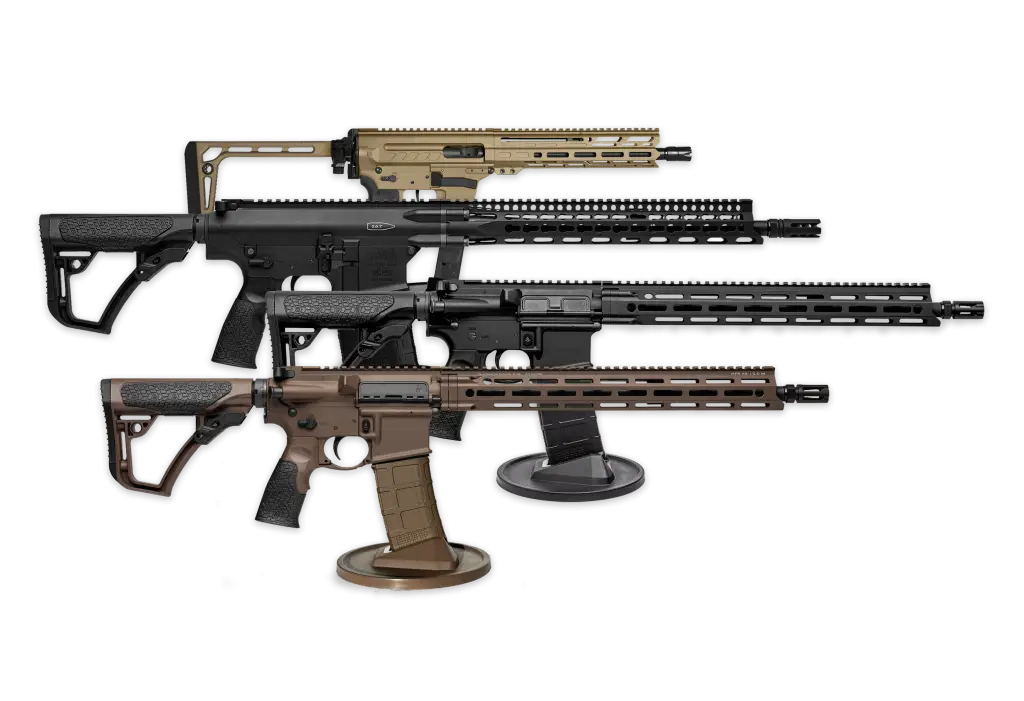
























The AK-47 and AR-15 are two of the most recognizable rifle platforms in the world. Their distinctive shapes, long histories, widespread use, and influence on modern rifle design have made them popular among collectors, recreational shooters, military historians, competitors, and firearm enthusiasts.
Although the two platforms are frequently compared, they were developed in different countries, around different cartridges, and according to different design priorities. The AK family is commonly associated with rugged construction, a long-stroke gas-piston operating system, curved magazines, and the 7.62x39mm cartridge. The AR-15 is known for lightweight aluminum receivers, modular construction, an in-line stock arrangement, and extensive aftermarket support.
Modern commercial examples have also expanded far beyond their original configurations. AK-pattern rifles are available in multiple calibers, receiver styles, furniture materials, and country-of-origin variations. AR-15 rifles are produced by numerous manufacturers with an almost unlimited selection of barrels, handguards, stocks, triggers, optics, and accessories.
This comparison examines the AK-47 vs AR-15 from a historical, mechanical, ergonomic, and collector-focused perspective. It does not provide assembly instructions, modification procedures, or tactical guidance.
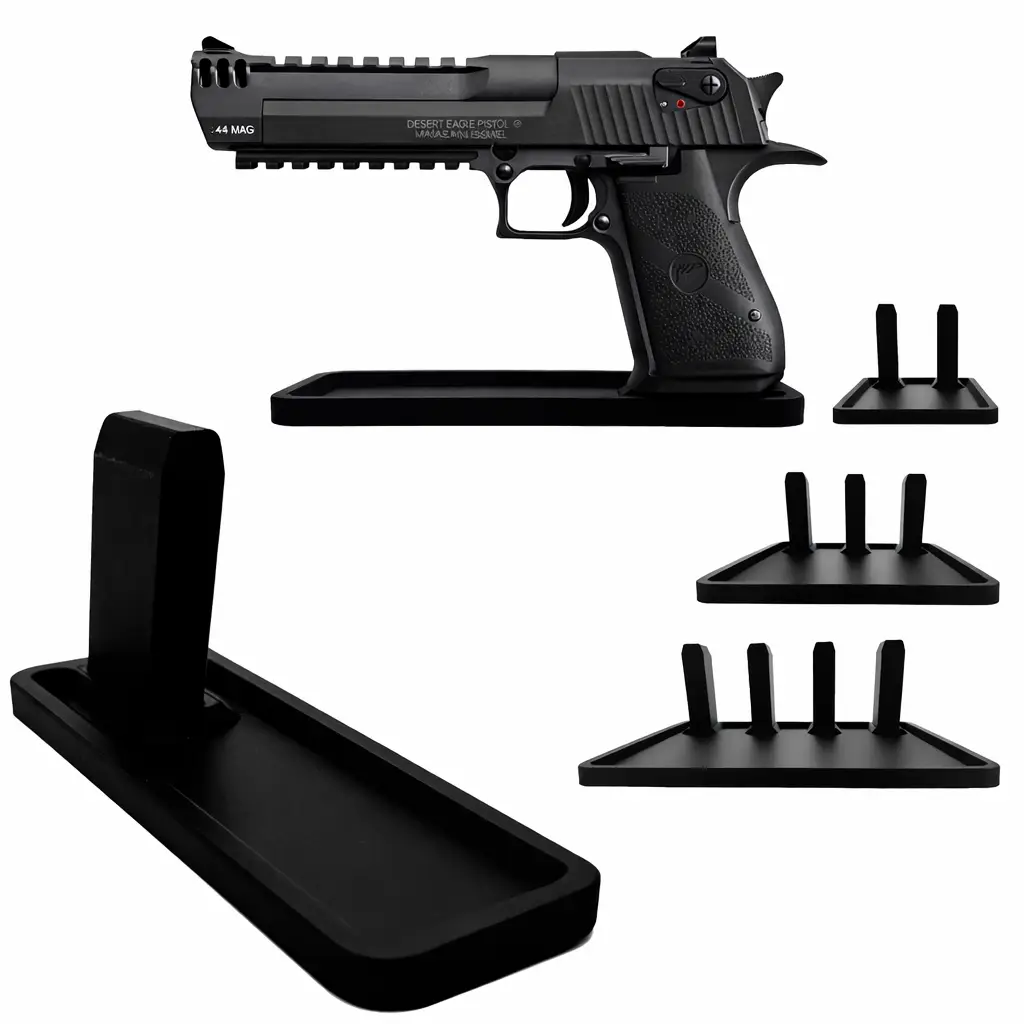
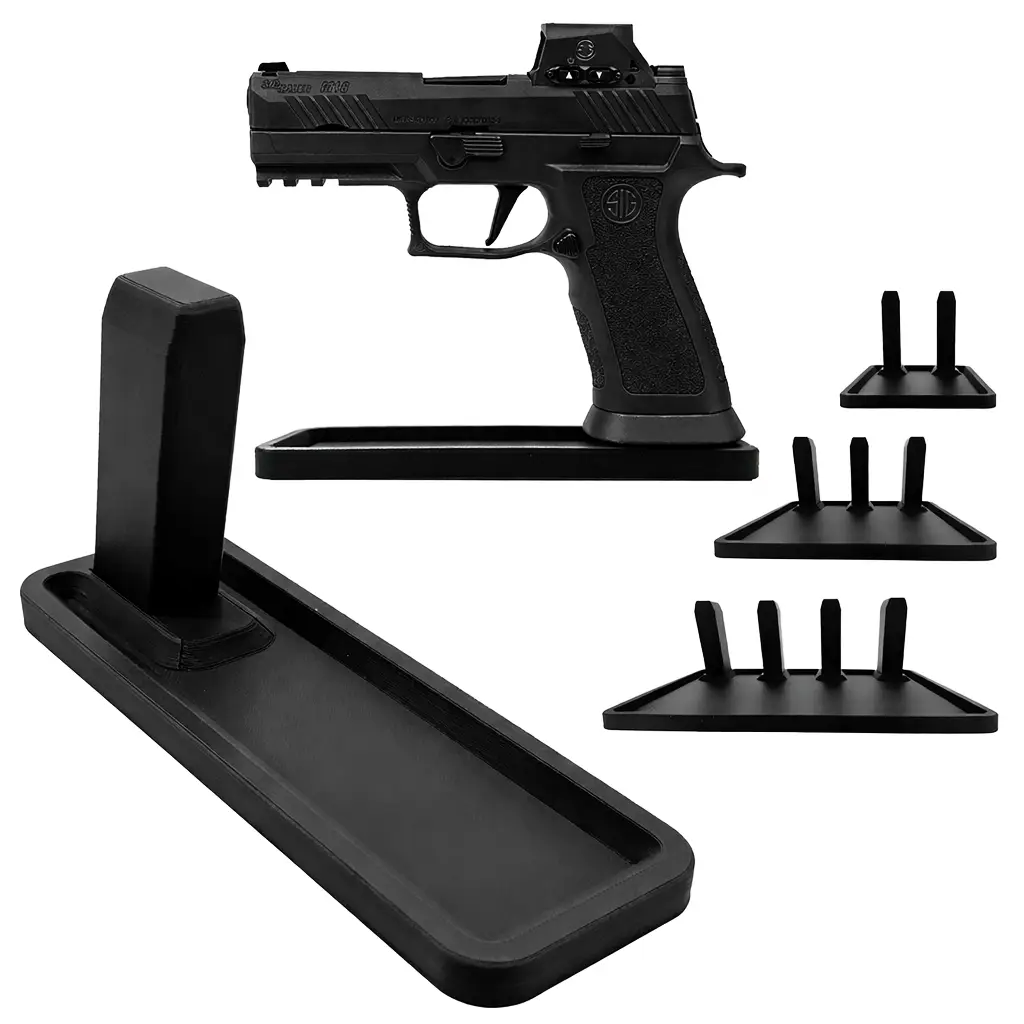
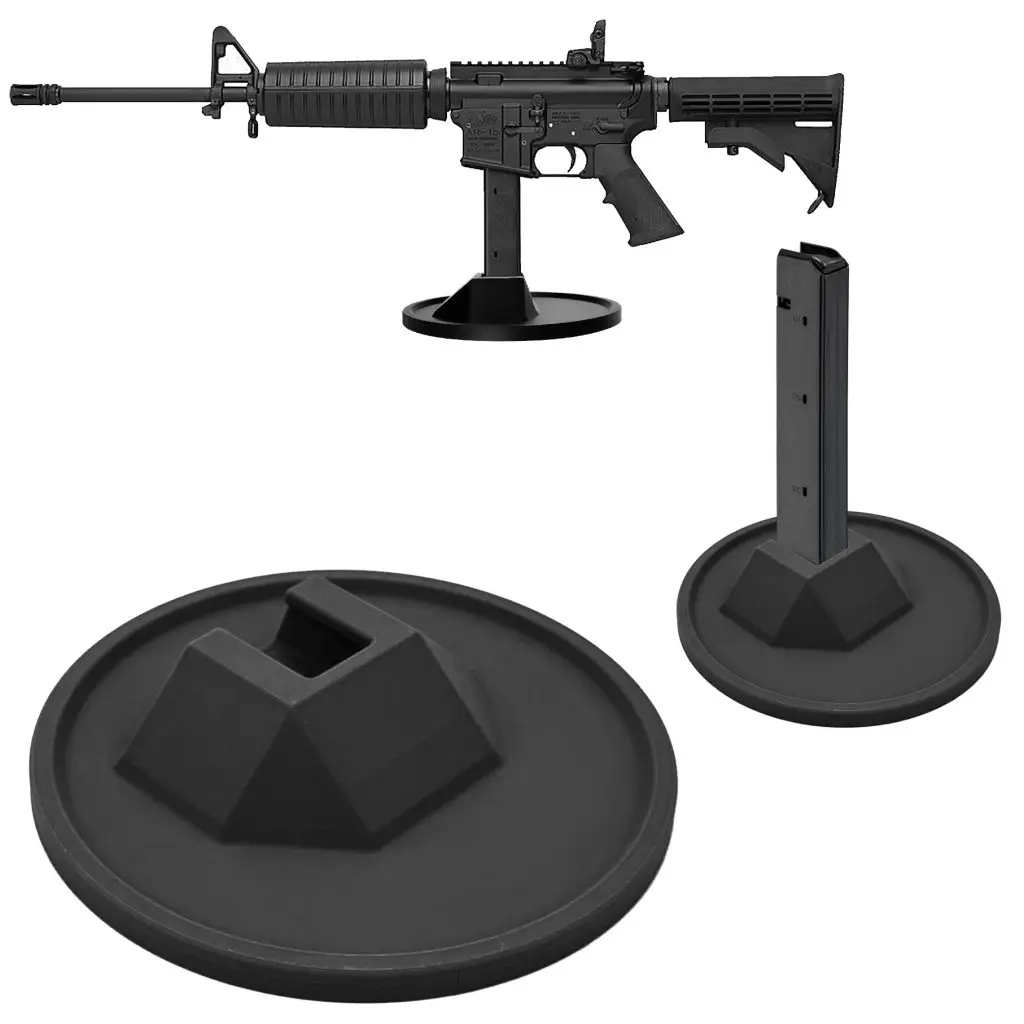
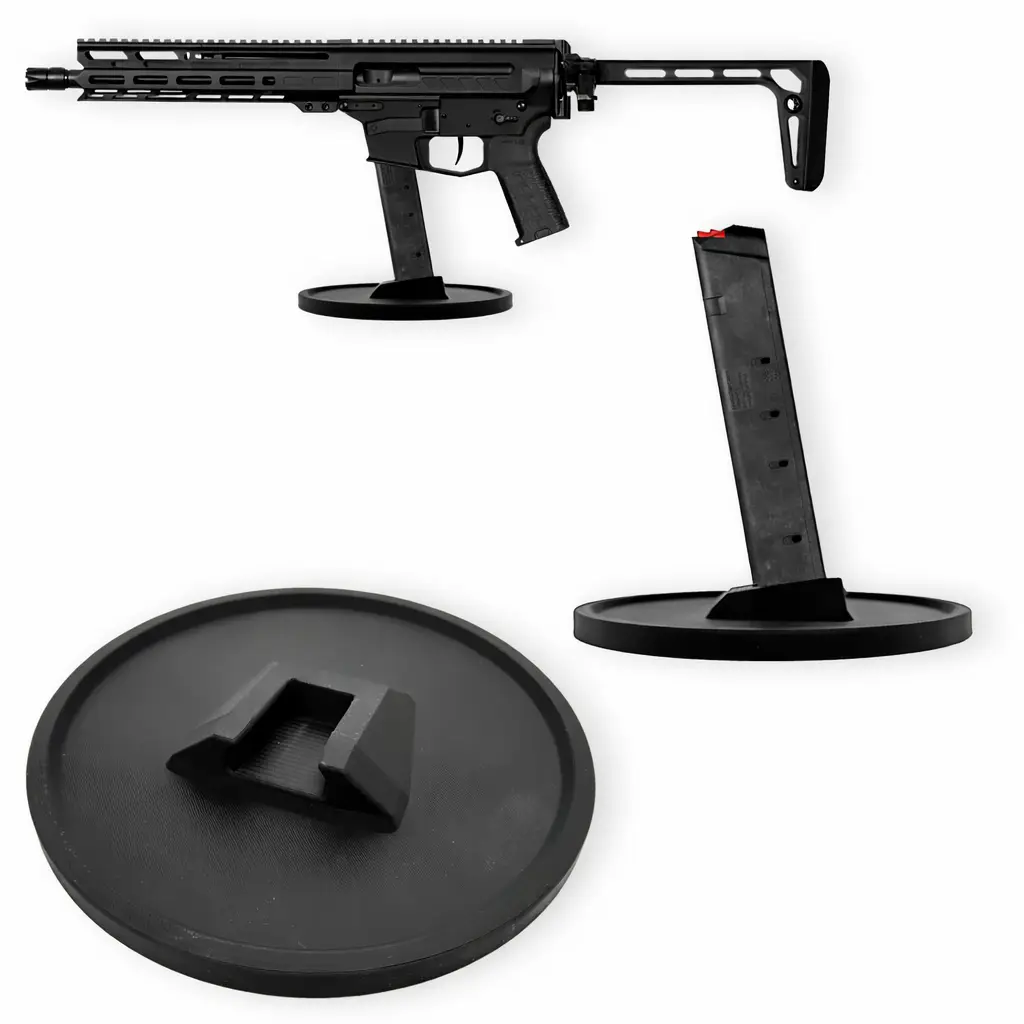
Collectors who own both platforms often display them on separate magazine-compatible solutions, including an AK gun stand and an AR-compatible stand designed around the correct magazine pattern.
Understanding the Names
The terms AK-47 and AR-15 are often used broadly, but each name has a more specific historical meaning.
The AK-47 refers to the original Avtomat Kalashnikova design associated with Mikhail Kalashnikov and adopted by the Soviet Union during the late 1940s. Many rifles commonly called AK-47s in the commercial market are technically based on later AKM designs or other members of the wider Kalashnikov family.
The AR-15 was originally developed by ArmaLite during the 1950s. The letters “AR” refer to ArmaLite Rifle rather than “assault rifle.” Colt later acquired the design and played a central role in its military and commercial development.
Modern civilian rifles using these general layouts are usually semi-automatic commercial platforms, even when their appearance is influenced by historic military designs.
The Origins of the AK-47
The AK-47 emerged after World War II as the Soviet Union searched for a rifle designed around an intermediate cartridge. Mikhail Kalashnikov and the development teams associated with the project created a platform that emphasized durability, relatively simple operation, and suitability for large-scale manufacturing.
Early AK rifles used milled receivers. The later AKM adopted a stamped receiver and several manufacturing changes that reduced weight and made large-scale production more practical.
Recognizable characteristics of the traditional AK family include:
- Long-stroke gas piston.
- Rotating bolt.
- Curved detachable magazine.
- Large right-side safety and selector lever.
- Charging handle attached to the bolt carrier.
- Separate upper gas-tube cover and lower handguard.
- Wood or durable plastic furniture, depending on the model.
The basic design spread widely, and numerous countries produced their own licensed, unlicensed, or modified versions.
The Origins of the AR-15
The AR-15 grew from ArmaLite’s earlier AR-10 rifle. Eugene Stoner and other members of the design team developed a smaller platform using lightweight materials and an intermediate cartridge.
Unlike the wood-and-steel rifles common during the period, the AR design used aluminum receivers, synthetic furniture, and a straight-line arrangement that placed the barrel and stock along a similar axis.
Recognizable characteristics include:
- Separate upper and lower receivers.
- Aluminum receiver construction.
- Rotating bolt.
- Rear-mounted charging handle.
- In-line stock and buffer system.
- Detachable box magazine.
- Modular handguards and accessory mounting systems.
The AR-15 eventually became the foundation of one of the largest commercial rifle ecosystems in the United States.
AK-47 vs AR-15 Operating Systems
Both platforms are commonly gas-operated and use rotating bolts, but they manage operating energy differently.
AK Long-Stroke Gas Piston
In a traditional AK-pattern system, the gas piston is connected to the bolt carrier. Gas tapped from the barrel acts on the piston, moving the carrier and piston assembly together through the operating cycle.
This arrangement creates a relatively large moving assembly and is one of the defining mechanical features of the Kalashnikov design.
Traditional AR Internal Gas System
Most traditional AR-15 rifles direct gas from the barrel through a gas tube and into the bolt carrier assembly. Pressure within the carrier contributes to unlocking and cycling the action.
This system is frequently called direct impingement in common commercial terminology, although its internal mechanics are more specifically associated with Stoner’s expanding-gas system.
Piston-Operated AR Variants
Some AR-style rifles use short-stroke piston systems. These designs retain many AR controls and receiver characteristics while changing how energy reaches the bolt carrier.
Therefore, not every AR-style rifle uses the same gas arrangement.
Traditional Caliber Comparison
The classic AK-47 vs AR-15 comparison usually involves 7.62x39mm and 5.56x45mm NATO or .223 Remington.
Traditional AK Chambering
The original AK family is closely associated with 7.62x39mm. The cartridge uses a larger-diameter projectile and a strongly tapered case that contributes to the curved shape of the magazine.
Traditional AR-15 Chambering
The AR-15 is most commonly associated with 5.56 NATO and .223 Remington. These cartridges are smaller in diameter and are commonly used in relatively straight 20- and 30-round AR magazines.
| Feature | Traditional AK Platform | Traditional AR-15 Platform |
|---|---|---|
| Common cartridge | 7.62x39mm | 5.56 NATO or .223 Remington |
| Magazine shape | Strongly curved | Mostly straight with a curved lower section |
| Typical commercial magazine | 30-round AK-pattern | 30-round STANAG-pattern |
| Projectile diameter | Larger | Smaller |
| Cartridge weight | Generally heavier | Generally lighter |
Modern AK and AR rifles are available in many additional calibers, so the platform name alone does not identify the ammunition.
Modern AK Caliber Options
The Kalashnikov family has expanded beyond 7.62x39mm.
Common AK-pattern chamberings include:
- 7.62x39mm.
- 5.45x39mm.
- 5.56 NATO.
- .223 Remington.
- 9mm on selected commercial platforms.
- 7.62x51mm on larger related designs.
Magazine compatibility varies significantly. A 5.45 AK magazine, 5.56 AK magazine, and 7.62×39 AK magazine are not automatically interchangeable even when their exterior profiles appear similar.
Modern AR-15 Caliber Options
The AR-15 has been adapted to an especially large selection of chamberings.
Popular examples include:
- 5.56 NATO.
- .223 Remington.
- .300 Blackout.
- 6.5 Grendel.
- 6mm ARC.
- 9mm.
- .22 LR.
- .350 Legend.
- .450 Bushmaster.
- 7.62x39mm.
Some caliber changes require only a compatible complete upper and magazine, while others require specialized bolts, lowers, buffers, or magazine-well systems.
Receiver Construction
AK Receivers
Most modern AK-pattern rifles use either stamped or milled receivers.
A stamped receiver is formed from sheet steel and uses separate trunnions to support important components. A milled receiver is machined from a larger block of material.
Stamped receivers are generally lighter and became the dominant approach with the AKM. Milled receivers are often appreciated for their appearance, rigidity, and collector appeal.
AR-15 Receivers
AR-15 upper and lower receivers are commonly made from aluminum. Forged and billet manufacturing methods are widely available.
The two-receiver design allows the rifle to separate at the pivot and takedown pins. This arrangement contributes heavily to the AR-15’s modularity.
AK-47 vs AR-15 Weight
Weight varies by manufacturer, barrel length, receiver construction, furniture, optic, and accessories.
A basic AR-15 carbine is often relatively lightweight because of its aluminum receivers and lightweight furniture. An AK with a steel receiver, steel magazine, wood furniture, and a larger cartridge may weigh more in a comparable configuration.
However, modern accessories can reverse that comparison. A heavily equipped AR with a large optic, light, bipod, and full quad rail may weigh more than a simple AK with lightweight furniture.
Buyers should compare complete rifle weights rather than assuming one platform is always lighter.
Magazine Design
The magazine is one of the most visible differences in the AK-47 vs AR-15 comparison.
AK Magazines
Traditional 7.62×39 AK magazines are strongly curved because of the cartridge’s tapered case. They are available in:
- Stamped steel.
- Durable plastic.
- Reinforced polymer-style construction.
- Aluminum on selected models.
- Various capacities.
Magazines are generally inserted using a front-lug and rear-locking motion commonly described as rocking the magazine into place.
AR-15 Magazines
Standard AR-15 magazines insert vertically into the magazine well and lock through a side-mounted magazine catch.
Common materials include:
- Aluminum.
- Steel.
- Durable plastic.
The Magpul PMAG is among the most recognizable modern AR magazines.
Magazine Compatibility
Neither platform has universal magazine compatibility across every caliber and manufacturer.
AK compatibility can be affected by:
- Caliber.
- Country-of-origin pattern.
- Magazine-lug dimensions.
- Receiver geometry.
- Magazine-well dimensions.
AR compatibility can be affected by:
- Caliber.
- Lower-receiver pattern.
- Magazine generation.
- Dedicated pistol-caliber designs.
- Large-frame versus small-frame receivers.
This matters when selecting a magazine-based display. An AR-compatible stand cannot automatically support an AK magazine, and an AK stand must match the correct AK magazine pattern.
Control Layout
AK Controls
A traditional AK has a large selector and safety lever on the right side of the receiver. The charging handle is also located on the right and moves with the bolt carrier.
The magazine release is positioned behind the magazine and commonly uses a paddle-style design.
AR-15 Controls
A standard AR-15 typically includes:
- Safety selector on the left side.
- Magazine-release button on the right side.
- Bolt catch on the left side.
- Rear charging handle.
- Forward assist on many models.
Modern ambidextrous AR rifles may duplicate several controls on both sides.
Ergonomics
Ergonomics are subjective and depend on hand size, stock length, optic height, grip design, and training.
The AR-15 is frequently praised for:
- Controls positioned near the firing hand.
- Adjustable stocks.
- Replaceable pistol grips.
- Ambidextrous component options.
- In-line stock design.
- Easy optic mounting.
The AK is frequently appreciated for:
- Large, simple controls.
- Charging handle attached directly to the carrier.
- Positive magazine-locking motion.
- Traditional wood or durable plastic furniture options.
- Distinctive balance and handling.
Modern AK manufacturers increasingly offer adjustable stocks, railed handguards, enhanced safeties, and improved optic-mounting solutions.
Stock Designs
AK Stocks
AK-pattern rifles may use:
- Fixed wood stocks.
- Fixed durable plastic stocks.
- Underfolding stocks.
- Side-folding stocks.
- Wire-style stocks.
- Modern adjustable stocks.
- Chassis-style adapters.
Compatibility depends on the rear trunnion and receiver pattern.
AR-15 Stocks
AR-15 rifles commonly use fixed or adjustable stocks attached to the receiver extension.
The receiver extension also contains the buffer and action spring on traditional designs, which affects folding-stock compatibility.
Specialized folding systems exist, but many standard AR-15 rifles depend on the receiver extension during operation.
Handguards and Accessory Mounting
Traditional AK Handguards
Classic AK rifles use separate upper and lower handguards made from wood or durable plastic. Modern versions may incorporate:
- M-LOK slots.
- Picatinny rails.
- Heat shields.
- Extended aluminum handguards.
- Integrated optic mounts.
AR-15 Handguards
AR-15 handguards are available in an enormous range of designs, including:
- Traditional two-piece handguards.
- Free-float M-LOK handguards.
- Quad rails.
- KeyMod rails.
- Carbon-fiber tubes.
- Competition handguards.
The AR platform generally offers a larger selection of standardized handguards and direct-mount accessories.
Optics Mounting
The flat-top AR-15 upper receiver provides an integrated Picatinny rail, making optics installation relatively straightforward.
Common AR optics include:
- Red dot sights.
- Holographic sights.
- Prism optics.
- LPVOs.
- Magnified scopes.
Traditional AK receivers do not normally use the same uninterrupted top rail. Optics may be mounted through:
- Side-rail mounts.
- Gas-tube replacement mounts.
- Railed dust-cover systems.
- Rear-sight-block mounts.
- Modern chassis handguards.
Quality, alignment, and the ability to maintain zero vary by product.
Iron Sights
Traditional AK rifles use a front post and rear tangent sight mounted forward on the rifle.
Traditional AR rifles commonly use a front sight and rear aperture. Flat-top rifles may use folding or removable sights.
The longer sight radius of many AR configurations can make precise alignment easier for some users, although sight quality and individual preference matter.
Accuracy and Precision
Both platforms can provide useful accuracy when properly manufactured, maintained, and paired with suitable ammunition.
The AR-15 often has an advantage in the commercial precision market because of:
- Broad selection of free-float handguards.
- Large variety of match barrels.
- Extensive trigger options.
- Simple optic mounting.
- Large supply of precision-oriented ammunition.
- Modular upper receivers.
AK accuracy varies significantly by manufacturer, barrel quality, ammunition, sights, optic mounting, and receiver construction.
It is inaccurate to assume that every AR is extremely precise or that every AK is inaccurate. Individual rifle quality matters more than the platform name alone.
Reliability and Durability
The AK is strongly associated with reliability under difficult conditions. Its design uses substantial moving components, generous operating energy, and clearances intended to tolerate contamination.
The AR-15 can also be highly dependable when built with quality components, supplied with compatible magazines, maintained properly, and lubricated according to the manufacturer’s instructions.
Reliability depends on:
- Manufacturing quality.
- Magazine condition.
- Ammunition.
- Maintenance.
- Lubrication.
- Gas-system balance.
- Component compatibility.
- Environmental conditions.
Platform stereotypes should not replace evaluation of the individual rifle.
Maintenance Differences
AK Maintenance
Traditional AK field maintenance generally involves removing the top cover, recoil-spring assembly, bolt carrier, piston, and bolt according to the manufacturer’s instructions.
Inspection commonly focuses on:
- Bore and chamber.
- Gas piston.
- Gas tube.
- Bolt and carrier.
- Recoil spring.
- Magazine catch.
AR-15 Maintenance
The AR separates at the upper and lower receivers. The charging handle and bolt carrier group can then be removed from the upper according to the owner’s manual.
Inspection commonly includes:
- Bolt carrier group.
- Chamber.
- Bore.
- Charging handle.
- Gas key.
- Buffer and action spring.
- Trigger components.
Both platforms should be maintained according to the specific manufacturer’s instructions.
Customization
The AR-15 generally offers the larger and more standardized aftermarket.
AR owners can commonly replace:
- Complete upper receivers.
- Barrels.
- Handguards.
- Stocks.
- Triggers.
- Grips.
- Charging handles.
- Bolt carrier groups.
- Controls.
- Optics and mounts.
The AK aftermarket is also substantial but may require greater attention to country pattern, trunnion design, receiver type, and fitting requirements.
AK customization categories include:
- Stocks.
- Handguards.
- Pistol grips.
- Safety levers.
- Optic mounts.
- Muzzle devices.
- Magazine releases.
- Furniture sets.
Parts Standardization
One of the AR-15’s biggest market advantages is the broad standardization of many small-frame components.
Although proprietary parts exist, owners can often combine compatible receivers and components from different manufacturers.
AK rifles vary more by country, factory, generation, receiver style, caliber, and trunnion pattern. A part marketed for one AK may require fitting or may not work with another pattern.
This does not make AK customization impossible, but it increases the importance of precise compatibility research.
Manufacturing Differences
AR-15 manufacturing commonly involves forging or machining aluminum receivers, installing a barrel extension, and assembling modular components according to established dimensions.
AK production may involve:
- Stamped receiver shells.
- Riveted trunnions.
- Pressed and pinned barrel assemblies.
- Milled receivers.
- Country-specific furniture and hardware.
The different construction methods contribute to the platforms’ distinctive appearance and aftermarket requirements.
Popular AR-15 Manufacturers
Major AR-15 manufacturers and brands include:
- Colt.
- Smith & Wesson.
- Ruger.
- Daniel Defense.
- BCM.
- Aero Precision.
- FN America.
- Springfield Armory.
- Palmetto State Armory.
- LWRC.
The American AR market includes both complete-rifle manufacturers and companies focused on receivers, barrels, handguards, triggers, and other components.
Popular AK Manufacturers and Origins
Commercial AK-pattern rifles may come from or be associated with:
- Romanian production.
- Bulgarian production.
- Serbian or former Yugoslavian patterns.
- Polish production.
- Chinese production.
- Hungarian production.
- Russian production.
- American manufacturers and assemblers.
Import laws, sanctions, company ownership, and product availability can change. Collectors often identify AK rifles by country, factory markings, receiver construction, caliber, and furniture pattern.
Collector Appeal
Both rifle families have strong collector communities, but collectors often focus on different qualities.
AK Collector Interests
- Country of origin.
- Factory markings.
- Milled vs stamped receivers.
- Historic furniture patterns.
- Import history.
- Caliber and magazine type.
- Military-inspired configurations.
AR-15 Collector Interests
- Historic Colt models.
- Retro configurations.
- Premium manufacturers.
- Special receiver markings.
- Military-inspired clones.
- Competition rifles.
- Different barrel lengths and optics.
A collection containing both platforms can illustrate two very different approaches to rifle engineering and manufacturing.
AK-47 vs AR-15 Display Considerations
The platforms require different magazine-compatible display solutions.
A traditional AR-15 commonly uses a STANAG-pattern magazine such as a compatible Magpul PMAG. A 7.62×39 AK commonly uses a wider, more curved magazine with front and rear locking points.
Before choosing a stand, confirm:
- Rifle platform.
- Caliber.
- Magazine manufacturer and model.
- Magazine body dimensions.
- Stand compatibility.
- Rifle balance and accessory weight.
A stand designed for an AR magazine should not be assumed to accept an AK magazine.
Why GunCreed Offers Platform-Specific Rifle Stands
GunCreed stands are designed around compatible magazine patterns. This approach allows the rifle to be supported through the magazine well while leaving its exterior visible.
For an AR collection, a compatible AR15 gun stand can showcase:
- The upper and lower receivers.
- Free-float handguards.
- Optics.
- Stocks.
- Pistol grips.
- Custom finishes.
For an AK collection, a platform-specific stand can showcase:
- Stamped or milled receiver.
- Wood or durable plastic furniture.
- Curved magazine profile.
- Side-mounted optic system.
- Folding or fixed stock.
- Country-specific features.
Using the correct gun stand helps keep the collection organized while preserving the unique appearance of each platform.
AK-47 vs AR-15 Cost Considerations
The price of either platform varies widely.
Factors affecting AR-15 cost include:
- Manufacturer.
- Barrel quality.
- Handguard.
- Trigger.
- Ambidextrous controls.
- Optic and accessories.
- Factory vs custom assembly.
Factors affecting AK cost include:
- Country of origin.
- Import status.
- Stamped vs milled receiver.
- Parts-kit history.
- Furniture.
- Collector rarity.
- Manufacturer and assembly quality.
A basic rifle on either platform may cost less than a rare import, premium factory model, or historically accurate collector configuration.
Ammunition Availability
Ammunition availability changes with market conditions, import restrictions, manufacturing levels, and consumer demand.
The AR-15’s common 5.56 NATO and .223 Remington chamberings benefit from extensive American commercial production.
Traditional 7.62×39 ammunition has historically included both domestic and imported options. Import changes can significantly affect price and availability.
Before choosing either platform, buyers may consider:
- Local ammunition availability.
- Average cost.
- Number of domestic manufacturers.
- Availability of practice loads.
- Availability of hunting or match ammunition.
- Long-term supply stability.
Which Platform Is Easier to Customize?
For most American buyers, the AR-15 is easier to customize because of component standardization and the enormous domestic aftermarket.
Complete upper assemblies can often be exchanged without replacing the lower receiver, and many common parts can be installed using established specifications.
AK customization may involve more platform-specific fitting and research. However, modern AK owners still have access to stocks, rails, optics mounts, grips, handguards, and enhanced controls.
Collectors seeking originality may prefer not to modify a historically significant or imported AK.
Which Platform Is Better for Collectors?
Neither platform is universally better for collecting. They appeal to different interests.
An AK collector may focus on national variations, factory codes, furniture, receiver construction, and import history.
An AR collector may focus on manufacturer history, military-inspired configurations, optics, barrels, handguards, and modular upgrades.
Many enthusiasts collect both because the platforms represent contrasting approaches to rifle development.
Which Platform Is Right for You?
The better choice depends on what the owner values.
An AR-15 may appeal to someone who prioritizes:
- Modularity.
- Lightweight construction.
- Easy optics mounting.
- Broad parts availability.
- Multiple caliber configurations.
- Precision-oriented options.
An AK-pattern rifle may appeal to someone who prioritizes:
- Historic Kalashnikov design.
- Long-stroke piston operation.
- Traditional wood furniture.
- Country-specific collecting.
- Distinctive magazines and controls.
- Stamped or milled steel construction.
The quality and condition of the individual rifle are more important than broad platform stereotypes.
Common AK-47 vs AR-15 Buying Mistakes
Assuming Every AK Is the Same
AK rifles vary greatly by country, caliber, receiver, trunnion, and manufacturer.
Assuming Every AR Part Is Universal
Proprietary designs, caliber changes, pistol-caliber platforms, and large-frame receivers may require different components.
Buying Incompatible Magazines
Magazine fit depends on caliber and platform pattern.
Judging Only by Appearance
Two similar-looking rifles may differ substantially in materials, assembly quality, and internal components.
Ignoring Ammunition Availability
Specialized calibers or imported ammunition may be more difficult to obtain.
Choosing a Display Stand by Rifle Name Alone
The stand must match the exact magazine pattern rather than only the general rifle family.
Frequently Asked Questions
Is an AK-47 the Same as an AKM?
No. The AKM is a later development that commonly uses a stamped receiver and several manufacturing changes. Many commercial rifles called AK-47s are more closely related to the AKM pattern.
What Does AR-15 Mean?
The “AR” refers to ArmaLite Rifle, the company designation associated with the original design.
Do AK and AR Rifles Use the Same Magazines?
No. Their magazines use different dimensions, locking systems, and cartridge geometry.
Are All AK Rifles Chambered in 7.62×39?
No. AK-pattern rifles are also available in 5.45×39, 5.56 NATO, and other chamberings.
Are All AR-15 Rifles Chambered in 5.56 NATO?
No. The platform supports .223 Remington, .300 Blackout, 9mm, 6.5 Grendel, 6mm ARC, and many other cartridges.
Which Platform Has More Aftermarket Parts?
The AR-15 generally has the larger and more standardized American aftermarket.
Can One Gun Stand Fit Both Platforms?
Generally, no. Magazine-compatible stands must match the correct magazine pattern and dimensions.
Which Platform Is More Accurate?
Individual rifle quality, barrel, ammunition, optic, trigger, and shooter matter. The commercial AR-15 market generally offers more precision-oriented factory and aftermarket options.
Final Thoughts
The AK-47 and AR-15 are iconic rifle platforms created from very different design philosophies. The AK family emphasizes steel construction, long-stroke gas-piston operation, strongly curved magazines, and a design history that spread through numerous countries and factories.
The AR-15 emphasizes lightweight aluminum receivers, modular upper and lower assemblies, an in-line stock, easy optic mounting, and an enormous standardized aftermarket.
The classic AK-47 vs AR-15 comparison also reflects two different cartridges. Traditional AK rifles use 7.62x39mm, while standard AR-15 rifles are closely associated with 5.56 NATO and .223 Remington. Modern versions of both platforms are now available in several additional chamberings.
Neither platform is represented accurately by simple stereotypes. A quality AK can provide excellent service and strong collector appeal, while a properly manufactured AR-15 can be highly reliable and precise. Manufacturing quality, magazine compatibility, ammunition, maintenance, and the condition of the individual rifle all matter.
For collectors, owning both platforms creates an opportunity to compare receiver construction, operating systems, magazines, furniture, controls, optics, and national manufacturing histories.
A compatible AR15 gun stand provides a clean way to showcase an AR-style rifle through the appropriate magazine pattern. An AK-pattern rifle requires a compatible AK gun stand designed around its wider, curved magazine.
By using the correct platform-specific display solution, collectors can organize both rifle families side by side while keeping the unique stock, handguard, receiver, optic, and magazine design of each rifle fully visible.