














Few accessories have influenced the modern AR-15 market as significantly as the PMAG. Developed by Magpul, the PMAG replaced the traditional idea of a thin metal rifle magazine with a durable plastic design featuring distinctive geometry, textured gripping surfaces, an anti-tilt follower, and easily removable internal components.
Since the original PMAG appeared in 2007, the product family has expanded into multiple generations, capacities, calibers, colors, windowed models, drum magazines, and versions designed for several different rifle platforms. What began as an alternative AR-15 magazine eventually became one of the most recognizable accessories in the modern sporting-rifle market.
The popularity of the PMAG is not based only on appearance. Owners frequently choose these magazines because of their durable construction, corrosion resistance, widespread availability, broad factory support, and compatibility with many common rifles.
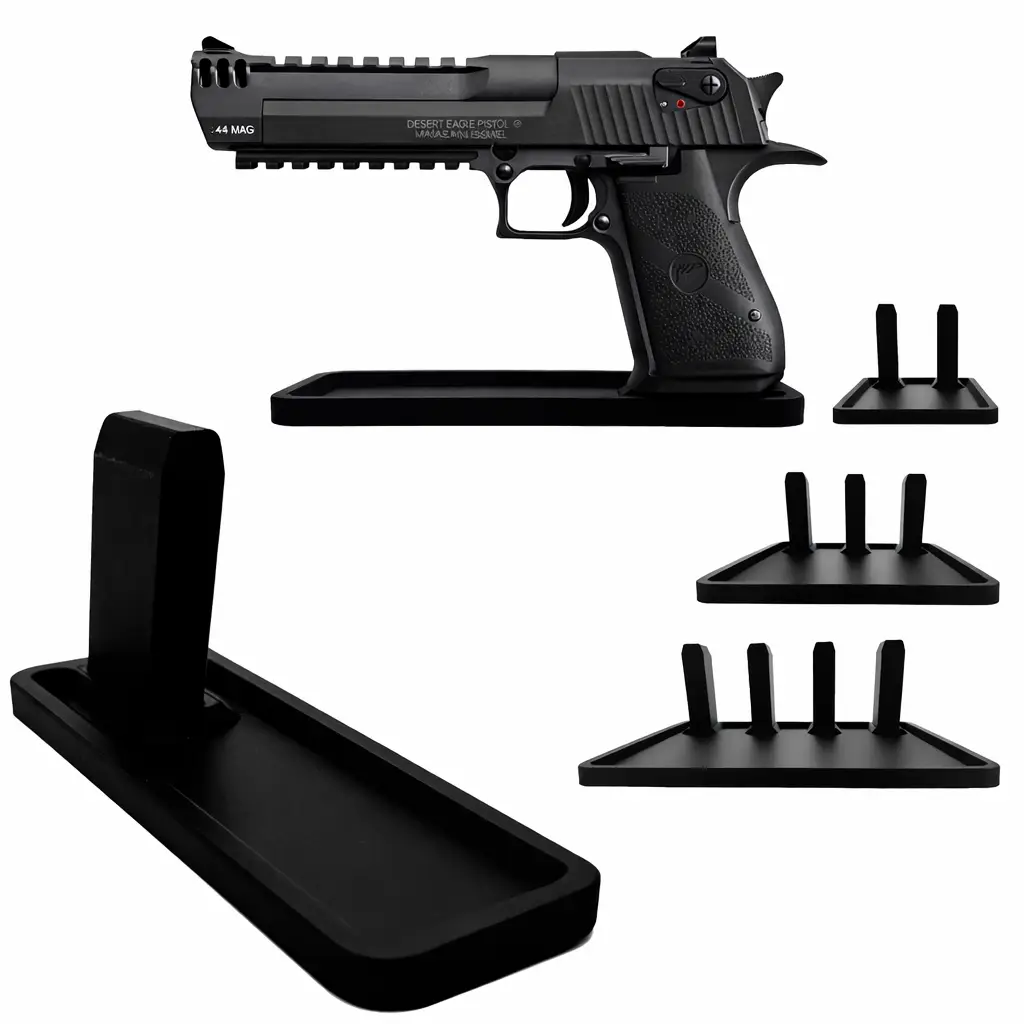
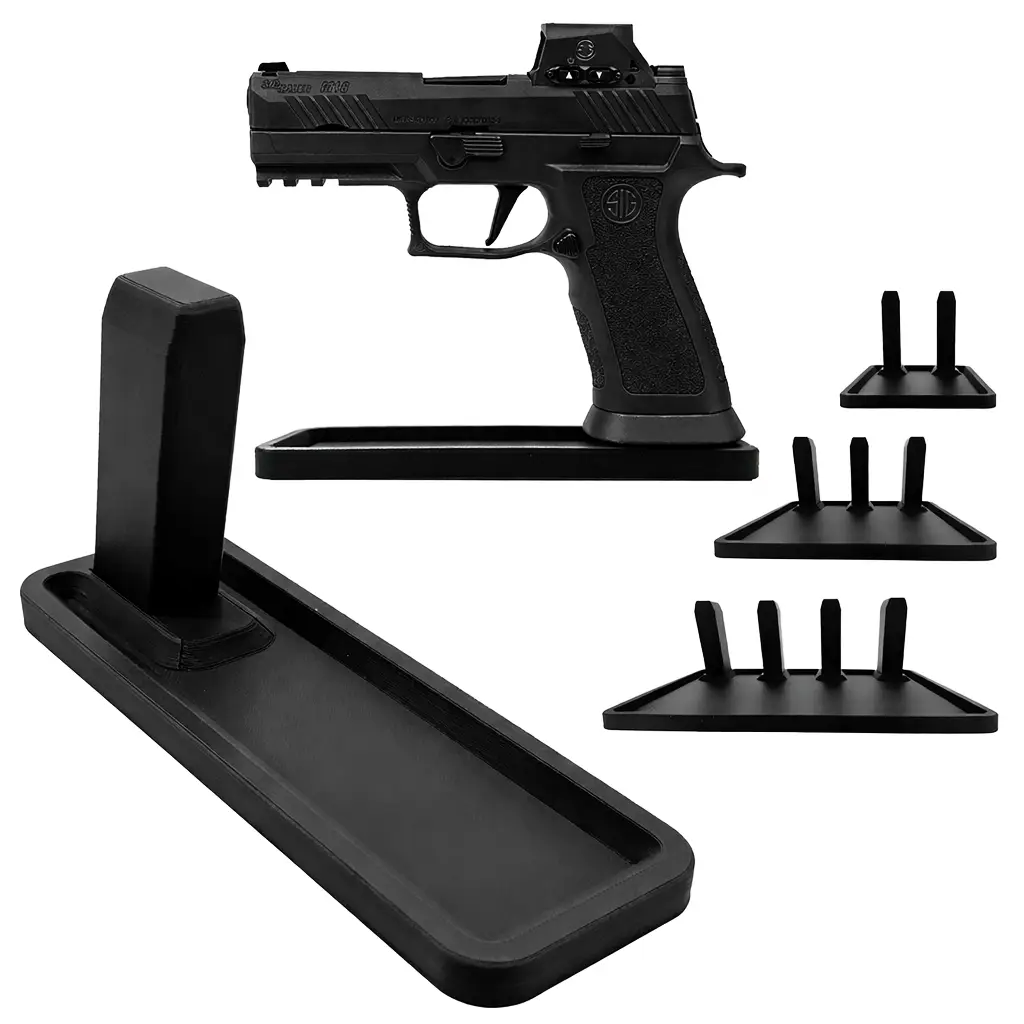
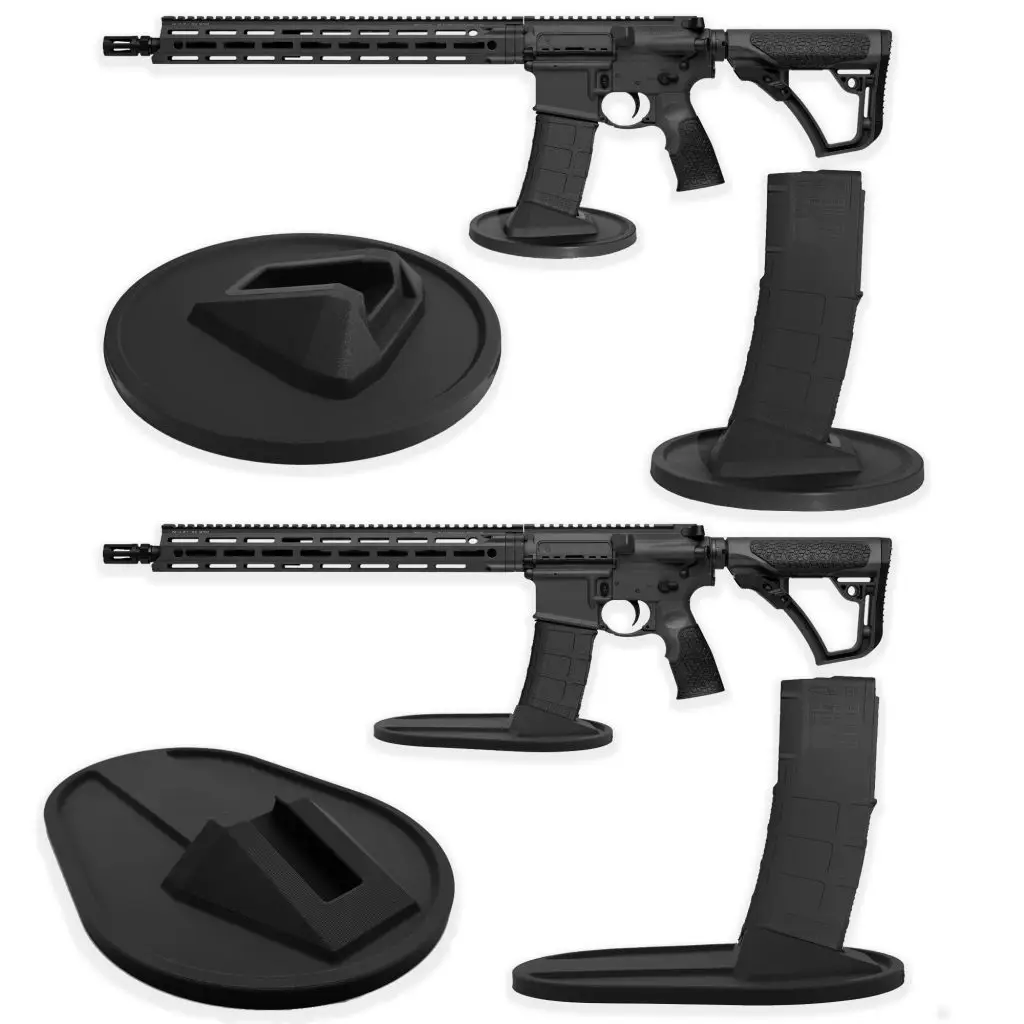
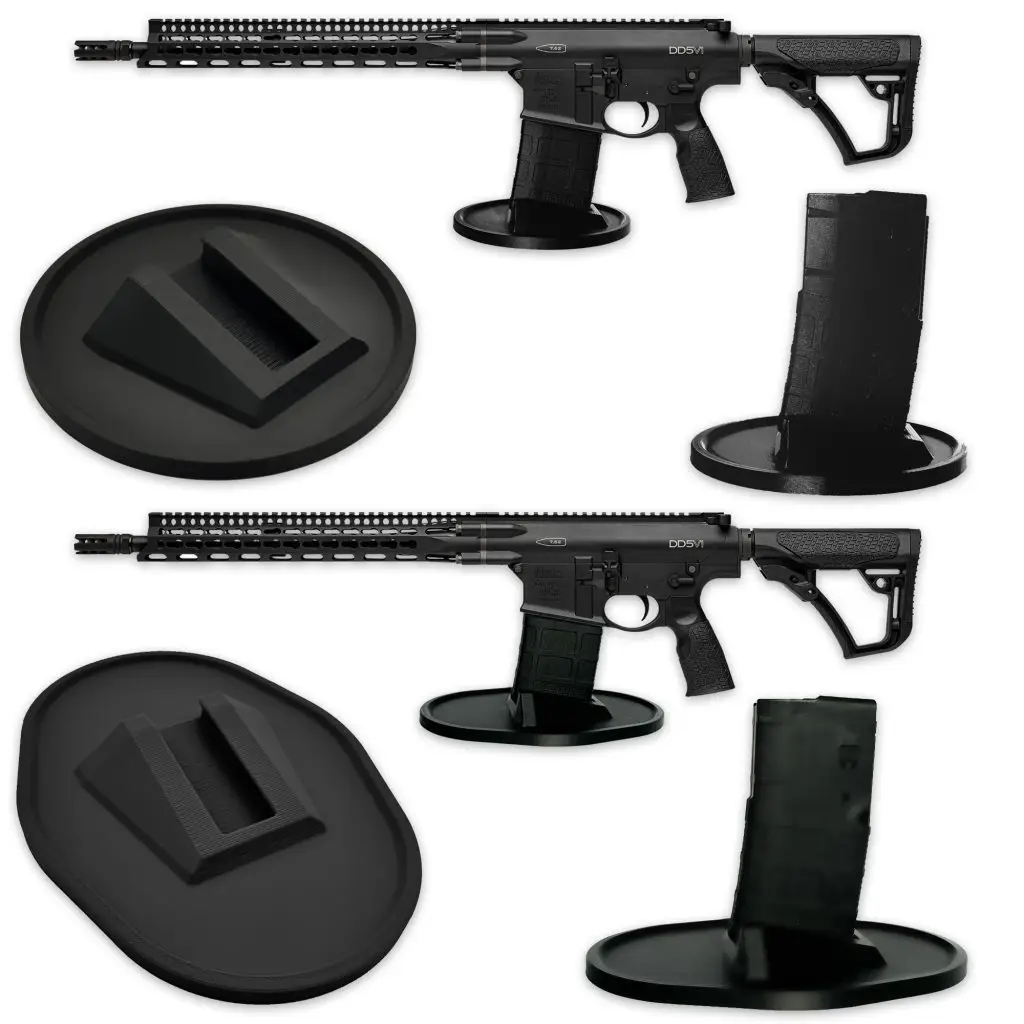
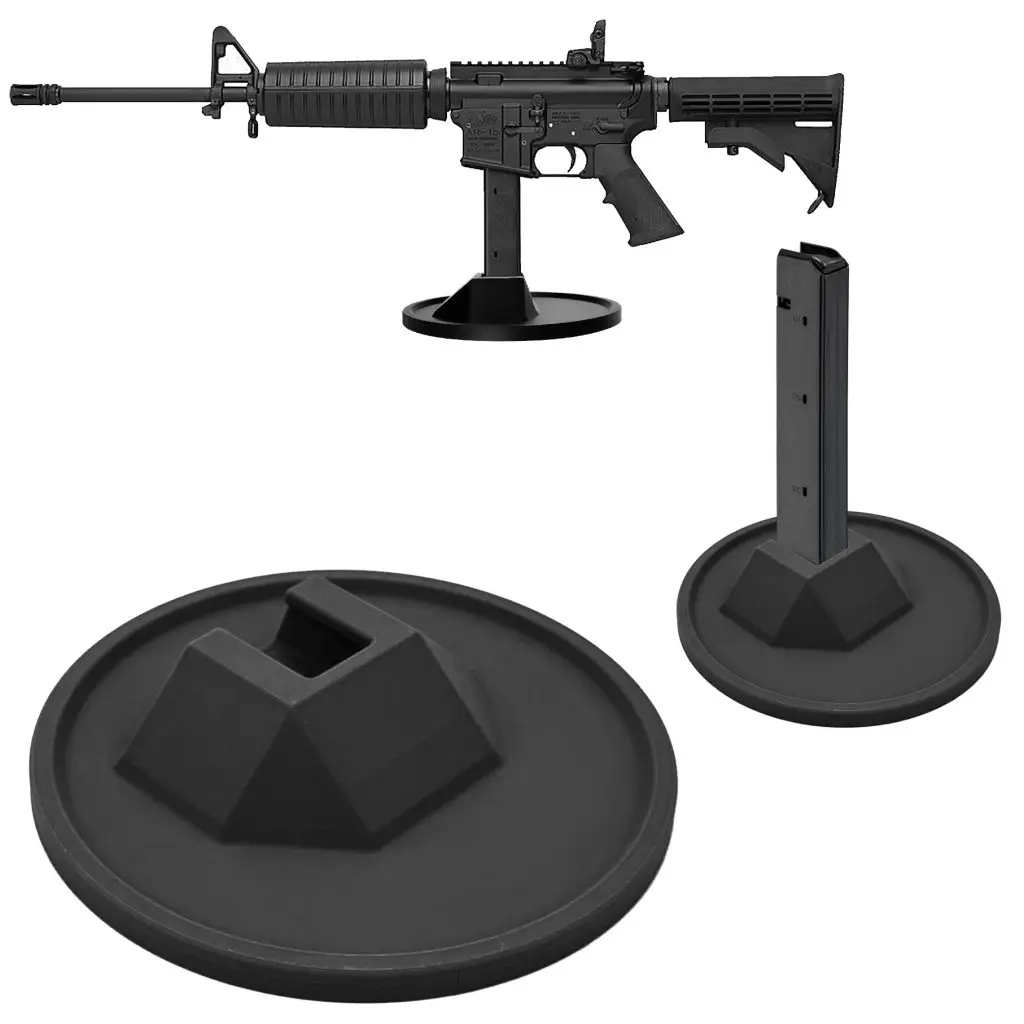
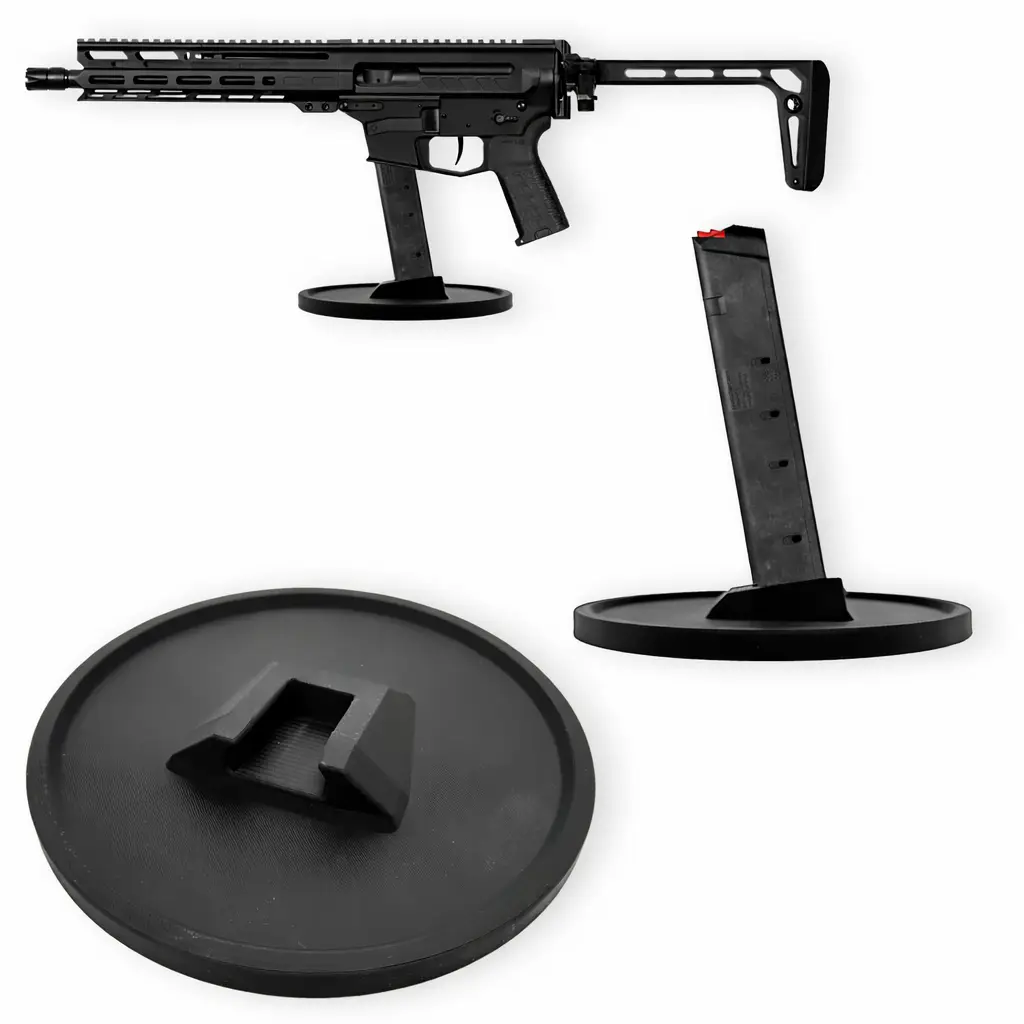
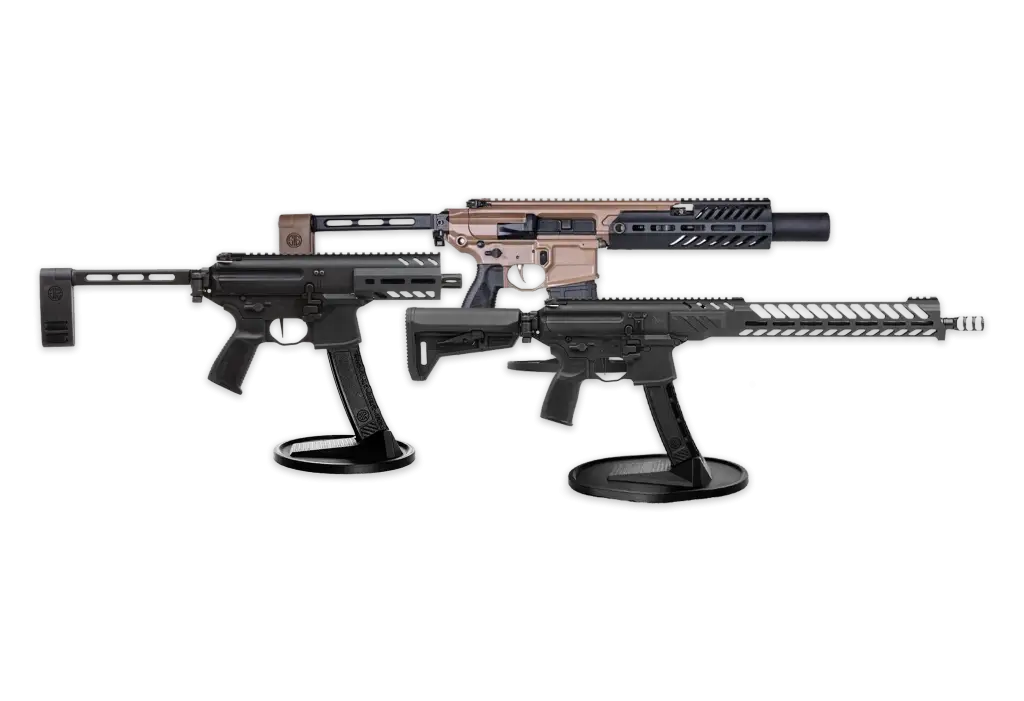
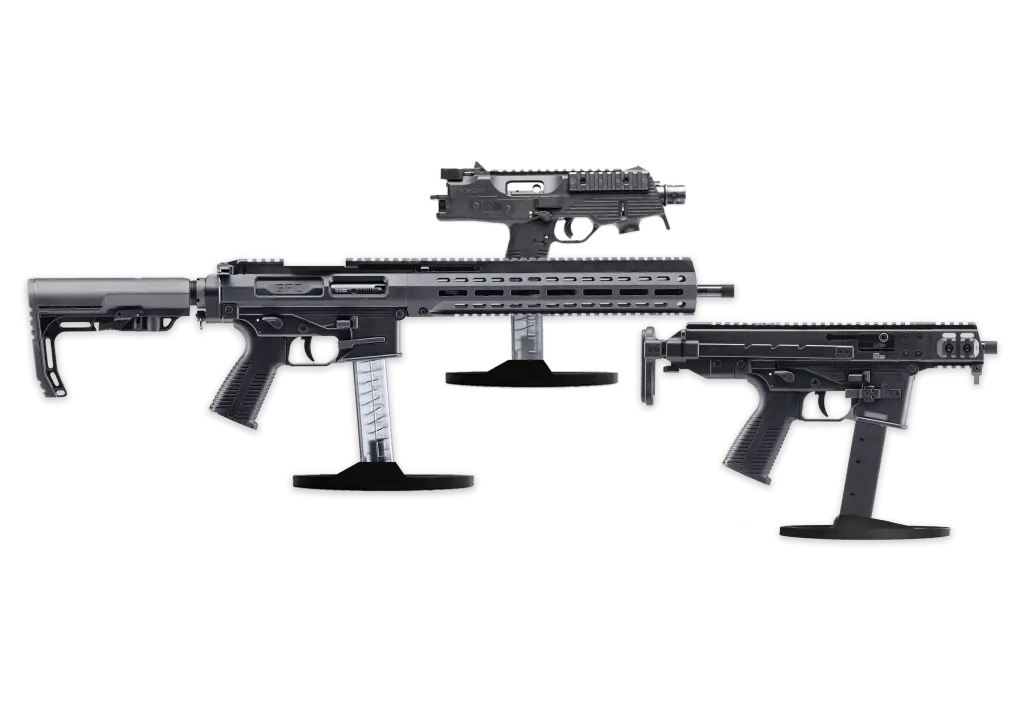
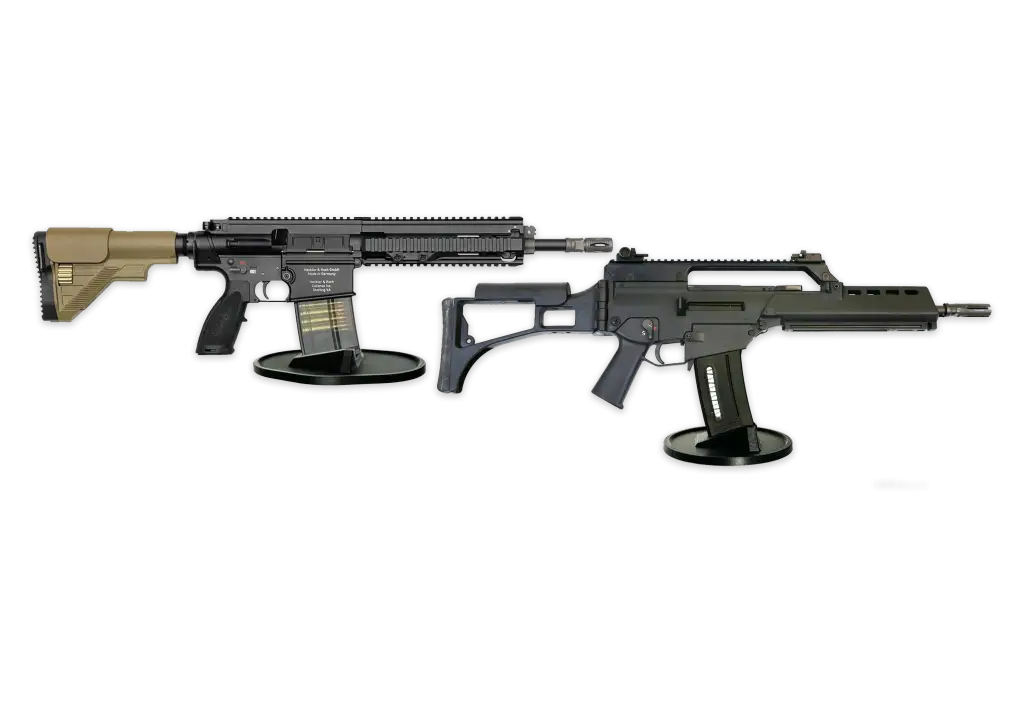
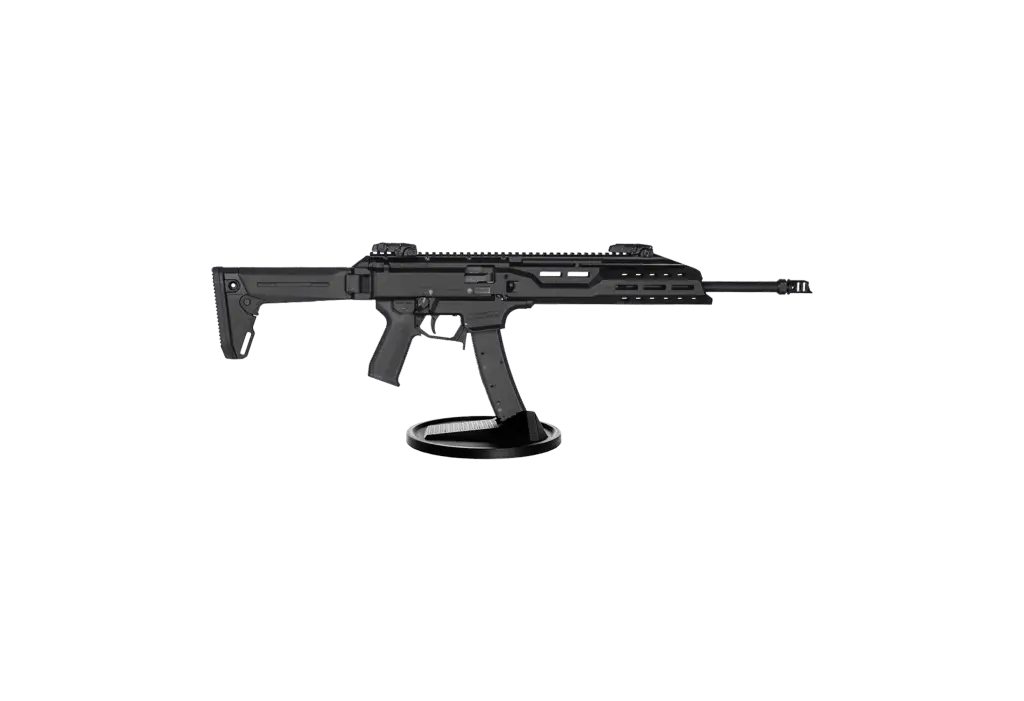
PMAG magazines have also become closely connected to the rifle-display market. Many GunCreed rifle stands use compatible magazines to support the rifle through the magazine well. For AR-15 owners, a compatible PMAG can provide the connection between the rifle and an AR15 gun stand, creating a clean presentation while keeping the rifle’s optic, stock, handguard, and receiver visible.
What Is a PMAG?
A PMAG is a detachable box magazine manufactured by Magpul. The name combines the company’s product branding with the magazine category and has become widely associated with durable plastic rifle magazines.
Although the AR-15 version is the best-known PMAG, the product family now includes magazines for several platforms and cartridges.
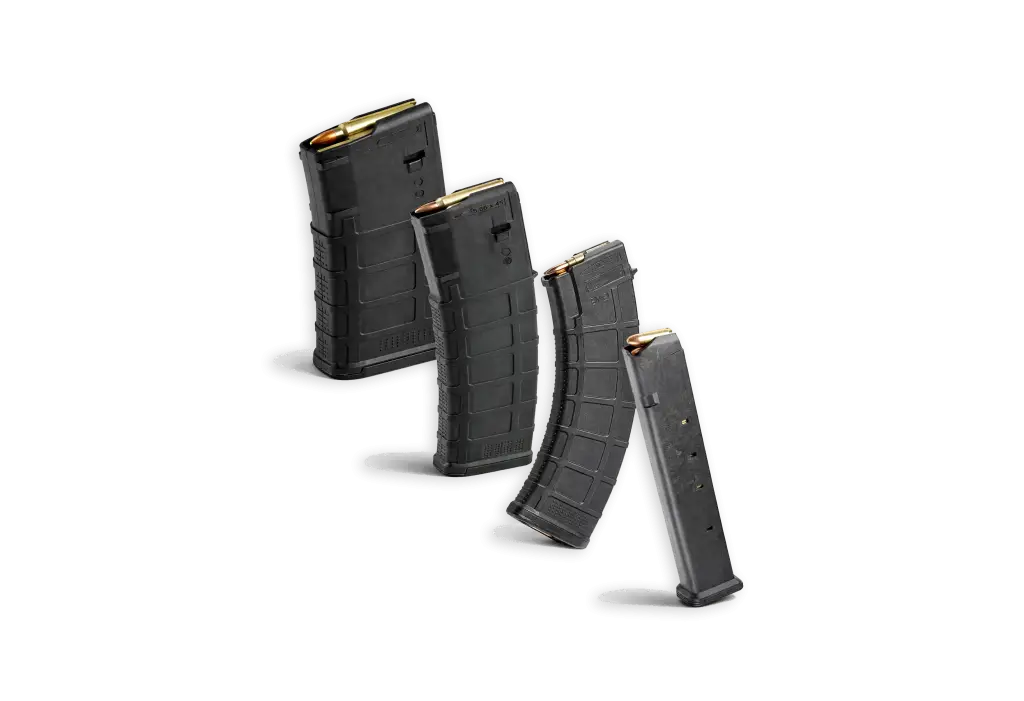
Common PMAG categories include:
- AR-15, M4, and M16-compatible magazines.
- .300 Blackout-specific magazines.
- AR-10 and SR25-pattern magazines.
- AK-pattern magazines.
- Glock-compatible magazines.
- Scorpion-compatible magazines.
- G36-compatible magazines.
- Various bolt-action rifle magazines.
- Drum magazines for selected platforms.
The exact material, geometry, follower, capacity, and compatibility vary by product.
The Rifle Magazine Market Before the PMAG
Before durable plastic magazines became common, AR-15 owners primarily relied on aluminum or steel magazines based on military-style designs.
Traditional metal magazines offered several advantages:
- Low weight.
- Thin exterior dimensions.
- Long-established production.
- Broad military and commercial use.
- Compatibility with standard magazine pouches.
However, metal magazine bodies could also be dented or deformed. Feed lips might become damaged, and surface finishes could wear over time. Owners often inspected metal magazines carefully for dents, spreading, corrosion, follower movement, and weakened springs.
The development of a dependable plastic magazine gave owners another option. Instead of stamping and joining thin metal, manufacturers could mold complex exterior shapes, reinforcing ribs, textured areas, and internal geometry into the magazine body.
The Original PMAG Arrives
The first PMAG entered the market in 2007. Its arrival coincided with rapid growth in AR-15 ownership, accessories, optics, and modular rifle components.
The original magazine stood out immediately because of its appearance. Instead of looking like a traditional aluminum magazine, it featured:
- A molded plastic body.
- Pronounced exterior ribs.
- Textured gripping areas.
- A removable floorplate.
- A self-leveling follower.
- A protective impact and dust cover on certain versions.
The design looked modern and matched the growing use of durable plastic stocks, grips, handguards, and rail accessories on AR-style rifles.
Because the PMAG entered the market during a major period of AR-platform growth, it quickly became visible in product photographs, online discussions, rifle builds, competitions, training environments, and private collections.
Why Plastic Magazine Construction Mattered
The use of durable plastic allowed Magpul to incorporate features directly into the magazine body that would have required separate manufacturing steps on a conventional metal design.
Potential advantages of molded construction include:
- Integrated reinforcing ribs.
- Consistent exterior texture.
- Corrosion resistance.
- Complex internal geometry.
- Color options.
- Impact-resistant design.
- Easy incorporation of witness windows.
Plastic magazines also feel different in the hand. Their thicker walls and textured bodies create a distinctive grip and appearance.
The material does not make every plastic magazine automatically superior to every metal magazine. Product quality, feed-lip geometry, spring strength, follower design, rifle compatibility, storage conditions, and manufacturing consistency all remain important.
The Development of PMAG Generations
Like many successful products, the PMAG did not remain unchanged. Magpul introduced updated generations as materials, compatibility requirements, manufacturing methods, and user feedback evolved.
The two generations most commonly encountered today are:
- PMAG GEN M2 MOE.
- PMAG GEN M3.
Older PMAG versions may also appear in collections, but GEN M2 and GEN M3 dominate the current commercial market.
PMAG GEN M2 MOE
The PMAG GEN M2 MOE became one of the most recognizable AR-15 magazines ever produced. It is widely available in standard and windowed configurations and remains popular among recreational owners, collectors, and rifle builders.
Common GEN M2 characteristics include:
- Durable plastic body.
- Textured gripping surface.
- Anti-tilt follower.
- Removable floorplate.
- Compatibility with many AR-15, M4, and M16-pattern rifles.
- Standard and windowed options.
- Competitive pricing.
The MOE designation refers to Magpul Original Equipment, a product category intended to provide functional designs at an accessible price.
GEN M2 magazines continue to be widely purchased because they are familiar, affordable, and compatible with many standard AR-15 platforms.
PMAG GEN M3
The GEN M3 represented the next major stage in PMAG development. Magpul revised the magazine body, material, internal geometry, over-insertion stop, floorplate, and other features to expand compatibility and improve durability.
Common GEN M3 features include:
- Updated material technology.
- Revised geometry.
- Over-insertion stop.
- Redesigned floorplate.
- Expanded compatibility with selected non-AR platforms.
- Dot-matrix panels for magazine identification.
- Windowed and non-windowed versions.
- Multiple capacities.
The dot-matrix panels are located near the lower portion of the magazine body. Owners can use a suitable marking tool to create letters, numbers, or other identifying marks.
This can be useful for distinguishing magazines assigned to different rifles, calibers, ammunition types, or collection groups.
GEN M2 vs GEN M3 PMAG
Both generations remain popular, but they are not identical.
| Feature | PMAG GEN M2 MOE | PMAG GEN M3 |
|---|---|---|
| Market position | Affordable classic design | Updated premium design |
| Primary platform | AR-15, M4, and M16 pattern | Expanded compatible-platform range |
| Identification panel | Limited | Dot-matrix marking panels |
| Over-insertion stop | Traditional body design | Integrated stop |
| Windowed option | Available | Available |
| Current availability | Very broad | Very broad |
The best choice depends on the rifle, budget, desired features, and manufacturer recommendations.
Windowed PMAG Magazines
Windowed PMAG models include transparent panels on both sides of the magazine body. These windows allow the owner to estimate how many cartridges remain.
A colored indicator connected to the spring moves as the magazine is loaded or unloaded. Number markings near the window provide an approximate visual reference.
Potential advantages include:
- Quick visual ammunition estimate.
- Distinctive appearance.
- Easy comparison between loaded magazines.
- Availability in GEN M2 and GEN M3 designs.
The window does not replace proper unloading and inspection procedures. It is an approximate visual indicator rather than a guarantee that a magazine or rifle is unloaded.
Non-Windowed PMAG Magazines
Non-windowed PMAG models use a solid magazine body. They are generally less expensive than comparable windowed versions and maintain a simple exterior appearance.
Reasons owners choose non-windowed magazines include:
- Lower price.
- Simple construction.
- Traditional PMAG appearance.
- Broad color and capacity availability.
- No need for a visual ammunition indicator.
Both styles use similar basic internal components within the same product generation.
PMAG Capacity Options
PMAG magazines are available in several capacities to meet different legal, sporting, collection, and platform requirements.
Common AR-15 PMAG capacities include:
- 10 rounds.
- 10/30 limited-capacity configuration.
- 20 rounds.
- 30 rounds.
- 40 rounds.
- 60-round drum configuration.
Capacity availability and legality vary by jurisdiction. Owners are responsible for understanding current federal, state, and local requirements.
10-Round PMAG
The 10-round PMAG offers a compact profile and is commonly used where magazine-capacity restrictions apply.
Its shorter body can also be useful for:
- Bench shooting.
- Supported shooting positions.
- Compact storage.
- Hunting where lawful.
- Collectors seeking multiple capacity options.
A shorter magazine creates less clearance beneath the rifle than a standard 30-round magazine.
PMAG 10/30
The PMAG 10/30 combines a full-size 30-round-style body with a permanently limited 10-round capacity in its factory configuration.
This design is intended to provide:
- Full-size handling.
- Compatibility with common pouches.
- Familiar 30-round appearance.
- Reduced legal capacity where permitted.
Legal requirements differ, and owners should verify whether a particular limited-capacity magazine complies with their jurisdiction.
20-Round PMAG
The 20-round PMAG offers a balance between the compact 10-round magazine and the standard 30-round design.
Many collectors appreciate the 20-round magazine because it resembles the shorter magazines associated with early AR-15 and AR-10-style rifles.
Potential advantages include:
- Compact profile.
- Improved bench clearance.
- Traditional appearance.
- Reduced weight compared with a loaded 30-round magazine.
30-Round PMAG
The 30-round PMAG is the most recognizable version in the product family. It has become a standard accessory for many AR-15 owners and is available in GEN M2, GEN M3, windowed, non-windowed, and caliber-specific forms.
Its popularity comes from:
- Common AR-platform capacity.
- Broad rifle compatibility.
- Widespread retail availability.
- Large accessory ecosystem.
- Compatibility with many magazine pouches.
- Use with magazine-based rifle stands.
Many GunCreed AR-15 rifle stands are designed around compatible 30-round magazine patterns. A PMAG can connect the rifle to a stable gun stand while preserving the recognizable magazine profile.
40-Round PMAG
The 40-round PMAG extends below the rifle farther than a 30-round magazine and provides additional capacity where lawful.
Owners should consider:
- Increased loaded weight.
- Additional overall length.
- Pouch compatibility.
- Bench clearance.
- Applicable capacity laws.
The longer body creates a distinctive appearance that some collectors prefer for specialized rifle configurations.
PMAG D-60 Drum
The PMAG D-60 is a 60-round drum magazine designed for compatible 5.56 NATO and .223 Remington AR-pattern rifles.
Unlike two magazines connected together, the D-60 uses one enclosed drum body with a single feed tower.
Characteristics include:
- 60-round capacity where lawful.
- Compact drum geometry compared with some extended magazines.
- Loading lever.
- Rear ammunition-level window.
- Specialized internal mechanism.
Drum magazines are more mechanically complex than conventional box magazines and should be maintained according to the manufacturer’s instructions.
PMAG for .300 Blackout
Magpul offers dedicated .300 Blackout PMAG magazines. Although .300 Blackout can often use standard 5.56-pattern magazines, projectile shapes and overall cartridge profiles can differ.
Dedicated .300 Blackout PMAG models are designed with internal geometry optimized for the cartridge.
Benefits may include:
- Clear caliber identification.
- Distinctive exterior texture.
- Internal geometry intended for .300 Blackout.
- Reduced risk of confusing the magazine with a 5.56 model.
- 20- and 30-round options.
Separating and clearly identifying .300 Blackout and 5.56 magazines is extremely important because the cartridges must not be fired through the wrong barrel.
Large-Frame LR/SR PMAG Magazines
Magpul also produces PMAG magazines for rifles using the SR25 and M110-style magazine pattern. These are commonly associated with AR-10-style rifles chambered for .308 Winchester or 7.62x51mm NATO.
Common LR/SR capacities include:
- 10 rounds.
- 20 rounds.
- 25 rounds.
- 50-round drum models.
Large-frame PMAG magazines are physically wider and longer than standard AR-15 magazines. They cannot be inserted into a standard AR-15 magazine well.
Because large-frame rifles may use different magazine patterns, owners should verify that the rifle is compatible with SR25-style magazines before purchasing an AR10 gun stand or replacement magazine.
PMAG Compatibility Beyond the AR-15
The GEN M3 design expanded compatibility with selected rifles beyond traditional AR-15, M4, and M16-pattern platforms.
Depending on the model, PMAG magazines may work with compatible rifles such as:
- HK416 and MR556 variants.
- FN SCAR 16.
- SA80-related platforms.
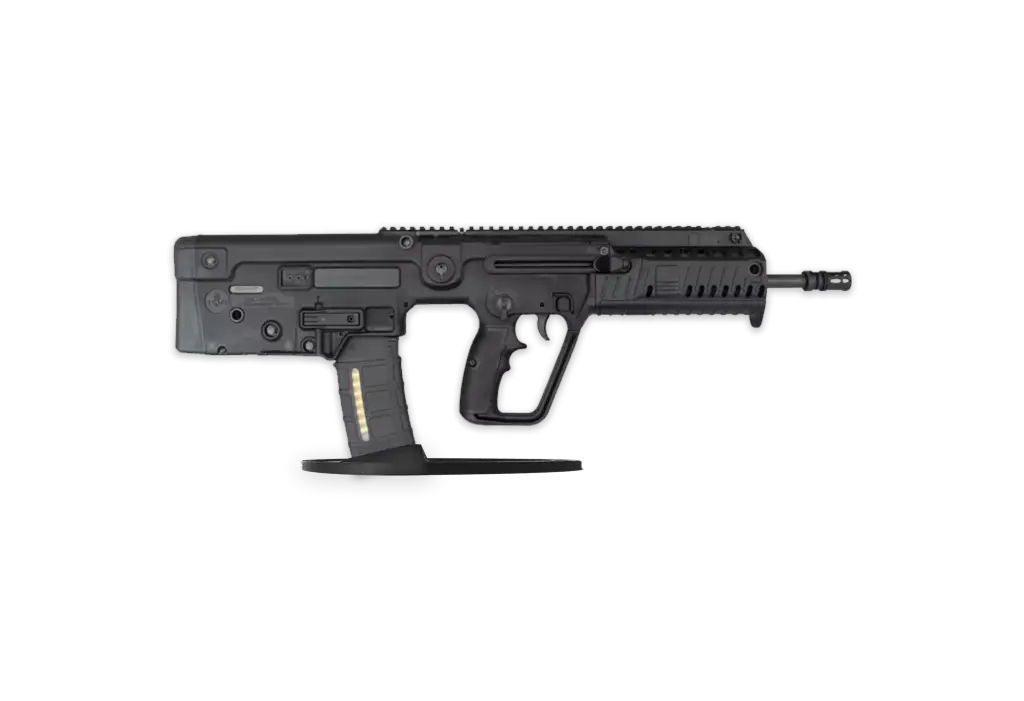
- IWI Tavor rifles.
- Other rifles using STANAG-pattern magazines.
Compatibility should always be confirmed with the rifle and magazine manufacturers. A rifle accepting a STANAG-style magazine does not guarantee that every magazine generation or floorplate shape will fit correctly.
Why PMAG Magazines Became So Popular
The PMAG achieved popularity because several advantages appeared at the right time in the AR-15 market.
Growth of AR-15 Ownership
The AR-15 market expanded rapidly during the same period that PMAG magazines became widely available.
Distinctive Appearance
The ribbed body and molded texture made the PMAG immediately recognizable.
Durable Plastic Construction
The design resisted corrosion and incorporated reinforcement into the molded body.
Broad Availability
PMAG magazines became available through major retailers, independent dealers, online sellers, and factory rifle packages.
Multiple Capacities
Owners could choose compact, standard, extended, and drum models.
Caliber Expansion
Dedicated .300 Blackout and large-frame magazines expanded the PMAG family beyond standard 5.56 rifles.
Factory Rifle Inclusion
Many rifle manufacturers included PMAG magazines with new rifles, exposing more buyers to the product.
Accessory Support
Ranger plates, dust covers, couplers, pouches, loaders, and magazine-compatible stands created a larger supporting ecosystem.
Military and Government Recognition
PMAG GEN M3 magazines have received National Stock Numbers for government procurement, and several PMAG models appear in Magpul’s official government and military product listings.
This recognition increased the magazine’s visibility beyond the commercial sporting market.
Government use does not mean that every PMAG model is appropriate for every rifle. Specific product versions, colors, calibers, and compatibility requirements still matter.
PMAG Colors
PMAG magazines have been offered in several colors over the years.
Common and historical colors include:
- Black.
- Medium coyote tan.
- Flat dark earth variations.
- Olive drab green.
- Sand or light-colored versions.
- Special and limited colors.
Not every color is available in every generation or capacity.
Color can help owners organize magazines by rifle, caliber, or ammunition type. However, color should never replace checking the caliber markings on the rifle, barrel, magazine, and ammunition.
PMAG Identification Features
GEN M3 magazines include dot-matrix panels that can be marked for identification.
Owners may use identification systems based on:
- Caliber.
- Rifle assignment.
- Ammunition type.
- Magazine number.
- Purchase group.
- Testing status.
A numbered magazine system can help owners identify a magazine that repeatedly causes feeding problems so it can be inspected or removed from service.
PMAG Feed Lips
The feed lips are molded into the upper portion of the magazine body. They retain cartridges and position them for feeding.
Owners should inspect feed lips for:
- Cracks.
- Chips.
- Deformation.
- Heat damage.
- Unusual spreading.
- Impact damage.
A magazine with visibly damaged feed lips should be removed from use and evaluated according to the manufacturer’s recommendations.
Anti-Tilt Followers
The follower sits above the magazine spring and supports the cartridge stack.
PMAG followers are designed to move smoothly while resisting excessive tilting within the magazine body.
The follower should move freely without binding. Dirt, damaged internal surfaces, an incorrect spring, or foreign material can interfere with movement.
Floorplates and Ranger Plates
The floorplate closes the bottom of the magazine and retains the spring and follower assembly.
Magpul also offers Ranger Plates for selected PMAG models. These replace the standard floorplate with a looped design intended to provide an additional gripping surface.
Before purchasing a replacement floorplate or Ranger Plate, owners should verify:
- Magazine generation.
- Magazine family.
- Caliber.
- Capacity.
- Manufacturer compatibility.
GEN M2, GEN M3, and LR/SR magazines may use different accessories.
Impact and Dust Covers
Some PMAG models include or support impact and dust covers. These covers attach over the top of the magazine when it is not inserted into the rifle.
The cover can help protect the upper portion of the magazine from dirt and debris during storage or transportation.
Cover compatibility varies between magazine generations. Owners should use the model specified for their magazine.
PMAG Maintenance
PMAG magazines require relatively little routine maintenance, but they should still be inspected and cleaned when necessary.
General maintenance may include:
- Inspecting the body for cracks.
- Checking the feed lips.
- Examining the floorplate.
- Checking follower movement.
- Inspecting the spring.
- Removing dirt and debris.
- Following Magpul’s product instructions.
Magazines should not be exposed unnecessarily to damaging chemicals, excessive heat, or storage conditions outside the manufacturer’s recommendations.
How to Clean a PMAG
A PMAG can generally be disassembled by removing the floorplate according to the manufacturer’s instructions.
The internal components commonly include:
- Magazine body.
- Follower.
- Spring.
- Spring retainer or locking plate.
- Floorplate.
Owners should avoid stretching, cutting, bending, or modifying the magazine spring.
Harsh solvents and heavy lubrication should generally be avoided unless specifically approved by the manufacturer. Excess oil inside a magazine can attract dust and debris.
Common PMAG Problems
Even a quality magazine can become worn or damaged.
Potential issues include:
- Cracked feed lips.
- Damaged magazine body.
- Loose or broken floorplate.
- Weak or damaged spring.
- Follower binding.
- Debris inside the body.
- Compatibility issues with a specific rifle.
When a rifle experiences repeated feeding problems with one magazine but functions correctly with others, that magazine should be marked and inspected.
PMAG vs Metal AR-15 Magazines
PMAG and metal magazines each have advantages.
| Feature | PMAG | Metal Magazine |
|---|---|---|
| Primary body material | Durable plastic | Aluminum or steel |
| Corrosion resistance | Body does not rust | Depends on metal and finish |
| Exterior texture | Molded ribs and texture | Stamped or smooth body |
| Body thickness | Generally thicker | Generally thinner |
| Dent behavior | May crack under severe damage | May dent or bend |
| Windowed versions | Widely available | Available from selected brands |
| Color options | Multiple molded colors | Primarily finish-based colors |
The best magazine is one that is compatible with the rifle, functions reliably, and is maintained properly.
PMAG Magazines and Rifle Collecting
PMAG magazines have become collectible in their own right.
Collectors may seek:
- Early-generation PMAG models.
- Discontinued colors.
- Limited-edition magazines.
- Manufacturer-marked versions.
- Windowed and non-windowed examples.
- Different capacities.
- Caliber-specific models.
- Government-contract variations.
PMAG generations can also help visually identify the period in which a rifle configuration became popular.
PMAG Magazines and Rifle Display
Magazine-based rifle stands use the magazine as the connection between the rifle and the base.
This display method can provide:
- A clean upright presentation.
- Minimal contact with the rifle’s exterior finish.
- Visibility of the optic and handguard.
- Easy placement and removal.
- Consistent spacing between rifles.
- Professional product photography.
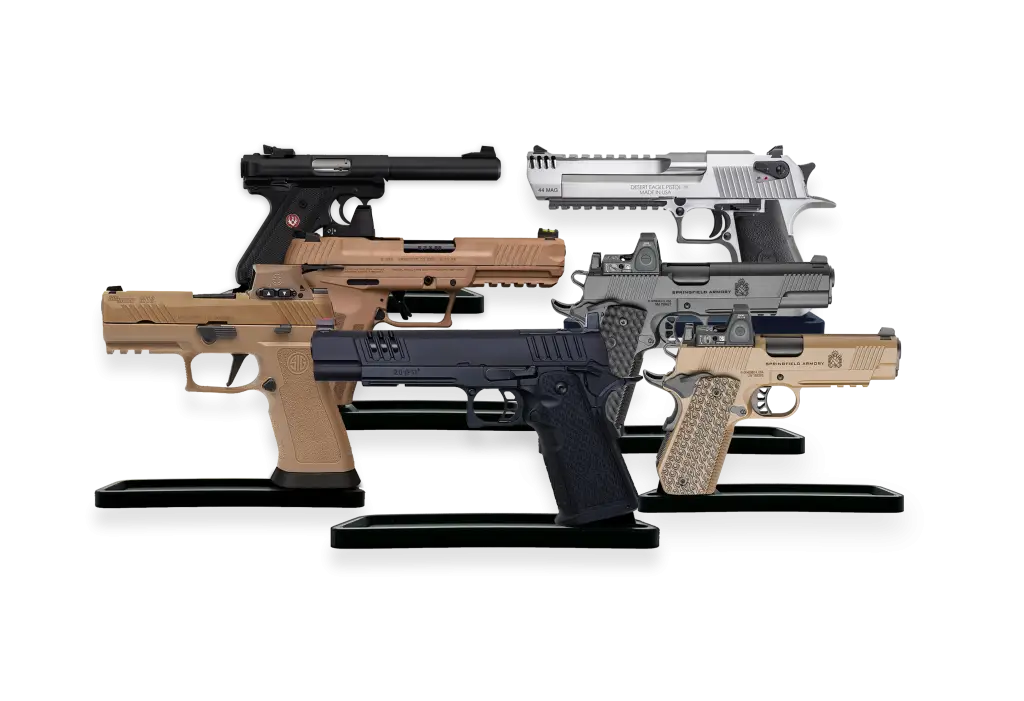
The magazine must match the rifle and stand. A standard AR-15 PMAG differs from an LR/SR PMAG, Glock-pattern magazine, Colt-style 9mm magazine, or other platform-specific design.
Why GunCreed Stands Pair Well with PMAG Magazines
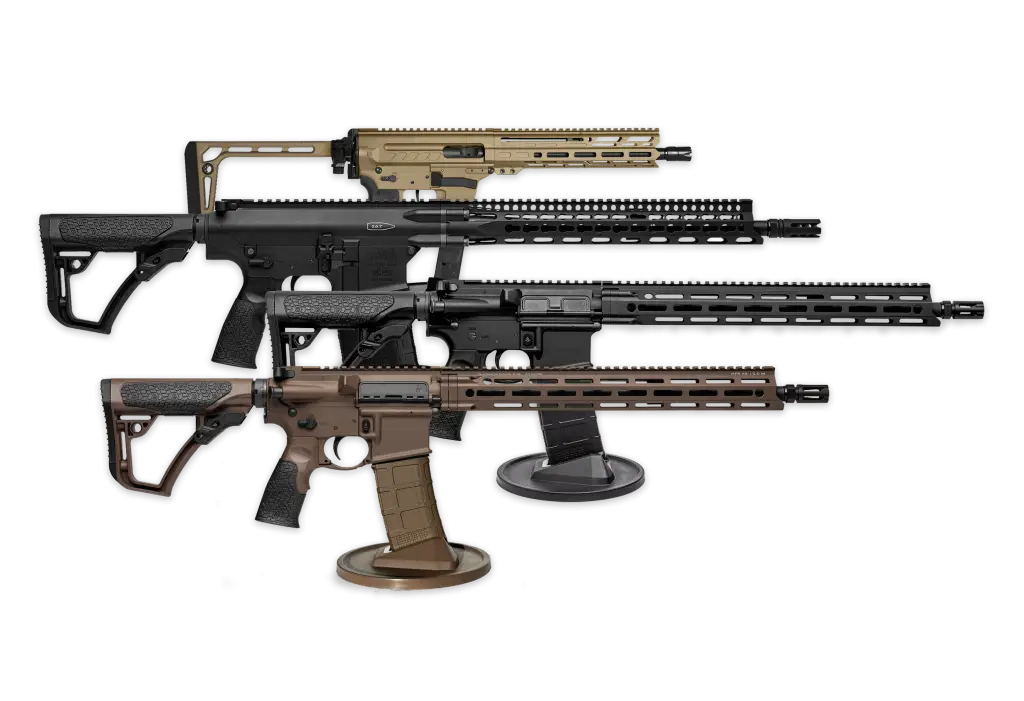
Many GunCreed rifle stands are designed around widely used magazine patterns, including several Magpul PMAG models.
A compatible magazine connects to the stand while the rifle attaches through the magazine well. This leaves major exterior components unobstructed.
Owners can showcase:
- Upper and lower receivers.
- Optics.
- Free-float handguards.
- Stocks.
- Pistol grips.
- Barrels and muzzle devices.
- Custom colors.
- PMAG magazine profiles.
A compatible gun stand is especially useful for a collection containing rifles from several manufacturers that all use the same magazine pattern.
Choosing the Correct PMAG for a Rifle Stand
Before purchasing a PMAG-compatible display stand, confirm:
- The rifle platform.
- The magazine pattern.
- The caliber.
- The PMAG generation.
- The magazine capacity.
- The stand’s listed compatibility.
A stand designed for a 30-round AR/M4 PMAG may not fit a 10-round PMAG, LR/SR magazine, AK magazine, or pistol-caliber magazine.
Product compatibility should always be determined by the exact magazine model rather than the PMAG name alone.
Common PMAG Buying Mistakes
Buying the Wrong Platform
An AR-15 PMAG cannot replace a large-frame LR/SR magazine or a pistol-caliber magazine.
Confusing GEN M2 and GEN M3 Accessories
Floorplates, dust covers, and Ranger Plates may be generation-specific.
Ignoring Caliber Identification
Using similar magazines for 5.56 NATO and .300 Blackout requires careful labeling and organization.
Assuming Every PMAG Fits Every Rifle
Compatibility varies between platforms and magazine generations.
Ignoring Capacity Laws
Magazine-capacity regulations differ by jurisdiction and may change.
Buying a Stand Without Checking the Magazine Model
Magazine-based stands must match the correct magazine dimensions and pattern.
PMAG Frequently Asked Questions
What Does PMAG Mean?
PMAG is Magpul’s product name for its family of durable plastic magazines.
When Was the PMAG Introduced?
The original PMAG was introduced in 2007.
What Is the Difference Between GEN M2 and GEN M3?
GEN M3 includes updated materials, revised geometry, an over-insertion stop, marking panels, and expanded compatibility with selected platforms.
Are Windowed PMAGs Better?
Windowed models provide an approximate ammunition-level indicator. Non-windowed versions remain popular because of their simpler design and lower price.
Can .300 Blackout Use a Standard PMAG?
Many .300 Blackout rifles can use standard AR-pattern magazines, but dedicated .300 Blackout PMAG models include caliber-specific internal geometry and clearer identification.
Do AR-10 Rifles Use Standard AR-15 PMAGs?
No. Compatible large-frame rifles commonly use wider LR/SR-pattern PMAG magazines.
Can Every PMAG Fit a GunCreed Stand?
No. The stand must be designed for the exact magazine pattern and compatible dimensions.
Do PMAG Magazines Require Lubrication?
Owners should follow Magpul’s instructions. Excess lubrication inside the magazine can attract dirt and debris.
Why Are PMAG Magazines So Popular?
Their durable construction, recognizable design, broad availability, multiple capacities, and compatibility with many popular rifle platforms contributed to their widespread use.
Final Thoughts
The PMAG helped reshape expectations for modern rifle magazines. When the original model appeared in 2007, most AR-15 owners were accustomed to traditional metal magazines. Magpul introduced a distinctive alternative featuring a durable plastic body, integrated texture, reinforced geometry, and an anti-tilt follower.
The product continued to evolve through GEN M2 and GEN M3 designs. Windowed versions added approximate ammunition-level indicators, while updated materials and geometry improved compatibility and durability. Additional capacities gave owners compact, standard, extended, and drum options.
The PMAG family also expanded beyond 5.56 NATO. Dedicated .300 Blackout magazines, LR/SR large-frame models, AK magazines, pistol magazines, and other platform-specific designs transformed PMAG from one AR-15 accessory into a broad magazine product family.
Its popularity is connected to timing as well as design. The PMAG entered the market during a major expansion of AR-15 ownership and quickly became visible on factory rifles, custom builds, retail shelves, ranges, and collector displays.
Owners should still verify exact compatibility. The PMAG name now applies to many magazines that are not interchangeable. Generation, capacity, caliber, rifle platform, and magazine pattern all matter.
For GunCreed customers, compatible PMAG models offer more than ammunition storage. They can also provide the connection between the rifle and a magazine-based display stand.
A properly matched AR15 gun stand can showcase a 5.56 or compatible .300 Blackout rifle using the appropriate magazine pattern. Larger-frame collections require an AR10 gun stand designed around the correct LR/SR magazine.
By matching the rifle, magazine, and stand correctly, collectors can create a clean display that highlights both the evolution of the PMAG and the modular design of the modern sporting rifle.