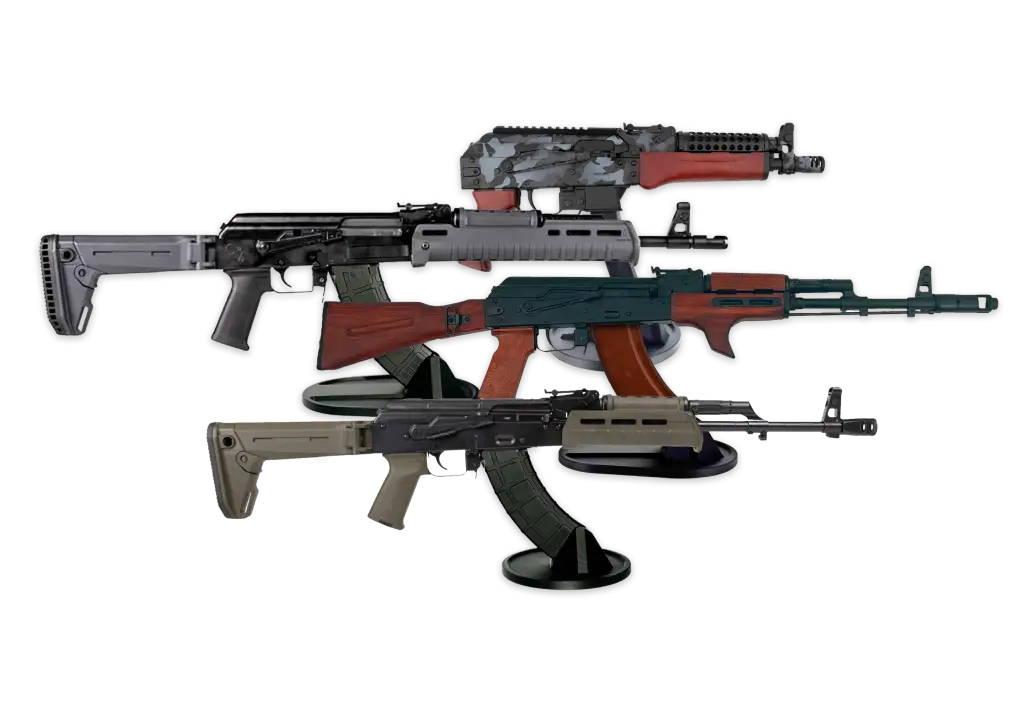
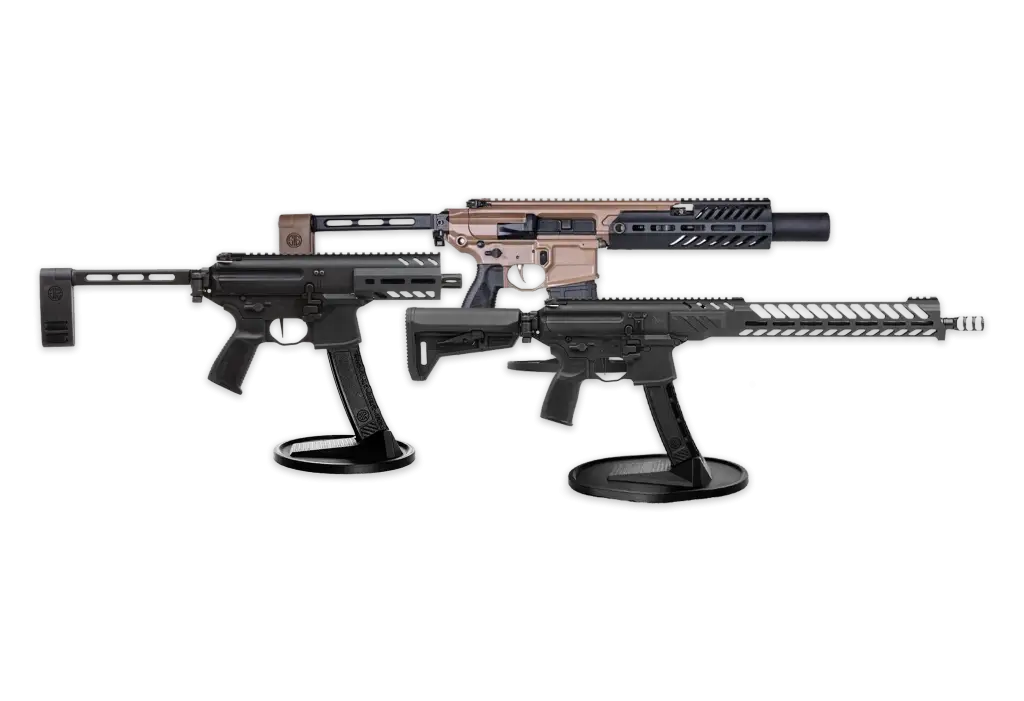
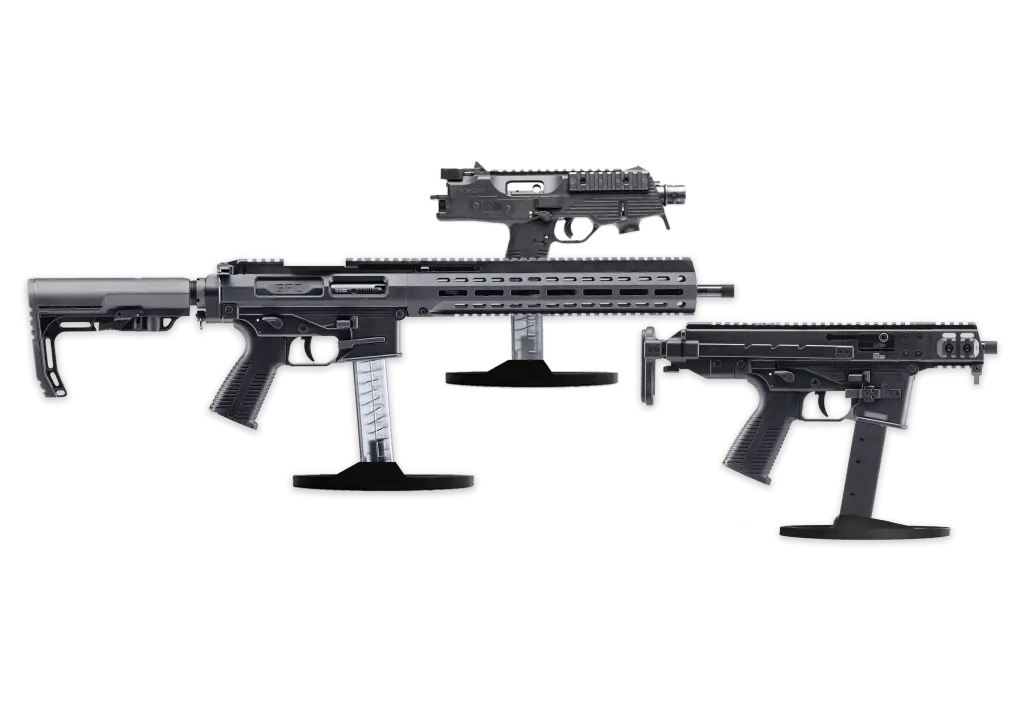
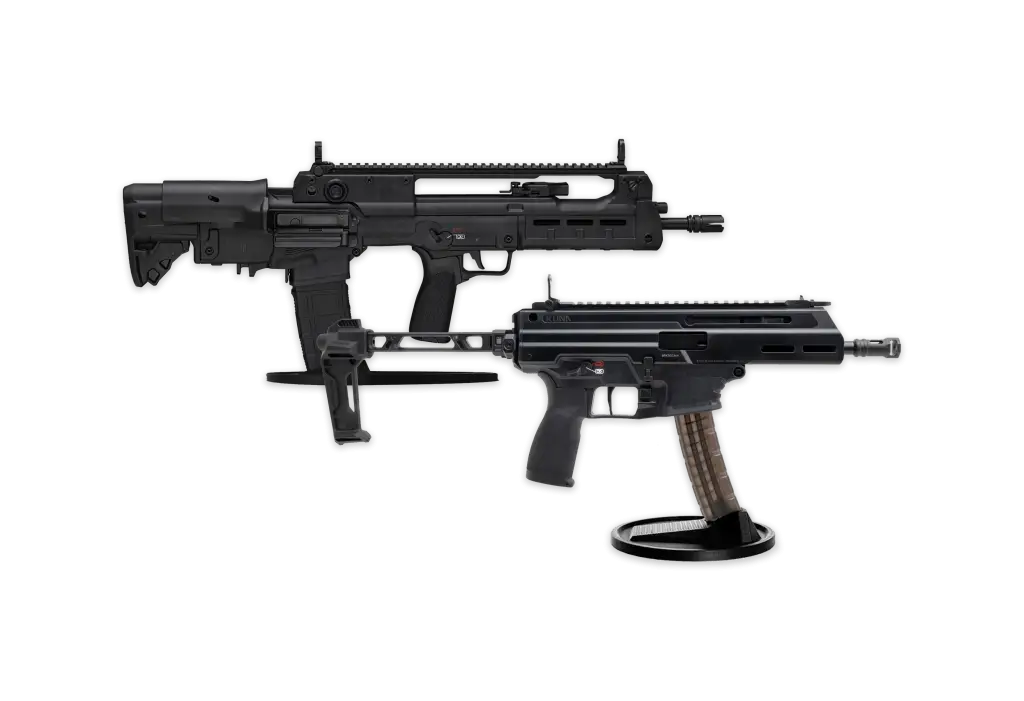








The AR-15 is most closely associated with 5.56 NATO and .223 Remington, but the platform can support a much wider range of cartridges. Over time, manufacturers have adapted the AR-15 for compact pistol calibers, specialized hunting cartridges, long-range options, rimfire ammunition, and large-bore chamberings.
This caliber flexibility is one of the biggest reasons the AR-15 remains so popular. Owners can retain the platform’s familiar controls, modular receivers, adjustable furniture, accessory-ready handguards, and broad aftermarket support while selecting a cartridge that better matches a particular lawful sporting application.
Changing caliber is not always as simple as installing a different barrel. Depending on the cartridge, a conversion may also require a compatible bolt, bolt carrier group, magazine, buffer system, gas system, upper receiver, or dedicated lower receiver. Some cartridges work within a standard AR-15 receiver, while others require specialized components.
Understanding the most common AR-15 calibers helps owners compare factory rifles and complete upper assemblies while avoiding compatibility mistakes. It also explains why two rifles that look nearly identical may use completely different magazines, bolts, barrels, and ammunition.
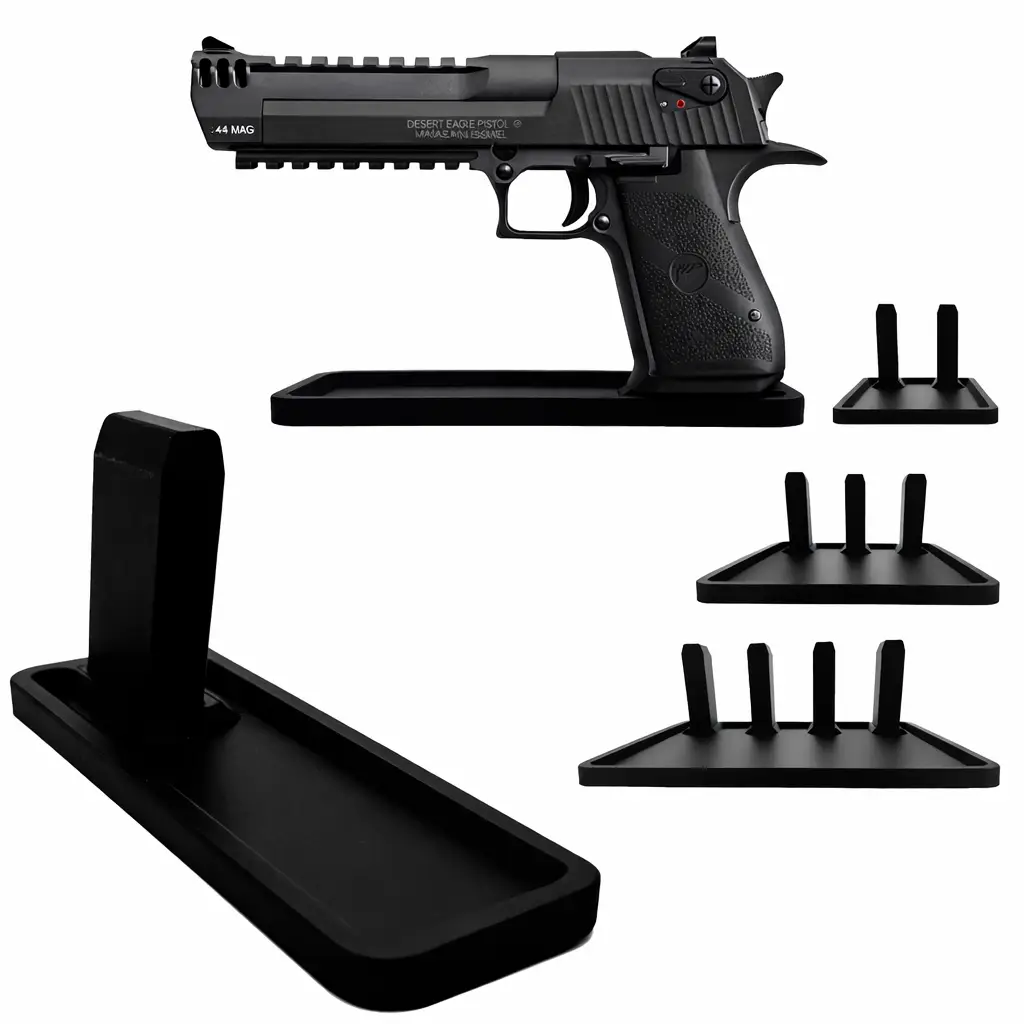
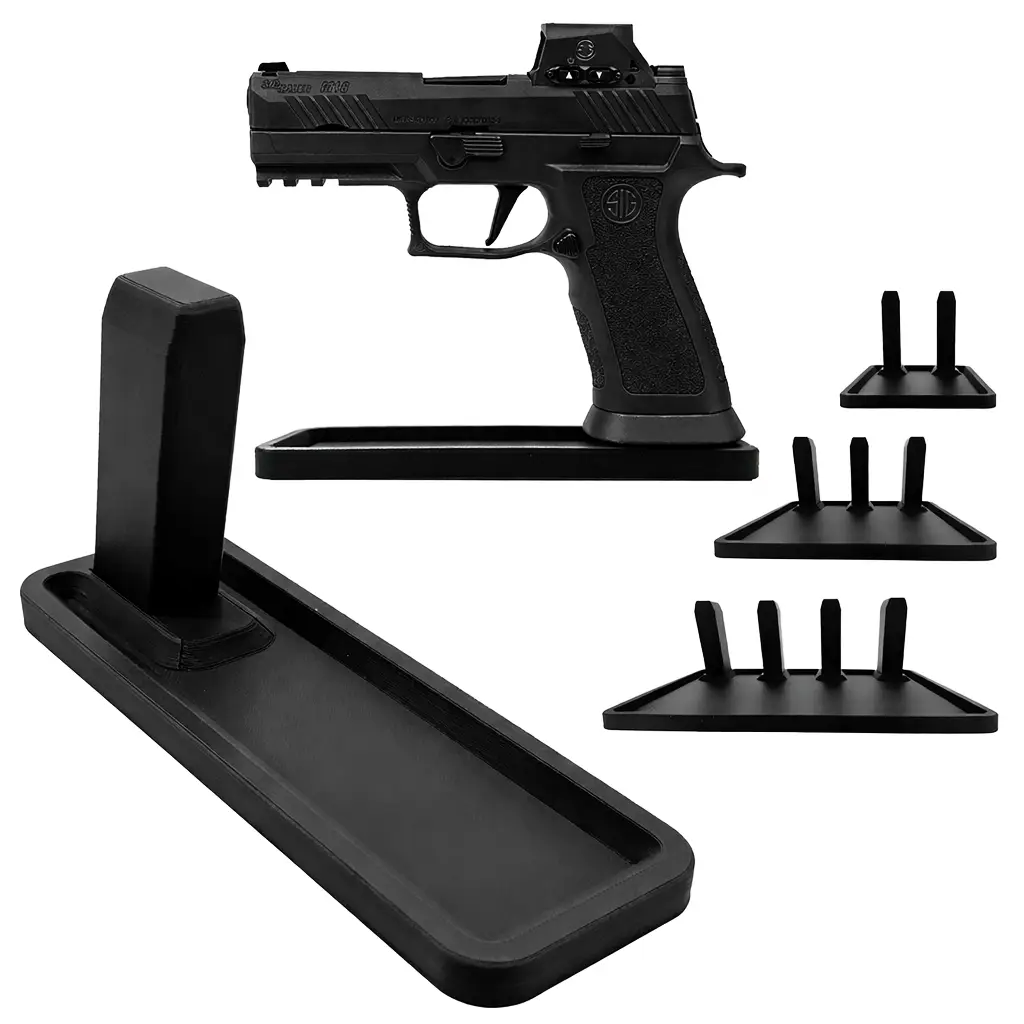
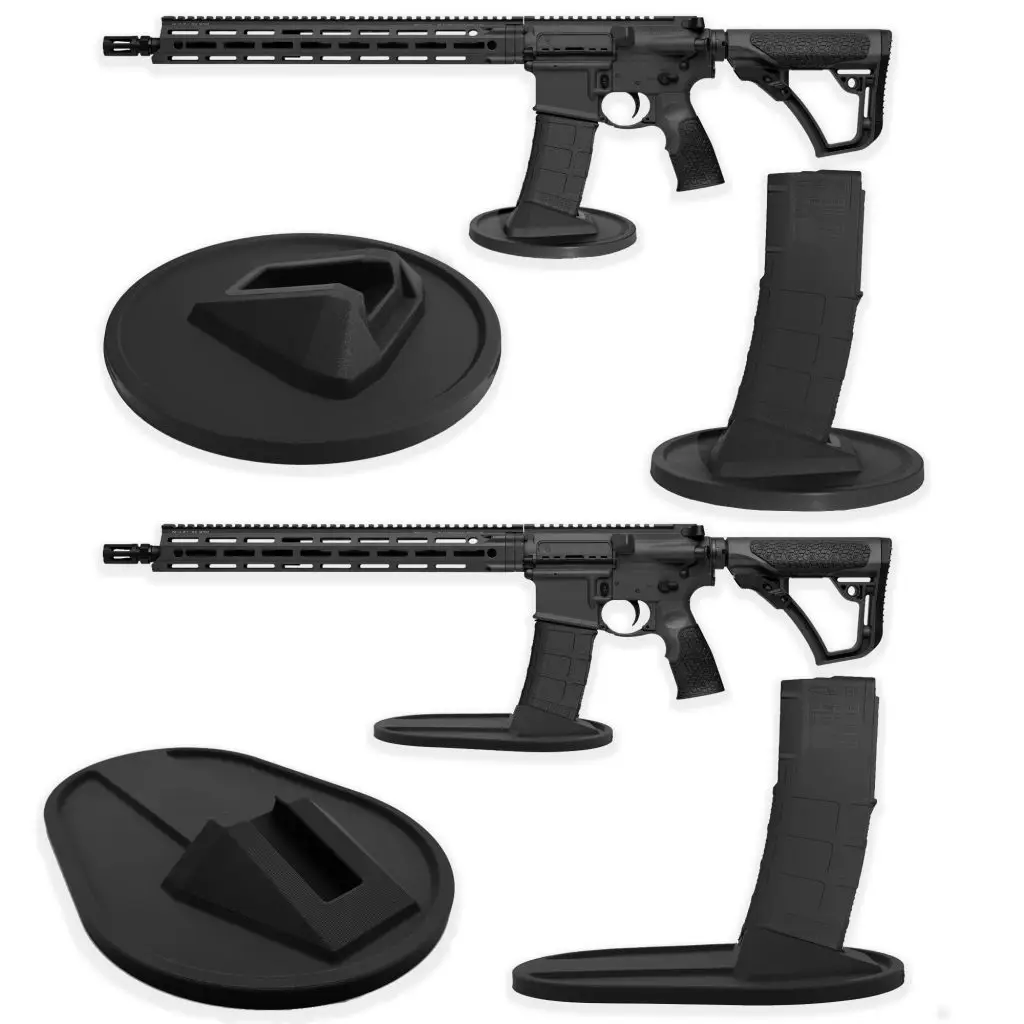
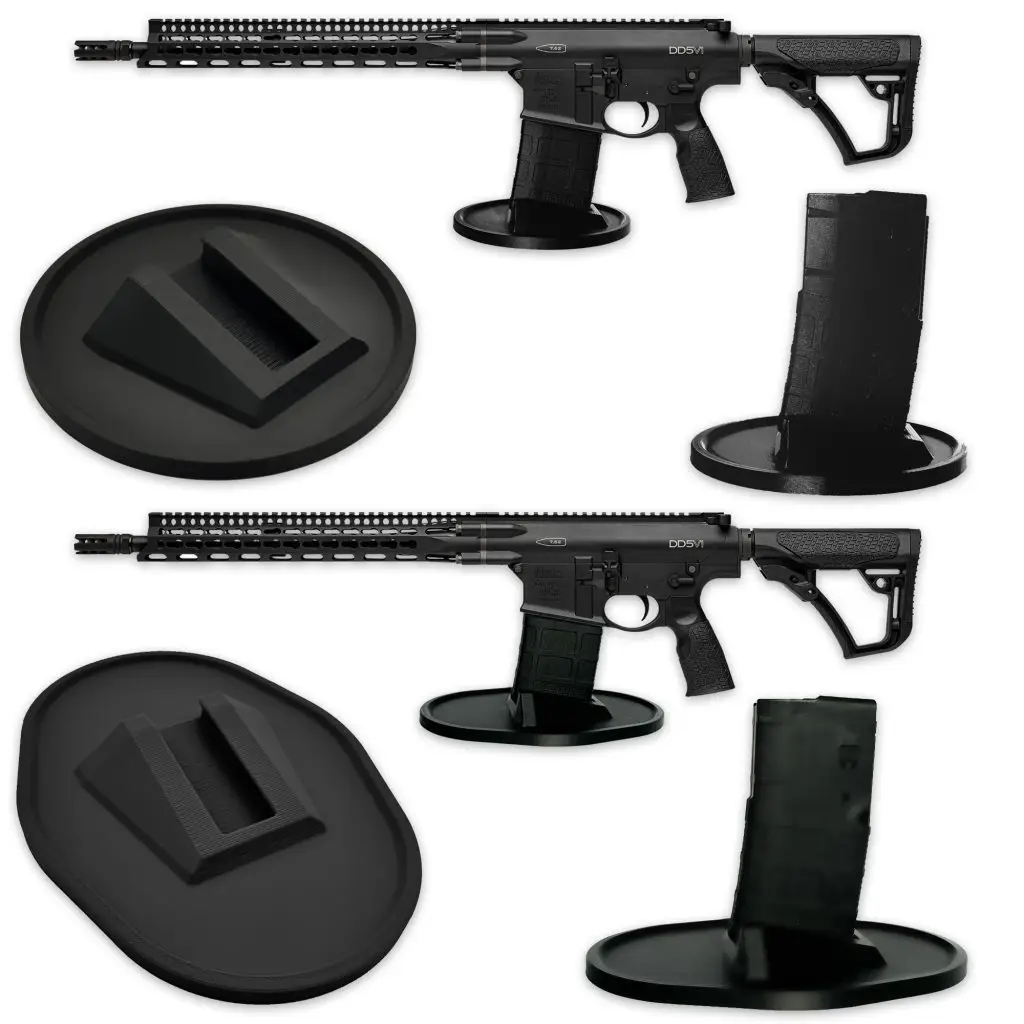
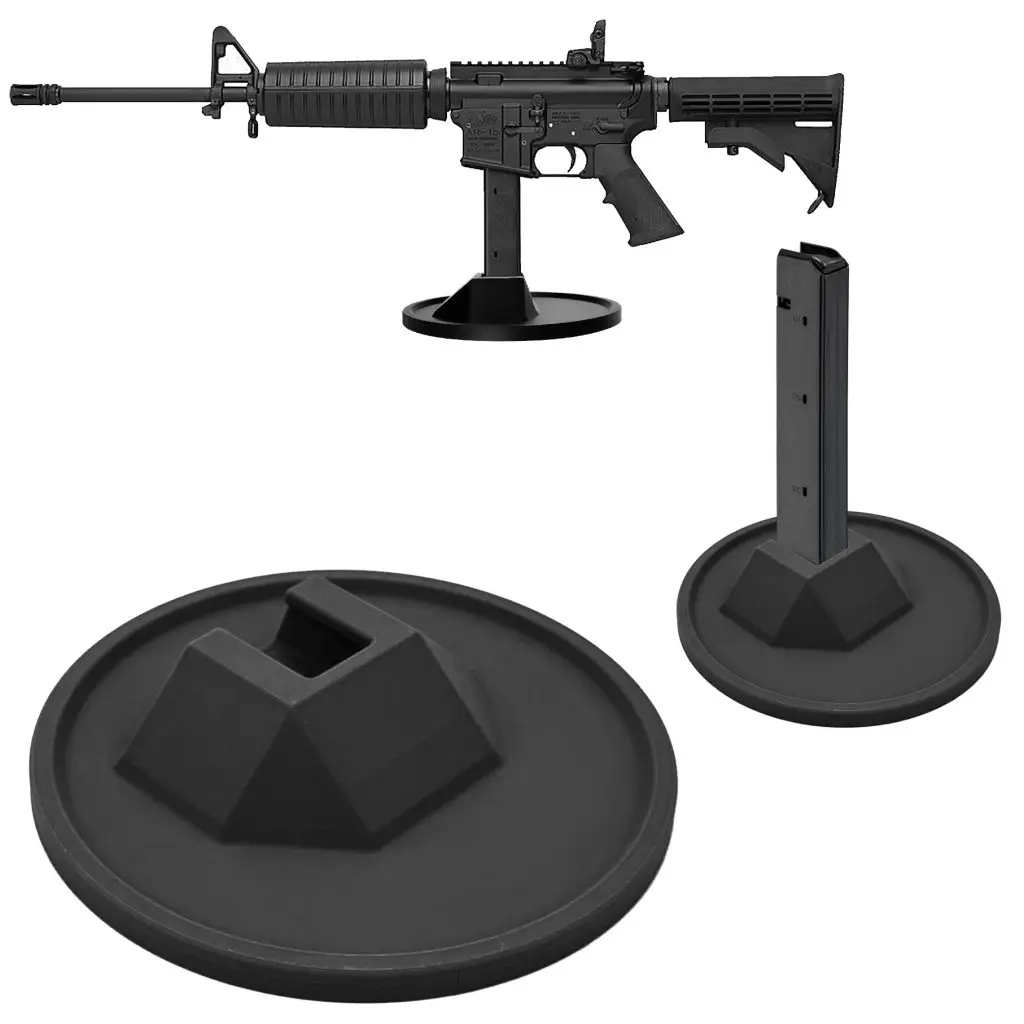
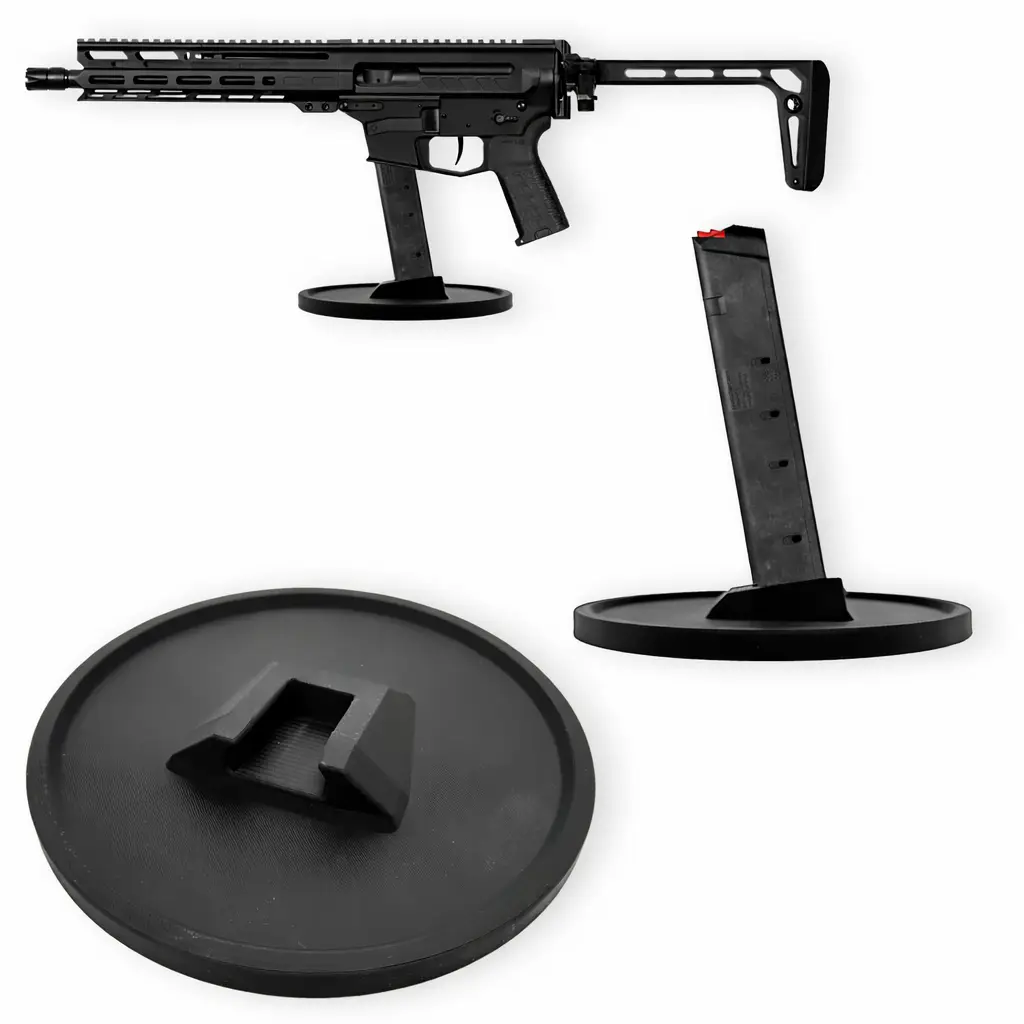
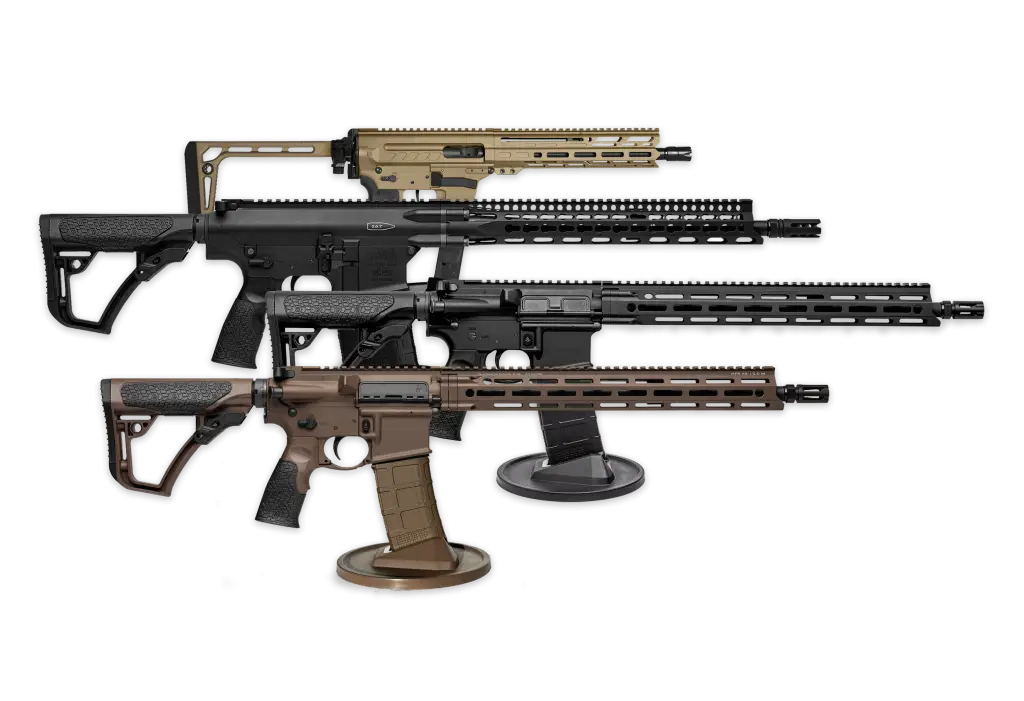
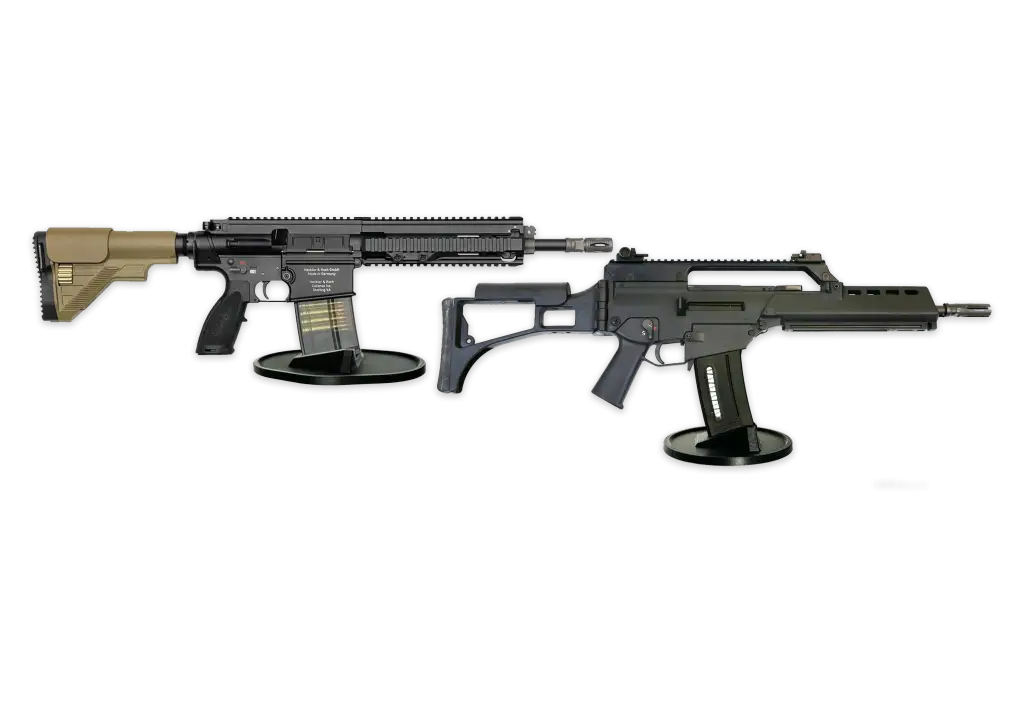
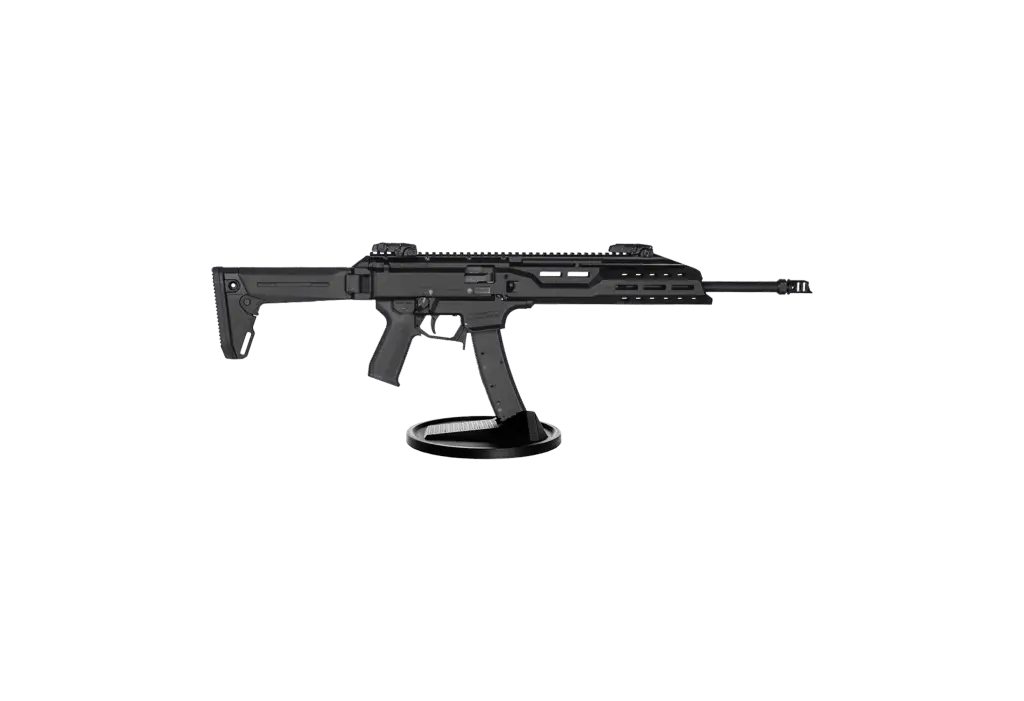
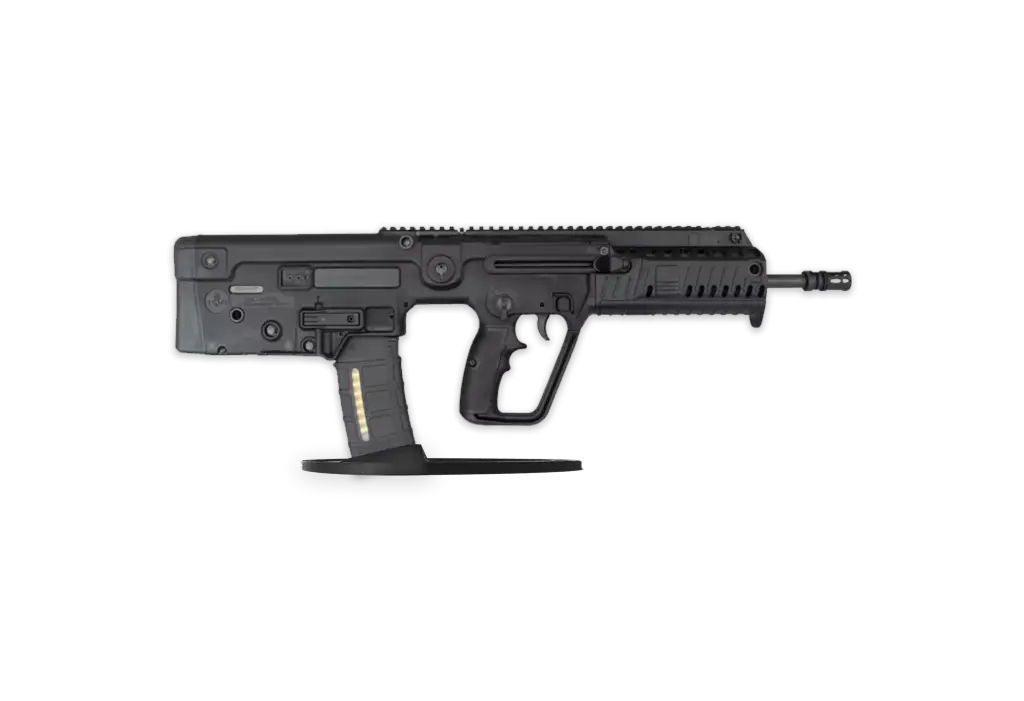
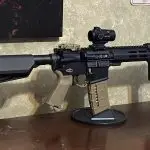
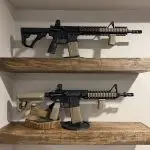
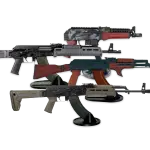
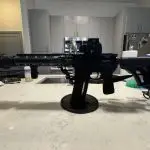
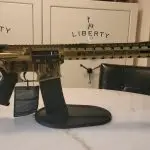
Collectors who own AR-style rifles in several chamberings often display them on a compatible AR15 gun stand, allowing each rifle’s magazine, optic, handguard, barrel, and caliber-specific features to remain visible.
Why the AR-15 Supports So Many Calibers
The AR-15 is built around separate upper and lower receiver assemblies. This modular design allows manufacturers to change several caliber-related components while preserving the rifle’s familiar overall layout.
Depending on the cartridge, the caliber may be determined by:
- The barrel and chamber.
- The bolt or bolt carrier group.
- The magazine.
- The gas system.
- The buffer and action spring.
- The upper receiver.
- The lower receiver or magazine-well adapter.
Some cartridges were designed specifically to work within standard AR-15 dimensions. Others were adapted from existing hunting or pistol cartridges and require more specialized components.
5.56 NATO and .223 Remington as the Starting Point
Before examining alternative AR-15 calibers, it helps to understand the platform’s traditional chamberings.
5.56 NATO and .223 Remington share very similar external cartridge dimensions, but their chamber specifications and pressure standards differ. Many rifles marked for 5.56 NATO are designed to use both 5.56 NATO and .223 Remington ammunition, while rifles marked only for .223 Remington should be used according to the manufacturer’s recommendations.
The popularity of these cartridges created the standard AR-15 magazine well, bolt-face dimensions, and receiver size around which many alternative cartridges were later developed.
.300 AAC Blackout
.300 AAC Blackout, commonly called .300 Blackout or .300 BLK, is one of the most popular alternative AR-15 calibers.
The cartridge was designed to work within the general dimensions of the AR-15 platform while using a larger-diameter projectile than 5.56 NATO. One of its biggest practical advantages is that many .300 Blackout rifles use a standard AR-15 bolt carrier group and standard-pattern magazines.
However, the barrel must be chambered specifically for .300 Blackout.
Common reasons owners choose .300 Blackout include:
- Compatibility with many standard AR-15 components.
- Availability of supersonic and subsonic ammunition.
- Popularity in compact configurations where lawful.
- Broad factory-rifle and upper-receiver availability.
- Strong aftermarket support.
Because .300 Blackout and 5.56 NATO cartridges can fit into similar magazines, ammunition identification and organization are extremely important. Owners should clearly label magazines and verify the rifle’s chamber marking before loading ammunition.
6.5 Grendel
6.5 Grendel was developed to provide increased ballistic performance from the AR-15 platform while remaining within the dimensions of the standard receiver family.
Compared with traditional 5.56 NATO configurations, 6.5 Grendel is commonly associated with:
- Heavier projectiles.
- Improved long-range energy.
- Reduced wind drift with appropriate ammunition.
- Precision-oriented AR-15 builds.
- Lawful hunting applications where permitted.
A 6.5 Grendel conversion generally requires:
- A 6.5 Grendel barrel.
- A compatible bolt.
- Compatible magazines.
Standard 5.56 magazines are not automatically appropriate for 6.5 Grendel because the cartridges have different case dimensions and feeding requirements.
Many 6.5 Grendel rifles use longer barrels, magnified optics, bipods, and precision-oriented stocks. These configurations can be displayed on a sturdy rifle stand that keeps the longer barrel and optic fully visible.
6mm ARC
6mm ARC is another cartridge developed to provide improved downrange performance within the general AR-15 platform size.
It is commonly associated with:
- High ballistic efficiency.
- Precision shooting.
- Reduced wind drift compared with some traditional options.
- Longer-range sporting applications.
- Modern match-oriented rifle builds.
Like 6.5 Grendel, 6mm ARC generally requires a dedicated barrel, compatible bolt, and appropriate magazines.
Many rifles chambered in 6mm ARC use:
- Free-float handguards.
- Magnified optics.
- Longer barrels.
- Adjustable stocks.
- Bipods.
- Precision triggers.
Although the rifle may look like a standard AR-15, the caliber-specific components should never be assumed to interchange with 5.56 parts.
.224 Valkyrie
.224 Valkyrie was introduced as a long-range cartridge for the AR-15 platform. It was designed to support high-ballistic-coefficient projectiles while fitting within standard AR-15 receiver dimensions.
Common characteristics include:
- Long-range target-shooting interest.
- Use of heavier .224-caliber projectiles.
- Precision-oriented rifle configurations.
- Compatibility with AR-15-size receivers.
A compatible .224 Valkyrie rifle generally requires:
- A dedicated barrel.
- An appropriate bolt.
- Compatible magazines.
Market interest in specific cartridges can change over time, so owners should consider ammunition availability and manufacturer support before selecting a specialized chambering.
9mm AR-Style Platforms
AR-style rifles and pistols chambered in 9mm have become extremely popular. These platforms are often called pistol-caliber carbines, or PCCs.
Although they resemble standard AR-15 rifles, 9mm AR platforms may use a different operating system. Many use simple blowback operation rather than the traditional gas-operated system associated with 5.56 rifles.
Popular magazine patterns include:
- Glock-pattern magazines.
- Colt-style 9mm magazines.
- Proprietary magazines.
A 9mm AR may use:
- A dedicated 9mm lower receiver.
- A standard lower with a magazine-well adapter.
- A caliber-specific bolt.
- A dedicated barrel.
- A specialized buffer system.
Reasons owners choose 9mm AR-style rifles include:
- Familiar AR-style controls.
- Compact platform options where lawful.
- Popularity in PCC competition.
- Common pistol-ammunition availability.
- Reduced size of ammunition and magazines.
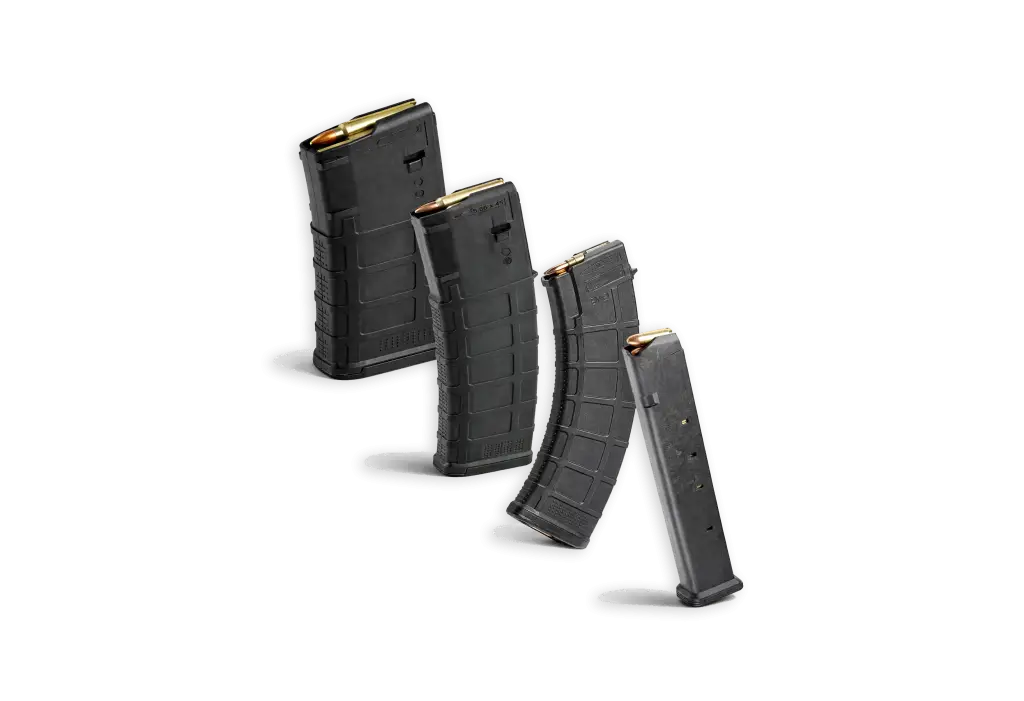
Magazine compatibility is especially important when selecting display equipment. A Glock-pattern 9mm AR requires a different magazine-based stand than a Colt-style 9mm platform.
.22 Long Rifle
.22 Long Rifle is one of the most common rimfire cartridges in the United States. AR-style rifles chambered in .22 LR are popular for recreational shooting, training, and collecting.
There are two common approaches:
- Dedicated .22 LR AR-style rifles.
- Conversion systems used with compatible AR-15 rifles.
Dedicated rimfire rifles may resemble a standard AR-15 but use different internal components, receivers, magazines, and operating systems.
Potential advantages include:
- Low recoil.
- Lower ammunition cost compared with many centerfire cartridges.
- Familiar AR-style ergonomics.
- Popularity for recreational range use.
- Availability of lightweight rifles.
Owners should confirm whether the rifle uses proprietary magazines and parts because visual similarity does not guarantee standard AR-15 compatibility.
.350 Legend
.350 Legend is a straight-wall cartridge designed to work in appropriately configured AR-15 rifles. It gained attention in areas where straight-wall cartridges are permitted for certain hunting applications.
Common reasons owners choose .350 Legend include:
- Straight-wall cartridge design.
- Use in lawful hunting applications where permitted.
- Availability in factory AR-style rifles.
- Compatibility with standard-size AR-15 receivers.
A .350 Legend rifle generally requires:
- A dedicated barrel.
- Compatible magazines.
- Appropriate ammunition.
Some configurations may use a standard bolt-face pattern, but compatibility should always be confirmed through the rifle or component manufacturer.
State hunting laws differ significantly, so owners must verify cartridge, magazine-capacity, and rifle requirements for their location.
.450 Bushmaster
.450 Bushmaster is a large-bore straight-wall cartridge commonly used in appropriately configured AR-15 rifles.
It is associated with:
- Heavy projectiles.
- Lawful hunting applications where permitted.
- Large-bore AR-15 configurations.
- Specialized magazines and barrels.
- Increased recoil compared with smaller AR cartridges.
A .450 Bushmaster rifle generally requires:
- A dedicated barrel.
- A compatible bolt.
- Appropriate magazines.
- A properly selected buffer system.
Because large-bore cartridges can create different recoil and balance characteristics, stocks, recoil pads, optics, and mounting hardware should be selected carefully.
.458 SOCOM
.458 SOCOM is another large-bore cartridge adapted to the AR-15 platform.
It uses a much larger-diameter projectile than 5.56 NATO and typically requires a dedicated barrel and bolt.
Common characteristics include:
- Large projectile diameter.
- Specialized upper assemblies.
- Use of modified or compatible AR-pattern magazines.
- Strong collector interest.
- Large-bore AR configuration.
Magazine capacity and feeding can vary depending on the magazine and cartridge design. Owners should use only magazines and components recommended by the manufacturer.
.50 Beowulf and Similar Large-Bore Cartridges
.50 Beowulf is a large-bore cartridge developed for AR-style rifles. It represents one of the largest projectile diameters commonly associated with the AR-15-size receiver platform.
A compatible rifle generally uses:
- A dedicated barrel.
- A caliber-specific bolt.
- Appropriate magazines.
- Components selected for the cartridge’s recoil and dimensions.
These rifles are highly specialized and may appeal to collectors who enjoy unusual AR configurations.
Because large-bore rifles may be heavier and use larger optics or muzzle devices, a wide and stable gun stand can help create a secure and professional display.
7.62x39mm AR-15
AR-style rifles are also available in 7.62x39mm, a cartridge most commonly associated with AK-pattern rifles.
Adapting the cartridge to the AR platform requires specialized components because of its case shape and dimensions.
A 7.62×39 AR commonly uses:
- A dedicated barrel.
- A compatible bolt.
- Specialized curved magazines.
- Appropriate firing and buffer components.
Reasons owners choose this chambering include:
- Interest in the cartridge.
- Familiar AR-style controls.
- Distinctive curved magazines.
- Collector appeal.
Magazine and bolt compatibility are critical. Standard 5.56 magazines should not be assumed to feed 7.62×39 ammunition properly.
5.7x28mm AR-Style Platforms
Some AR-style platforms are chambered for 5.7x28mm. These rifles may use specialized upper receivers, magazines, bolts, or magazine-well designs.
Depending on the system, magazines may feed through the traditional magazine well or mount differently within the upper receiver.
These configurations are more specialized than standard AR-15 conversions and often use proprietary components.
Before purchasing one, buyers should research:
- Magazine availability.
- Replacement parts.
- Ammunition cost.
- Manufacturer support.
- Stand and storage compatibility.
.410 Bore AR-Style Platforms
AR-style firearms have also been produced in .410 bore. These specialized platforms resemble the AR-15 but may use proprietary upper assemblies, magazines, gas systems, and internal components.
They demonstrate how widely the AR-style layout has been adapted beyond traditional rifle cartridges.
However, a .410 AR should not be treated as a standard AR-15 caliber conversion. Component compatibility may be limited, and the manufacturer’s instructions should be followed carefully.
Which AR-15 Calibers Use a Standard Bolt?
Bolt compatibility depends on the cartridge’s case-head dimensions.
Some cartridges, such as .300 Blackout, commonly use a standard 5.56-pattern bolt. Others require a larger or differently configured bolt face.
Examples that generally require specialized bolts include:
- 6.5 Grendel.
- 6mm ARC.
- .224 Valkyrie.
- 7.62x39mm.
- .450 Bushmaster.
- .458 SOCOM.
- .50 Beowulf.
Owners should never assume bolt compatibility based only on cartridge length.
Which Calibers Use Standard AR-15 Magazines?
Some alternative cartridges are designed to work with standard-pattern AR-15 magazines, while others require specialized magazine geometry.
.300 Blackout commonly uses standard 5.56-pattern magazines, although manufacturers may offer dedicated magazines optimized for the cartridge.
Cartridges that commonly require different magazines include:
- 6.5 Grendel.
- 6mm ARC.
- 7.62x39mm.
- .350 Legend.
- .450 Bushmaster.
- 9mm.
- .22 LR.
Magazine markings and organization are especially important in collections containing several calibers.
Caliber Changes and Complete Upper Assemblies
One of the most convenient ways to change an AR-15’s chambering is through a compatible complete upper receiver assembly.
A complete upper may include:
- Upper receiver.
- Barrel.
- Handguard.
- Gas system.
- Bolt carrier group.
- Charging handle.
- Muzzle device.
However, changing the upper does not guarantee that the existing lower, magazine, buffer system, and stock configuration are appropriate for the new caliber.
Owners should confirm:
- Lower receiver compatibility.
- Magazine compatibility.
- Buffer and spring requirements.
- Legal barrel-length requirements.
- Bolt and ammunition compatibility.
- Manufacturer recommendations.
Gas-Operated vs Blowback AR Calibers
Many centerfire AR-15 cartridges use a gas-operated system similar to a traditional 5.56 rifle.
However, some pistol-caliber and rimfire platforms use blowback operation.
Gas-operated systems commonly include:
- Gas port.
- Gas block.
- Gas tube.
- Carrier key.
Blowback systems may instead rely on the combined mass of the bolt and buffer assembly.
This difference affects:
- Bolt design.
- Buffer weight.
- Recoil characteristics.
- Maintenance.
- Parts compatibility.
How Caliber Affects Rifle Ergonomics
AR-15 ergonomics remain familiar across many chamberings, but caliber can still change how the rifle feels and handles.
Heavier cartridges may affect:
- Recoil.
- Rifle balance.
- Magazine size and shape.
- Barrel weight.
- Stock selection.
- Optic choice.
- Overall rifle length.
A lightweight 9mm carbine can feel very different from a long-barreled 6.5 Grendel precision rifle or a large-bore .450 Bushmaster platform.
The AR-15’s adjustable stocks, replaceable grips, modular handguards, and varied optic heights allow owners to adapt the rifle’s ergonomics to the chosen caliber and configuration.
Caliber and Barrel Length
Different cartridges are commonly paired with different barrel lengths.
Factors that influence barrel selection include:
- Cartridge design.
- Powder characteristics.
- Desired velocity.
- Overall rifle balance.
- Gas-system length.
- Manufacturer recommendations.
- Applicable laws.
A barrel length that works well for one cartridge may not provide the same results with another.
Owners should use barrels and complete upper assemblies designed specifically for the selected chambering.
Caliber and Twist Rate
Barrel twist rate describes how quickly the rifling completes one full rotation.
Each caliber may use several twist rates depending on projectile length, weight, and intended application.
For example, a twist rate common in a 5.56 NATO barrel may be completely inappropriate for a .300 Blackout, 6.5 Grendel, or .450 Bushmaster barrel.
Barrel markings should be reviewed carefully to confirm both chambering and twist rate.
Ammunition Availability
A specialized caliber may offer attractive performance, but ammunition availability is an important practical consideration.
Before selecting an alternative AR-15 caliber, consider:
- Local retail availability.
- Online availability where lawful.
- Average cost per round.
- Number of manufacturers producing ammunition.
- Availability of practice ammunition.
- Availability of hunting or match loads.
- Long-term market support.
5.56 NATO, .223 Remington, 9mm, and .22 LR are generally easier to find than highly specialized cartridges.
Magazine Identification and Safety
Collections containing several AR-15 calibers require careful organization.
Good identification practices may include:
- Clearly marked magazines.
- Different magazine colors.
- Caliber labels.
- Separate storage containers.
- Distinctive baseplates.
- Verification of barrel markings.
This is particularly important with cartridges such as .300 Blackout and 5.56 NATO because they can use similar magazines while requiring completely different barrels.
Legal and Hunting Considerations
Caliber legality and hunting regulations vary by state and jurisdiction.
Requirements may address:
- Minimum caliber.
- Straight-wall cartridge rules.
- Magazine capacity.
- Rifle configuration.
- Barrel length.
- Permitted game species.
- Hunting zones and seasons.
Owners should verify current local requirements before selecting a cartridge for hunting or another regulated activity.
Common AR-15 Caliber Buying Mistakes
Assuming Every Cartridge Uses Standard Magazines
Many alternative cartridges require dedicated magazines.
Buying Only a Barrel
A caliber change may also require a bolt, magazine, gas-system component, or buffer adjustment.
Ignoring Ammunition Cost
Some specialized cartridges cost significantly more than 5.56 NATO.
Confusing Similar Ammunition
Cartridges with similar dimensions can create serious compatibility risks when mixed.
Overlooking Replacement Parts
Specialized bolts, magazines, and upper components may be difficult to replace.
Choosing a Caliber Without a Clear Purpose
A specialized cartridge may add expense without providing a meaningful advantage for the owner’s intended use.
Choosing the Right AR-15 Caliber
The best AR-15 caliber depends on the owner’s intended lawful application, budget, ammunition availability, and preference.
Consider the following:
- Recreational range use.
- Competition requirements.
- Lawful hunting regulations.
- Desired recoil level.
- Maximum practical distance.
- Ammunition availability.
- Magazine compatibility.
- Replacement-parts availability.
- Overall rifle weight.
No caliber is ideal for every situation.
Popular Calibers by General Category
Affordable Recreational Shooting
- .22 LR.
- 9mm.
- 5.56 NATO.
- .223 Remington.
Compact AR Configurations
- .300 Blackout.
- 9mm.
- 5.7x28mm.
Precision and Longer-Range Builds
- 6.5 Grendel.
- 6mm ARC.
- .224 Valkyrie.
Straight-Wall Hunting Options Where Lawful
- .350 Legend.
- .450 Bushmaster.
Large-Bore Collector Builds
- .458 SOCOM.
- .50 Beowulf.
Displaying Different AR-15 Calibers
A caliber-focused AR collection can include rifles that look similar while using completely different internal components and magazine patterns.
Collectors may compare:
- Magazine shapes.
- Barrel lengths.
- Handguard styles.
- Muzzle devices.
- Optic configurations.
- Stocks and grips.
- Receiver markings.
- Caliber labels.
A compatible gun stand provides an organized way to display these differences while leaving the rifle’s exterior configuration visible.
Why GunCreed Stands Work with Caliber-Specific AR Platforms
GunCreed rifle stands are designed around compatible magazine patterns. Because AR-style rifles in different calibers may use different magazines, selecting the correct stand requires more than simply identifying the rifle as an AR-15.
Examples include:
- Standard AR-15 magazines for compatible 5.56 and .300 Blackout platforms.
- Glock-pattern magazines for compatible 9mm AR rifles.
- Colt-style magazines for compatible 9mm platforms.
- Large-frame magazines for AR-10 and SR25-style rifles.
- Specialized magazines for other caliber configurations.
Matching the stand to the correct magazine pattern provides a cleaner and more secure display.
A properly selected rifle stand keeps the magazine, caliber markings, optic, handguard, stock, and barrel visible while helping organize a growing collection.
AR-15 Calibers Frequently Asked Questions
Can an AR-15 Shoot More Than 5.56 NATO?
Yes. The AR-15 platform has been adapted to many cartridges, including .300 Blackout, 6.5 Grendel, 6mm ARC, 9mm, .22 LR, .350 Legend, and .450 Bushmaster.
Can I Change Calibers by Replacing the Upper?
Sometimes, but compatibility depends on the cartridge. A different magazine, buffer system, bolt, or lower receiver may also be required.
Which Caliber Uses a Standard 5.56 Bolt?
.300 Blackout commonly uses a standard 5.56-pattern bolt, but the barrel must be chambered specifically for .300 Blackout.
Which AR-15 Caliber Is Best for Long Range?
6.5 Grendel and 6mm ARC are commonly selected for precision and longer-range sporting configurations. The best choice depends on ammunition, barrel, and intended use.
Can a Standard AR-15 Use 9mm?
A 9mm AR requires caliber-specific components such as a barrel, bolt, magazine system, and often a different buffer arrangement.
Are All AR-15 Magazines Interchangeable?
No. Magazine compatibility depends on the cartridge and receiver design.
Can One Stand Fit Every AR-15 Caliber?
No. Magazine-based stands must match the magazine pattern used by the specific rifle.
Final Thoughts
The AR-15 supports a remarkably diverse selection of calibers beyond 5.56 NATO. Popular options include .300 Blackout, 6.5 Grendel, 6mm ARC, .224 Valkyrie, 9mm, .22 LR, .350 Legend, .450 Bushmaster, .458 SOCOM, and 7.62x39mm.
Each cartridge changes more than ammunition performance. Caliber selection may affect the barrel, bolt, magazine, buffer system, gas system, operating method, recoil, weight, and overall ergonomics of the rifle.
Some conversions are relatively straightforward, while others require specialized receivers and proprietary parts. Owners should verify every component through the rifle or component manufacturer rather than assuming that all AR-15 parts are interchangeable.
Ammunition cost and availability should also be considered. A specialized long-range or large-bore cartridge may offer interesting characteristics, but it may be more expensive and less widely stocked than 5.56 NATO, 9mm, or .22 LR.
For collectors, different AR-15 calibers provide nearly endless opportunities to compare magazine patterns, barrel lengths, optics, stocks, handguards, and receiver markings.
Displaying these rifles on compatible gun stands helps keep the collection organized while clearly showing the differences between each configuration. Standard AR-15 platforms can use an appropriate AR15 gun stand, while larger-frame rifles require a compatible AR10 gun stand designed around the correct magazine pattern.