











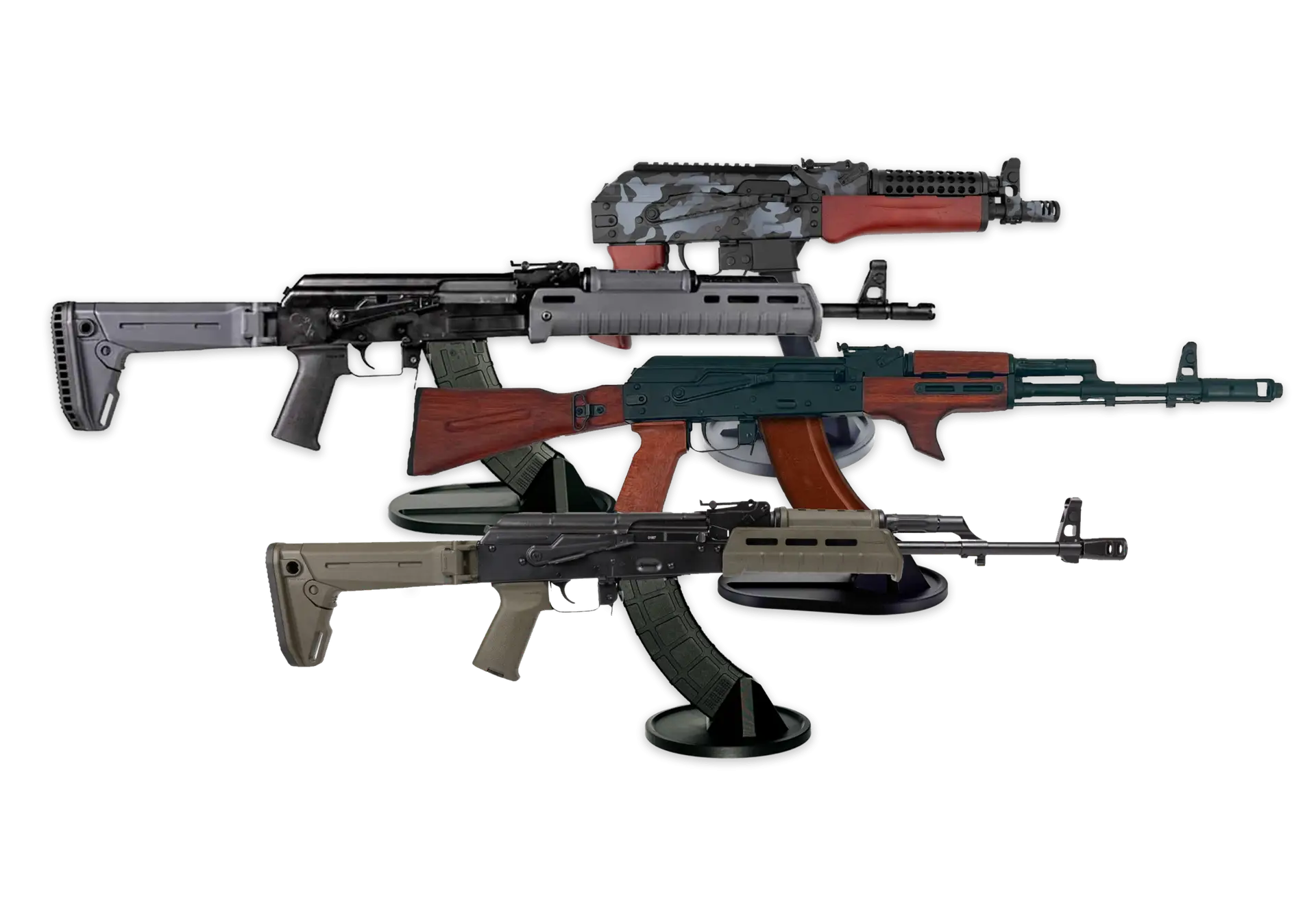

The AK magazine is one of the most recognizable rifle magazines ever produced. Its strongly curved profile, front locking lug, rear locking tab, and distinctive rocking insertion method immediately separate it from the straighter magazines used by many other modern sporting rifles.
However, not every curved magazine is compatible with every AK-pattern rifle. The Kalashnikov family includes rifles chambered in 7.62x39mm, 5.45x39mm, 5.56 NATO, .223 Remington, 9mm, and several larger cartridges. Each caliber may require a different magazine body, follower, feed-lip design, locking geometry, and cartridge presentation angle.
AK magazines also vary by country of origin, material, capacity, reinforcement, production period, and intended rifle pattern. Steel surplus magazines, durable plastic commercial magazines, fiberglass-reinforced designs, translucent magazines, reduced-capacity models, extended magazines, and drums are all available.
Understanding these differences is essential for owners, collectors, and anyone selecting a magazine-compatible display stand. A magazine that appears to fit may still fail to lock correctly or present cartridges at the proper angle. Likewise, a stand designed around one magazine pattern may not accept another caliber or body style.
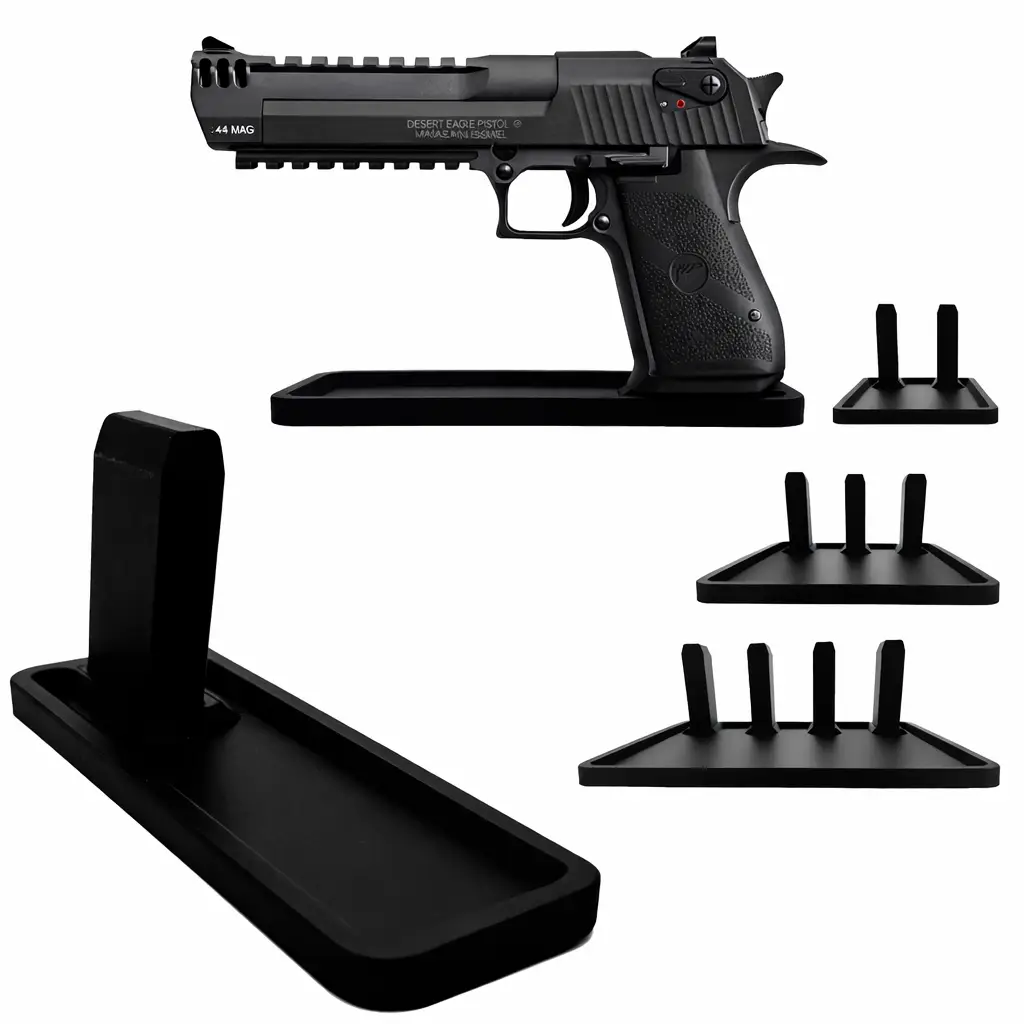
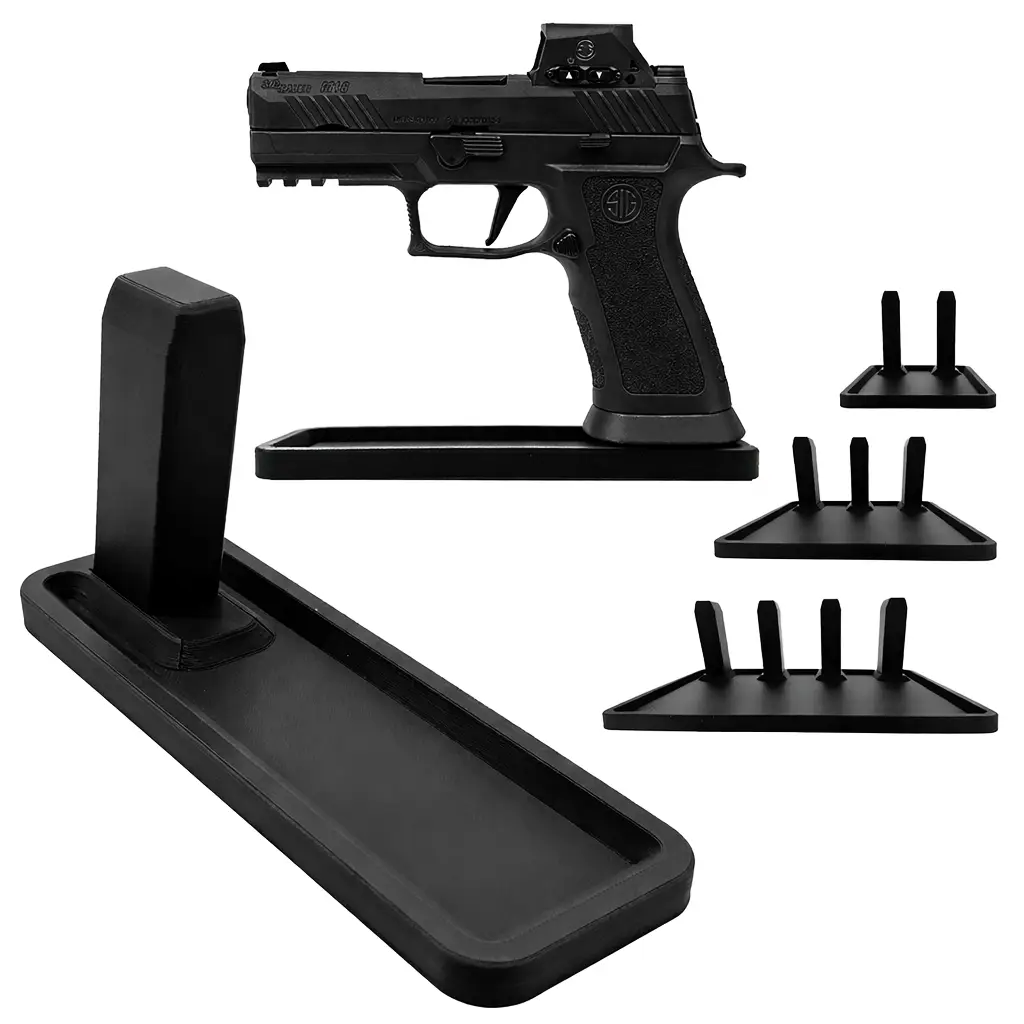
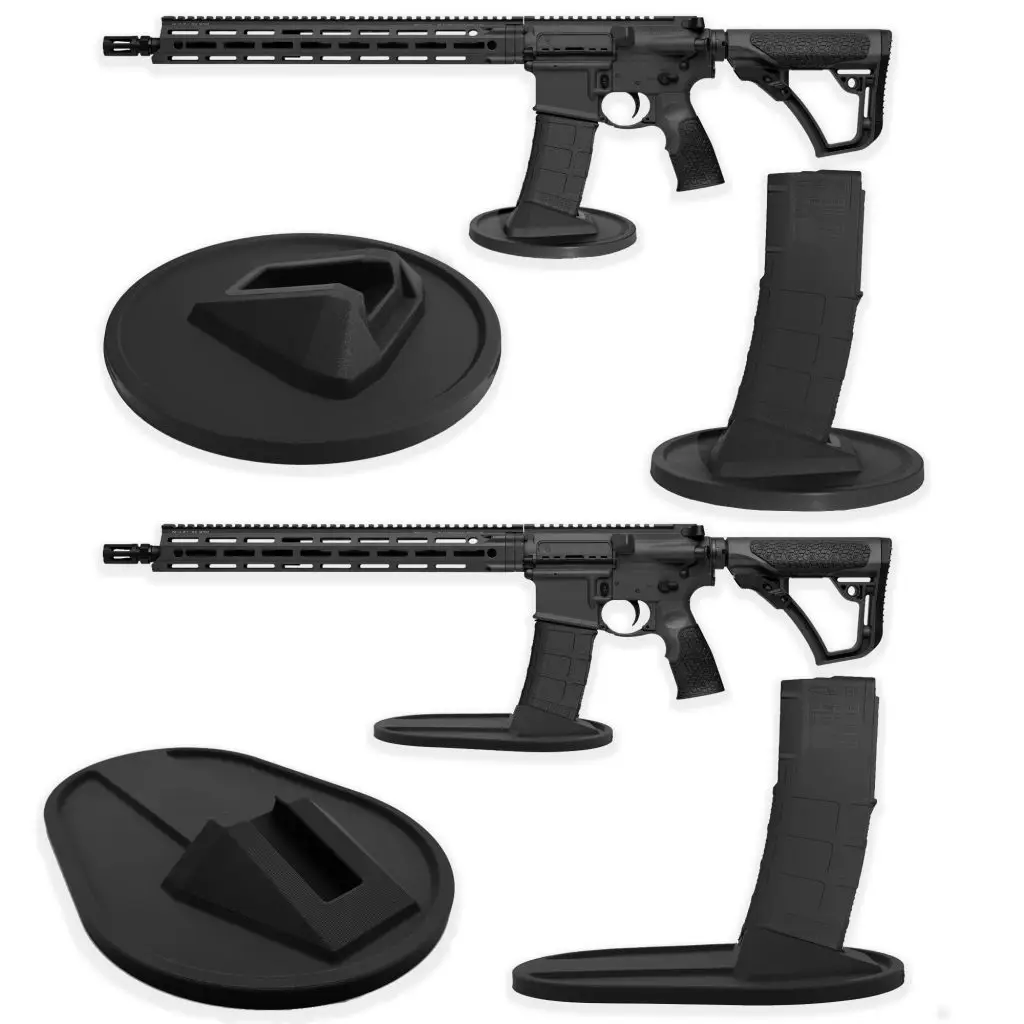
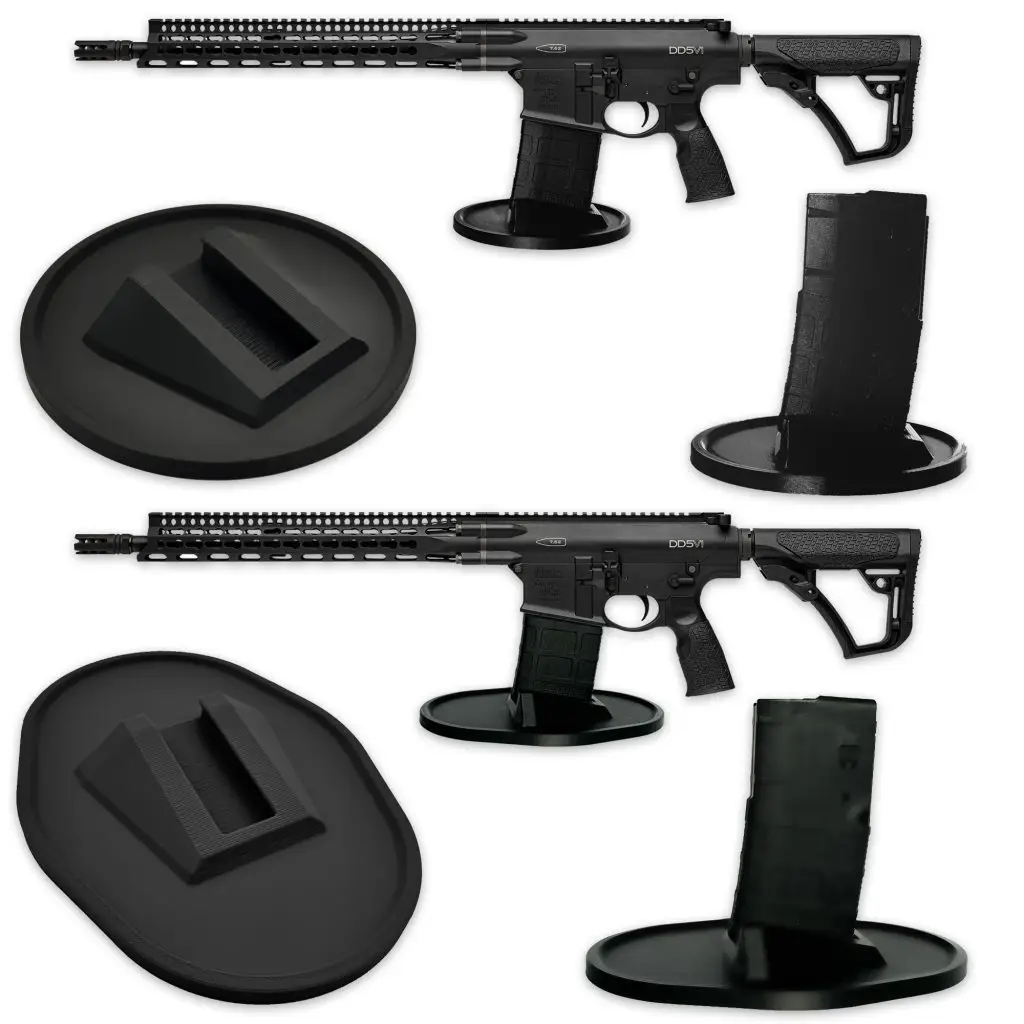
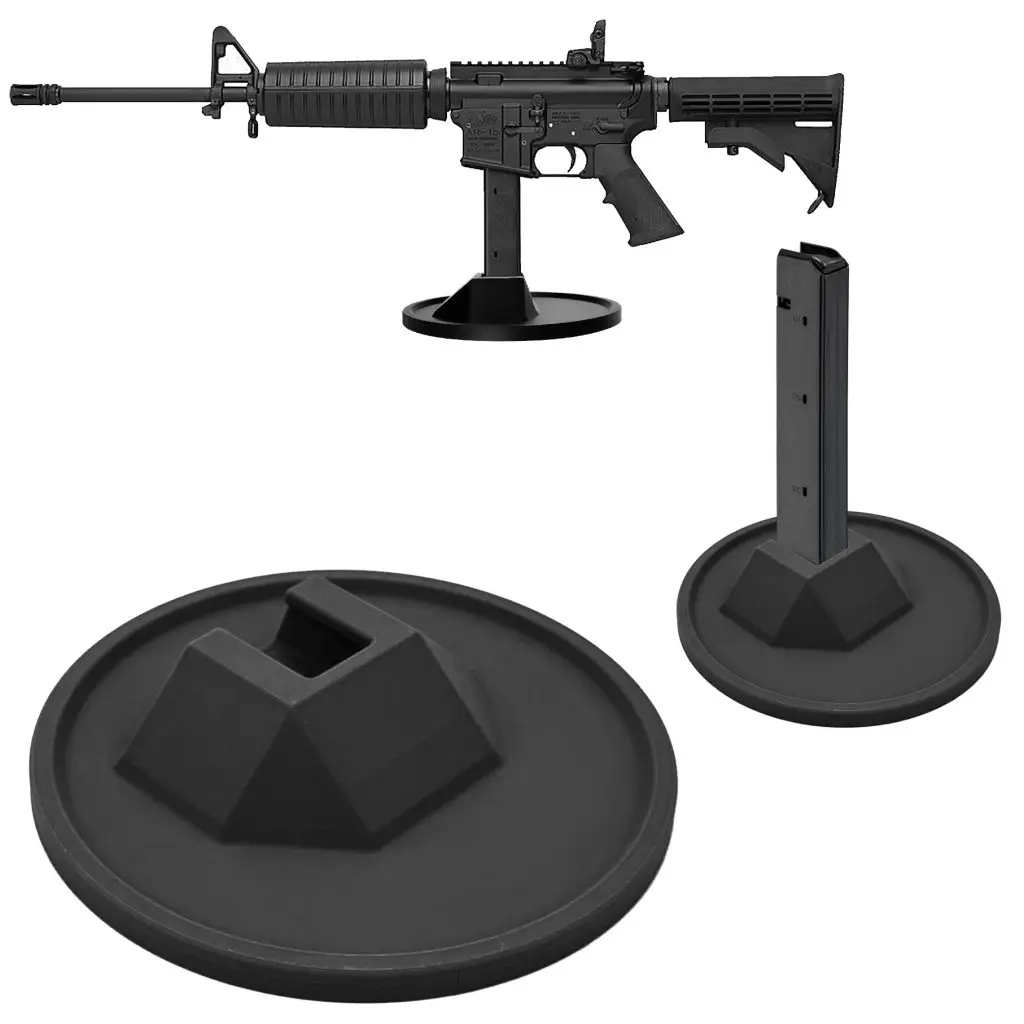
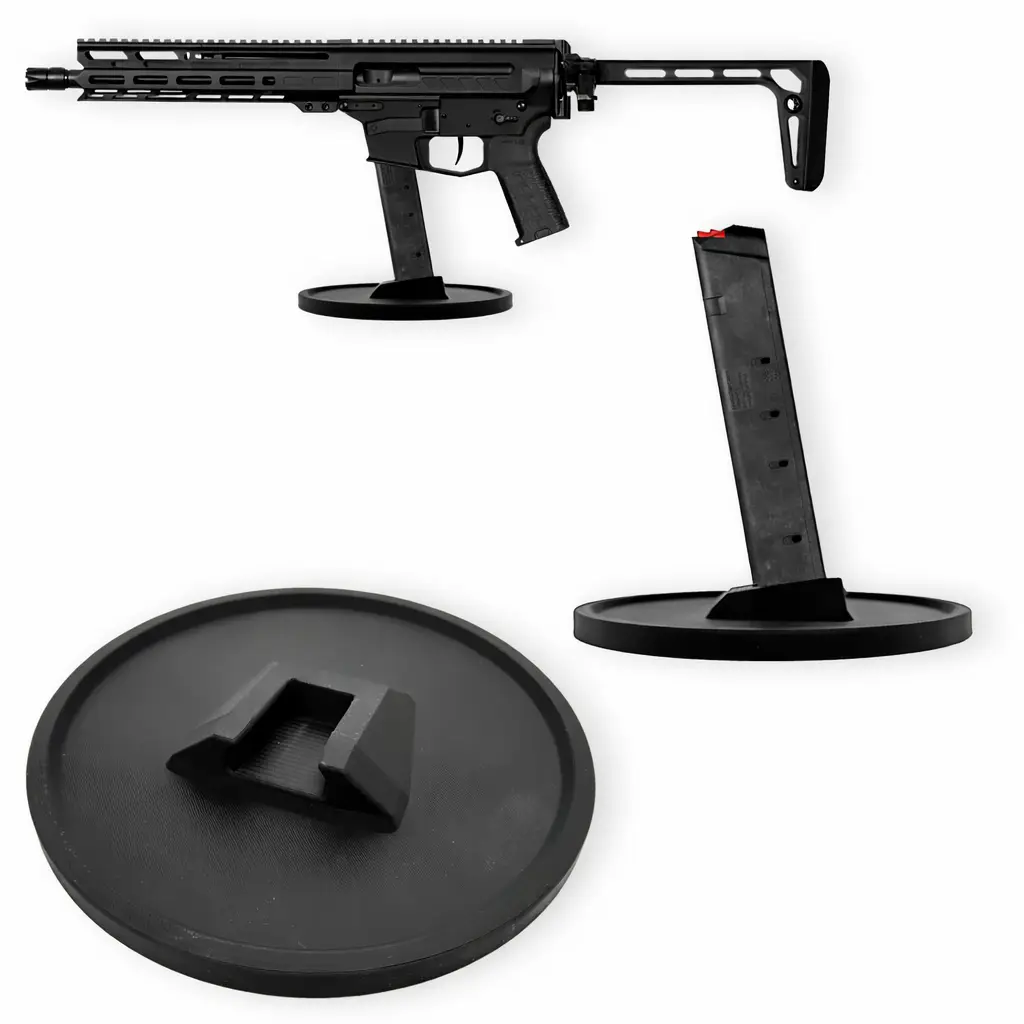
This complete guide explains the most common AK magazine types, how their designs differ, what materials are used, and what owners should verify before purchasing. Collectors can also use a properly matched AK gun stand to display a rifle through the correct magazine pattern while leaving the receiver, furniture, optic, and curved magazine visible.
What Is an AK Magazine?
An AK magazine is a detachable box magazine designed for a compatible Kalashnikov-pattern rifle. It stores cartridges under spring pressure and presents them at the top of the magazine for feeding into the chamber.
A typical AK magazine contains:
- Magazine body.
- Front locking lug.
- Rear locking tab.
- Feed lips.
- Follower.
- Magazine spring.
- Floorplate or baseplate.
- Internal spring retainer on many models.
The exact construction differs by manufacturer and material. A traditional steel magazine may use welded feed lips and a stamped floorplate, while a modern durable plastic magazine may mold several structural features directly into the body.
Why AK Magazines Are Curved
The famous curve of an AK magazine is not merely decorative. It is largely determined by the shape of the ammunition stored inside it.
The 7.62x39mm cartridge has a noticeably tapered case. When tapered cartridges are stacked in a double column, the stack naturally follows a curved path. The magazine body must follow that path to maintain proper cartridge alignment.
Different cartridges create different curves. As a result:
- 7.62×39 magazines have a strong curve.
- 5.45×39 magazines generally use a different, somewhat less dramatic profile.
- 5.56 AK magazines use another geometry based on the straighter 5.56 NATO case.
- 9mm AK-style magazines may be relatively straight.
The magazine’s curvature can help identify its intended caliber, but shape alone should never replace checking its markings and manufacturer specifications.
How an AK Magazine Locks into the Rifle
A traditional AK magazine uses two primary locking points.
The front locking lug engages a corresponding surface inside the front portion of the magazine well. The magazine is then rotated rearward until the rear locking tab passes the magazine catch and locks into position.
This motion is often described as rocking the magazine into place.
The design differs from an AR-15 magazine, which is generally inserted vertically into a straight magazine well and retained by a side-mounted catch.
AK magazine fit depends on:
- Front lug dimensions.
- Rear locking-tab dimensions.
- Magazine body width.
- Receiver opening.
- Magazine catch height.
- Caliber-specific feed geometry.
A magazine may fit tightly in one rifle and more loosely in another because AK receivers and magazine catches can vary between manufacturers and production origins.
Main AK Magazine Calibers
The most common AK magazine families are organized by cartridge.
- 7.62x39mm AK and AKM magazines.
- 5.45x39mm AK-74 magazines.
- 5.56 NATO and .223 Remington AK magazines.
- 9mm AK-style magazines.
- 7.62x51mm and other large-frame magazines.
These magazine families are not interchangeable. Even when two magazines fit into a similar opening, their feed lips, followers, cartridge angles, and locking surfaces may differ.
7.62x39mm AK Magazines
The 7.62x39mm magazine is the classic AK-47 and AKM magazine pattern. Its strong curve and broad body make it one of the most recognizable components of the Kalashnikov platform.
Common capacities include:
- 5 rounds.
- 10 rounds.
- 20 rounds.
- 30 rounds.
- 40 rounds.
- Drum configurations.
The 30-round magazine is the most widely recognized version. It is available in steel, durable plastic, fiberglass-reinforced material, and other constructions.
Although many 7.62×39 AK magazines share broadly similar dimensions, owners should still verify fit with their exact rifle. Magazine catches, receiver openings, locking lugs, and commercial tolerances can vary.
5.45x39mm AK-74 Magazines
The AK-74 was developed around the smaller 5.45x39mm cartridge. Its magazines look similar to traditional AK magazines but use different internal and external geometry.
Common AK-74 magazine characteristics include:
- Different curvature from 7.62×39 magazines.
- Narrower cartridge presentation.
- Caliber-specific feed lips.
- Distinct followers.
- 30-round standard capacity.
- Durable plastic and reinforced construction.
Historic AK-74 magazines appeared in several colors and materials, including plum, orange-brown, brown, black, and other country-specific variations.
A 5.45 magazine should not be used as a substitute for a 7.62×39 or 5.56 magazine. The exterior resemblance does not make the cartridge geometry compatible.
5.56 NATO and .223 AK Magazines
Kalashnikov-pattern rifles chambered in 5.56 NATO or .223 Remington are manufactured in several countries and by multiple commercial companies. Magazine compatibility in this category can be especially complicated.
Unlike the relatively established 7.62×39 AKM pattern, 5.56 AK rifles have historically used several magazine designs.
Differences may involve:
- Magazine body width.
- Front locking lug.
- Rear locking tab.
- Feed-lip geometry.
- Follower design.
- Cartridge presentation angle.
- Receiver and trunnion dimensions.
A 5.56 magazine made for one rifle may not work properly in another 5.56 AK. Owners should confirm compatibility by exact rifle manufacturer and model.
9mm AK-Style Magazines
Several commercial rifles and carbines adapt the Kalashnikov appearance or control layout to the 9mm cartridge.
These platforms may use:
- Proprietary 9mm magazines.
- Modified submachine-gun magazines.
- Glock-pattern magazines.
- Other pistol-magazine patterns.
A 9mm AK-style magazine is generally straighter than a traditional 7.62×39 magazine because the pistol cartridge has different dimensions.
Visual similarity between the rifle and a full-size AK does not indicate magazine compatibility. Pistol-caliber AK-style platforms may use entirely different magazine wells, catches, bolts, and operating systems.
Large-Frame Kalashnikov Magazines
Some Kalashnikov-related rifles use larger cartridges such as 7.62x51mm NATO or 7.62x54R.
These platforms require larger magazines designed around their cartridges and receivers.
Large-frame magazines may differ in:
- Overall length.
- Body width.
- Cartridge-stack geometry.
- Locking-lug dimensions.
- Capacity.
- Feed-lip construction.
They should not be confused with standard AKM magazines merely because they use a rocking insertion motion.
Steel AK Magazines
Stamped steel magazines are among the most traditional AK magazine types. They were produced in enormous quantities by several countries and remain popular with collectors and owners.
Common features include:
- Stamped steel body.
- Welded reinforcing ribs.
- Steel locking lugs.
- Steel feed lips.
- Removable floorplate.
- Durable military-style construction.
Potential advantages include strong locking surfaces, traditional appearance, and broad availability in surplus and new-production forms.
Potential disadvantages include additional weight and susceptibility to corrosion if the finish is damaged or maintenance is neglected.
Ribbed Steel AK Magazines
The ribbed steel magazine is the classic AKM-style steel magazine. Stamped ribs increase rigidity while helping the relatively thin steel body resist deformation.
The ribs also create the visual pattern most people associate with a traditional steel AK magazine.
Collectors may distinguish magazines by:
- Rib pattern.
- Weld marks.
- Factory symbols.
- Finish.
- Follower shape.
- Country of production.
Two steel magazines may look nearly identical while coming from different countries or factories.
Slab-Side Steel Magazines
Slab-side magazines are early steel magazine designs with relatively smooth exterior walls rather than the pronounced ribs found on later AKM magazines.
Because the body lacks deep reinforcing ribs, slab-side magazines typically use thicker steel and can be noticeably heavy.
They are especially desirable among collectors because they are associated with earlier stages of AK development.
Original examples may command higher collector prices than ordinary ribbed magazines, depending on condition and markings.
Aluminum AK Magazines
Some AK magazines were produced from aluminum or aluminum-based alloys. These designs attempted to reduce weight compared with traditional steel magazines.
Aluminum AK magazines are less common than steel or durable plastic examples. Their construction, markings, reinforcement, and collector value vary by country and production type.
Owners should inspect aluminum magazines for:
- Cracks.
- Dents.
- Damaged locking lugs.
- Feed-lip deformation.
- Corrosion or finish wear.
Durable Plastic AK Magazines
Modern durable plastic magazines reduce weight and resist corrosion while allowing reinforcing ribs, textured gripping surfaces, identification panels, and complex geometry to be molded directly into the body.
Popular features include:
- Textured front and rear surfaces.
- Anti-tilt or low-friction followers.
- Removable floorplates.
- Identification panels.
- Reinforced locking surfaces on selected models.
- Multiple capacities.
Not every plastic magazine has the same reinforcement. Some value-oriented models use molded locking surfaces, while premium designs may include metal reinforcement in the lugs or feed lips.
Magpul PMAG AK Magazines
Magpul produces several PMAG models for compatible Kalashnikov rifles.
Current major categories include:
- PMAG 30 AK/AKM MOE for 7.62×39.
- PMAG 30 AK/AKM GEN M3 for 7.62×39.
- PMAG 20 AK/AKM MOE for 7.62×39.
- PMAG 10 AK/AKM MOE for 7.62×39.
- PMAG 30 AK-74 MOE for 5.45×39.
The MOE and GEN M3 7.62×39 magazines are not identical. The GEN M3 model includes additional metal reinforcement in critical areas, while the MOE version emphasizes lightweight, affordable construction.
The correct model should be selected according to caliber, desired capacity, rifle compatibility, and intended use.
US Palm AK Magazines
US Palm AK magazines are recognized for their waffle-style exterior texture and durable plastic construction.
The molded pattern serves both visual and structural purposes by increasing rigidity and providing a gripping surface.
US Palm magazines are commonly associated with 7.62×39 AK-pattern rifles, although product offerings and versions can change.
Owners should verify the exact model, capacity, locking components, and compatibility before purchasing.
Waffle-Pattern AK Magazines
The term waffle magazine generally describes a magazine with a raised grid pattern across the exterior body.
This pattern may provide:
- Structural reinforcement.
- Additional gripping texture.
- A distinctive appearance.
- Resistance to flexing.
Several military and commercial magazines use waffle-inspired patterns, but they are not all produced by the same manufacturer or for the same caliber.
Fiberglass-Reinforced and AG-4S Magazines
Some historic AK magazines were manufactured using glass-fiber-reinforced materials rather than conventional modern plastic.
These magazines are often orange-brown, reddish, or dark brown. They are commonly called Bakelite magazines by collectors, even though many were not made from traditional Bakelite.
The material used in several historic examples is often identified as AG-4S, a glass-reinforced phenolic composite.
Collectors appreciate these magazines for their:
- Distinctive color patterns.
- Historic production methods.
- Factory markings.
- Country-specific variations.
- Unique aging and surface appearance.
What Is a Bakelite AK Magazine?
“Bakelite magazine” is a widely used collector term for orange-brown composite AK magazines. The name is convenient but is not always technically accurate.
These magazines were produced in several calibers and patterns, including examples for 7.62×39 and 5.45×39 rifles.
Owners should not determine caliber based on color alone. Similar orange or brown composite magazines may have very different dimensions and cartridge geometry.
Plum AK Magazines
Plum-colored magazines are closely associated with later Soviet and Russian AK-74 production. Their color may range from dark purple to nearly black depending on lighting, material composition, and production variation.
Plum magazines are popular with collectors building period-inspired AK-74 configurations.
Authenticity may be evaluated through:
- Factory markings.
- Mold numbers.
- Material appearance.
- Feed-lip design.
- Locking-lug construction.
- Country of origin.
Translucent AK Magazines
Translucent magazines allow the cartridge stack to be viewed through some or all of the magazine body.
Potential advantages include:
- Approximate ammunition-level visibility.
- Distinctive appearance.
- Easy identification within a collection.
- Modern commercial styling.
A translucent body does not guarantee compatibility or durability. The magazine should still be evaluated by caliber, locking geometry, feed lips, follower, and manufacturer reputation.
10-Round AK Magazines
Ten-round AK magazines are common where capacity restrictions apply or where owners prefer a shorter magazine profile.
Potential advantages include:
- Compact size.
- Reduced loaded weight.
- Additional clearance for bench shooting.
- Easier storage.
- Availability in steel and durable plastic.
Some reduced-capacity magazines use a short body, while others retain the appearance of a larger magazine with an internal capacity limiter.
Owners should verify current laws in their jurisdiction.
20-Round AK Magazines
The 20-round magazine offers a middle ground between compact 10-round models and full-size 30-round magazines.
Twenty-round magazines may appeal to owners who value:
- Shorter overall length.
- Traditional or uncommon appearance.
- Better clearance in supported positions.
- Reduced loaded weight.
Several commercial and historic 20-round designs exist, and their shape can vary substantially.
30-Round AK Magazines
The 30-round magazine is the standard profile most commonly associated with the AK platform.
It is widely available in:
- Ribbed steel.
- Durable plastic.
- Composite materials.
- Waffle-pattern designs.
- Multiple colors.
Because it is the most common AK magazine size, many magazine-compatible display stands are designed around specific 30-round magazine models.
A correctly matched gun stand can use the magazine to support the rifle while preserving its familiar curved profile.
40-Round AK Magazines
Forty-round magazines are commonly associated with RPK-style rifles and extended-capacity configurations.
Compared with a standard 30-round magazine, they provide:
- Additional capacity where lawful.
- Longer body.
- Greater loaded weight.
- Distinctive RPK-inspired appearance.
The extra length can reduce bench clearance and change the balance of the rifle when fully loaded.
AK Drum Magazines
Drum magazines store cartridges in a circular or spiral internal arrangement rather than a conventional vertical box.
Common AK drum capacities include:
- 50 rounds on selected commercial models.
- 75 rounds.
- 100 rounds on selected designs.
Drums are mechanically more complex than standard box magazines. They may use winding mechanisms, internal rotors, loading doors, or other specialized components.
Maintenance and loading procedures depend on the exact drum model and manufacturer.
Top-Loading vs Rear-Loading AK Drums
AK drums can be divided into different loading styles.
Top-Loading Drums
Top-loading drums accept cartridges through the feed lips in a manner similar to a conventional box magazine.
Rear-Loading Drums
Rear-loading drums use a hinged or removable back cover that exposes the internal cartridge tracks.
The two designs use different internal systems and should be operated only according to the manufacturer’s instructions.
Magazine Materials Compared
| Material | Common Advantages | Common Considerations |
|---|---|---|
| Steel | Strong locking surfaces and traditional appearance | Heavier and may corrode |
| Aluminum | Reduced weight | Less common and may dent |
| Durable plastic | Lightweight, corrosion-resistant, and easily textured | Reinforcement varies by model |
| Fiber-reinforced composite | Historic appearance and strong collector appeal | Age, rarity, and condition affect value |
| Translucent material | Approximate cartridge visibility | Material quality differs by manufacturer |
Reinforced vs Non-Reinforced Plastic Magazines
Some durable plastic AK magazines include steel reinforcement in high-stress areas.
Reinforcement may be found in:
- Front locking lug.
- Rear locking tab.
- Feed lips.
- Upper magazine body.
- Floorplate area.
Other magazines rely entirely on molded plastic in these areas.
A non-reinforced magazine may be lighter and less expensive. A reinforced design may provide greater durability around the locking and feeding surfaces.
The appropriate choice depends on budget, intended use, rifle compatibility, and personal preference.
Country-of-Origin Magazine Differences
AK magazines have been manufactured in numerous countries, including:
- Russia and the former Soviet Union.
- Romania.
- Bulgaria.
- Poland.
- Hungary.
- China.
- Serbia and the former Yugoslavia.
- East Germany.
- Finland.
- South Korea.
- United States.
Country-of-origin differences may appear in the body shape, rib pattern, welds, markings, finish, follower, floorplate, and locking components.
Collectors often identify steel magazines through small factory symbols stamped into the spine or lower body.
Romanian AK Magazines
Romanian steel magazines are widely encountered in the American market. They often use a traditional ribbed steel design and military-style finish.
Condition varies because many examples entered the market as surplus products.
Inspect surplus magazines for:
- Rust.
- Dents.
- Damaged feed lips.
- Worn locking lugs.
- Weak springs.
- Follower binding.
Bulgarian AK Magazines
Bulgarian magazines are available in several calibers and constructions. Collectors may encounter steel 7.62×39 magazines, reinforced durable plastic models, and 5.45 or 5.56 patterns.
Because Bulgaria produced multiple magazine families, the country name alone does not establish compatibility. Caliber and model must still be confirmed.
Chinese AK Magazines
Chinese AK magazines are popular among collectors and may feature distinctive construction details.
Examples include traditional steel magazines, smooth-backed designs, and models with unique floorplates or follower features.
Import history and collector demand can cause some Chinese magazines to cost substantially more than ordinary commercial magazines.
Serbian and Yugoslavian Bolt-Hold-Open Magazines
Some Serbian and former Yugoslavian-pattern magazines use a follower designed to hold the bolt carrier open after the last cartridge is removed from the magazine.
This feature is commonly called bolt hold open, or BHO.
On many traditional AK rifles, removing the empty magazine allows the bolt to move forward because the rifle itself does not contain an automatic bolt-catch mechanism.
The feature therefore depends on the magazine follower rather than a separate receiver-mounted bolt catch.
Finnish and Galil-Pattern Magazines
Finnish Valmet and Israeli Galil rifles were influenced by the Kalashnikov system but use their own magazine patterns in many configurations.
A magazine designed for a Valmet or Galil should not be assumed to fit a standard AK rifle merely because the platforms share mechanical heritage.
Caliber, receiver geometry, feed angle, and locking components may differ.
AK Magazine Fit and Wobble
A small amount of movement is common with many AK magazines. The rifle’s rocking insertion system and variations in receiver and magazine dimensions can allow some side-to-side or front-to-back movement.
Minor movement does not necessarily indicate a functional problem.
Potential warning signs include:
- Failure to lock.
- Magazine falling free unexpectedly.
- Excessive vertical movement.
- Failure to feed.
- Contact with internal components.
- Rear tab failing to engage the catch.
A magazine that does not lock securely should not be forced into use.
AK Magazine Feed Lips
The feed lips retain the top cartridges and control their position during feeding.
Steel magazines generally use steel feed lips formed as part of the upper body. Plastic magazines may use molded feed lips or metal-reinforced assemblies.
Inspect feed lips for:
- Cracks.
- Chips.
- Bending.
- Uneven spacing.
- Corrosion.
- Impact damage.
Damaged feed lips can alter cartridge presentation and contribute to malfunctions.
AK Magazine Followers
The follower sits above the spring and supports the cartridge stack.
Followers vary in:
- Material.
- Shape.
- Anti-tilt features.
- Caliber geometry.
- Bolt-hold-open design.
The follower should move smoothly without binding inside the body.
A follower designed for one caliber or magazine family should not be installed in another unless the manufacturer specifically approves it.
AK Magazine Springs
The magazine spring pushes the follower and cartridges upward.
Springs can become damaged through corrosion, improper modification, severe wear, or incorrect reassembly.
Owners should avoid:
- Cutting coils.
- Stretching the spring.
- Installing an unidentified spring.
- Using heavily corroded components.
- Reassembling the spring backward when orientation matters.
Replacement springs should match the magazine model and capacity.
AK Magazine Floorplates
The floorplate closes the bottom of the magazine and retains the spring assembly.
Floorplates vary among steel, durable plastic, reduced-capacity, and extended magazines.
A damaged or improperly installed floorplate can allow the internal components to shift or separate from the body.
Inspect the floorplate for:
- Cracks.
- Bending.
- Corrosion.
- Broken locking tabs.
- Excessive movement.
Cleaning an AK Magazine
AK magazines should be cleaned when dirt, sand, residue, moisture, or corrosion interferes with normal movement.
General maintenance may include:
- Removing the floorplate according to manufacturer instructions.
- Removing the spring and follower.
- Wiping debris from the body.
- Inspecting the internal surfaces.
- Checking the spring for corrosion.
- Reassembling the parts in the correct orientation.
Excess oil inside a magazine can attract dirt. Cleaning products should be compatible with steel finishes, plastic, and composite materials.
Maintaining Steel AK Magazines
Steel magazines require attention to corrosion protection.
Good practices include:
- Keeping them dry.
- Inspecting worn finish areas.
- Removing surface rust carefully.
- Checking interior surfaces.
- Inspecting welds and locking lugs.
- Using an appropriate protective product sparingly.
Deep corrosion near the feed lips, locking lugs, or welded seams may compromise the magazine.
Maintaining Durable Plastic Magazines
Durable plastic magazines do not rust, but they can still be damaged.
Inspect for:
- Cracked feed lips.
- Chipped locking tabs.
- Heat deformation.
- Damaged floorplates.
- Follower binding.
- Separation around metal inserts.
Owners should avoid exposing plastic magazines to excessive heat or chemicals not approved by the manufacturer.
Identifying AK Magazines by Caliber
Collections containing several AK calibers require a consistent identification system.
Possible methods include:
- Factory caliber markings.
- Color-coded floorplates.
- Paint-marker identification.
- Numbered magazines.
- Separate storage containers.
- Distinctive magazine pouches.
Identification should supplement, not replace, verification of the ammunition and barrel marking.
Magazine Capacity Laws
Magazine-capacity laws vary by state and local jurisdiction and may change over time.
Restrictions may address:
- Maximum permitted capacity.
- Possession of previously owned magazines.
- Transfer or sale.
- Hunting use.
- Permanent capacity limitations.
- Transportation.
Owners should verify current requirements through official state and local sources before purchasing, transferring, or modifying a magazine.
Surplus vs New-Production AK Magazines
Surplus magazines were originally produced for military or government contracts and later entered the commercial market.
Potential advantages include:
- Historic authenticity.
- Steel locking components.
- Country-specific collector value.
- Traditional military construction.
Potential considerations include:
- Used condition.
- Surface rust.
- Dents.
- Cosmoline or storage residue.
- Unknown service history.
New-production magazines generally provide cleaner condition, manufacturer support, and consistent commercial availability.
Collectible AK Magazines
Some AK magazines are collected independently of the rifles.
Collector interest may focus on:
- Factory markings.
- Country of origin.
- Rare colors.
- Early slab-side construction.
- Bakelite-style composite material.
- Plum AK-74 magazines.
- Unusual capacities.
- Prototype or limited-production designs.
- Historic military association.
Refinishing or altering a rare magazine may reduce its collector value.
Choosing an AK Magazine
Before purchasing a magazine, confirm several details.
Caliber
The magazine must be designed for the exact cartridge used by the rifle.
Rifle Pattern
Confirm compatibility with the manufacturer and model, especially for 5.56, pistol-caliber, and large-frame rifles.
Capacity
Choose a lawful capacity appropriate for the intended use and storage needs.
Material
Steel emphasizes traditional construction, while durable plastic reduces weight and resists corrosion.
Reinforcement
Compare molded and metal-reinforced locking surfaces.
Condition
Inspect surplus magazines for rust, dents, feed-lip damage, and worn locking lugs.
Stand Compatibility
For magazine-based rifle displays, confirm the exact magazine model listed by the stand manufacturer.
Common AK Magazine Buying Mistakes
Assuming All AK Magazines Are Universal
Caliber and rifle pattern determine compatibility.
Buying by Color Alone
Brown, plum, black, and translucent magazines exist in multiple calibers.
Ignoring Locking-Lug Condition
Worn or damaged locking surfaces may prevent secure attachment.
Confusing 5.45 and 5.56 Magazines
These magazines may appear similar but use different cartridge geometry.
Overpaying for an Incorrectly Identified Collectible
Factory markings and construction details should be researched before purchasing rare magazines.
Buying a Display Stand by Rifle Name Alone
The stand must fit the specific magazine pattern and body dimensions.
Displaying an AK with Its Magazine
The magazine is a major part of the AK platform’s visual identity. Steel ribs, waffle patterns, composite colors, and strong curvature can completely change the appearance of a rifle.
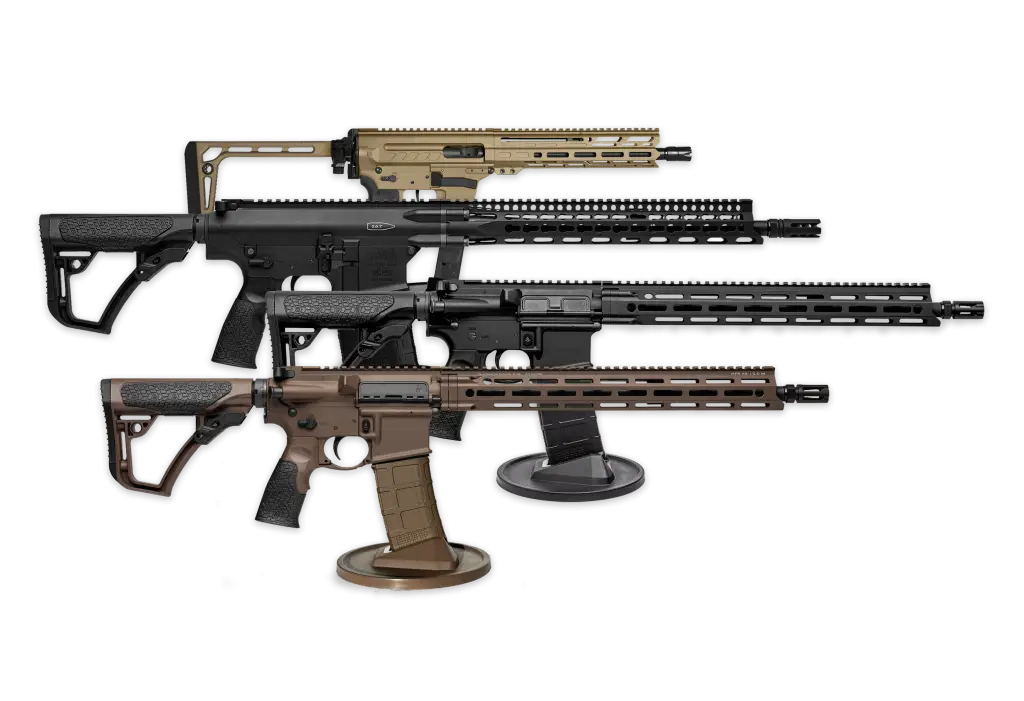
A magazine-compatible rifle stand can display:
- Traditional steel magazines.
- Modern durable plastic magazines.
- Waffle-pattern magazines.
- Wood-furniture rifles.
- Modern M-LOK configurations.
- Stamped and milled receivers.
- Fixed and folding stocks.
The magazine connects the rifle to the stand while leaving the receiver, stock, handguards, barrel, and optic visible.
Why GunCreed Uses Magazine-Specific AK Stands
AK magazine bodies are not standardized across every caliber and manufacturer. Differences in curvature, locking lugs, body width, and reinforcement make a one-size-fits-all design impractical.
A magazine-specific stand can account for:
- Front lug position.
- Rear locking-tab location.
- Magazine curve.
- Body width.
- Floorplate shape.
- Caliber-specific dimensions.
Using the correct AK gun stand helps create a stable display and avoids relying on a loose approximation of the magazine shape.
AK Magazine Frequently Asked Questions
Do All AK Rifles Use the Same Magazine?
No. Magazine compatibility depends on caliber, receiver, rifle pattern, and manufacturer.
What Is the Standard AK Magazine Capacity?
The 30-round magazine is the pattern most commonly associated with traditional AK and AKM rifles, where lawful.
Will a 5.45 Magazine Fit a 7.62 AK?
It may appear similar but is not designed to feed 7.62×39 ammunition and should not be treated as compatible.
Are All 5.56 AK Magazines Interchangeable?
No. Different 5.56 AK manufacturers may use different magazine patterns and feed geometry.
Are Steel AK Magazines Better Than Plastic?
Each offers different advantages. Steel provides traditional construction and strong locking surfaces, while durable plastic reduces weight and resists corrosion.
What Is a Bakelite AK Magazine?
It is a common collector term for orange-brown fiber-reinforced composite magazines. Many are not made from traditional Bakelite.
What Is a Bolt-Hold-Open AK Magazine?
It uses a follower that prevents the bolt carrier from moving fully forward when the magazine is empty. Removing the magazine may allow the bolt to close on rifles without a separate bolt catch.
Can One AK Stand Fit Every AK Magazine?
No. Magazine-based stands must match the correct caliber, body dimensions, curve, and locking geometry.
Final Thoughts
The AK magazine is far more diverse than its familiar curved shape suggests. Traditional 7.62×39 magazines, 5.45 AK-74 magazines, 5.56 AK magazines, pistol-caliber magazines, and large-frame Kalashnikov magazines all use different cartridge and feeding geometry.
Material creates another major distinction. Steel magazines provide a traditional appearance and strong locking surfaces but add weight and require corrosion protection. Modern durable plastic magazines reduce weight, resist rust, and support molded texture and identification features. Historic composite and Bakelite-style magazines offer unique colors, markings, and collector appeal.
Capacity options range from compact 5- and 10-round magazines to traditional 20- and 30-round models, extended 40-round magazines, and specialized drums. Availability and legality depend on the owner’s jurisdiction.
Country of origin can also matter. Romanian, Bulgarian, Polish, Chinese, Serbian, Russian, Hungarian, and American magazines may differ in their markings, welds, followers, finishes, reinforcement, and collector value.
The most important rule is that the AK name does not guarantee universal compatibility. Owners must verify the caliber, rifle model, magazine pattern, locking lugs, feed geometry, and manufacturer recommendations.
That same attention is required when selecting a display stand. A stand shaped around one 7.62×39 magazine may not accept a 5.45, 5.56, 9mm, or large-frame magazine.
Displaying the rifle on compatible gun stands allows collectors to showcase the magazine as an important part of the rifle rather than hiding it in storage.
A properly matched AK gun stand supports the rifle through the correct magazine pattern while keeping the receiver, furniture, optic, stock, and magazine fully visible. By matching the rifle, caliber, magazine, and stand correctly, owners can create a stable and professional display for one of the most recognizable rifle platforms in history.