
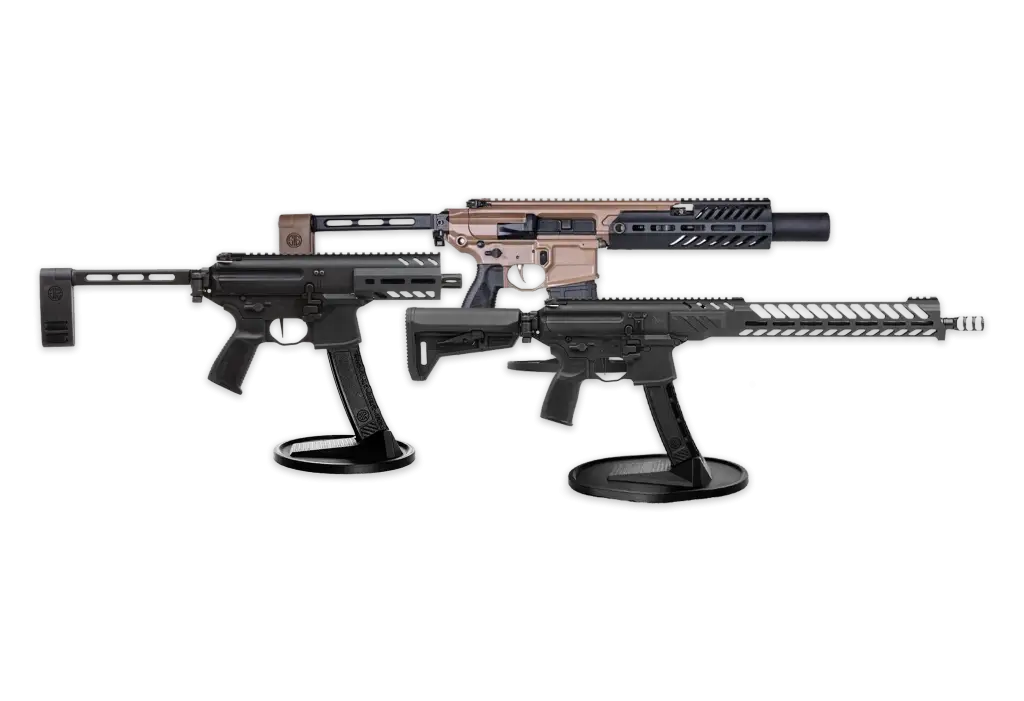
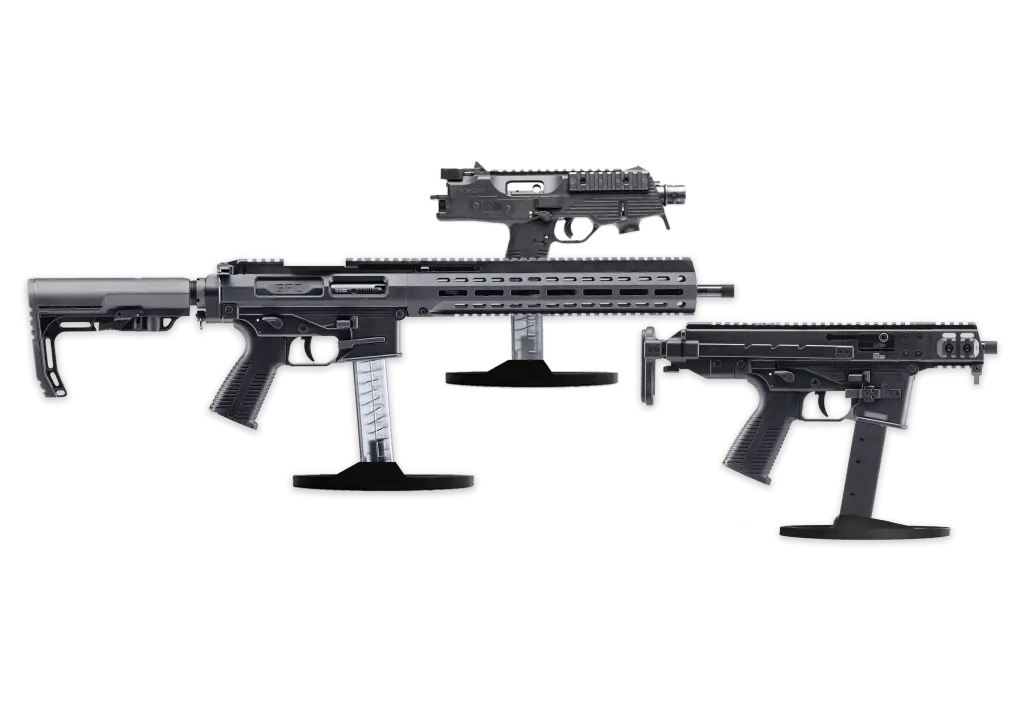
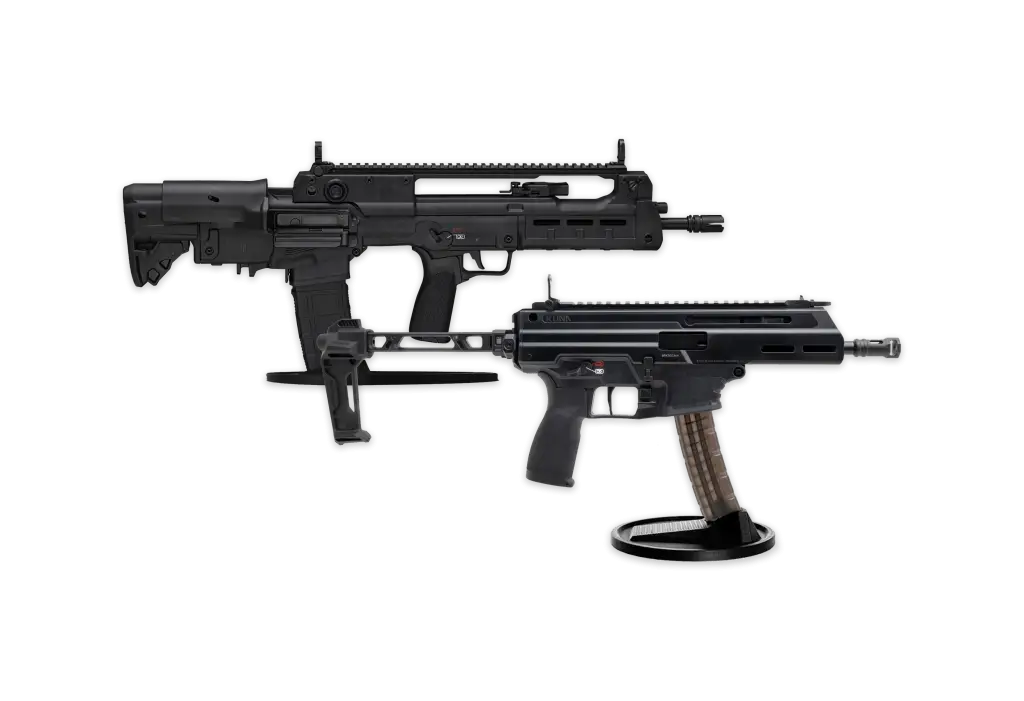
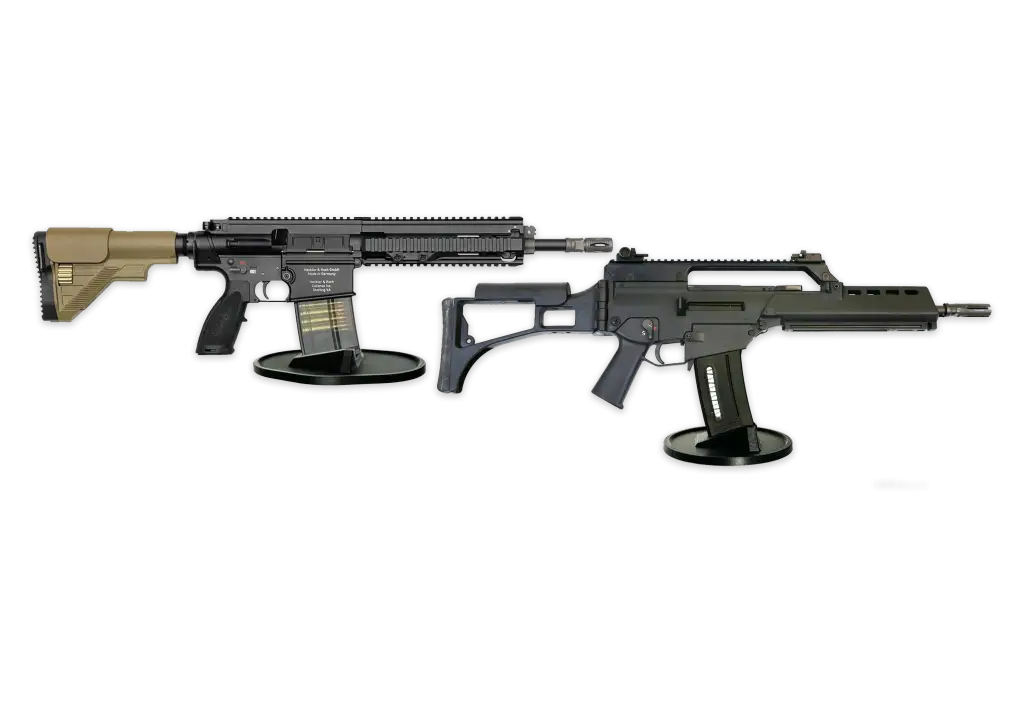






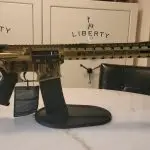



The modern sporting rifle has become one of the most recognizable categories in the American rifle market. These rifles are commonly associated with semi-automatic operation, detachable magazines, modular components, adjustable furniture, accessory-ready handguards, and compatibility with modern optics.
The term can describe several rifle families rather than one individual model. AR-15-style rifles are the most widely recognized examples in the United States, but AK-pattern rifles, pistol-caliber carbines, large-frame AR platforms, and other magazine-fed semi-automatic rifles may also be discussed within the broader sporting-rifle category.
Modern sporting rifles are used for lawful recreational shooting, organized competition, hunting where permitted, collecting, training, and range use. Their popularity is closely connected to their adaptability. Owners can select different barrel lengths, chamberings, stocks, grips, handguards, magazines, optics, slings, and display accessories.
Although many modern sporting rifles share similar features, they are not all mechanically identical. A traditional AR-15 uses a different receiver, magazine, control layout, and operating system than an AK-pattern rifle. Pistol-caliber carbines may resemble either platform while using entirely different bolts, magazines, buffers, and operating systems.
This complete guide explains what defines a modern sporting rifle, explores the most common platforms and features, and discusses compatibility, maintenance, storage, collecting, and display considerations.
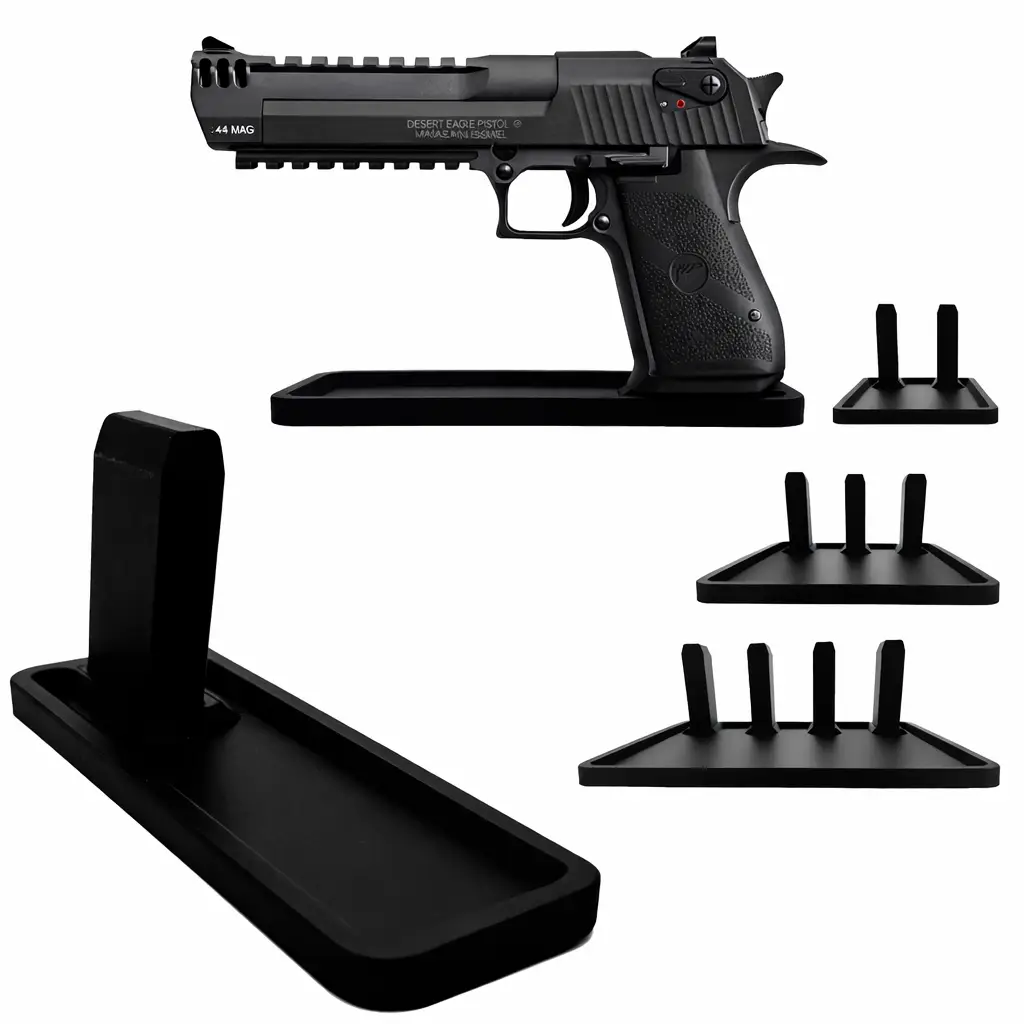
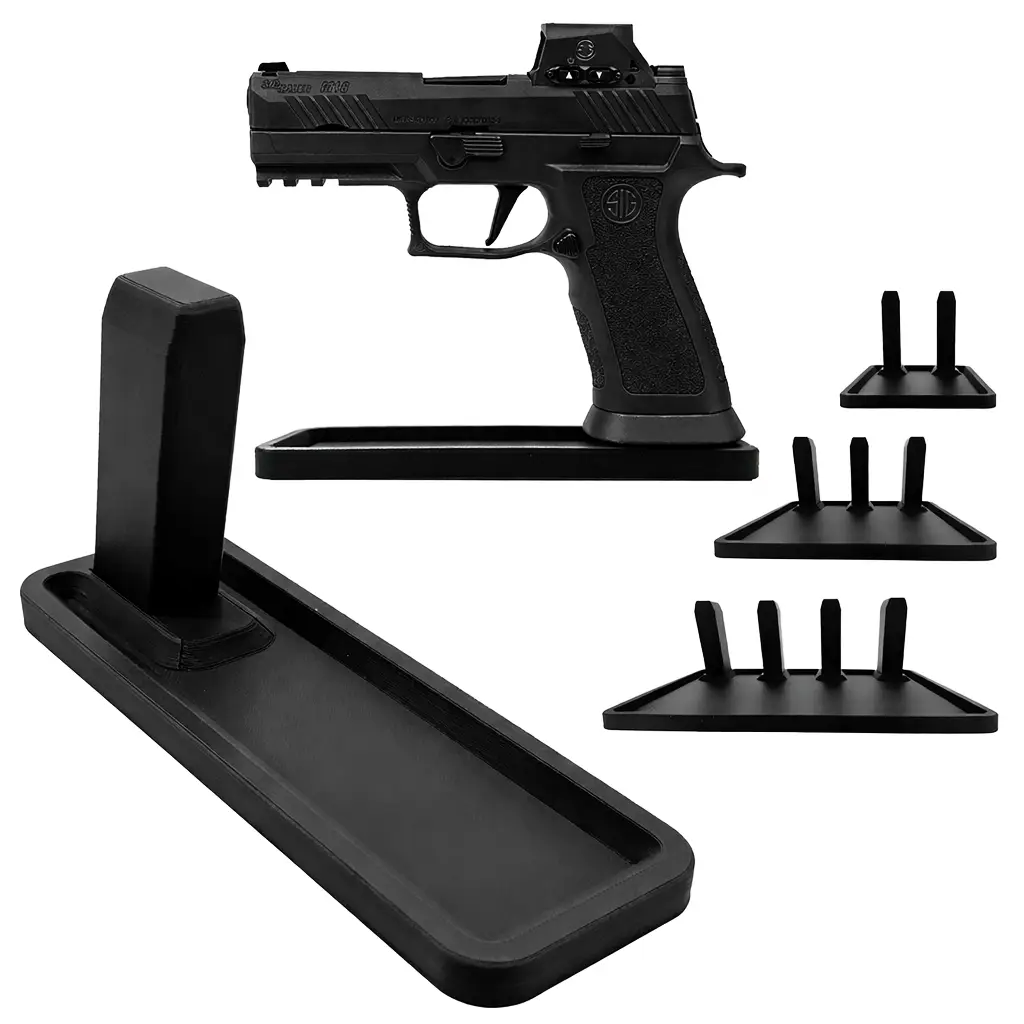
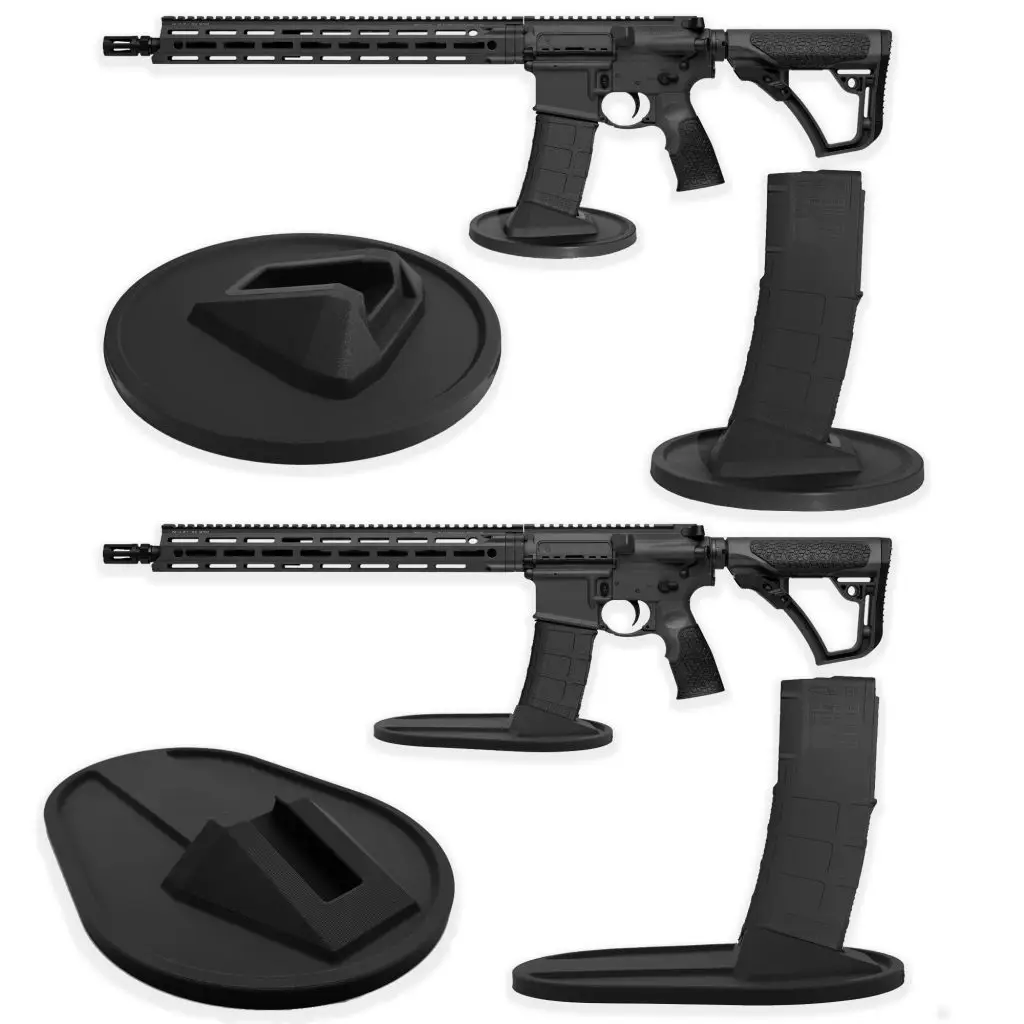
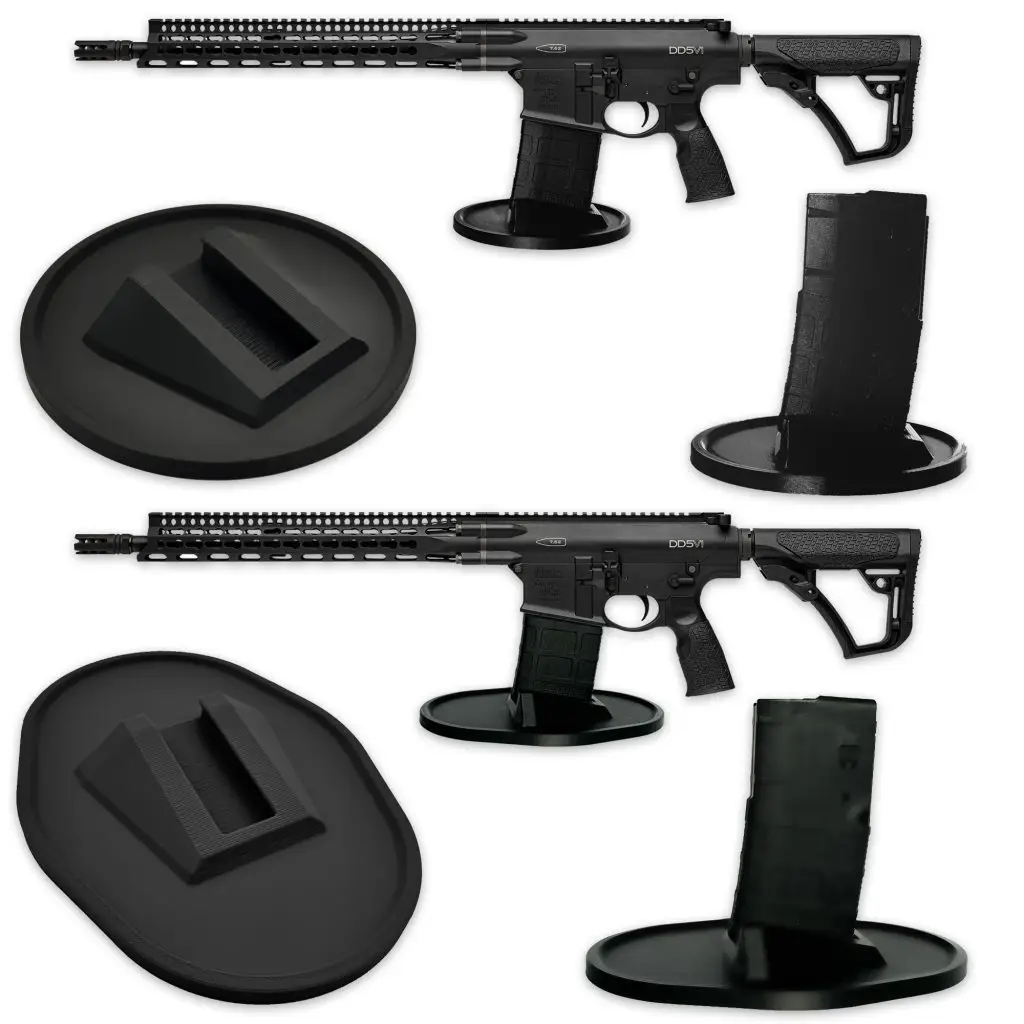
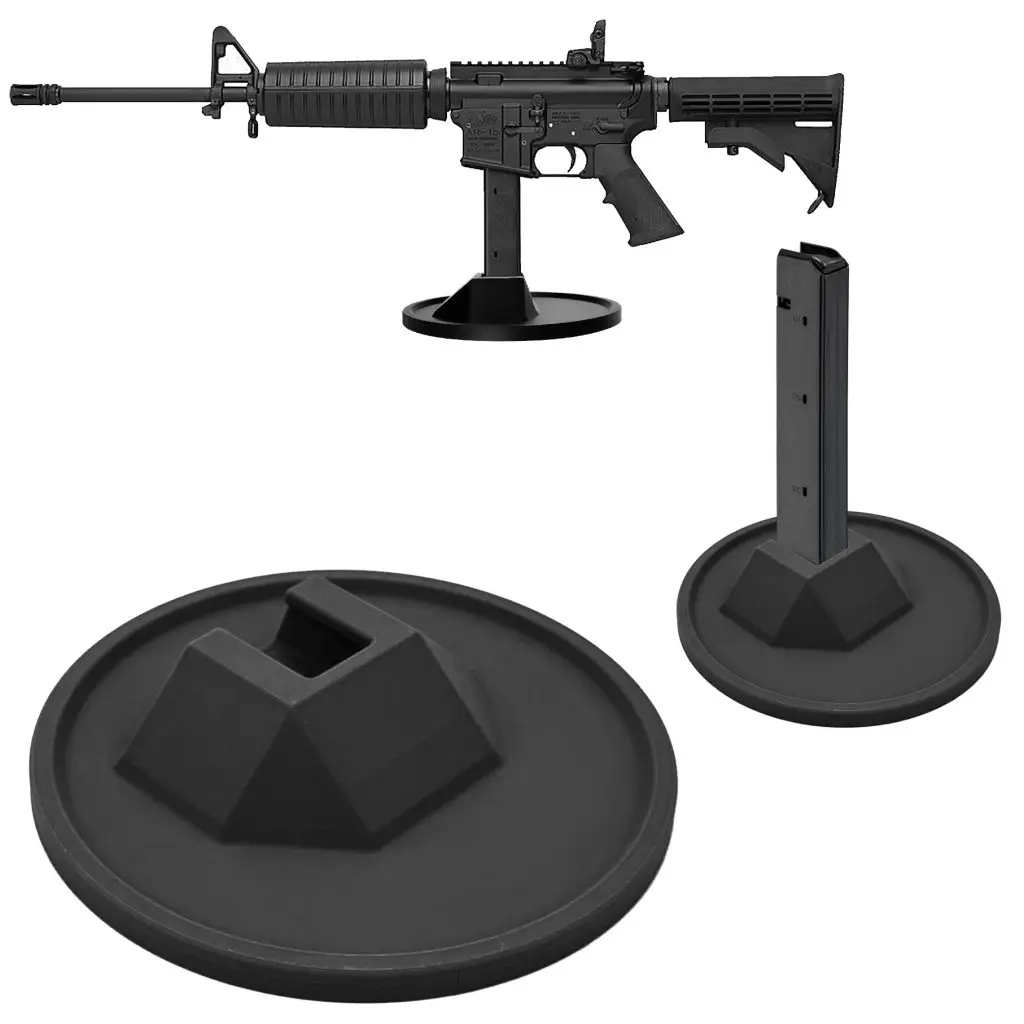
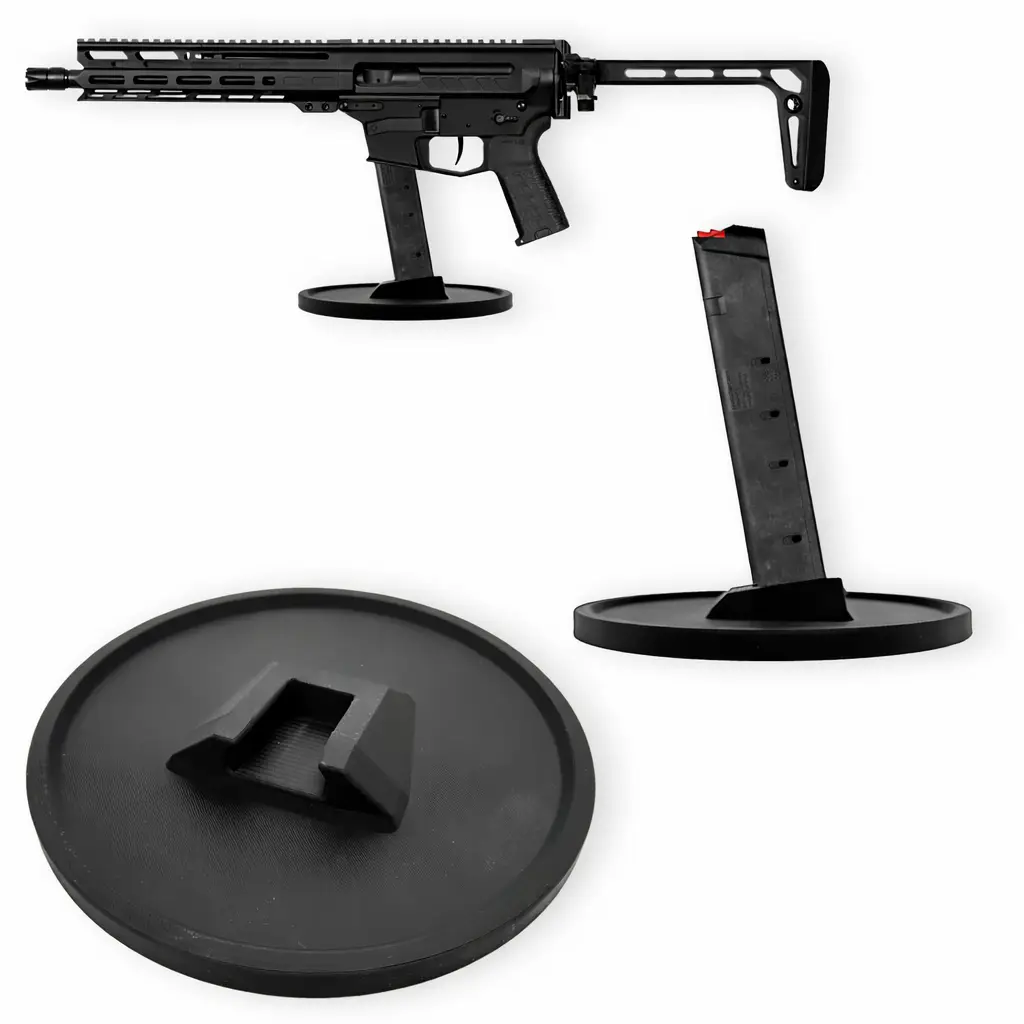
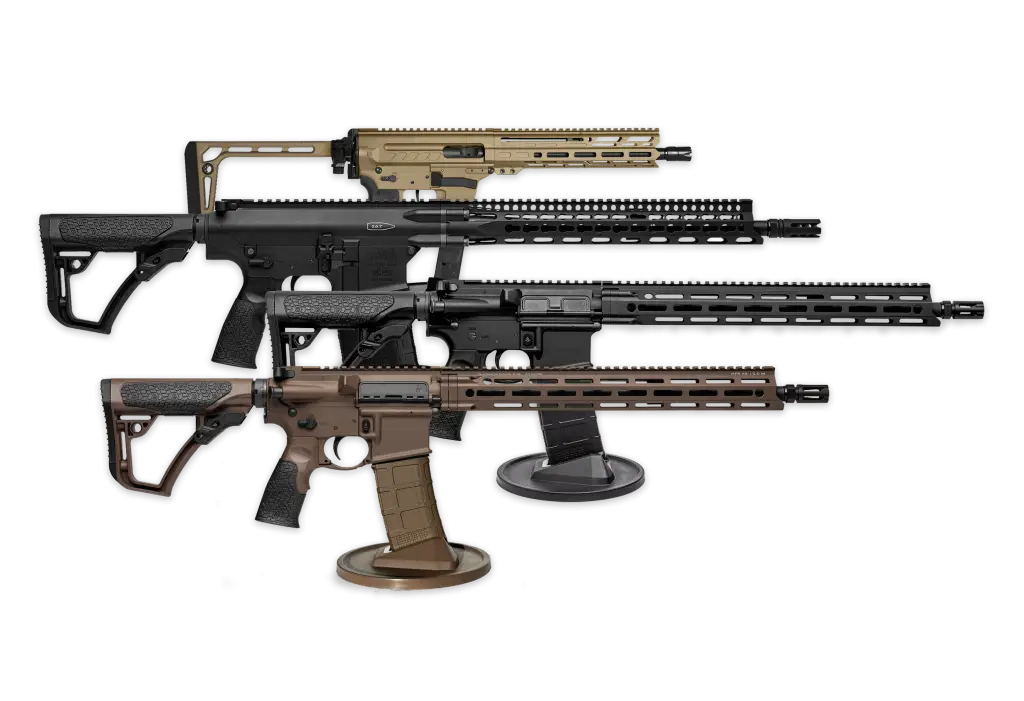
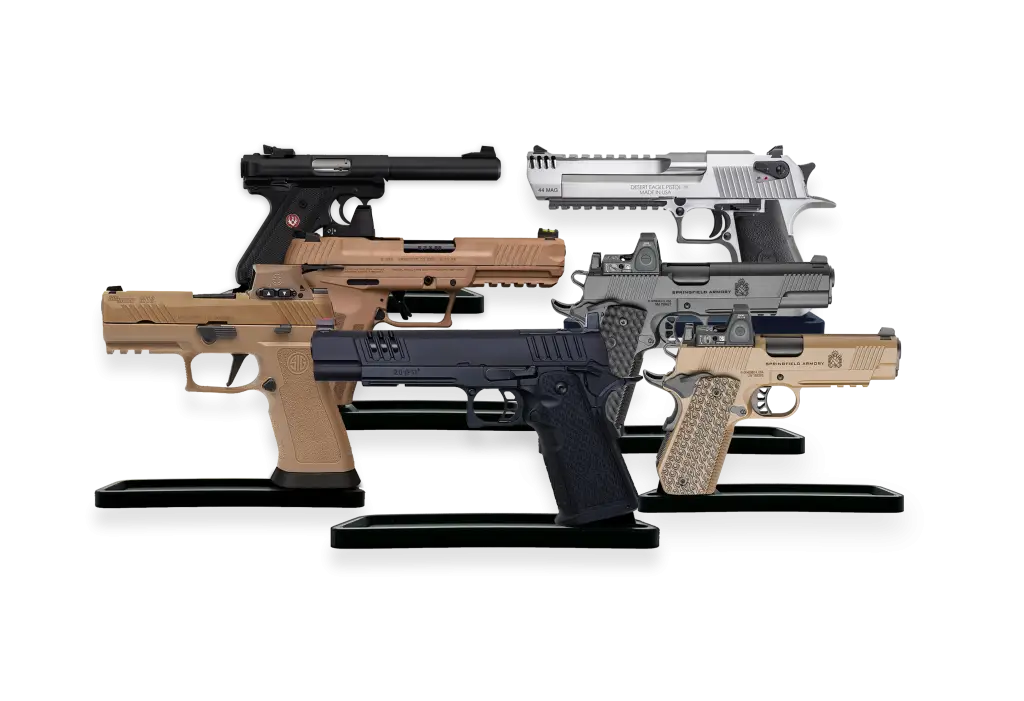
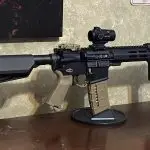
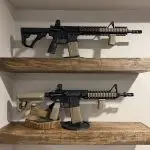
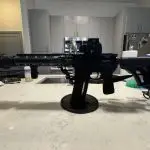
Collectors who own multiple rifle platforms often organize them using compatible gun stands designed around the correct magazine pattern.
What Is a Modern Sporting Rifle?
Modern sporting rifle is an industry term generally used to describe contemporary semi-automatic rifles with features such as detachable magazines, modular components, adjustable furniture, and accessory-mounting systems.
The category is most commonly associated with rifles based on the AR-15 platform. However, similar terminology may also be used when discussing other modern semi-automatic rifles intended for lawful sporting and recreational purposes.
Common characteristics include:
- Semi-automatic operation.
- One shot fired with each separate trigger pull.
- Detachable magazines.
- Replaceable or adjustable stocks.
- Modern optic-mounting surfaces.
- Modular handguards.
- Interchangeable accessories.
- Lightweight or corrosion-resistant materials.
- Multiple chambering options.
Not every rifle must include every feature to be considered part of the category. A traditionally configured AR-15 with a fixed stock and basic handguards still shares the same general platform heritage as a modern rifle equipped with an adjustable stock, free-float M-LOK handguard, and red dot sight.
Semi-Automatic Operation Explained
A semi-automatic rifle uses energy generated by a fired cartridge to cycle the action, eject the fired cartridge case, and chamber the next cartridge. A separate trigger pull is required for each shot.
This is different from a manually operated rifle, such as a bolt-action, lever-action, or pump-action design, where the shooter manually cycles the action between shots.
It is also different from a fully automatic firearm, which can continue firing more than one shot through a single continuous trigger function according to its design.
Semi-automatic operation is used across many rifle, pistol, and shotgun categories and is not exclusive to modern sporting rifles.
The AR-15 Platform
The AR-15 is the modern sporting rifle most commonly encountered in the United States. Its popularity comes from its lightweight construction, separate upper and lower receivers, broad aftermarket support, and compatibility with numerous calibers and accessories.
Common AR-15 features include:
- Aluminum upper and lower receivers.
- Rotating bolt.
- Rear-mounted charging handle.
- Detachable box magazine.
- In-line stock arrangement.
- Replaceable pistol grip.
- Adjustable or fixed stock.
- Free-float or drop-in handguard.
- Picatinny and M-LOK accessory mounting.
The upper receiver generally contains the barrel, bolt carrier group, charging handle, gas-system components, and handguard. The lower receiver contains the magazine well, trigger-related components, safety selector, grip, buffer assembly, and stock attachment area.
This divided receiver design is one of the main reasons the AR-15 is so adaptable.
The AK Platform
The AK family represents another major modern sporting-rifle category. Commercial semi-automatic AK-pattern rifles are available in several calibers, receiver styles, and furniture configurations.
Traditional AK characteristics include:
- Long-stroke gas-piston operation.
- Rotating bolt.
- Stamped or milled receiver.
- Right-side reciprocating charging handle.
- Large safety lever.
- Rocking magazine insertion.
- Fixed or folding stock.
- Wood or durable plastic furniture.
Modern AK rifles may replace traditional furniture with M-LOK handguards, adjustable stocks, optic mounts, enhanced grips, and accessory-ready components.
Because AK rifles were produced in numerous countries and patterns, accessory compatibility can be more complicated than it is with many standard AR-15 components.
Large-Frame AR Rifles
Large-frame AR-style rifles are commonly associated with cartridges such as .308 Winchester, 7.62x51mm NATO, and 6.5 Creedmoor.
These rifles resemble the AR-15 but use larger receivers, bolts, barrels, magazines, and operating components.
Common large-frame platforms include:
- AR-10-inspired rifles.
- SR25-pattern rifles.
- DPMS-pattern rifles.
- Manufacturer-specific large-frame designs.
Unlike the small-frame AR-15 market, large-frame rifles are not completely standardized. Receiver contours, barrel nuts, handguards, bolts, charging handles, and magazines may vary between manufacturers.
Collectors should confirm magazine compatibility before selecting an AR10 gun stand for a large-frame platform.
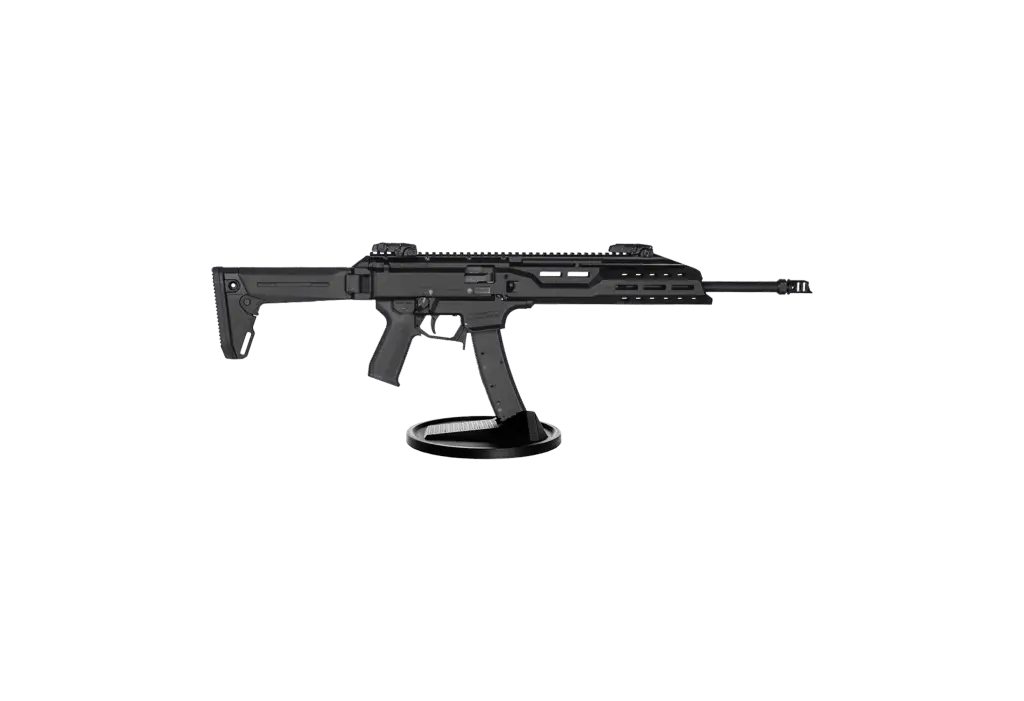
Pistol-Caliber Carbines
Pistol-caliber carbines, commonly called PCCs, combine rifle-style ergonomics with cartridges traditionally associated with handguns.
Popular chamberings include:
- 9mm.
- .40 S&W.
- .45 ACP.
- 10mm Auto on selected platforms.
- 5.7x28mm on specialized designs.
PCCs may use:
- Glock-pattern magazines.
- Colt-style magazines.
- SIG-pattern magazines.
- Scorpion-pattern magazines.
- Proprietary magazines.
Some PCCs use AR-style controls and receivers, while others use completely proprietary layouts.
The magazine pattern is especially important when selecting replacement magazines, magazine carriers, or display stands.
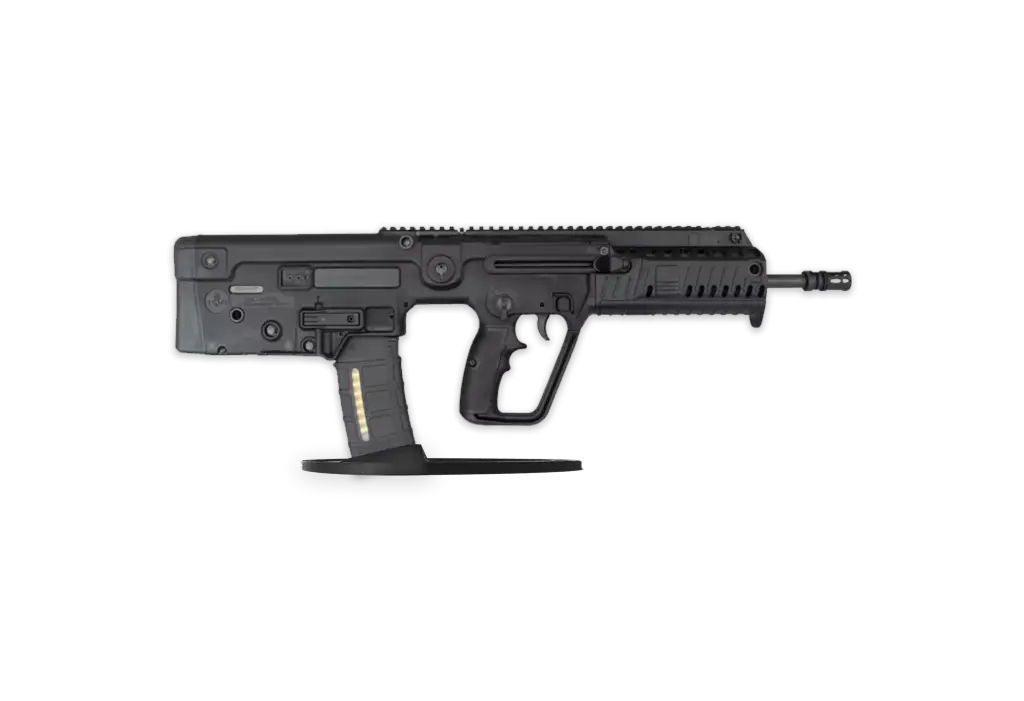
Bullpup Sporting Rifles
A bullpup places the action and magazine behind the trigger area. This arrangement can provide a relatively long barrel while keeping the rifle’s overall length shorter than a traditionally arranged rifle with a similar barrel.
Common bullpup characteristics include:
- Rear-positioned action.
- Magazine located behind the grip.
- Compact overall dimensions.
- Long top rail on many modern models.
- Ambidextrous or reversible features on selected platforms.
- Specialized trigger linkage.
Examples may use AR-pattern magazines, proprietary magazines, or other established magazine types.
Bullpup balance can differ substantially from the balance of an AR-15 or AK because more of the rifle’s mass is positioned toward the rear.
Modern Sporting Rifle Operating Systems
Modern sporting rifles use several operating systems. The exterior appearance of a rifle does not always reveal exactly how it functions internally.
Common systems include:
- Internal gas operation.
- Short-stroke gas piston.
- Long-stroke gas piston.
- Direct blowback.
- Delayed blowback.
Each system has different components, maintenance requirements, weight distribution, and compatibility considerations.
Internal Gas-Operated Rifles
Traditional AR-15 rifles use a gas system that directs gas from the barrel through a gas tube and into the bolt carrier assembly.
Common components include:
- Barrel gas port.
- Gas block.
- Gas tube.
- Carrier key.
- Bolt carrier group.
This system supports lightweight front-end construction and is widely used across commercial AR-15 rifles.
Short-Stroke Piston Rifles
A short-stroke piston uses gas pressure to move a separate piston or operating rod a limited distance. That component transfers energy to the bolt carrier.
Short-stroke systems appear on several AR-style and proprietary modern sporting rifles.
Potential characteristics include:
- Different bolt-carrier design.
- Additional front-end components.
- Manufacturer-specific gas adjustments.
- Proprietary replacement parts.
- Different balance compared with a traditional AR.
Parts from one piston system should not be assumed to fit another.
Long-Stroke Piston Rifles
A long-stroke piston remains attached to the bolt carrier and moves with it through the operating cycle.
This system is most strongly associated with AK-pattern rifles, although other platforms use related designs.
The piston, carrier, and bolt form a relatively large moving assembly. This arrangement contributes to the distinctive mechanical character of the AK family.
Blowback-Operated Sporting Rifles
Many pistol-caliber carbines use direct blowback operation. Instead of using a gas tube or piston, the system relies largely on bolt mass, spring pressure, and cartridge energy.
Blowback platforms may require:
- Caliber-specific bolt.
- Specialized buffer.
- Dedicated magazine system.
- Different ejector arrangement.
- Caliber-specific lower receiver or adapter.
A blowback AR-style rifle may resemble a 5.56 AR-15 while using substantially different internal components.
Upper and Lower Receivers
The separate upper-and-lower receiver arrangement is most strongly associated with AR-style rifles.
The upper receiver may contain:
- Barrel.
- Bolt carrier group.
- Charging handle.
- Gas system.
- Handguard.
- Forward assist on selected designs.
- Ejection port cover.
The lower receiver may contain:
- Magazine well.
- Trigger assembly.
- Safety selector.
- Magazine release.
- Bolt catch.
- Pistol grip.
- Buffer system.
- Stock attachment.
Other modern sporting rifles may use a single receiver, stamped receiver shell, molded receiver housing, or manufacturer-specific chassis.
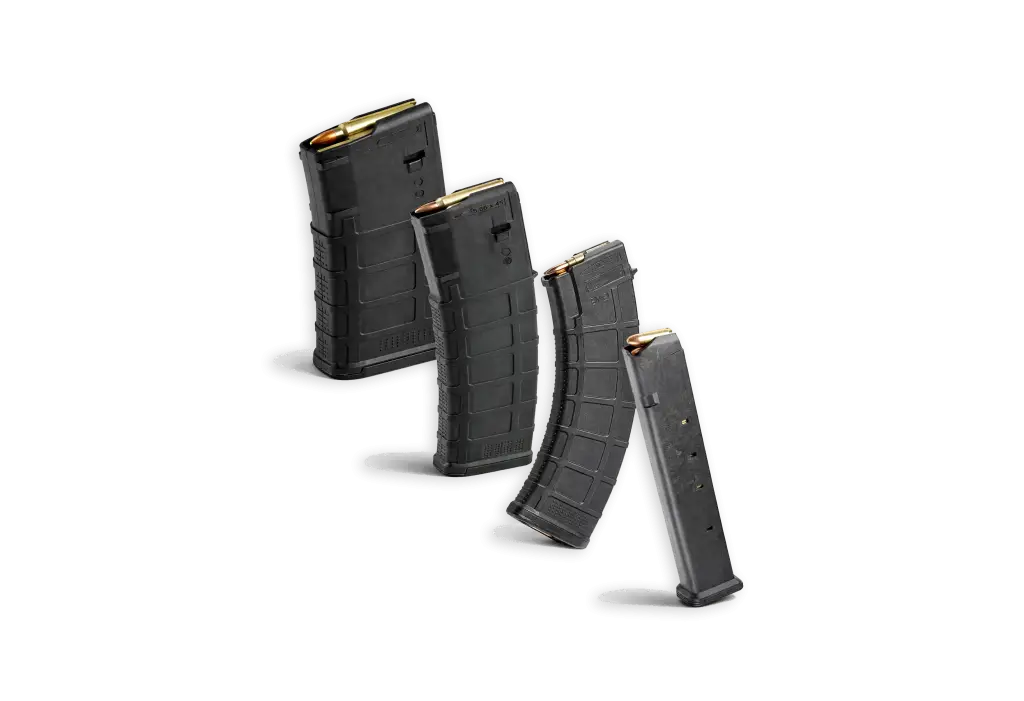
Detachable Magazines
Detachable magazines are among the most recognizable features of modern sporting rifles. They are available in several materials, capacities, and platform-specific designs.
Common magazine materials include:
- Aluminum.
- Steel.
- Durable plastic.
- Fiber-reinforced composite material.
- Translucent material.
Magazine compatibility depends on:
- Rifle platform.
- Caliber.
- Magazine-well dimensions.
- Feed-lip geometry.
- Locking system.
- Manufacturer specifications.
Similar-looking magazines are not necessarily interchangeable.
AR-15 Magazines
Standard 5.56 and .223 AR-15 rifles commonly use STANAG-pattern magazines.
Common capacities include:
- 5 rounds.
- 10 rounds.
- 20 rounds.
- 30 rounds.
- 40 rounds.
The Magpul PMAG is one of the most recognizable modern AR-15 magazines. Metal magazines from numerous manufacturers also remain popular.
Alternative AR calibers may require specialized magazines even when the rifle uses a standard-size lower receiver.
AK Magazines
AK magazines use front and rear locking surfaces and are generally rocked into the rifle.
Common AK magazine families include:
- 7.62×39 AK and AKM magazines.
- 5.45×39 AK-74 magazines.
- 5.56 NATO AK magazines.
- Pistol-caliber AK-style magazines.
The magazine’s curve, body width, feed lips, follower, and locking lugs vary by cartridge and rifle pattern.
A stand intended for an AR magazine should not be assumed to support an AK magazine.
Common Modern Sporting Rifle Calibers
Modern sporting rifles are available in a broad selection of chamberings.
Common examples include:
- 5.56 NATO.
- .223 Remington.
- .300 Blackout.
- 7.62x39mm.
- 5.45x39mm.
- 9mm.
- .22 LR.
- 6.5 Grendel.
- 6mm ARC.
- .350 Legend.
- .450 Bushmaster.
- .308 Winchester.
- 7.62x51mm NATO.
- 6.5 Creedmoor.
The correct caliber depends on the owner’s intended lawful application, ammunition availability, rifle design, local regulations, and personal preferences.
Barrel Lengths
Barrel length influences the rifle’s overall dimensions, weight distribution, handling, sight radius, and ballistic characteristics.
Common AR-style rifle barrel lengths include:
- 14.5 inches on selected configurations.
- 16 inches.
- 18 inches.
- 20 inches.
Shorter barrels may be used on legally configured platforms subject to applicable requirements. Owners must understand all federal, state, and local laws governing barrel length and overall firearm configuration.
AK, bullpup, PCC, and large-frame rifles are also available with several barrel lengths depending on the model.
Barrel Profiles
A barrel’s profile describes its exterior shape and thickness.
Common profiles include:
- Lightweight or pencil.
- Government.
- Medium.
- Heavy.
- Fluted.
- Precision-oriented.
A heavier barrel can add weight and affect balance. A lightweight barrel reduces front-end mass but may respond differently to heat during extended use.
Barrel quality, chambering, twist rate, ammunition, and manufacturing consistency all influence performance.
Barrel Twist Rates
Twist rate describes how quickly the rifling completes one full revolution inside the barrel.
It is written as a ratio such as:
- 1:7.
- 1:8.
- 1:9.
A 1:7 twist completes one full rotation in seven inches. A 1:9 twist completes one rotation in nine inches.
The appropriate twist rate depends on the chambering, projectile design, and manufacturer recommendations.
Free-Float Handguards
A free-float handguard mounts around the barrel nut without contacting the barrel along most of its length.
Potential benefits include:
- Reduced transfer of handguard pressure to the barrel.
- Extensive accessory-mounting space.
- Modern appearance.
- Multiple available lengths.
- Improved ventilation.
- Continuous top rail on many designs.
Free-float handguards are common on modern AR-15 and large-frame AR rifles.
M-LOK Handguards
M-LOK uses elongated rectangular slots that accept compatible direct-mount accessories.
Popular M-LOK accessories include:
- Hand stops.
- Vertical grips.
- Angled grips.
- Sling mounts.
- Light mounts.
- Bipod mounts.
- Rail covers.
- Picatinny rail sections.
M-LOK has become one of the most common accessory-mounting systems on modern sporting rifles.
Picatinny Rails
Picatinny rail uses a series of raised cross slots that provide standardized mounting locations.
It is commonly found:
- Along the top of upper receivers.
- On quad-rail handguards.
- On short modular rail sections.
- On optic mounts.
- On bipod and sling adapters.
Picatinny remains widely supported even as M-LOK has reduced the need for permanent rails on every side of the handguard.
Fixed and Adjustable Stocks
Modern sporting rifles may use fixed, adjustable, or folding stocks depending on the platform.
Fixed Stocks
Fixed stocks provide one consistent length and generally use fewer moving components.
Adjustable Stocks
Adjustable stocks allow the length of pull to be changed for different users, clothing, or shooting positions.
Folding Stocks
Folding stocks reduce the rifle’s overall length for storage or transportation. Compatibility depends on the operating system and receiver design.
Traditional AR-15 rifles use a receiver extension containing the buffer and spring, which affects compatibility with folding-stock arrangements.
Pistol Grips
Many modern sporting rifles use a separate pistol grip. Aftermarket grips allow owners to select different angles, widths, textures, and storage features.
Common grip features include:
- More vertical angle.
- Traditional swept angle.
- Rubber overmolding.
- Textured durable plastic.
- Internal storage.
- Interchangeable panels.
Grip compatibility varies by platform. An AR-15 grip does not automatically fit an AK, bullpup, or proprietary rifle.
Modern Rifle Optics
Modern sporting rifles support a wide selection of optics.
Popular categories include:
- Red dot sights.
- Holographic sights.
- Prism optics.
- LPVOs.
- Magnified rifle scopes.
- Backup iron sights.
The best optic depends on the rifle’s intended use, mounting surface, stock height, eye relief, weight, and owner’s preferences.
Red Dot Sights
A red dot sight provides a non-magnified illuminated aiming point.
Common features include:
- Adjustable brightness.
- Red or green reticle.
- Motion activation.
- Automatic shutoff.
- Extended battery life.
- Compact construction.
Red dots are especially common on AR-15 rifles, AK rifles with compatible mounts, PCCs, and compact sporting platforms.
Low-Power Variable Optics
An LPVO provides variable magnification beginning at a relatively low setting.
Common ranges include:
- 1-4x.
- 1-6x.
- 1-8x.
- 1-10x.
LPVOs are popular on general-purpose, competition, and precision-oriented sporting rifles.
They generally add more size and weight than a red dot and require proper eye relief.
Ambidextrous Controls
Many modern sporting rifles include controls that can be reached from both sides.
Ambidextrous components may include:
- Safety selector.
- Charging handle.
- Magazine release.
- Bolt catch.
- Bolt release.
Some rifles include only one or two ambidextrous controls, while others use purpose-built receivers with nearly mirrored control access.
These features can benefit left-handed, right-handed, cross-dominant, and shared-rifle users.
Rifle Slings and Mounting Options
A sling supports carrying and organization while keeping the rifle close to the body when appropriate.
Common sling types include:
- One-point slings.
- Two-point slings.
- Three-point slings.
- Padded slings.
- Traditional leather slings.
- Competition slings.
Mounting options include:
- QD sockets.
- M-LOK sling mounts.
- Picatinny mounts.
- Fixed loops.
- Sling studs.
- Receiver end plates.
Rifle-Mounted Lights
Accessory-ready handguards allow compatible lights to be installed using M-LOK, Picatinny, or platform-specific mounts.
A light system may include:
- Light body.
- Mount.
- Battery.
- Tail cap.
- Remote switch.
- Cable-management hardware.
Buyers should consider size, weight, battery availability, mount compatibility, switch placement, and heat exposure.
Bipods
Bipods are commonly used on precision-oriented sporting rifles and rifles intended for supported recreational shooting.
Common attachment methods include:
- Direct M-LOK mount.
- Picatinny mount.
- Sling-stud mount.
- Proprietary quick-detach system.
A bipod adds weight near the front of the rifle and can affect balance.
Muzzle Devices
Modern sporting rifles may use several types of muzzle devices.
Common categories include:
- Thread protectors.
- Flash hiders.
- Compensators.
- Muzzle brakes.
- Suppressor-compatible mounts where lawful.
Compatibility depends on caliber, thread pattern, barrel dimensions, manufacturer specifications, and applicable laws.
Trigger Systems
Factory sporting rifles commonly include standard single-stage or two-stage trigger systems. Aftermarket options allow owners to select different pull characteristics and trigger shapes.
Common categories include:
- Single-stage triggers.
- Two-stage triggers.
- Cassette-style triggers.
- Competition-oriented triggers.
- Manufacturer-specific trigger groups.
Any trigger component must be compatible with the rifle and installed according to the manufacturer’s instructions.
Materials Used in Modern Sporting Rifles
Modern rifles combine several materials selected for different structural and ergonomic purposes.
Common materials include:
- Steel for barrels, bolts, and operating components.
- Aluminum for receivers and handguards.
- Durable plastic for stocks, grips, magazines, and rail covers.
- Wood for traditional AK and sporting-rifle furniture.
- Carbon fiber for lightweight stocks and handguards.
- Rubber for recoil pads and grip surfaces.
The material alone does not determine quality. Manufacturing consistency, design, heat treatment, coatings, and assembly also matter.
Colors and Finishes
Black remains the traditional finish for many modern sporting rifles, but manufacturers and accessory companies offer numerous additional colors.
Popular options include:
- Army Tan or FDE.
- Army Green.
- Gray.
- White.
- Safety Orange.
- Cherry Red.
- Pink.
- Light Pink.
- Camouflage patterns.
Owners can coordinate stocks, grips, magazines, rail covers, slings, and display stands to create a consistent collection theme.
Modularity and Customization
Modularity is one of the defining reasons modern sporting rifles remain popular.
Depending on the platform, owners may customize:
- Upper receivers.
- Barrels.
- Handguards.
- Stocks.
- Pistol grips.
- Triggers.
- Charging handles.
- Safety selectors.
- Optics.
- Slings.
- Magazines.
- Display equipment.
The AR-15 generally offers the broadest standardized aftermarket. AK and proprietary platforms may require more model-specific research.
Compatibility Is Not Universal
One of the most common buying mistakes is assuming that visually similar components are interchangeable.
Compatibility can be affected by:
- Rifle model.
- Receiver pattern.
- Caliber.
- Gas system.
- Magazine design.
- Barrel nut.
- Handguard mounting system.
- Stock attachment.
- Manufacturer-specific dimensions.
Large-frame AR rifles, piston-operated platforms, AK variants, and pistol-caliber carbines may use proprietary components.
Maintenance and Inspection
Routine maintenance helps preserve the rifle and allows worn or damaged components to be identified.
General inspection may include:
- Barrel and chamber.
- Bolt and carrier.
- Gas-system components.
- Charging handle.
- Trigger assembly.
- Buffer or recoil-spring assembly.
- Magazines.
- Optic mounts.
- Handguard hardware.
- Stock and sling attachments.
Owners should follow the manual provided for their exact rifle. Maintenance procedures differ between AR, AK, piston, blowback, bullpup, and proprietary platforms.
Magazine Maintenance
Magazines are essential components and should be inspected regularly.
Check for:
- Damaged feed lips.
- Cracked or dented bodies.
- Follower binding.
- Corroded springs.
- Damaged locking surfaces.
- Loose floorplates.
- Dirt and debris.
A magazine that repeatedly causes problems should be marked, inspected, and removed from use when damaged.
Safe Storage and Organization
Modern sporting rifles should be stored securely and in accordance with applicable laws and household safety needs.
Storage options may include:
- Gun safes.
- Locking cabinets.
- Secure display rooms.
- Hard cases.
- Soft cases.
- Locked wall systems.
- Display stands used within a secured area.
A display stand is an organizational product and is not a replacement for secure storage, responsible access control, or an appropriate locking system.
Modern Sporting Rifles for Collectors
The category provides nearly unlimited collecting possibilities.
Popular collection themes include:
- AR-15 manufacturer collections.
- Retro AR configurations.
- Modern M-LOK rifles.
- AK country-of-origin variants.
- Stamped and milled AK rifles.
- Pistol-caliber carbines.
- Large-frame AR rifles.
- Bullpup platforms.
- Different calibers.
- Color-coordinated builds.
Collectors may also compare optics, barrel lengths, magazines, furniture, and operating systems.
Displaying Modern Sporting Rifles
A well-organized rifle display allows the differences between platforms to remain visible.
A compatible rifle stand can showcase:
- Upper and lower receivers.
- Stocks.
- Handguards.
- Optics.
- Magazines.
- Slings.
- Barrels.
- Muzzle devices.
- Custom finishes.
Magazine-compatible stands support the rifle through an appropriate magazine pattern, reducing the need to rest the handguard, barrel, or stock against an external support.
Why Magazine Pattern Matters for Rifle Stands
A magazine-compatible stand must match the exact magazine used by the rifle.
Common patterns include:
- AR-15 STANAG magazines.
- AR-10 and SR25 magazines.
- 7.62×39 AK magazines.
- 5.45 AK-74 magazines.
- Glock-pattern magazines.
- Colt-style 9mm magazines.
- Scorpion-pattern magazines.
- Proprietary PCC magazines.
A rifle’s general appearance is not enough to determine stand compatibility. The caliber, magazine model, locking system, and body dimensions all matter.
Why GunCreed Stands Complement Modern Sporting Rifles
GunCreed rifle stands are designed around specific compatible magazine patterns. This allows the rifle to connect to the base through the magazine well while leaving the exterior features visible.
A compatible stand can highlight:
- AR-15 receiver designs.
- AK wood or modern furniture.
- Free-float handguards.
- Optics and sights.
- Adjustable stocks.
- Ambidextrous controls.
- Custom colors.
- Distinct magazine profiles.
An appropriate AR15 gun stand can support many compatible small-frame AR rifles using the listed magazine pattern. AK, large-frame AR, and pistol-caliber platforms require their own compatible stands.
Common Modern Sporting Rifle Buying Mistakes
Choosing by Appearance Alone
Two similar-looking rifles may use different operating systems, magazines, receivers, and proprietary components.
Assuming Every Part Is Universal
Even within the AR market, large-frame, piston, and pistol-caliber components may differ.
Ignoring Magazine Compatibility
The wrong magazine may not lock, feed, or fit the rifle.
Adding Too Many Accessories
Excessive attachments can increase weight and disrupt balance.
Ignoring Ammunition Availability
Specialized calibers may cost more and be harder to find.
Overlooking Local Laws
Rifle configurations, magazine capacities, transportation, hunting use, and storage requirements vary by jurisdiction.
Buying the Wrong Display Stand
The stand must match the exact magazine pattern rather than only the rifle’s general category.
Modern Sporting Rifle Frequently Asked Questions
What Is a Modern Sporting Rifle?
It is an industry term generally used for contemporary semi-automatic rifles with features such as detachable magazines, modular components, adjustable furniture, and modern optic-mounting systems.
Is Every Modern Sporting Rifle an AR-15?
No. The AR-15 is the most recognized example, but the broader category may include AK-pattern rifles, PCCs, large-frame AR rifles, bullpups, and proprietary semi-automatic platforms.
Does a Semi-Automatic Rifle Fire More Than One Shot per Trigger Pull?
No. A semi-automatic rifle requires a separate trigger pull for each shot.
Are Modern Sporting Rifles Available in Different Calibers?
Yes. Common chamberings include 5.56 NATO, .223 Remington, .300 Blackout, 7.62×39, 9mm, .308 Winchester, and many others.
Are All AR-15 Parts Interchangeable?
No. Caliber, receiver pattern, gas system, barrel dimensions, and proprietary designs can affect compatibility.
Do All AK Rifles Use the Same Magazine?
No. AK magazines differ by caliber, country pattern, rifle design, and locking geometry.
What Is the Most Common Modern Handguard System?
M-LOK is one of the most widely used modular attachment systems on current commercial rifles.
Can One Rifle Stand Fit Every Modern Sporting Rifle?
No. Magazine-compatible stands must match the exact magazine pattern and rifle configuration.
Final Thoughts
The modern sporting rifle category includes an enormous selection of semi-automatic rifle platforms. The AR-15 is the most recognizable American example, but AK-pattern rifles, large-frame AR platforms, bullpups, pistol-caliber carbines, and proprietary designs also contribute to the category’s diversity.
These rifles commonly combine detachable magazines, modern materials, accessory-ready handguards, adjustable furniture, and optic-mounting systems. However, shared features do not mean universal compatibility.
An AR-15 and AK may both use detachable magazines and modern optics, but their operating systems, receivers, controls, magazines, and furniture are fundamentally different. A 9mm PCC may resemble an AR-15 while using a blowback bolt, specialized buffer, and pistol magazine. A large-frame AR may resemble a standard AR-15 while requiring a larger receiver and completely different magazine.
Owners should identify the exact rifle, caliber, receiver pattern, operating system, and magazine before purchasing parts or accessories. Manufacturer specifications are especially important when selecting handguards, stocks, bolts, barrels, magazines, triggers, and display equipment.
For collectors, modern sporting rifles provide almost unlimited variety. A collection can include retro AR rifles, modern M-LOK carbines, wood-furniture AKs, folding-stock variants, PCCs, large-frame rifles, and bullpup platforms.
Displaying these rifles on compatible gun stands allows the major differences to remain visible while helping organize the collection.
A properly matched AR15 gun stand can showcase a compatible small-frame AR through the appropriate magazine pattern. Large-frame, AK, and pistol-caliber rifles require stands designed for their exact magazines.
By matching the rifle, magazine, accessories, and display stand correctly, collectors can create a clean and professional presentation that highlights the adaptability, engineering, and continuing evolution of the modern sporting rifle.