
















The AR-15 is one of the most recognizable and widely discussed rifle platforms in the United States. Its distinctive profile, lightweight construction, modular design, and extensive aftermarket support have made it popular among collectors, recreational shooters, competitors, hunters, and rifle enthusiasts.
Despite its familiarity, AR-15 history is often misunderstood. The platform did not appear overnight, and the letters “AR” do not stand for “assault rifle.” The name originally came from ArmaLite, the company that developed the early design. Over several decades, the platform moved from an experimental lightweight rifle concept to a military-related design and eventually into one of the largest commercial sporting-rifle ecosystems in the world.
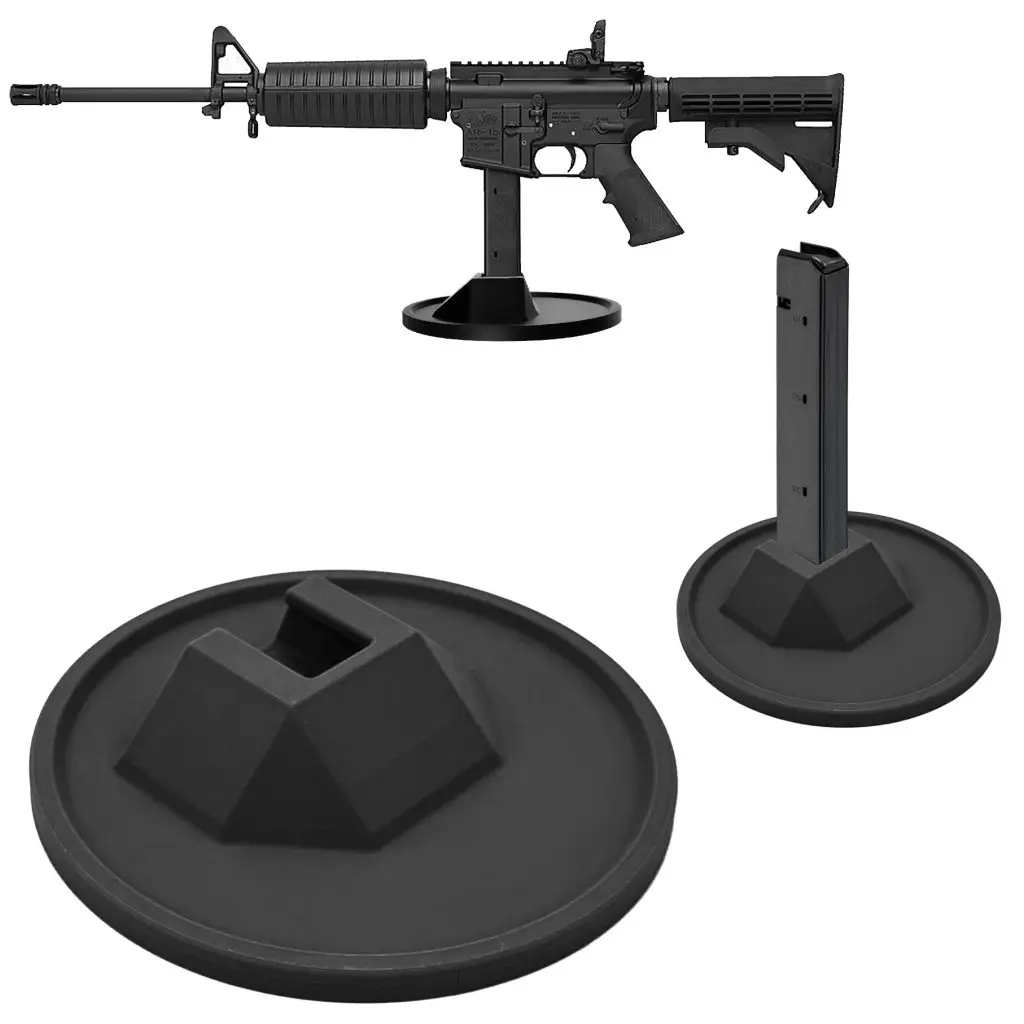
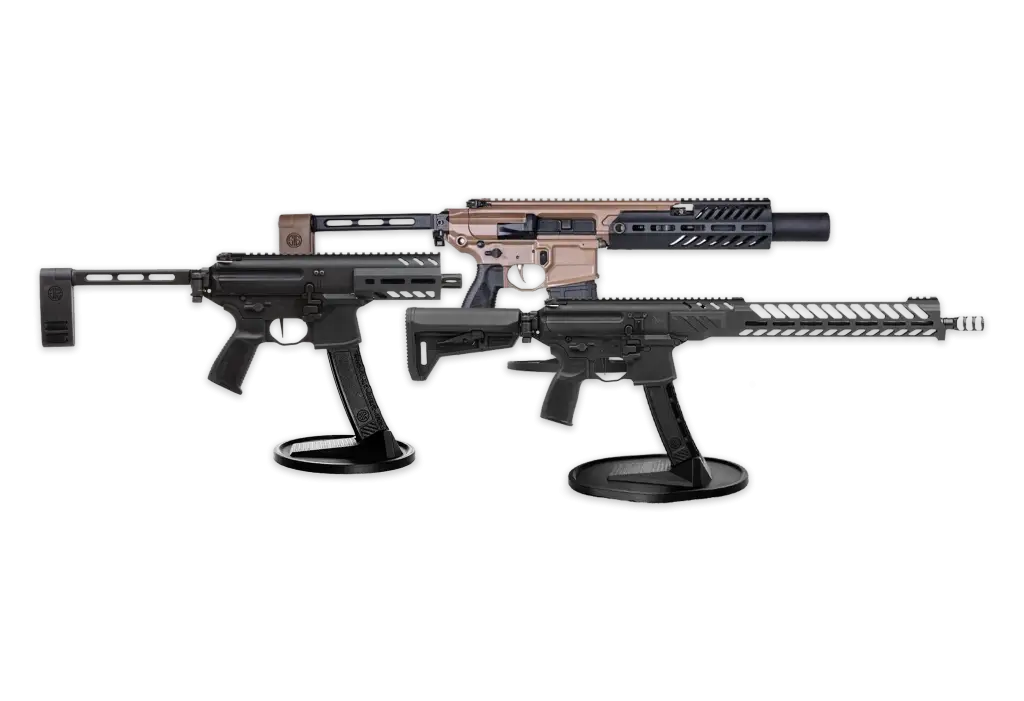
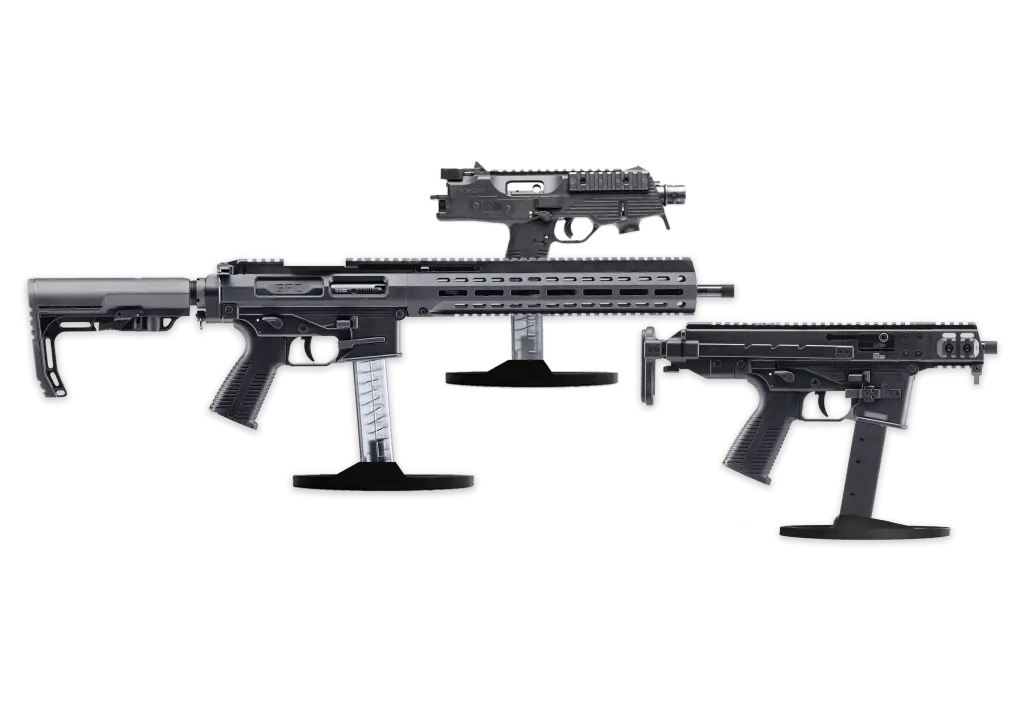
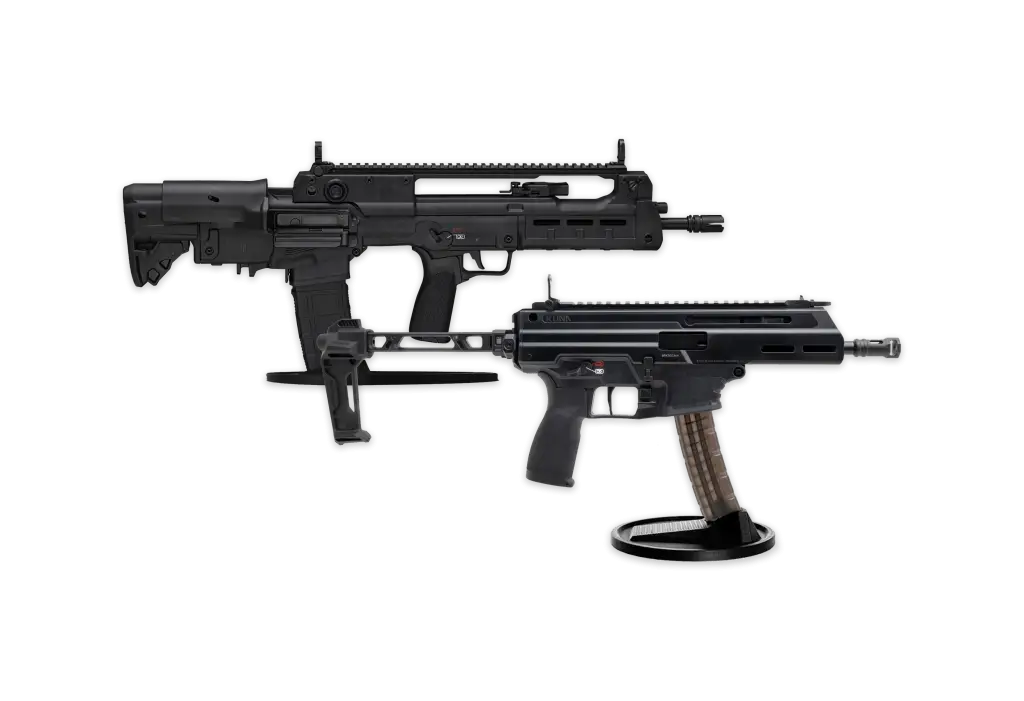
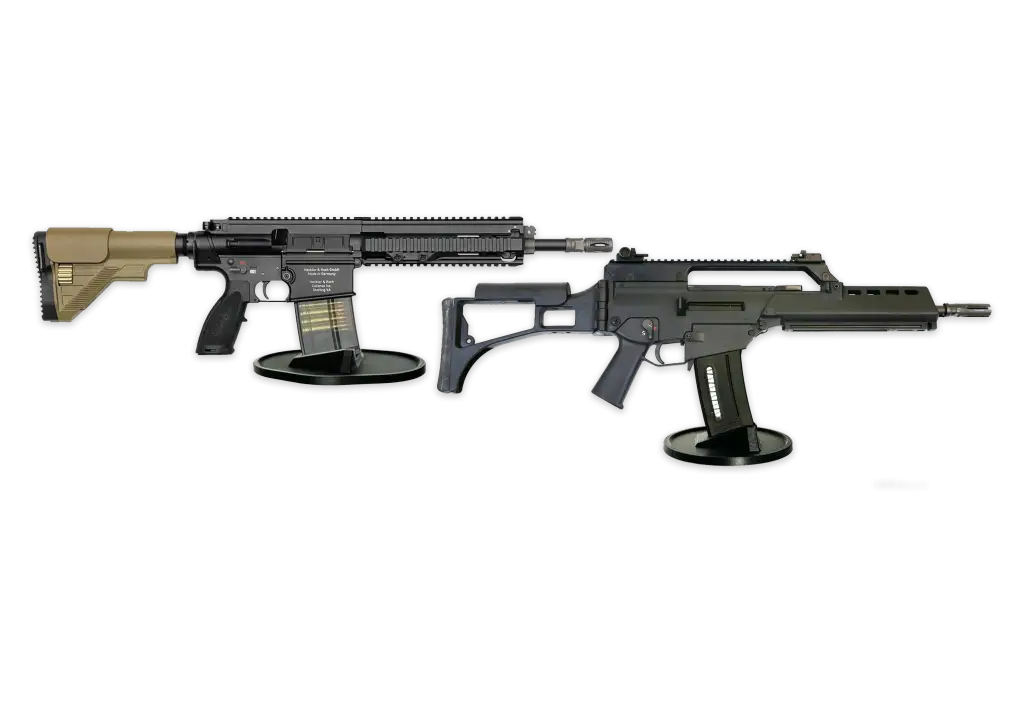
Today, the AR-15 is available in countless configurations, calibers, barrel lengths, colors, and accessory combinations. Many collectors display these variations on a dedicated AR15 gun stand, allowing the evolution of the platform to be seen across an organized collection.
What Does AR-15 Mean?
One of the most persistent misunderstandings surrounding the rifle is the meaning of its name. The “AR” in AR-15 refers to ArmaLite Rifle, reflecting the company responsible for the original design.
ArmaLite used the “AR” designation across several of its projects. These included rifles with different operating systems, calibers, and intended purposes. The number following “AR” identified a particular design within the company’s development sequence.
The AR-15 name therefore began as a model designation rather than a general description of every rifle that later adopted a similar layout.
The Origins of ArmaLite
ArmaLite was established during the 1950s as a small-arms design company associated with the Fairchild Engine and Airplane Corporation. Rather than operating as a large-volume manufacturer, ArmaLite focused heavily on research, experimentation, and innovative engineering.
The company’s designers explored the use of materials and manufacturing techniques influenced by the aviation industry. Aluminum alloys, synthetic components, and lightweight construction were major departures from the wood and steel commonly used in earlier military rifles.
This focus on modern materials helped shape the philosophy behind the rifles that eventually led to the AR-15.
Eugene Stoner and the Early Designs
Eugene Stoner is closely associated with AR-15 history because of his role in developing the family of rifles that preceded and influenced it. Stoner was an engineer and designer who became known for combining lightweight materials with a direct gas operating concept and an in-line stock arrangement.
One of ArmaLite’s most important early designs was the AR-10. Developed during the 1950s, the AR-10 was chambered for the 7.62×51mm NATO cartridge and featured several characteristics that appeared advanced for the time.
These included:
- Aluminum receiver construction.
- Synthetic furniture.
- A straight-line stock arrangement.
- A detachable box magazine.
- A rotating bolt.
- A lightweight overall design.
Although the original AR-10 did not achieve the large military contracts ArmaLite sought, it established the basic architecture that would later be scaled down into the AR-15.
From the AR-10 to the AR-15
As military interest moved toward smaller and lighter cartridges, ArmaLite developed a reduced-size version of the AR-10 concept. This new rifle became the AR-15.
The smaller rifle retained many of the AR-10’s recognizable features, including the in-line stock, aluminum receivers, rotating bolt, and lightweight construction. However, it was redesigned around a smaller cartridge and a more compact overall format.
This reduction in size produced a rifle that was lighter than many traditional service rifles of the period. The use of lighter ammunition also allowed soldiers to carry more cartridges for the same overall weight.
The AR-15 therefore represented more than a scaled-down rifle. It reflected a broader change in thinking about military rifle design, mobility, ammunition weight, and controllability.
ArmaLite Sells the Design to Colt
ArmaLite was a relatively small company and lacked the production capacity and established military-sales network needed to fully commercialize the AR-15. As a result, the design rights were sold to Colt near the end of the 1950s.
Colt had greater manufacturing resources, a recognized name, and stronger connections within military and international markets. Under Colt, the AR-15 design received additional development, promotion, and production support.
This transfer was one of the most important turning points in AR-15 history. Without a larger manufacturer behind it, the platform might never have achieved widespread adoption.
Military Development and the M16
Colt marketed the rifle to military organizations, and versions of the design were eventually adopted by the United States military. The military-developed rifle became known as the M16.
Although the civilian AR-15 and military M16 share a common design heritage and many external similarities, they are not identical. Military versions were developed to meet specific government requirements and incorporated different internal operating capabilities depending on the model.
The M16 family continued to evolve through several major versions. Changes were made to barrels, sights, handguards, stocks, controls, ammunition specifications, and other components as military requirements developed.
This military evolution contributed to the long-term durability of the overall platform and influenced many later commercial AR-style rifles.
The Early Civilian Colt AR-15
Colt also introduced semi-automatic AR-15 models for the civilian market. These rifles allowed recreational shooters, collectors, and competitors to purchase a commercial version of the platform.
Early commercial AR-15 rifles looked different from many modern examples. Common historical characteristics included:
- Fixed carrying handles.
- Fixed front sights.
- Traditional triangular or round handguards.
- Fixed stocks.
- Longer barrels.
- Limited accessory mounting space.
Compared with today’s highly configurable rifles, early civilian models offered relatively few factory variations. However, they helped establish the AR-15 as a recognizable commercial rifle rather than only a military-related design.
The Traditional 20-Inch Configuration
Many early AR-15 and M16-pattern rifles used 20-inch barrels and rifle-length gas systems. This configuration became one of the platform’s most iconic appearances.
The longer barrel, fixed stock, carrying handle, and traditional handguards created a full-size rifle profile. For collectors, these historically inspired configurations remain popular because they reflect the appearance of early service and commercial rifles.
Many enthusiasts continue to build or purchase retro-style AR-15 rifles that reproduce specific visual features from different decades of the platform’s development.
The Rise of Carbine-Length Rifles
Over time, shorter and more compact AR-based configurations gained popularity. Carbine-length rifles offered reduced overall size and improved handling compared with traditional full-length models.
Commercial manufacturers increasingly offered 16-inch barrels, collapsible stocks, shorter gas systems, and compact handguards. The 16-inch barrel became especially common in the civilian market because it provided a practical combination of legal classification, handling, and ballistic performance.
Today, the 16-inch carbine remains one of the most popular AR-15 configurations available.
The Development of the Flat-Top Upper Receiver
One of the most important steps in the platform’s evolution was the widespread adoption of flat-top upper receivers.
Earlier rifles typically featured a fixed carrying handle that incorporated the rear sight. While durable and recognizable, the fixed design limited the placement of modern optics.
Flat-top receivers replaced the permanent carrying handle with an integrated accessory rail. This allowed owners to install:
- Red dot sights.
- Holographic sights.
- Prism optics.
- Magnified scopes.
- Low-power variable optics.
- Removable iron sights.
The flat-top receiver dramatically expanded the AR-15’s versatility and helped establish the platform as a highly adaptable sporting rifle.
The Expansion of Accessory Rails
Handguards also changed considerably throughout AR-15 history. Traditional handguards were primarily designed to protect the shooter’s hands from barrel heat. They offered little or no space for mounting accessories.
Later rail systems introduced multiple mounting surfaces. Picatinny quad rails became popular because they allowed accessories to be attached at several positions around the handguard.
Although highly functional, full quad rails could add weight and bulk. Manufacturers later developed slimmer systems using modular attachment standards such as KeyMod and M-LOK.
M-LOK eventually became one of the most widely used modular handguard systems. It allows accessories to be mounted only where needed, reducing unnecessary weight while maintaining flexibility.
The Free-Float Handguard
Free-float handguards represented another significant development. Unlike traditional systems that contact the barrel assembly, a free-float handguard is designed to attach primarily around the barrel nut without applying the same type of external pressure to the barrel.
This configuration became popular on precision-oriented rifles because pressure placed on the handguard by a sling, support, or bipod is less likely to influence the barrel in the same manner as some traditional designs.
Free-float systems also provide a modern appearance, improved accessory placement, and additional ventilation around the barrel.
The Growth of the Aftermarket Industry
The AR-15’s modular architecture helped create one of the largest aftermarket parts industries in the shooting world. Rather than being limited to a single factory configuration, owners could replace or upgrade individual components.
Common aftermarket categories include:
- Stocks and pistol grips.
- Handguards.
- Triggers.
- Barrels.
- Charging handles.
- Gas blocks.
- Optics and mounts.
- Muzzle devices.
- Magazines.
- Upper receiver assemblies.
This component-based ecosystem allowed the AR-15 to evolve faster than many traditional rifle designs. New materials, manufacturing methods, and accessory standards could be incorporated without replacing the entire platform.
The Importance of the Two-Receiver Design
The AR-15 is built around an upper receiver and a lower receiver. These major assemblies are joined together using takedown and pivot pins.
The upper receiver assembly generally contains the barrel, handguard, bolt carrier group, and related components. The lower receiver contains the magazine well, trigger-related components, grip, buffer system, and stock or brace attachment area, depending on the configuration.
This arrangement contributes heavily to the platform’s modularity. Owners can pair compatible upper assemblies with appropriate lower receivers, subject to manufacturer specifications and applicable laws.
The two-receiver layout also makes routine cleaning, inspection, and maintenance relatively straightforward.
The Evolution of AR-15 Materials
Materials used in AR-15 construction have continued to improve. Aluminum remains common for receivers and handguards, while steel is used for many components requiring high strength and wear resistance.
Synthetic materials are widely used for stocks, grips, magazines, and other accessories. Modern durable plastics can reduce weight, resist corrosion, and allow manufacturers to create complex shapes efficiently.
Advances in coatings and finishes have also changed the appearance and durability of modern rifles. Black remains the traditional color, but rifles and accessories are now available in:
- Flat dark earth.
- Army green.
- Gray.
- White.
- Red.
- Orange.
- Pink.
- Camouflage patterns.
This variety has transformed the AR-15 from a mostly standardized rifle into a platform that owners can personalize extensively.
The Expansion into New Calibers
The original AR-15 design was closely associated with the 5.56×45mm NATO and .223 Remington family of cartridges. As the commercial market expanded, manufacturers adapted the platform for many additional chamberings.
Modern AR-style rifles may be encountered in calibers such as:
- .300 AAC Blackout.
- 6.5 Grendel.
- 6mm ARC.
- .224 Valkyrie.
- .350 Legend.
- .450 Bushmaster.
- .458 SOCOM.
- Various pistol-caliber configurations.
- Rimfire training configurations.
Not every component is interchangeable between calibers, and owners must verify barrel, bolt, magazine, receiver, and ammunition compatibility. However, the ability to support multiple cartridges greatly expanded the platform’s usefulness.
The Development of AR-Style Pistol-Caliber Platforms
Pistol-caliber AR-style platforms became increasingly popular as manufacturers adapted the familiar controls and appearance of the AR design to cartridges such as 9mm.
These configurations may use different magazine patterns, including Colt-style magazines, Glock-pattern magazines, or proprietary designs. They may also use operating systems that differ from a traditional 5.56 AR-15.
Although they resemble standard AR-15 rifles, pistol-caliber platforms often require specialized bolts, buffers, barrels, magazines, and lower receivers.
This branch of the market demonstrates how far the basic AR concept has expanded beyond its original chambering.
The AR-10 and Large-Frame AR Market
Modern large-frame AR-style rifles trace their broad design heritage back to the original AR-10 concept. These rifles are commonly chambered for cartridges such as .308 Winchester and 7.62×51mm NATO.
Unlike the more standardized AR-15 market, large-frame AR platforms may vary significantly between manufacturers. Receiver dimensions, magazines, handguards, barrel nuts, and internal parts are not always universally compatible.
Collectors who own both small-frame and large-frame rifles often organize them using separate display solutions, including an AR10 gun stand designed around the appropriate magazine pattern.
The Growth of Competition Rifles
Competitive shooting has played an important role in the AR-15’s development. Manufacturers created rifles and components designed for greater consistency, improved ergonomics, and specialized competition formats.
Competition-oriented features may include:
- Free-float handguards.
- Refined triggers.
- Adjustable stocks.
- Low-power variable optics.
- Specialized muzzle devices.
- Lightweight components.
- Precision barrels.
Competition helped drive demand for faster handling, better accessory placement, and more refined controls. Many of these improvements eventually became common on general-purpose commercial rifles.
The AR-15 as a Hunting Platform
As additional calibers became available, the AR-15 was increasingly adopted for lawful hunting applications where permitted.
Its adjustable stocks, interchangeable upper assemblies, optic compatibility, and range of chamberings allowed manufacturers to offer rifles suited to different game and regional requirements.
Hunters must always select a cartridge appropriate for the intended game and comply with state and local regulations regarding rifle type, caliber, magazine capacity, and hunting seasons.
The Influence of Modern Manufacturing
Advancements in computer-controlled machining, metal finishing, injection molding, and quality-control systems helped make AR-style rifles and components more widely available.
Modern manufacturers can produce receivers, handguards, mounts, and small parts with consistent dimensions and repeatable tolerances. This has contributed to a large market of complete rifles, partially assembled receivers, and individual components.
Greater manufacturing access also allowed smaller companies to enter the market and specialize in particular categories, such as lightweight parts, precision barrels, retro components, or display accessories.
The Rise of Retro AR-15 Collecting
While much of the market focuses on modern accessories, there has also been strong interest in historically inspired AR-15 configurations.
Retro collectors may recreate rifles associated with particular periods by using:
- Fixed carrying-handle receivers.
- Triangular handguards.
- Fixed stocks.
- Pencil-profile barrels.
- Period-inspired grips.
- Traditional iron sights.
These rifles allow collectors to appreciate the visual and mechanical development of the platform across different eras.
A dedicated rifle stand can make it easier to display a retro configuration beside a modern flat-top rifle, clearly showing how the platform has evolved.
Why the AR-15 Became So Popular
The AR-15’s popularity cannot be attributed to a single feature. Instead, it resulted from a combination of design characteristics and market development.
Major factors include:
- Modular construction.
- Adjustable ergonomics.
- Manageable weight.
- Wide availability of replacement parts.
- Multiple caliber options.
- Extensive optic compatibility.
- A large magazine and accessory market.
- Simple separation of upper and lower assemblies.
- Support from numerous manufacturers.
Because the platform can be configured in so many ways, it appeals to owners with very different preferences and intended uses.
How the Modern AR-15 Differs from Early Models
A modern AR-15 may look substantially different from a rifle produced decades ago. Today’s models often feature:
- Flat-top upper receivers.
- Free-float M-LOK handguards.
- Adjustable stocks.
- Ambidextrous controls.
- Modern red dot sights or LPVOs.
- Enhanced charging handles.
- Improved grips.
- Specialized barrel profiles.
- Advanced coatings and finishes.
Despite these changes, the recognizable upper-and-lower receiver layout remains closely connected to the architecture established by the early ArmaLite designs.
AR-15 Collecting and Display
Because the platform has changed so much over time, AR-15 collecting can focus on a wide variety of themes. Some collectors prefer historically inspired rifles, while others focus on modern optics, specialized calibers, different barrel lengths, or custom colors.
Common collection categories include:
- Retro rifles.
- 20-inch traditional configurations.
- 16-inch carbines.
- Precision-oriented rifles.
- Pistol-caliber platforms.
- Large-frame AR rifles.
- Competition builds.
- Custom color combinations.
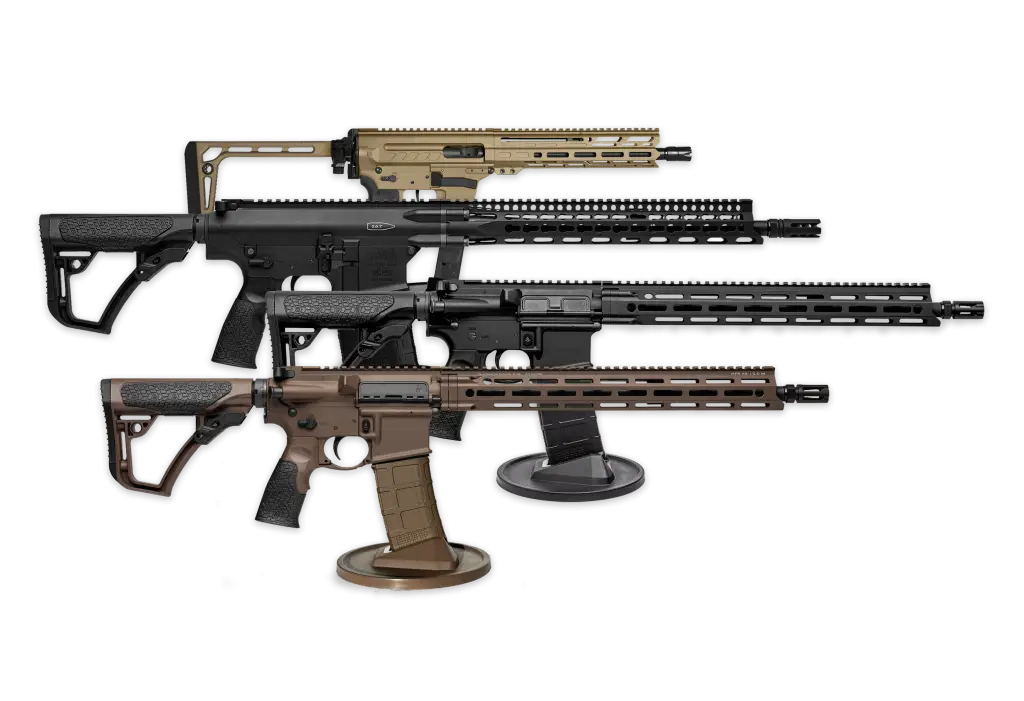
Displaying these rifles on a compatible gun stand helps keep each configuration upright, visible, and organized without hiding the features that make it unique.
Why GunCreed Stands Fit the Evolution of the AR Platform
The AR-15’s modular design means no two collections look exactly alike. Rifles may have different optics, stocks, handguards, barrel lengths, colors, and accessories. A display system should allow those differences to remain visible.
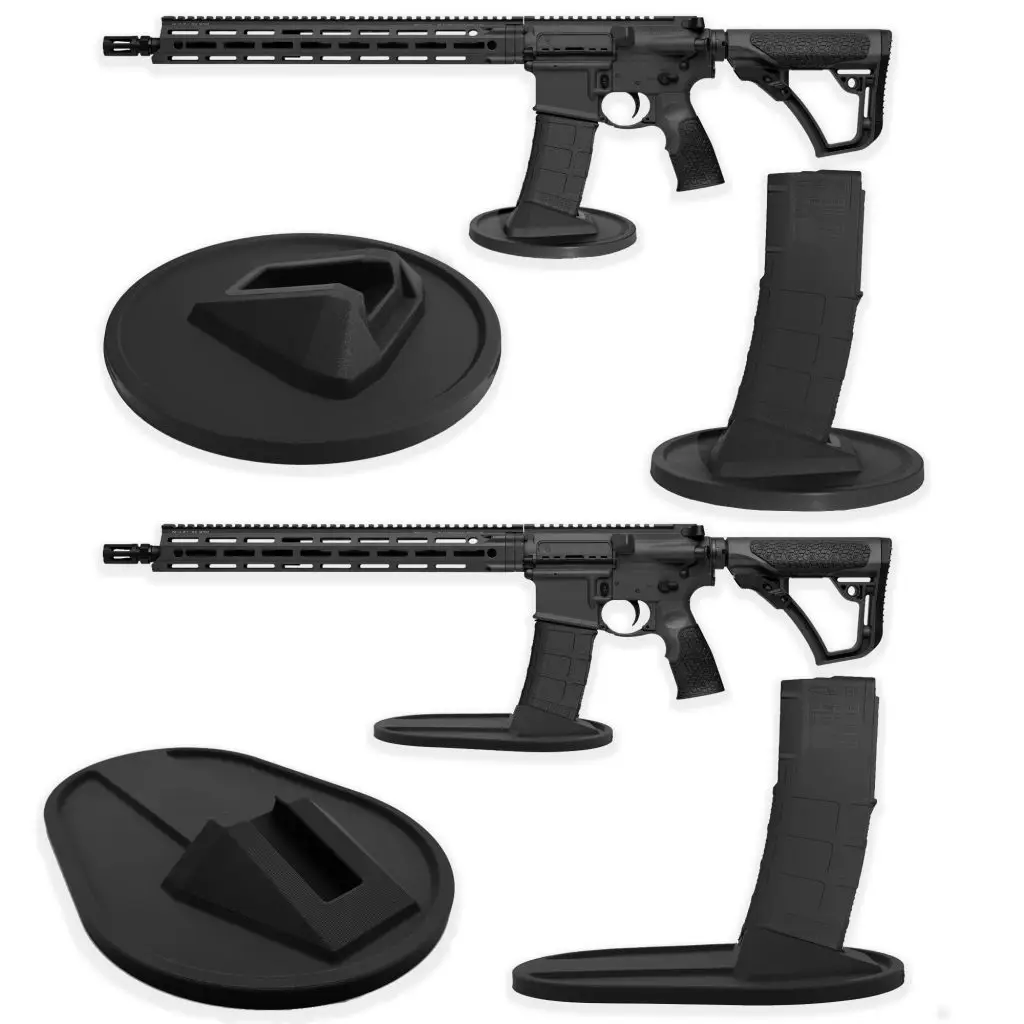
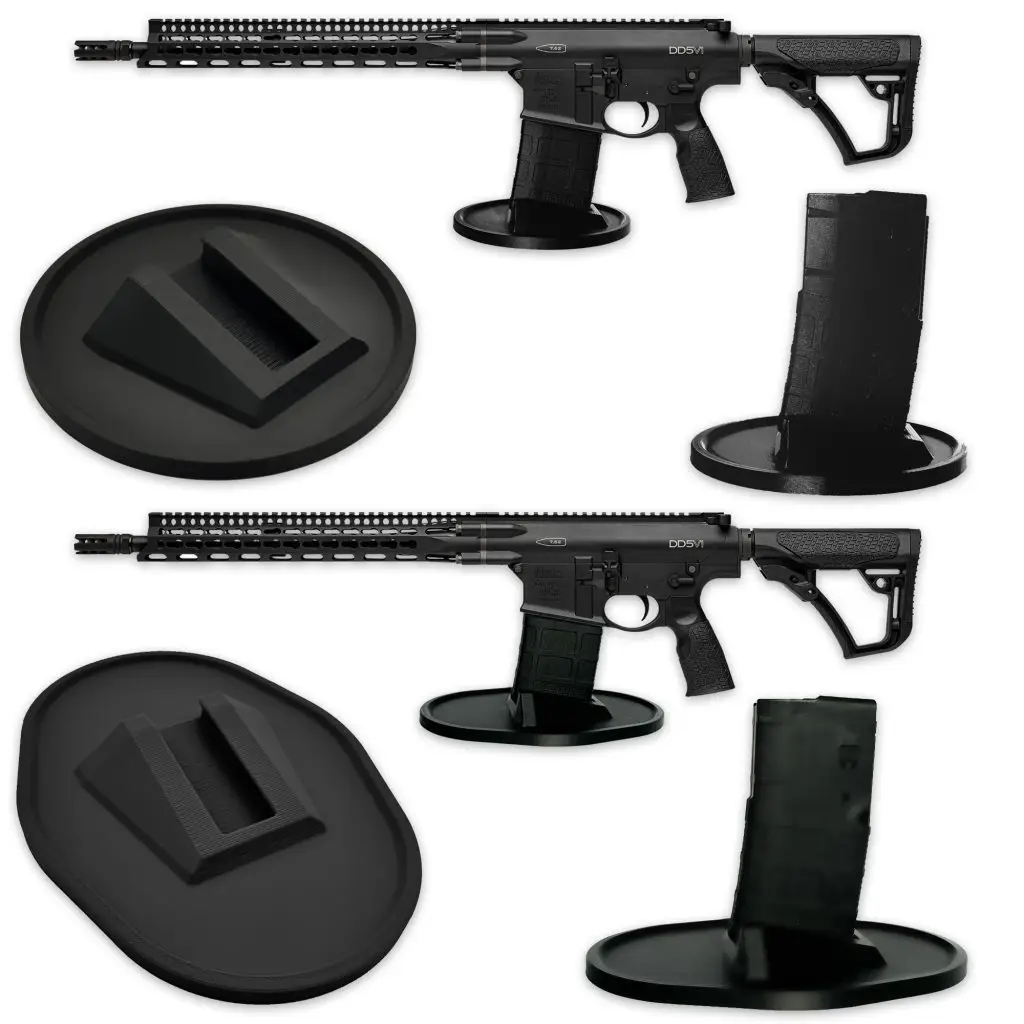
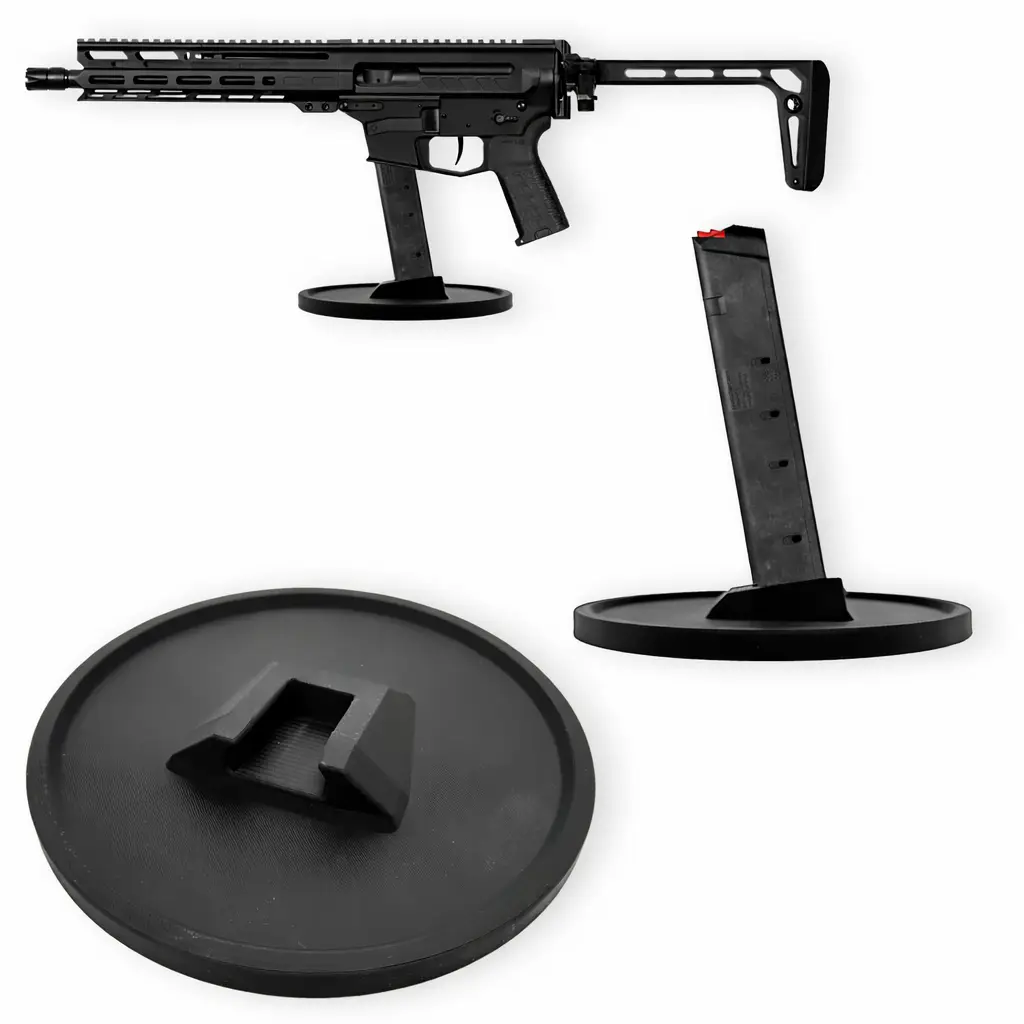
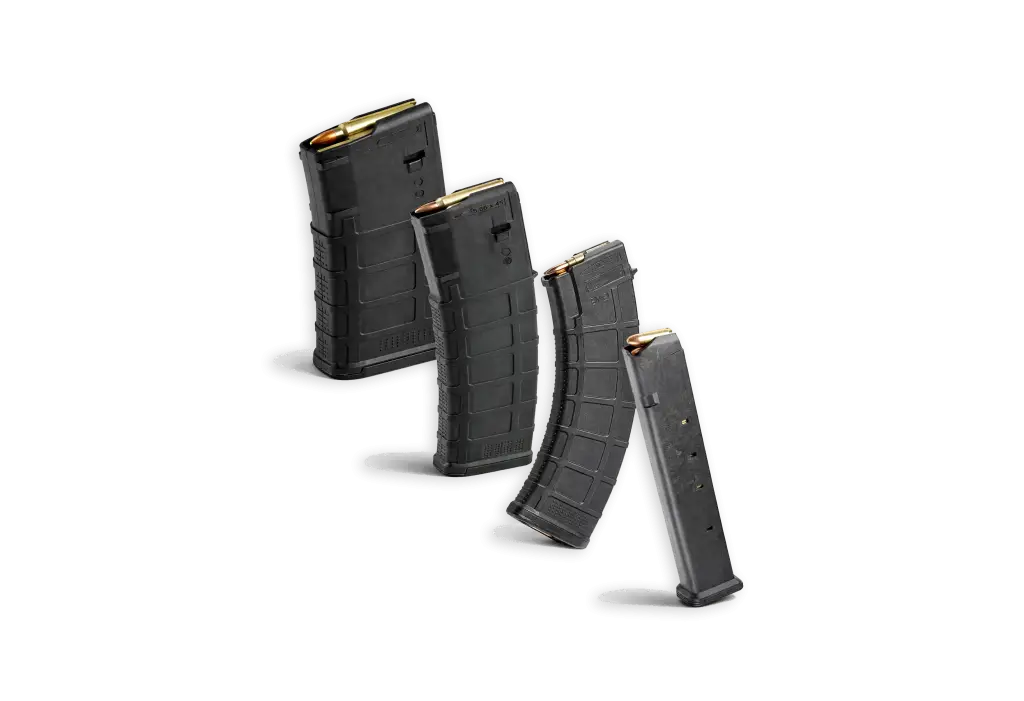
GunCreed rifle stands use compatible magazines to support the rifle through the magazine well. This creates a clean display while leaving the barrel, handguard, stock, optic, and receiver visible.
This approach works especially well for collectors who want to showcase the development of the AR platform, from traditional fixed-stock rifles to modern competition-oriented configurations.
The Continuing Evolution of the AR-15
The AR-15 continues to evolve as manufacturers respond to changes in materials, optics, ammunition, competition, manufacturing, and consumer preferences.
Future developments are likely to focus on areas such as:
- Reduced component weight.
- Improved ambidextrous controls.
- More efficient manufacturing.
- Advanced materials and coatings.
- New cartridge options.
- Better suppressor compatibility where lawful.
- Improved optic and accessory integration.
- Greater component durability.
The platform’s modular nature makes it well suited to continued innovation. Manufacturers can improve individual components without abandoning the overall architecture that has defined the rifle for decades.
Final Thoughts
AR-15 history began with ArmaLite’s effort to create lightweight rifles using modern materials and innovative engineering. Eugene Stoner’s early work on the AR-10 helped establish the design principles that led to the smaller AR-15. After Colt acquired the design, it developed into both military-related and civilian versions, eventually becoming one of the most influential rifle platforms in the United States.
Over time, the AR-15 evolved from a relatively standardized rifle with a fixed stock and carrying handle into an enormous family of modular sporting rifles. Flat-top receivers, free-float handguards, adjustable stocks, new calibers, modern optics, and an extensive aftermarket transformed the platform while preserving its core architecture.
For collectors, the AR-15 provides a visible timeline of rifle development. A classic 20-inch configuration, a modern 16-inch carbine, and a precision-oriented build may look very different, yet all share a recognizable design heritage.
Displaying those configurations on a durable AR15 gun stand provides an organized way to showcase the history, engineering, and continuing evolution of the AR-15 platform.