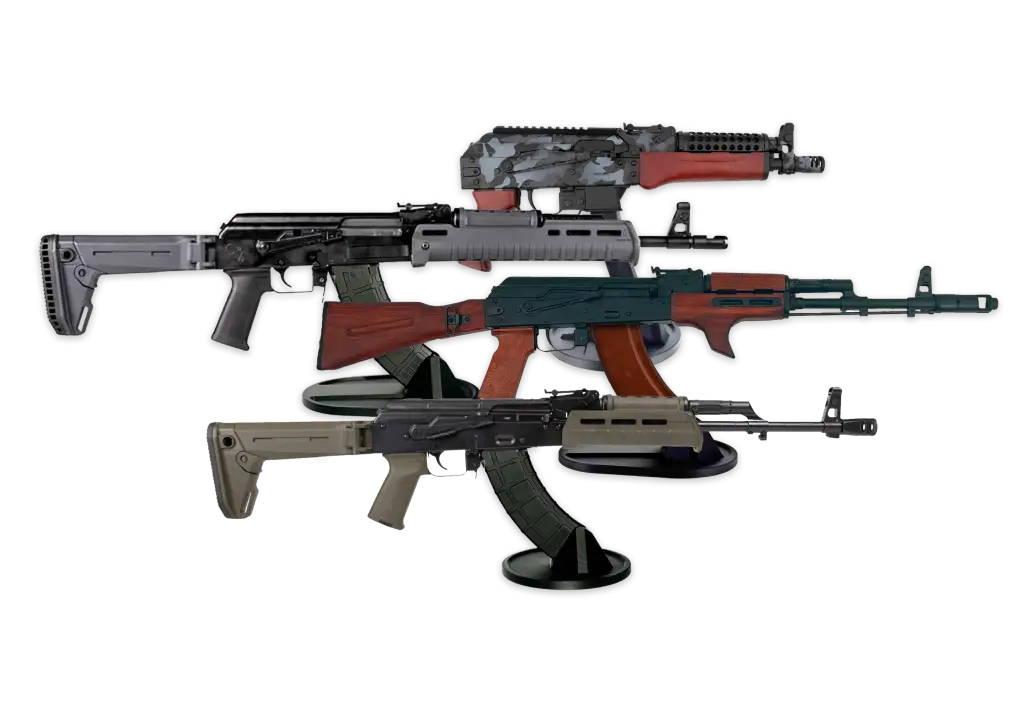
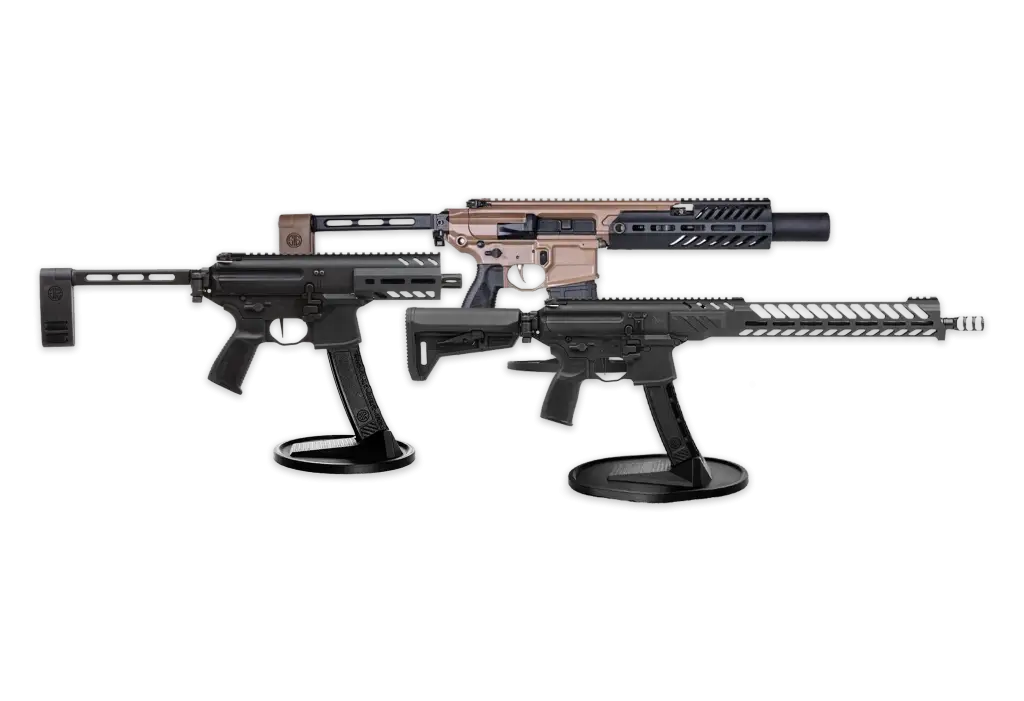
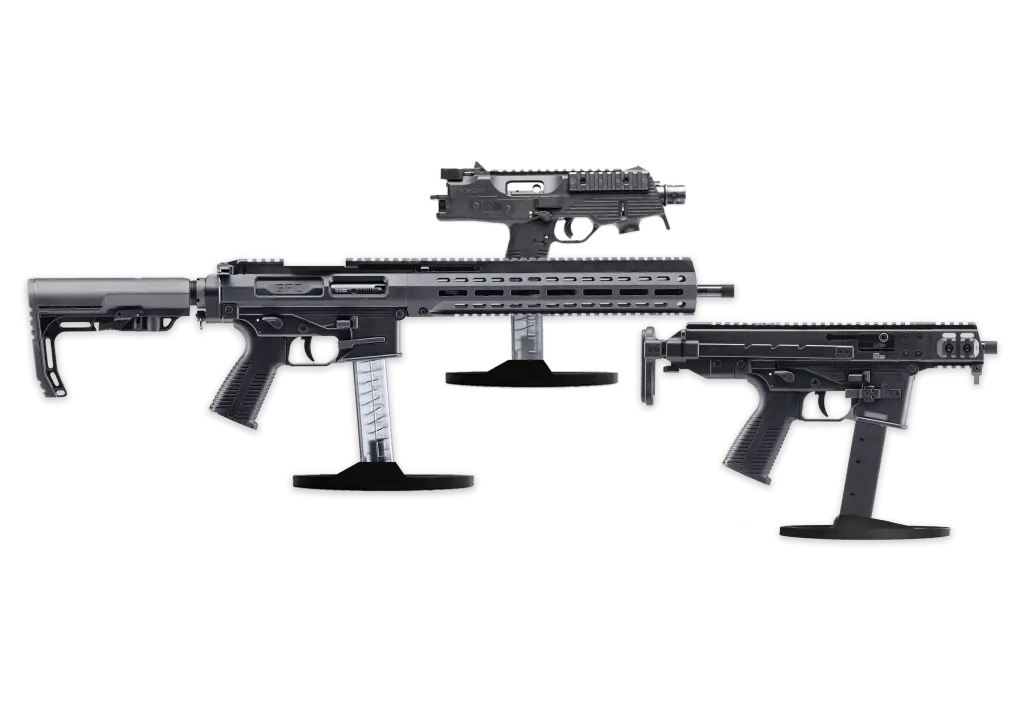
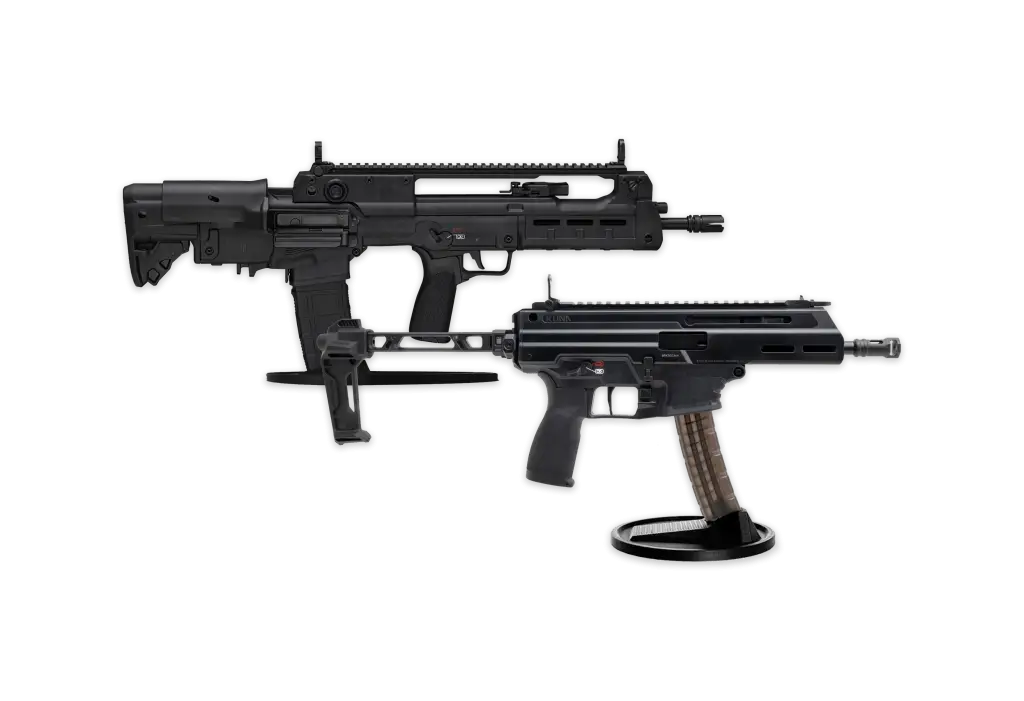
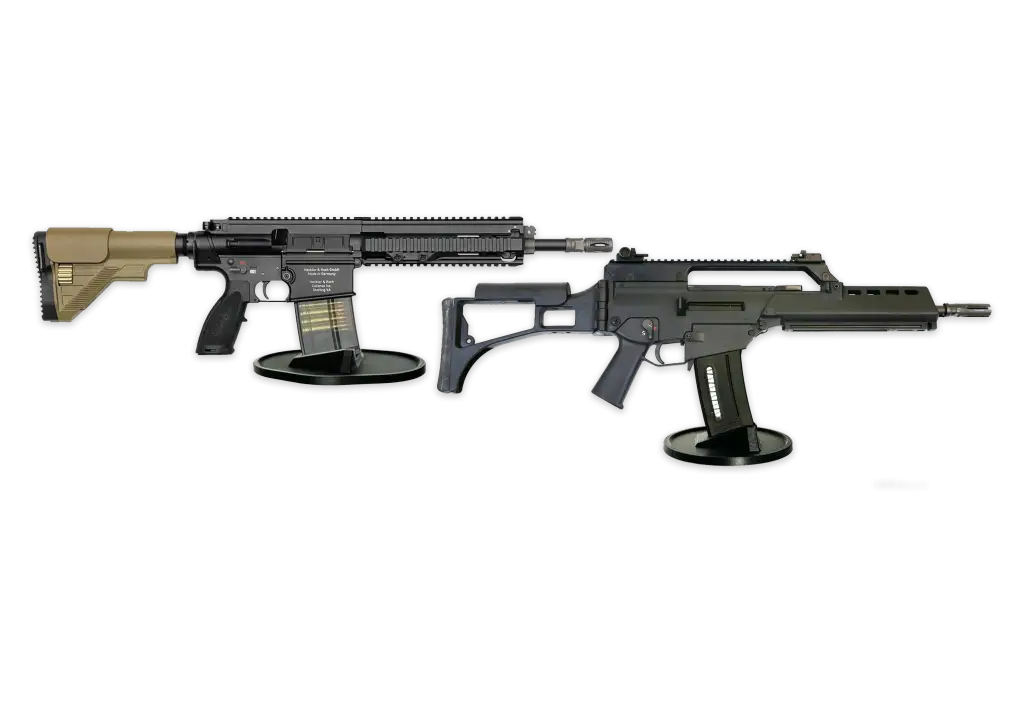
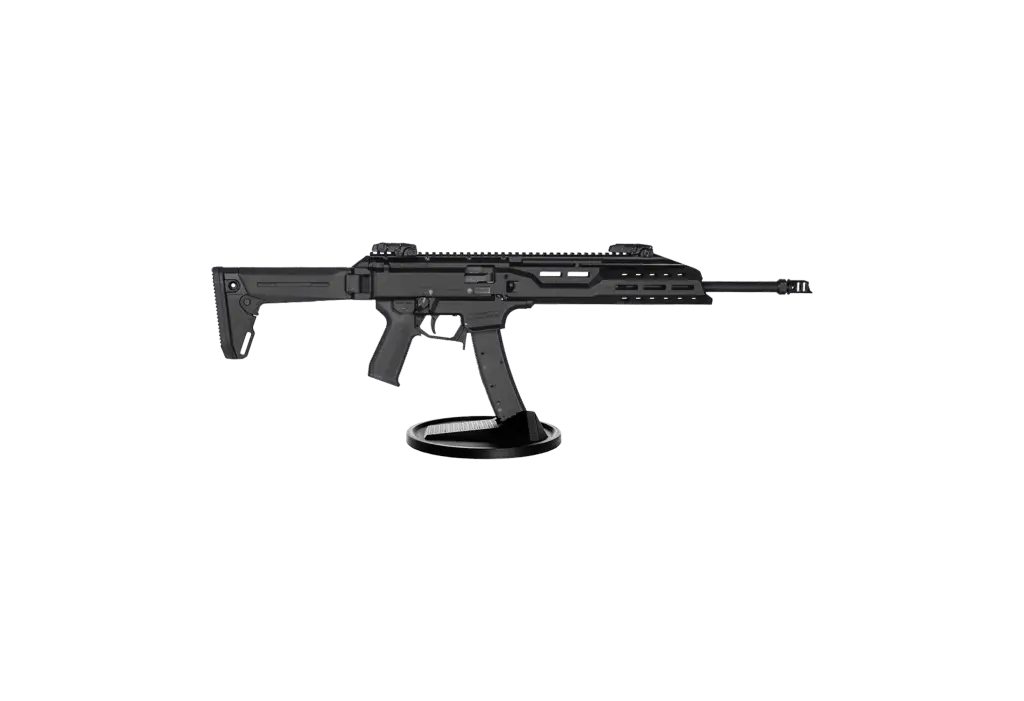
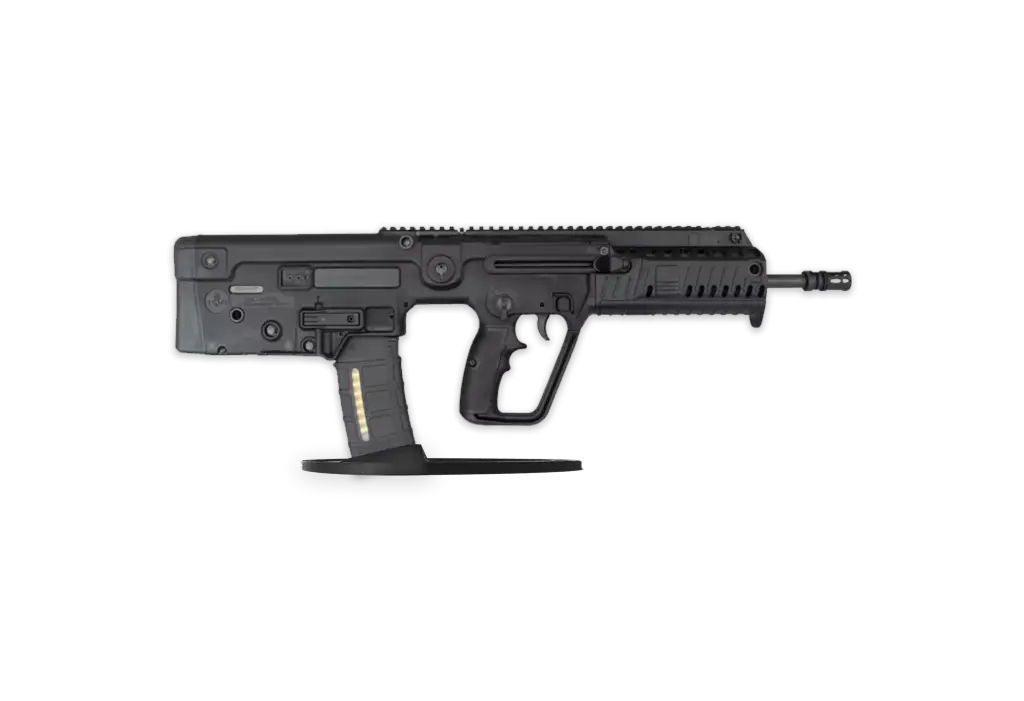






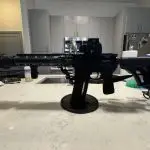
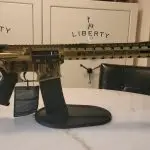

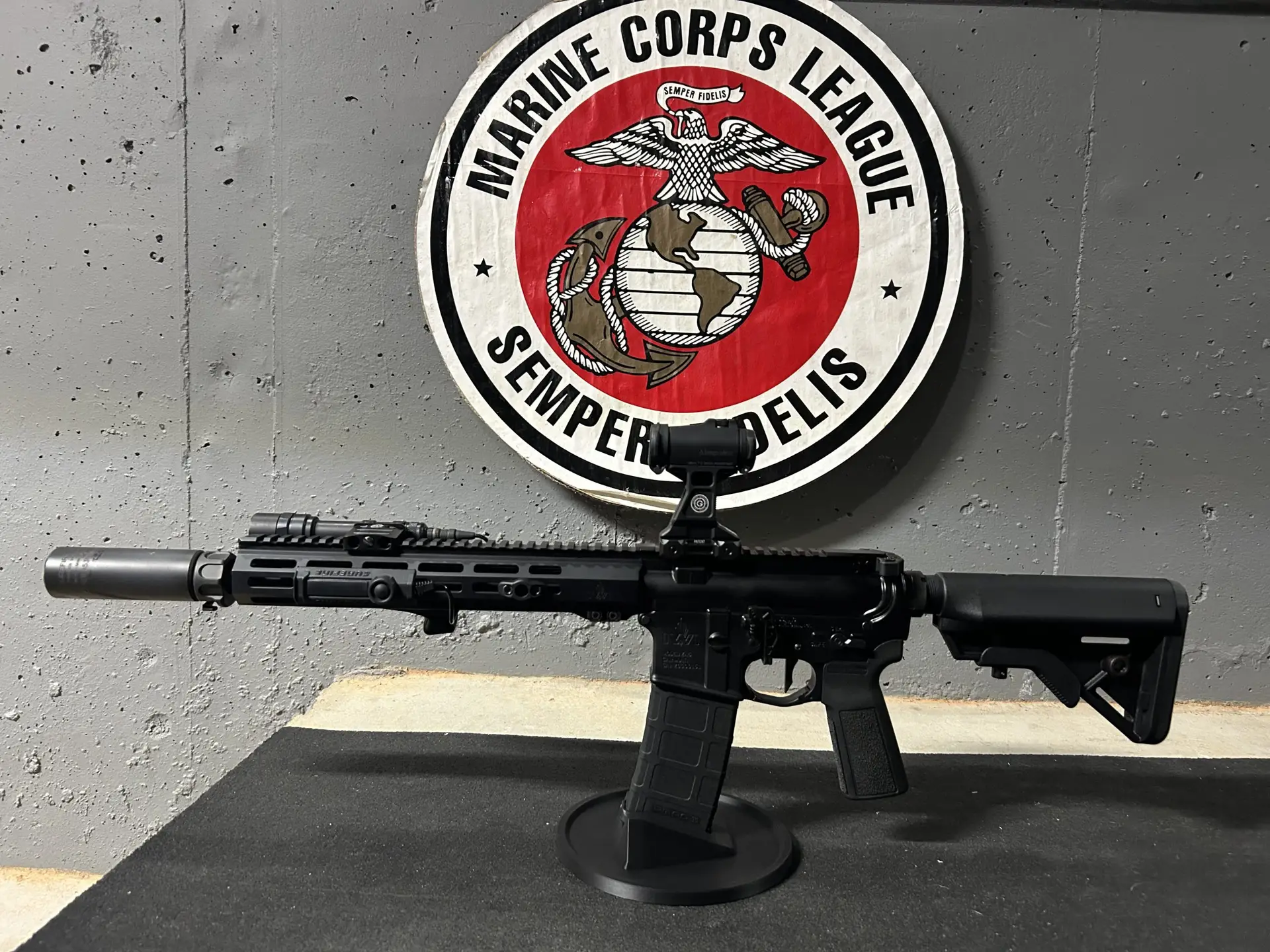

A free float handguard is one of the most recognizable features found on modern AR-15 rifles. Its slim profile, modular accessory slots, continuous upper rail, and wide range of available lengths have made it a common choice for factory rifles, custom builds, competition-oriented platforms, and display collections.
Although the term is widely used, many new owners are unsure what “free float” actually means. A free-float handguard is designed to attach around the barrel nut without making direct contact with the barrel along most of its length. This separates the handguard from the barrel and reduces the amount of external pressure that can be transferred directly to it.
Free-floating the handguard does not make every rifle automatically more accurate, nor does it guarantee better performance than every traditional design. Barrel quality, ammunition consistency, optics, assembly quality, and many other factors still matter. However, a properly designed free float handguard can provide a stable accessory platform, reduce unnecessary barrel contact, and offer extensive customization options.
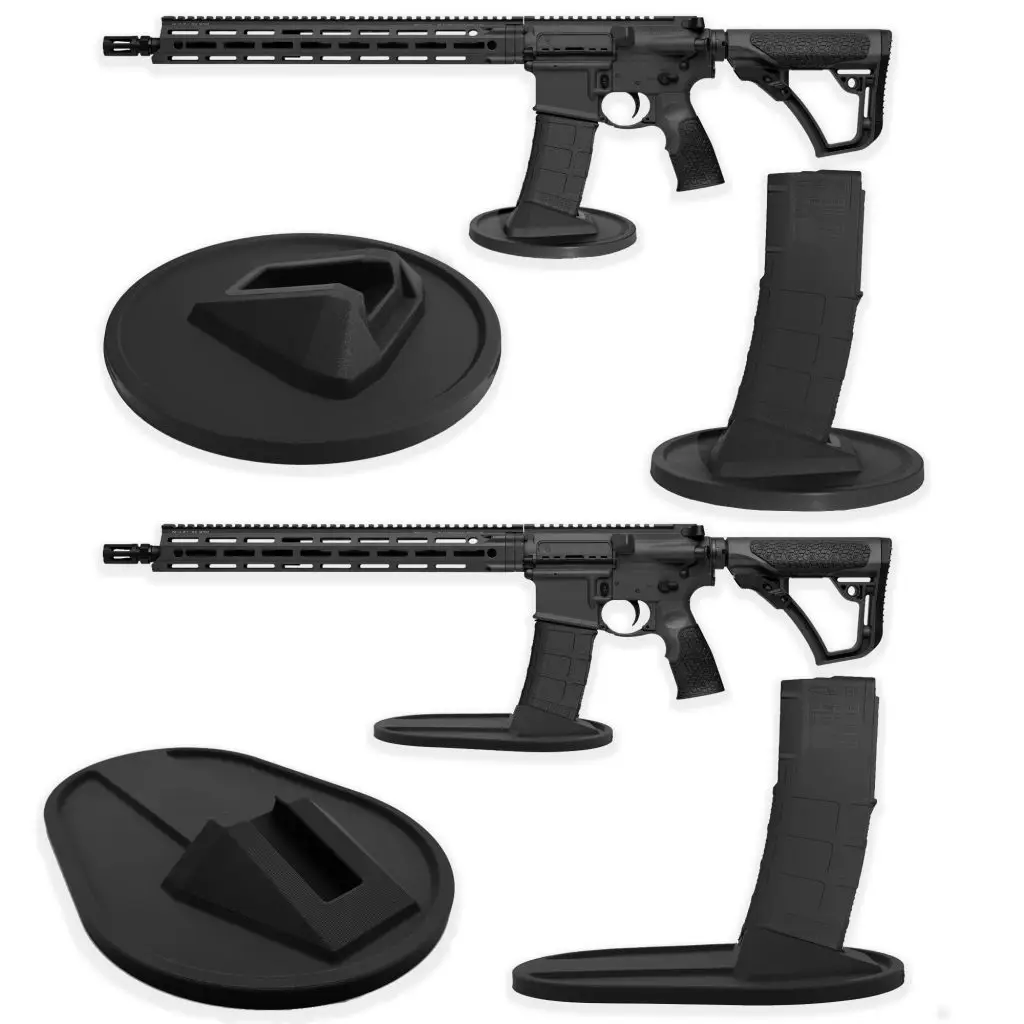
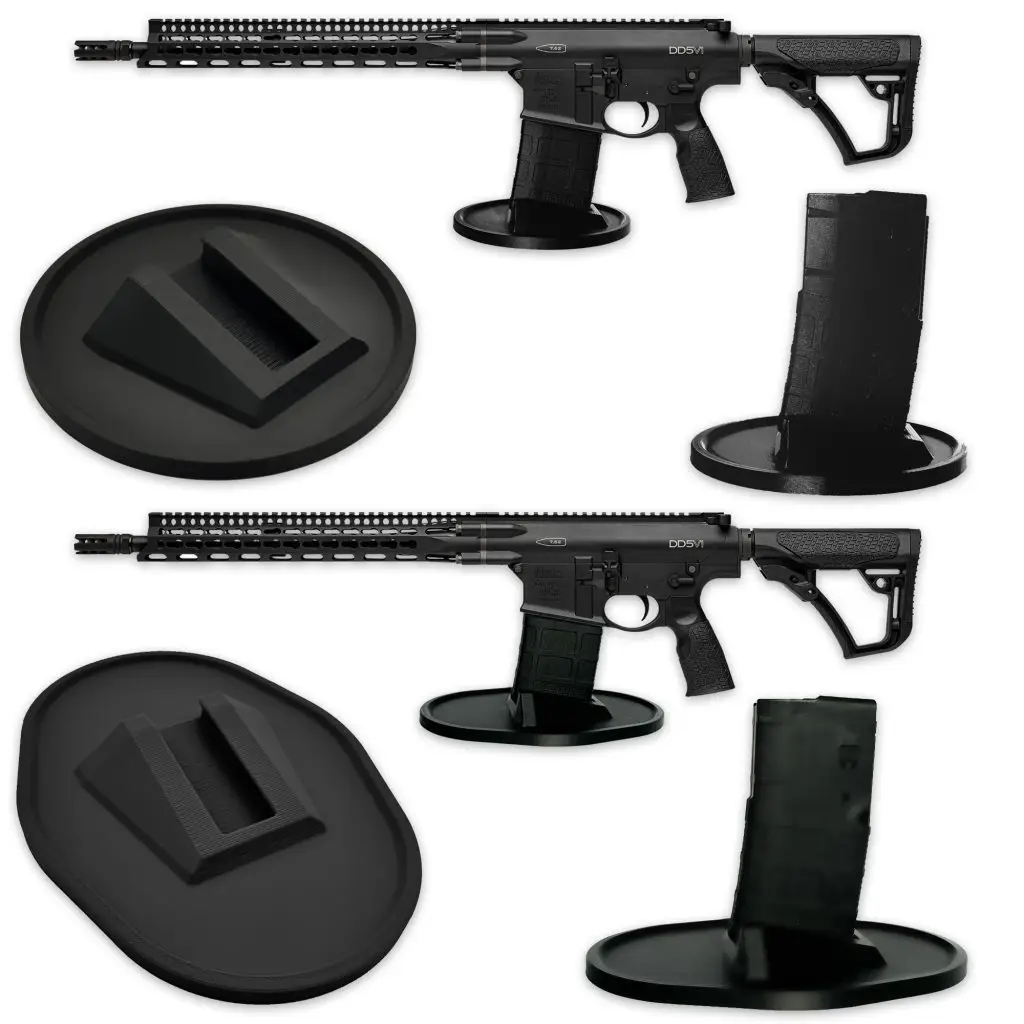
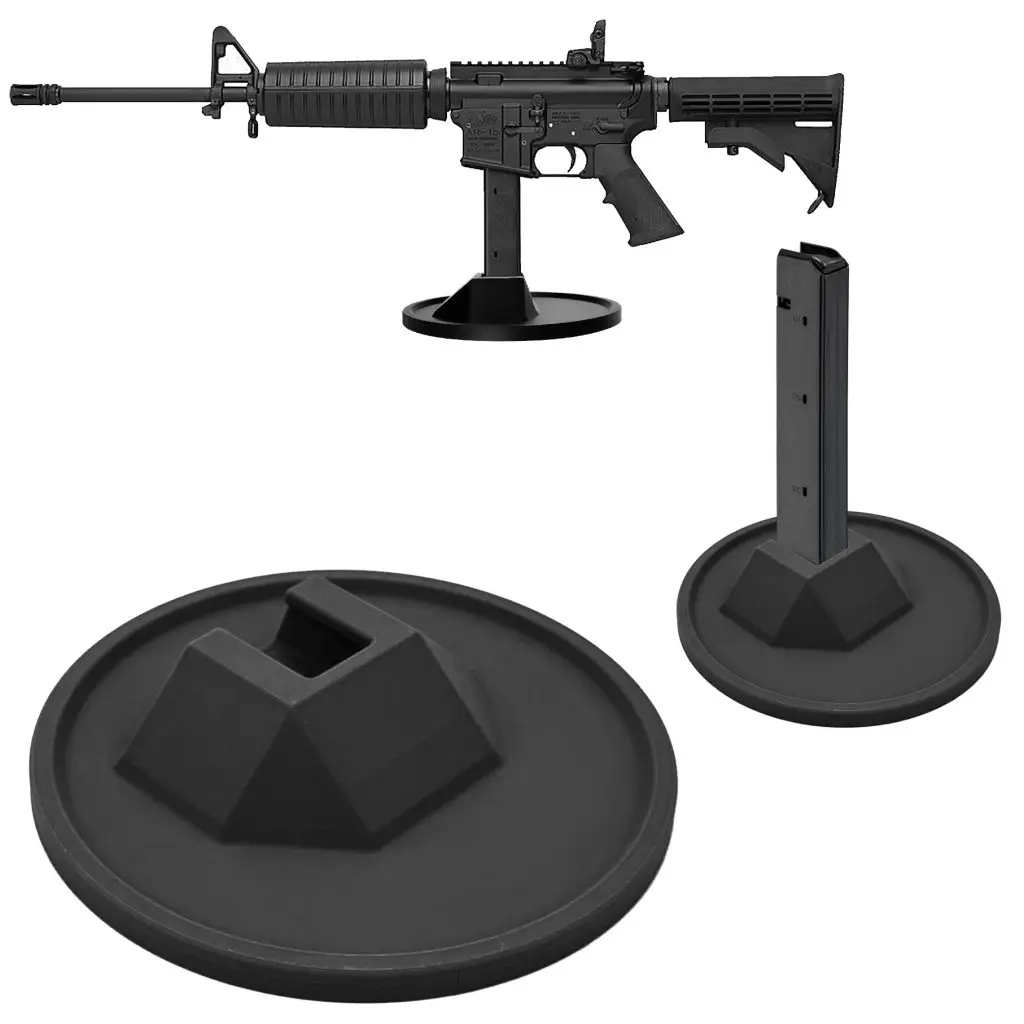
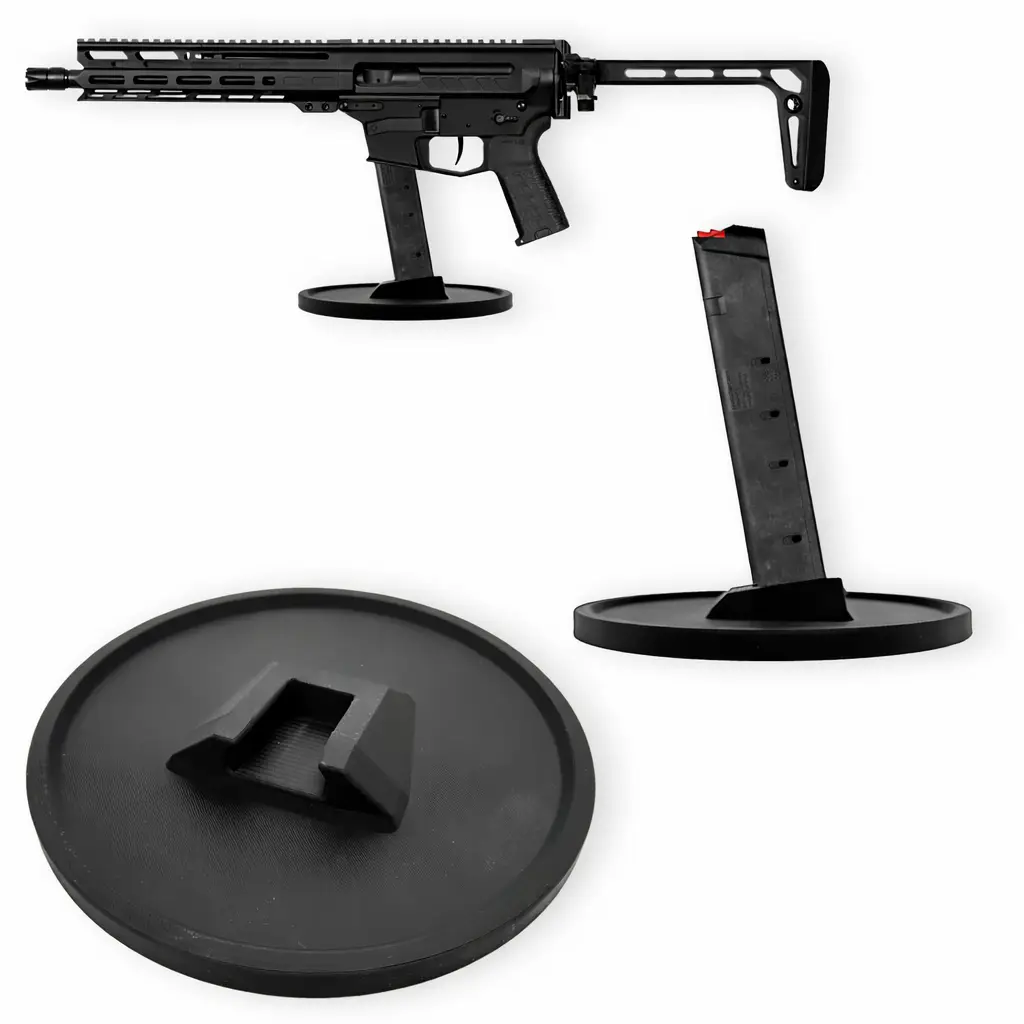
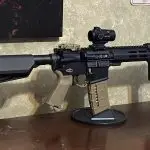
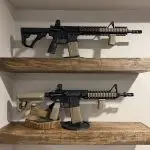
After installing a new handguard, many collectors display the completed rifle on a compatible AR15 gun stand, leaving the rail system, optic, stock, and mounted accessories fully visible.
What Is a Rifle Handguard?
A handguard is the component that surrounds part of a rifle barrel and provides a surface for the owner to hold. It also helps reduce direct contact with the barrel, which can become hot during use.
Depending on the design, an AR-15 handguard may provide:
- A gripping surface.
- Protection from barrel heat.
- Accessory mounting locations.
- Ventilation around the barrel.
- Protection for gas-system components.
- A continuous upper rail.
- Sling attachment points.
- A customized appearance.
Handguards are available in traditional two-piece designs, drop-in rail systems, free-floating tubes, quad rails, and modern modular systems using M-LOK or KeyMod slots.
What Does Free Float Mean?
In a free-float system, the handguard attaches to the upper receiver through a barrel-nut assembly. It extends forward around the barrel but is designed not to contact the barrel along most of its length.
The word “free” refers to the barrel being largely free from contact with the handguard. The barrel is still securely attached to the upper receiver through the barrel extension and barrel nut. It is not loose or unsupported.
The handguard surrounds the barrel while remaining structurally separate from it.
How a Free Float Handguard Works
A typical free float handguard system includes several major components:
- The upper receiver.
- The barrel.
- The barrel extension.
- The barrel nut.
- The handguard body.
- Mounting screws or clamping hardware.
- Anti-rotation components on some models.
The barrel is secured to the upper receiver using the barrel nut. The handguard then mounts to that nut or to a related mounting surface.
Because the handguard does not rely on a front handguard cap for support, it can remain separated from the barrel throughout most of its length.
Free Float Handguard vs Drop-In Handguard
Free-float and drop-in handguards use different mounting arrangements.
Free Float Handguard
A free float handguard generally mounts around a dedicated barrel nut and does not depend on a front handguard cap. The handguard surrounds the barrel without making direct contact with it along most of its length.
Drop-In Handguard
A traditional drop-in handguard commonly fits between the delta-ring assembly near the receiver and a handguard cap closer to the front sight or gas block.
Drop-in handguards are typically made from two pieces that fit around the barrel and gas system.
| Feature | Free Float Handguard | Drop-In Handguard |
|---|---|---|
| Primary mounting point | Barrel nut | Delta ring and handguard cap |
| Direct barrel contact | Designed to avoid it | May transfer more pressure through the assembly |
| Typical accessory space | Extensive | Varies by model |
| Installation complexity | Usually greater | Usually lower |
| Common modern use | Very common | Traditional and budget configurations |
Why Barrel Contact Matters
A rifle barrel vibrates as a projectile travels through it. These vibrations are sometimes referred to as barrel harmonics.
External pressure placed directly on the barrel or on components that influence the barrel may change how it moves during each shot. The effect can vary depending on the rifle, barrel profile, support position, sling pressure, and other factors.
A free float handguard helps isolate the barrel from pressure applied to the handguard. For example, supporting the rifle on the handguard or attaching a bipod to it does not place the same type of direct contact pressure on the barrel as some traditional systems.
This does not eliminate every possible influence on accuracy, but it can help create a more consistent relationship between the handguard and barrel.
Does a Free Float Handguard Improve Accuracy?
A free float handguard can contribute to more consistent performance by reducing external pressure on the barrel. However, the amount of improvement varies.
Accuracy is influenced by many factors, including:
- Barrel quality.
- Barrel condition.
- Ammunition consistency.
- Twist rate.
- Optic quality.
- Optic mounting.
- Trigger characteristics.
- Upper-receiver assembly.
- Environmental conditions.
- Shooter technique.
A quality free float handguard cannot correct a damaged barrel, inconsistent ammunition, a loose optic mount, or poor assembly.
Its primary accuracy-related advantage is reducing changes caused by pressure placed on the handguard.
Advantages of a Free Float Handguard
Reduced Barrel Contact
The defining advantage is that the handguard remains separated from the barrel along most of its length.
Extensive Accessory Space
Modern free-float handguards commonly include M-LOK, KeyMod, or Picatinny mounting surfaces.
Continuous Upper Rail
Many designs provide a rail that visually aligns with the upper receiver and supports compatible sights or accessories.
Multiple Length Options
Free-float systems are available in numerous lengths for different barrel and gas-system configurations.
Slim Profiles
Modern M-LOK handguards can provide a narrower gripping surface than traditional quad rails.
Modern Appearance
The long, streamlined handguard has become a defining visual feature of contemporary AR-15 rifles.
Ventilation
Slots and openings can help air circulate around the barrel while reducing unnecessary material.
Accessory Placement
Owners can position compatible lights, grips, sling mounts, hand stops, bipods, and rail sections where they are needed.
Potential Disadvantages
Free-float handguards also involve tradeoffs.
More Complex Installation
Installing a free float handguard may require removing existing barrel components and replacing the barrel nut.
Higher Cost
A complete free-float conversion can cost more than installing a basic drop-in handguard.
Compatibility Requirements
The handguard must be compatible with the upper receiver, barrel nut, gas system, and intended barrel configuration.
Added Parts
Some systems use proprietary barrel nuts, mounting plates, wedges, screws, or anti-rotation components.
Heat Transfer
Thin aluminum handguards may become warm as heat builds around the barrel and gas system.
Variable Quality
Not every free float handguard is equally rigid, durable, straight, or securely mounted.
Common Free Float Handguard Styles
M-LOK Handguards
M-LOK is the most common modular attachment system found on modern free-float handguards. It uses rectangular slots with rounded ends and compatible rotating T-nut hardware.
M-LOK supports direct mounting of compatible:
- Hand stops.
- Vertical grips.
- Angled grips.
- Sling mounts.
- Light mounts.
- Bipod mounts.
- Rail panels.
- Picatinny sections.
KeyMod Handguards
KeyMod uses keyhole-shaped slots. It was one of the first popular open modular standards designed to reduce dependence on full quad rails.
KeyMod remains in use, but M-LOK now has broader manufacturer and accessory support.
Quad-Rail Handguards
A free-float quad rail has Picatinny mounting surfaces on the top, bottom, and both sides. These systems provide extensive mounting space and a distinctive military-inspired appearance.
They are typically wider and heavier than slim modular handguards.
Smooth Free-Float Tubes
Some free-float handguards use a mostly smooth cylindrical or oval profile. These may include limited rail sections or attachment points.
Smooth tubes have been popular on competition and precision-oriented rifles where extensive side-mounted accessories are not required.
M-LOK Free Float Handguards
M-LOK free float handguards have become the standard configuration for many commercial AR-15 rifles.
Their popularity comes from combining:
- Low weight.
- A slim profile.
- Broad accessory support.
- Direct mounting.
- Multiple available lengths.
- Compatibility with rail adapters.
Most M-LOK handguards retain a full-length Picatinny rail along the top while using M-LOK slots on the sides and bottom.
This design provides a stable top rail without covering every exterior surface in permanent rail sections.
Free-Float Quad Rails
Before M-LOK became dominant, free-float quad rails were a common upgrade on military-inspired and commercial AR-15 rifles.
A quad rail typically provides four primary Picatinny surfaces:
- 12 o’clock.
- 3 o’clock.
- 6 o’clock.
- 9 o’clock.
This provides extensive accessory compatibility but can also add width and weight.
Many owners add rail covers to unused sections to improve comfort and protect the exposed rail edges.
Free-float quad rails remain popular on historical reproductions, duty-style configurations, and collections representing earlier stages of AR-15 development.
Free Float Handguard Materials
Aluminum
Aluminum is the most common material used for modern free-float handguards. It offers a useful balance of rigidity, weight, machinability, and corrosion resistance when properly finished.
Different aluminum alloys and manufacturing methods may be used depending on the manufacturer.
Carbon Fiber
Carbon-fiber handguards are commonly marketed toward lightweight and competition-oriented configurations.
Potential advantages include reduced weight and lower heat conductivity than aluminum. However, pricing, mounting designs, and accessory compatibility vary.
Durable Plastic
Durable plastic is widely used for drop-in handguards, rail covers, grip panels, and accessories. It is less common as the primary structural material for long free-float AR-15 handguards, although some products use reinforced nonmetallic components.
Mixed-Material Designs
Some systems combine an aluminum mounting structure with carbon-fiber or other lightweight handguard sections.
Understanding Handguard Length
Free-float handguards are available in many lengths. Common marketed sizes include:
- 7 inches.
- 9 inches.
- 10 inches.
- 10.5 inches.
- 11 inches.
- 12 inches.
- 13 inches.
- 13.5 inches.
- 15 inches.
- 17 inches.
Actual measured length may differ slightly from the marketed size.
Handguard length influences:
- Available gripping space.
- Accessory placement.
- Overall weight.
- Barrel coverage.
- Gas-system clearance.
- Rifle appearance.
- Balance.
The handguard must be appropriate for the rifle’s barrel length, gas system, gas block, and muzzle configuration.
Handguard Length vs Barrel Length
The handguard is normally shorter than the barrel, leaving the muzzle and attached muzzle device beyond its front edge.
Some specialized configurations position the muzzle device close to the end of the handguard. Others leave several inches of exposed barrel.
When comparing lengths, owners should consider:
- The handguard’s exact measured length.
- The barrel’s actual length.
- Muzzle-device dimensions.
- Gas-block position.
- Manufacturer clearance requirements.
- Whether any regulated attachment is involved.
Compatibility should be verified using the specifications provided by the barrel and handguard manufacturers.
Gas-System Compatibility
The AR-15 gas system generally includes a gas port, gas block, and gas tube. These components are positioned beneath or inside the handguard on many modern rifles.
A free float handguard must provide appropriate internal clearance for the gas block and gas tube.
Common AR-15 gas-system lengths include:
- Pistol length.
- Carbine length.
- Mid length.
- Rifle length.
The gas-system length and handguard length are separate measurements, but they must be compatible with the complete barrel assembly.
Low-Profile Gas Blocks
Modern free-float handguards commonly use a low-profile gas block that fits beneath the handguard.
This allows the handguard to extend forward beyond the gas block, creating a longer gripping surface and a streamlined appearance.
Internal handguard diameter is important because some handguards may not provide sufficient clearance for larger gas blocks or specialty components.
The gas block should be compatible with the barrel, gas tube, handguard, and manufacturer specifications.
Barrel-Nut Designs
The barrel nut is a critical part of a free float handguard system. It secures the barrel assembly and provides the mounting structure for the handguard.
Manufacturers use several designs, including:
- Threaded handguard systems.
- Clamp-on systems.
- Wedge-lock designs.
- Cross-bolt designs.
- Mounting-plate systems.
- Proprietary locking mechanisms.
The barrel nut included with one handguard is not automatically compatible with another manufacturer’s rail.
Owners should use the correct barrel nut, mounting hardware, tools, and instructions for the specific product.
Anti-Rotation Features
Many free-float handguards include anti-rotation tabs or locking components. These features are intended to help prevent the rail from rotating around the barrel nut.
Common anti-rotation designs include:
- Tabs that fit around the upper receiver.
- Indexing plates.
- Cross bolts.
- Wedge-lock systems.
- Alignment pins.
- Clamping surfaces.
A properly installed handguard should remain aligned with the upper receiver and should not twist or move under ordinary use.
Top-Rail Alignment
Many free-float handguards include a continuous Picatinny rail along the top. This rail should visually align with the rail on the upper receiver.
Poor alignment may indicate:
- Improper installation.
- Loose mounting hardware.
- An incorrectly positioned barrel nut.
- A damaged component.
- Manufacturing inconsistency.
Optics should generally be mounted according to the optic and rifle manufacturer’s instructions. Many owners keep the primary optic mount on the upper receiver rather than bridging it across the receiver and handguard.
Accessory Mounting Standards
A free float handguard may support one or more attachment standards.
Picatinny
Picatinny rail uses raised cross slots. It offers broad compatibility and a strong clamping surface.
M-LOK
M-LOK uses rectangular slots and rotating T-nuts. It is widely supported across current handguards and accessories.
KeyMod
KeyMod uses keyhole-shaped openings and compatible mounting hardware. It remains available but is less common on newly manufactured rifles.
Proprietary Systems
Some older or specialty handguards use manufacturer-specific mounts. Accessory selection may be limited for these products.
Popular Free Float Handguard Accessories
Owners frequently add compatible accessories such as:
- Hand stops.
- Angled grips.
- Vertical grips.
- Rail covers.
- Quick-detach sling mounts.
- Light mounts.
- Pressure-switch mounts.
- Cable-management clips.
- Bipod mounts.
- Picatinny rail sections.
Not every available slot needs to be filled. Excess accessories can increase weight, width, and clutter.
Many modern configurations use only a few carefully selected attachments.
Hand Stops and Grips
Hand stops and grips provide a physical reference point for hand placement. They are available in direct-mount M-LOK, KeyMod, and Picatinny versions.
Common styles include:
- Small index stops.
- Two-piece hand stops.
- Angled foregrips.
- Short vertical grips.
- Full-size vertical grips.
Compatibility and legal classification should be considered before attaching any grip or similar component to a particular rifle configuration.
Rail Covers and Grip Panels
Rail covers attach to unused mounting surfaces and can improve comfort, texture, and appearance.
They may also help reduce direct contact with a warm aluminum handguard.
Common rail-cover materials include:
- Durable plastic.
- Rubber.
- Aluminum.
- Heat-resistant composite materials.
Rail panels are available in black, tan, green, gray, white, red, orange, pink, and other colors, allowing owners to coordinate them with stocks, grips, magazines, and display accessories.
Sling Mounting Options
Free-float handguards frequently include built-in or add-on sling attachment points.
Common options include:
- Integrated quick-detach sockets.
- M-LOK QD mounts.
- KeyMod QD mounts.
- Picatinny sling mounts.
- Fixed loops.
The sling mount should be installed in a location that works with the rifle’s stock and intended carrying arrangement.
Bipods and Free-Float Handguards
Free-float handguards are commonly used on rifles equipped with bipods. The bipod attaches to the handguard rather than directly to the barrel.
Common bipod mounting systems include:
- Direct M-LOK mounts.
- Picatinny rail mounts.
- Sling-stud adapters.
- Proprietary quick-detach systems.
Because a bipod can place pressure on the handguard, rigidity and secure mounting are important.
A flexible or poorly mounted handguard may shift under pressure even if it does not directly contact the barrel.
Handguard Weight
Weight varies significantly between free-float systems.
Factors include:
- Length.
- Material.
- Wall thickness.
- Barrel-nut weight.
- Integrated rail coverage.
- Mounting hardware.
- Accessory count.
A lightweight handguard can improve balance, but reducing too much material may also reduce rigidity or durability.
Buyers should compare the total installed weight, including the barrel nut and mounting hardware.
Handguard Rigidity
Rigidity describes how resistant the handguard is to flexing or shifting under pressure.
A rigid handguard may be especially important when it supports:
- A front sight.
- A laser or aiming accessory.
- A bipod.
- A sling under tension.
- Other alignment-sensitive equipment.
Rigidity depends on handguard construction, material, mounting design, length, and the quality of the connection to the barrel nut.
A longer handguard may experience more leverage at its forward end than a shorter model.
Heat Management
Free-float handguards surround the barrel and gas system, both of which can generate heat.
Heat management may be influenced by:
- Ventilation-slot size.
- Handguard material.
- Wall thickness.
- Barrel profile.
- Gas-system design.
- Rate of use.
- Rail covers.
Aluminum transfers heat efficiently, so it may become warm during extended use. Rail covers or gloves can help reduce direct contact with heated surfaces.
Free Float Handguards and Barrel Profiles
AR-15 barrels are available in several profiles, including:
- Lightweight or pencil profile.
- Government profile.
- Medium profile.
- Heavy profile.
- Fluted profile.
- Specialized precision profiles.
The internal diameter of the handguard must provide clearance for the barrel, gas block, and related components.
Heavy or specialized barrels may require a handguard with additional internal space.
Can a Free Float Handguard Touch the Gas Block?
A free float handguard should generally have adequate clearance around the gas block and other internal components according to the manufacturer’s design.
If the handguard contacts the gas block, pressure placed on the handguard could potentially be transferred through that contact point.
Contact may result from:
- Insufficient internal diameter.
- An oversized gas block.
- Improper alignment.
- A bent or damaged component.
- An incompatible combination of parts.
Compatibility should be confirmed before assembly.
Installing a Free Float Handguard
Installation requirements vary significantly. A typical conversion may involve removing the original handguard and changing components around the barrel nut and gas system.
Depending on the rifle and product, the job may require specialized tools, correct torque procedures, alignment checks, and familiarity with AR-15 upper-receiver assemblies.
Improper installation can affect reliability, alignment, component security, and safety.
Owners should follow the manufacturer’s instructions and have the work completed by a qualified professional when they do not have the correct tools or experience.
Can a Drop-In Handguard Be Replaced with a Free-Float System?
Many traditional AR-15 rifles can be converted from a drop-in handguard to a free-float system, but the process depends on the existing configuration.
Factors include:
- Upper-receiver design.
- Barrel profile.
- Gas-block type.
- Front-sight base.
- Gas-system length.
- Muzzle-device configuration.
- New handguard specifications.
A rifle with a fixed front-sight base may require a different style of free-float handguard or more extensive component changes than a rifle using a low-profile gas block.
Two-Piece Free Float Handguards
Some free-float systems use a two-piece design. These may be intended for installation around existing components or for specific traditional rifle configurations.
Two-piece free-float rails can offer:
- A classic appearance.
- Compatibility with certain fixed front sights.
- Reduced need to remove some barrel components.
- Free-floating benefits in a specialized format.
Installation requirements still vary, and compatibility must be confirmed carefully.
Free Float Handguards for AR-10-Style Rifles
Free-float systems are also widely used on AR-10, SR25, and other large-frame AR-style rifles.
However, large-frame platforms are not as standardized as the AR-15. Differences may exist in:
- Receiver height.
- Barrel-nut threads.
- Upper-receiver pattern.
- Handguard attachment method.
- Rail alignment.
- Component dimensions.
An AR-15 handguard should not be assumed to fit a large-frame receiver. Even handguards marketed for AR-10-style rifles may only fit a specific receiver pattern.
Collectors displaying a large-frame rifle can use an appropriate AR10 gun stand designed around the correct magazine platform.
Free Float Handguards for Pistol-Caliber AR Platforms
Pistol-caliber AR-style platforms often use free-float handguards that resemble those found on standard AR-15 rifles.
However, operating systems, barrel dimensions, upper receivers, and other components may differ.
Owners should confirm:
- Upper-receiver compatibility.
- Barrel-nut compatibility.
- Barrel length.
- Muzzle-device clearance.
- Internal handguard diameter.
- Applicable legal requirements.
Choosing the Right Free Float Handguard
Several factors should be evaluated before purchasing a handguard.
Length
Choose a length that fits the barrel, gas system, and intended accessory placement.
Attachment Standard
M-LOK offers the broadest current accessory support. KeyMod and Picatinny remain useful for certain configurations.
Weight
Compare the total installed weight, including the barrel nut and hardware.
Internal Diameter
Confirm that the handguard clears the barrel, gas block, and other internal components.
Rigidity
Consider whether the handguard will support a bipod, front sight, sling, or alignment-sensitive accessory.
Mounting System
Look for a secure design with suitable anti-rotation features.
Manufacturer Support
Replacement hardware, installation instructions, warranty coverage, and customer support can be important.
Appearance
Free-float handguards are available in traditional, modern, competition, retro, and lightweight styles.
Common Free Float Handguard Buying Mistakes
Choosing by Appearance Alone
A handguard may look attractive while being too long, too narrow internally, or incompatible with the receiver.
Ignoring Barrel-Nut Compatibility
Free-float handguards often require their own proprietary barrel nuts.
Assuming Every Rail Height Is the Same
Large-frame receivers and specialty uppers may use different top-rail heights.
Forgetting Gas-Block Clearance
A slim handguard may not clear every gas block.
Comparing Incomplete Weight Specifications
Some listed weights include the barrel nut, while others do not.
Buying the Wrong Accessory Standard
M-LOK, KeyMod, and Picatinny accessories use different mounting systems.
Overloading the Handguard
Adding unnecessary accessories can defeat the purpose of choosing a lightweight, slim rail.
Inspecting a Free Float Handguard
A free-float handguard should be inspected as part of routine rifle maintenance.
Inspection may include checking for:
- Loose mounting screws.
- Rotation or movement.
- Top-rail misalignment.
- Damaged mounting slots.
- Cracks or deformation.
- Contact with the gas block or barrel.
- Loose accessories.
- Missing mounting hardware.
Any unexplained movement or damage should be evaluated before continued use.
Cleaning a Free Float Handguard
Dust, debris, and residue can collect in ventilation slots and around mounted accessories.
Routine care may include:
- Wiping the exterior with an appropriate cloth.
- Cleaning around accessory mounts.
- Inspecting the inside surface when accessible.
- Following finish-specific care instructions.
- Avoiding chemicals that may damage coatings or durable plastic accessories.
Accessories should be removed only when necessary and reinstalled according to the manufacturer’s directions.
Free Float Handguards and Rifle Display
A modern handguard is often one of the most visually important features on an AR-15. Its length, slot pattern, finish, accessories, and rail covers can define the entire appearance of the rifle.
Traditional wall racks or horizontal storage systems may partially cover the rail or place contact pressure on mounted components.
A magazine-compatible rifle stand supports an appropriate rifle through a compatible magazine, leaving the handguard visible.
This display method is useful for showcasing:
- M-LOK rails.
- Free-float quad rails.
- Carbon-fiber handguards.
- Rail covers.
- Mounted lights.
- Bipods.
- Hand stops.
- Custom colors.
Why GunCreed Stands Work with Free-Float Handguards
GunCreed stands are designed to display rifles without relying on the handguard as the main support point. A compatible magazine connects the rifle to the stand through the magazine well.
This leaves the external configuration visible, including:
- The free float handguard.
- The barrel.
- The optic.
- The stock.
- The pistol grip.
- The sling attachments.
- The rail-mounted accessories.
- The rifle’s finish and color scheme.
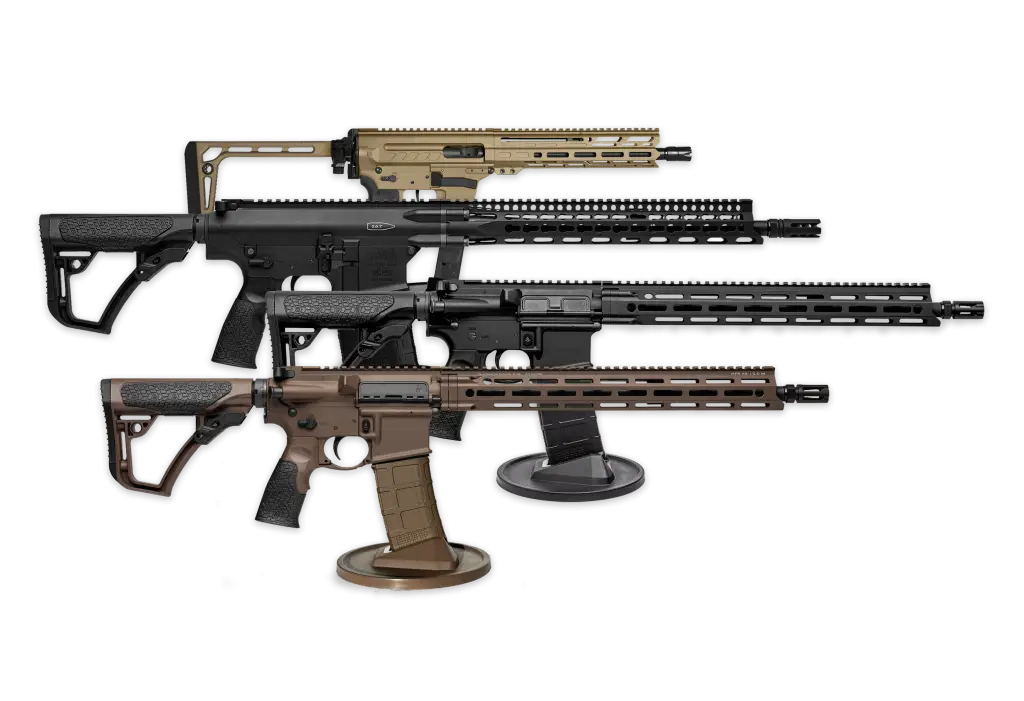
This approach is especially useful for collectors who own multiple rifles with different handguard lengths or attachment systems.
A 20-inch traditional rifle, a 16-inch M-LOK carbine, and a precision-style large-frame rifle can be displayed side by side using compatible gun stands.
Free Float Handguard Frequently Asked Questions
What Is the Main Purpose of a Free Float Handguard?
Its defining purpose is to surround the barrel without making direct contact with it along most of its length. It also provides a gripping surface and accessory mounting locations.
Does a Free Float Handguard Touch the Barrel?
It is designed not to touch the barrel along most of its length. The handguard mounts around the barrel nut at the upper receiver.
Is a Free Float Handguard More Accurate?
It can help reduce changes caused by pressure applied to the handguard, but overall accuracy still depends on the complete rifle, ammunition, optics, and shooter.
Is M-LOK the Same as Free Float?
No. M-LOK is an accessory attachment standard. A handguard can be M-LOK and free-floating, M-LOK and drop-in, or use another mounting system entirely.
Can a Quad Rail Be Free-Floating?
Yes. Many quad rails mount around a barrel nut and do not contact the barrel.
Can a Drop-In Handguard Be Replaced?
Many rifles can be converted, but compatibility and installation requirements depend on the existing barrel, gas system, front sight, and upper receiver.
What Is the Most Popular Free Float Handguard System?
M-LOK is the most common modular attachment system on modern commercial free-float handguards.
How Long Should a Free Float Handguard Be?
The correct length depends on the barrel, gas system, accessory placement, balance, and appearance desired. Manufacturer specifications should always be checked.
Are Free Float Handguards Universal?
No. Barrel-nut threads, receiver patterns, rail heights, mounting systems, and internal dimensions can differ.
Can an AR-15 Handguard Fit an AR-10?
Generally, it should not be assumed to fit. Large-frame AR-style rifles use different receiver patterns and barrel-nut specifications.
Final Thoughts
A free float handguard surrounds an AR-15 barrel while remaining structurally separate from it along most of its length. By mounting around the barrel nut rather than relying on a front handguard cap, the system reduces the transfer of external handguard pressure directly to the barrel.
This design can contribute to more consistent performance while also providing a stable platform for modern accessories. M-LOK slots, Picatinny rails, sling mounts, lights, grips, bipods, and rail covers can all be incorporated into a properly selected handguard system.
Free-float handguards are available in many lengths, materials, attachment standards, and mounting designs. The best option depends on the receiver, barrel, gas system, intended accessories, weight goals, and desired appearance.
Owners should never assume that every AR-style component is universally compatible. Barrel-nut threads, handguard dimensions, gas-block clearance, receiver height, and mounting hardware must all be verified.
For collectors, a free float handguard is also one of the most visible ways to distinguish one rifle from another. A slim M-LOK rail, traditional free-float quad rail, or lightweight carbon-fiber handguard can give each configuration a completely different character.
Displaying the finished rifle on a durable AR15 gun stand keeps the handguard and its accessories visible while helping organize the collection. Larger-frame rifles can be showcased using a compatible AR10 gun stand designed for the appropriate magazine platform.