




















The AR-15 is one of the most modular modern sporting rifle platforms ever developed. Unlike many traditional rifle designs that rely on a single receiver, the AR-15 separates its primary operating components into two major assemblies: the upper receiver and the lower receiver.
This two-piece design is one of the biggest reasons the AR-15 has become so popular among collectors, recreational shooters, competitors, hunters where lawful, and enthusiasts. The upper and lower receivers can often be separated for cleaning, maintenance, inspection, transportation, and customization, allowing owners to configure rifles in many different ways.
Although both receiver assemblies work together as one complete rifle, they perform very different functions. The upper receiver contains the barrel and many of the operating components responsible for chambering, locking, extracting, and ejecting cartridges. The lower receiver houses the magazine well, fire-control components, safety selector, grip, stock attachment point, and buffer system.
Understanding the upper vs lower receiver helps owners identify compatible parts, understand how the rifle functions, and make informed decisions when upgrading or maintaining an AR-15.
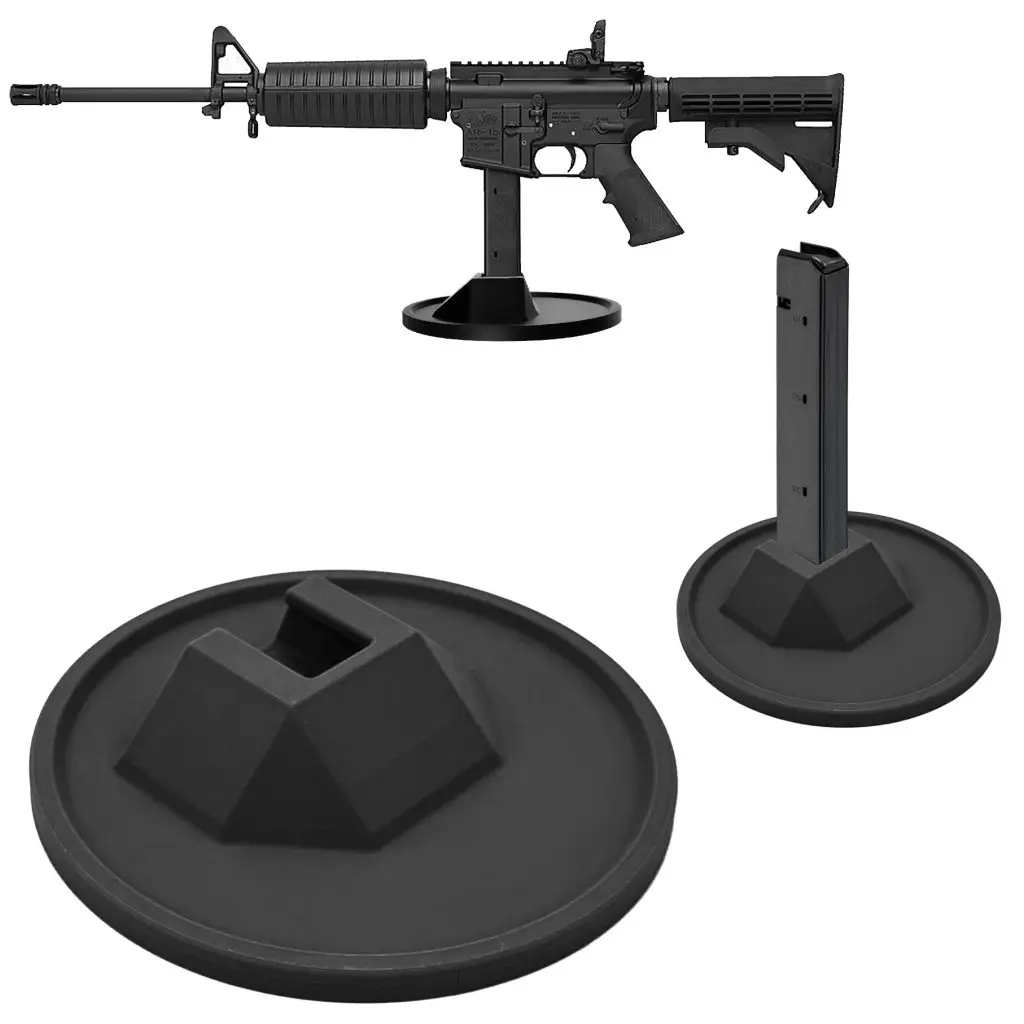
Once a rifle is assembled, many collectors display it using a compatible AR15 gun stand, allowing both receiver assemblies and the rifle’s accessories to remain fully visible.
What Is an AR-15 Receiver?
A receiver is the primary structural component around which the rifle is built. Unlike many traditional firearms that use one receiver housing, the AR-15 divides this structure into two separate assemblies:
- Upper receiver.
- Lower receiver.
These two sections connect using the pivot pin and rear takedown pin. When assembled, they function as one complete rifle while allowing relatively simple separation for maintenance or inspection.
The split receiver design is one of the defining characteristics of the AR platform.
What Is the Upper Receiver?
The upper receiver forms the top half of the rifle and supports many of the components involved in the operating cycle.
A complete upper receiver assembly commonly includes:
- Upper receiver housing.
- Barrel.
- Barrel extension.
- Barrel nut.
- Bolt carrier group.
- Charging handle.
- Handguard.
- Gas block.
- Gas tube.
- Muzzle device.
- Forward assist on many models.
- Ejection port cover.
Not every product marketed as an “upper receiver” includes all of these components. Some products include only the stripped receiver housing, while others are sold as complete upper assemblies ready to attach to a compatible lower.
What Is the Lower Receiver?
The lower receiver forms the bottom half of the rifle and supports the magazine, trigger-related components, grip, stock assembly, and several controls.
A complete lower assembly commonly includes:
- Lower receiver.
- Magazine well.
- Magazine release.
- Bolt catch.
- Trigger.
- Hammer.
- Disconnector.
- Safety selector.
- Pistol grip.
- Trigger guard.
- Pivot pin.
- Takedown pin.
- Buffer tube.
- Buffer.
- Buffer spring.
- Stock.
Like uppers, lowers may be sold stripped, partially assembled, or complete.
How the Upper and Lower Work Together
The upper and lower receiver are connected using two pins.
The front pivot pin allows the upper receiver to rotate open for maintenance.
The rear takedown pin allows the receivers to separate completely when both pins are removed.
This design allows owners to:
- Clean the rifle.
- Inspect components.
- Replace compatible assemblies.
- Swap complete upper receivers.
- Store or transport the rifle more compactly.
The two-piece receiver system has become one of the defining advantages of the AR platform.
Components Found in the Upper Receiver
Barrel
The barrel directs the projectile during firing. Modern AR-15 barrels are available in many lengths, profiles, twist rates, and chamberings.
Bolt Carrier Group
The bolt carrier group contains the bolt and related components that chamber, lock, extract, and eject.
Charging Handle
The charging handle allows the owner to manually retract the bolt carrier group.
Handguard
The handguard protects the shooter’s hands from barrel heat while providing mounting locations for compatible accessories.
Gas System
The gas block and gas tube help cycle the action in standard direct-impingement AR-15 designs.
Forward Assist
Many upper receivers include a forward assist. Some lightweight or competition-oriented uppers omit this feature.
Ejection Port Cover
The dust cover helps reduce debris entering the action when the rifle is not being fired.
Components Found in the Lower Receiver
Magazine Well
The magazine well supports compatible magazines.
Trigger Assembly
The trigger assembly includes the trigger, hammer, disconnector, springs, and related components.
Safety Selector
The selector allows the rifle’s safety mechanism to be engaged or disengaged according to the manufacturer’s design.
Pistol Grip
The grip provides a comfortable interface for controlling the rifle.
Receiver Extension
Often called the buffer tube, the receiver extension houses the buffer and buffer spring.
Stock
The stock attaches to the receiver extension and provides shoulder support.
Upper vs Lower Receiver Comparison
| Feature | Upper Receiver | Lower Receiver |
|---|---|---|
| Main function | Supports operating components | Supports fire-control components |
| Contains barrel | Yes | No |
| Contains trigger | No | Yes |
| Contains magazine well | No | Yes |
| Supports stock | No | Yes |
| Supports handguard | Yes | No |
| Contains bolt carrier group | Yes | No |
| Contains charging handle | Yes | No |
Complete Upper vs Stripped Upper
Upper receivers are commonly sold in several configurations.
Stripped Upper
A stripped upper generally includes only the receiver housing.
Assembled Upper
An assembled upper often includes the forward assist and ejection port cover.
Complete Upper
A complete upper usually includes the barrel, handguard, gas system, charging handle, bolt carrier group, and muzzle device.
Product descriptions should always be reviewed carefully because manufacturers define “complete” differently.
Complete Lower vs Stripped Lower
Lower receivers are also available in multiple configurations.
Stripped Lower
A stripped lower generally contains only the receiver housing.
Complete Lower
A complete lower typically includes the lower parts kit, buffer assembly, pistol grip, and stock.
Some complete lowers may exclude certain accessories or furniture, so specifications should always be verified.
Receiver Materials
Most modern AR-15 receivers are manufactured from aluminum alloys.
Common manufacturing methods include:
- Forged aluminum.
- Billet aluminum.
- Cast aluminum on some older products.
Some specialty receivers may incorporate polymer or mixed-material designs, although aluminum remains the most common choice.
Forged vs Billet Receivers
Forged receivers begin as forged aluminum blanks that are machined into their final shape.
Billet receivers are machined from solid blocks of aluminum.
Both methods can produce quality receivers. Buyers often compare:
- Appearance.
- Weight.
- Machining details.
- Accessory compatibility.
- Manufacturer reputation.
Upper Receiver Styles
Modern AR-15 uppers are available in several configurations.
Flat-Top Upper
The flat-top upper includes a continuous Picatinny rail for optics and accessories.
Carry Handle Upper
Traditional receivers include an integrated carrying handle and fixed rear sight.
Slick-Side Upper
Some receivers omit the forward assist for a simplified appearance.
Lower Receiver Styles
Modern lowers also vary considerably.
Features may include:
- Ambidextrous controls.
- Integrated trigger guards.
- Flared magazine wells.
- Enhanced machining.
- Specialized grip angles.
Receiver Compatibility
Most standard AR-15 upper and lower receivers are designed around similar dimensions, but compatibility should never be assumed.
Buyers should verify:
- Receiver pattern.
- Caliber compatibility.
- Manufacturer recommendations.
- Pin dimensions.
- Buffer requirements.
Large-frame AR rifles use different receiver dimensions and should not be confused with standard AR-15 components.
Customization Opportunities
The split receiver design allows owners to customize nearly every aspect of the rifle.
Popular upgrades include:
- Barrels.
- Handguards.
- Triggers.
- Stocks.
- Pistol grips.
- Charging handles.
- Bolt carrier groups.
- Optics.
- Safety selectors.
- Magazine releases.
Because many components are grouped into upper and lower assemblies, upgrades can often be performed without replacing the entire rifle.
Cleaning the Upper Receiver
Routine maintenance of the upper receiver typically includes inspecting and cleaning:
- Chamber.
- Bolt carrier group.
- Barrel.
- Gas system.
- Charging handle.
- Feed ramps.
Owners should follow the rifle manufacturer’s maintenance recommendations.
Cleaning the Lower Receiver
The lower receiver generally requires less intensive cleaning but should still be inspected regularly.
Common inspection areas include:
- Trigger components.
- Magazine well.
- Safety selector.
- Buffer assembly.
- Pins and springs.
Common Buying Mistakes
Confusing Complete and Stripped Assemblies
Always verify whether the product includes only the receiver housing or a complete assembly.
Ignoring Compatibility
Not every upper, lower, barrel, or handguard is universally interchangeable.
Choosing Appearance Over Function
Features, compatibility, and manufacturer support are often more important than cosmetic machining.
Forgetting Supporting Components
A stripped receiver requires additional compatible parts before becoming a functional assembly.
Upper vs Lower Receiver for Collectors
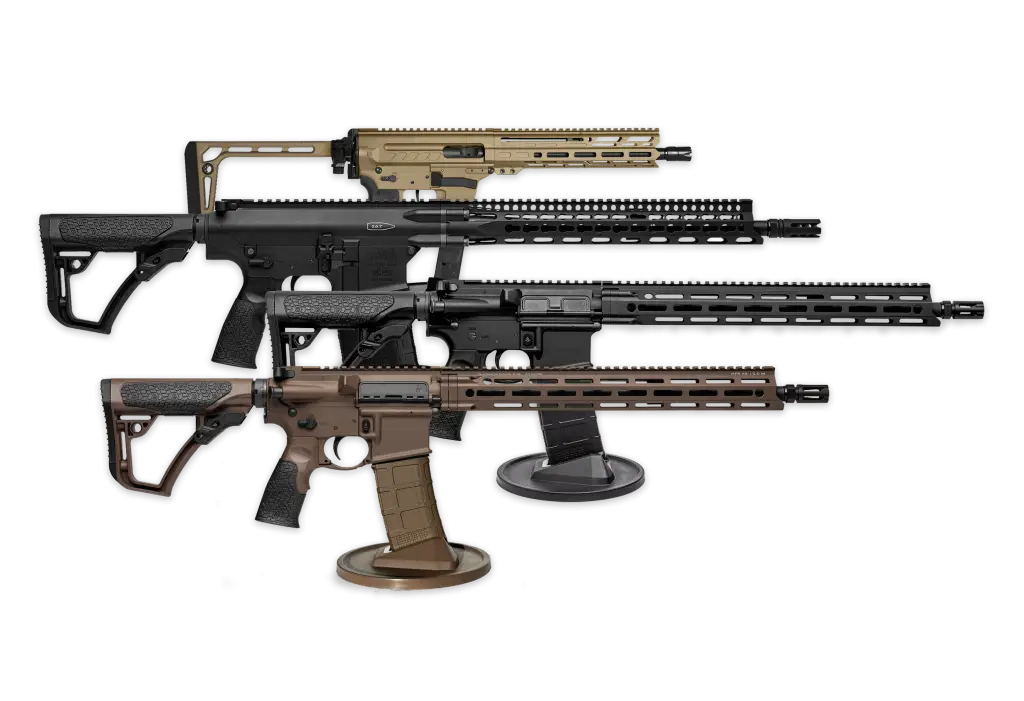
Collectors often own multiple upper receivers with different barrel lengths, optics, or calibers alongside several complete rifles.
Popular collection themes include:
- Retro carry-handle rifles.
- Modern M-LOK carbines.
- Precision-oriented builds.
- Competition configurations.
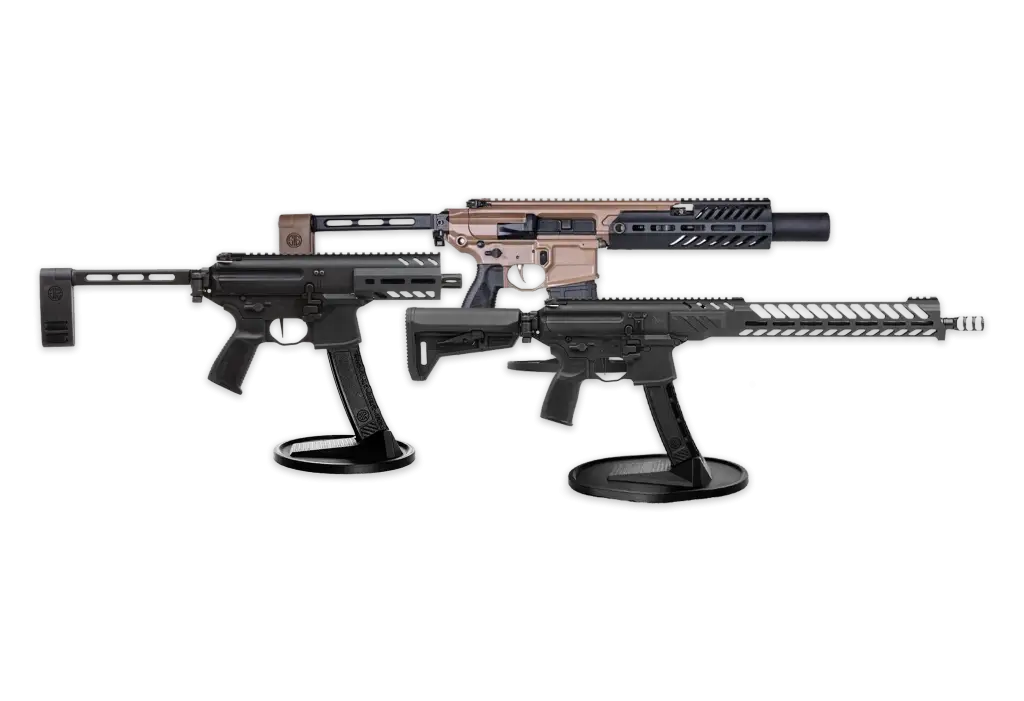
- Pistol-caliber platforms.
- Different optic combinations.
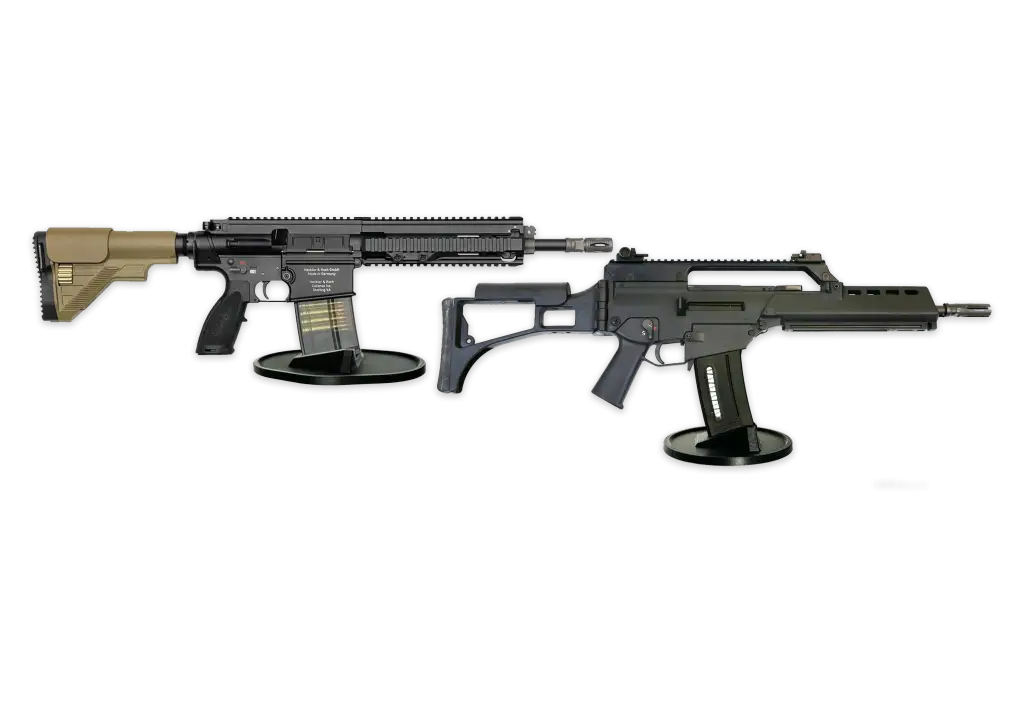
A compatible rifle stand helps display these configurations while leaving both receiver assemblies fully visible.
Why GunCreed Stands Complement AR-15 Builds
Many display racks contact the handguard or stock, partially hiding the rifle’s features.
GunCreed magazine-compatible rifle stands support the rifle through a compatible magazine, allowing the upper receiver, lower receiver, optic, handguard, grip, and stock to remain visible.
This creates an organized presentation for collectors, photography, retail displays, and personal collections.
Whether displaying a classic carry-handle rifle or a modern flat-top configuration, a compatible gun stand helps showcase the complete build.
Frequently Asked Questions
Can You Separate the Upper and Lower Receiver?
Yes. The upper and lower receivers are connected using pivot and takedown pins, allowing them to be separated for maintenance and inspection.
Can You Buy a Complete Upper?
Yes. Many manufacturers sell complete upper assemblies that include the barrel, handguard, gas system, charging handle, and bolt carrier group.
Can You Buy a Complete Lower?
Yes. Complete lowers are commonly available with the stock, grip, trigger assembly, and buffer system already installed.
Are All AR-15 Receivers Compatible?
No. Compatibility varies by manufacturer, receiver pattern, caliber, and platform.
Do AR-10 Receivers Fit AR-15 Rifles?
No. Large-frame AR platforms use different receiver dimensions and components.
Final Thoughts
The AR-15’s two-piece receiver design is one of the platform’s defining features. The upper receiver contains the barrel and operating components, while the lower receiver houses the magazine well, trigger assembly, grip, stock attachment, and controls.
This modular architecture allows owners to customize, maintain, inspect, and organize their rifles more easily than many traditional firearm designs. Understanding the differences between the upper and lower receiver also helps buyers choose compatible parts and avoid common purchasing mistakes.
Whether you own a classic carry-handle rifle, a modern M-LOK build, or several specialized configurations, displaying them on a durable AR15 gun stand provides a clean, professional way to showcase both receiver assemblies while keeping your collection organized.