




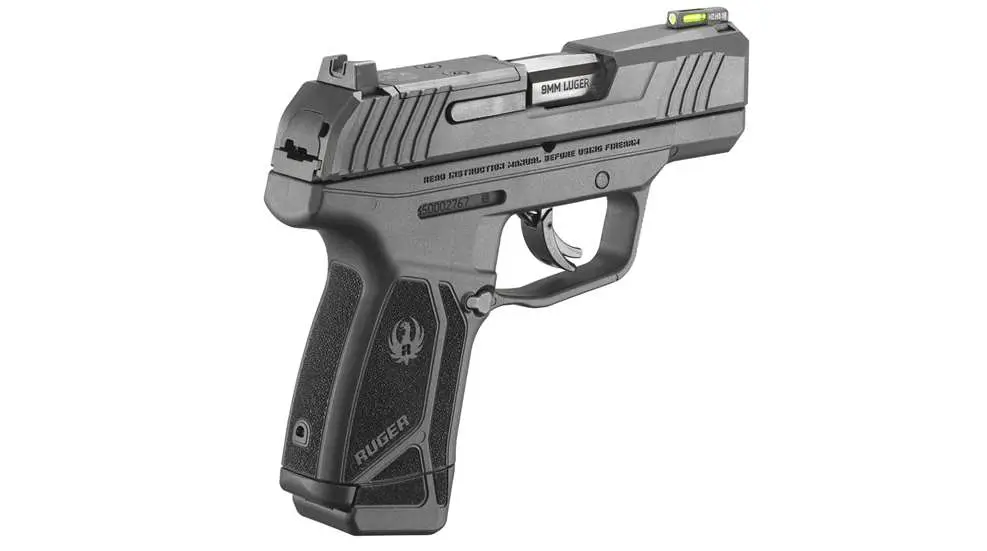

If you’ve been shopping for a slim 9mm that’s easy to carry all day—without giving up modern features—the Ruger Max-9 is one of the most talked-about options in the micro-compact category. It’s lightweight, optic-ready on most models, and built around a capacity that makes sense for daily carry. In this review, we’ll break down what the Max-9 does well, what to watch for, and who it fits best—so you can decide if it deserves a spot in your rotation.
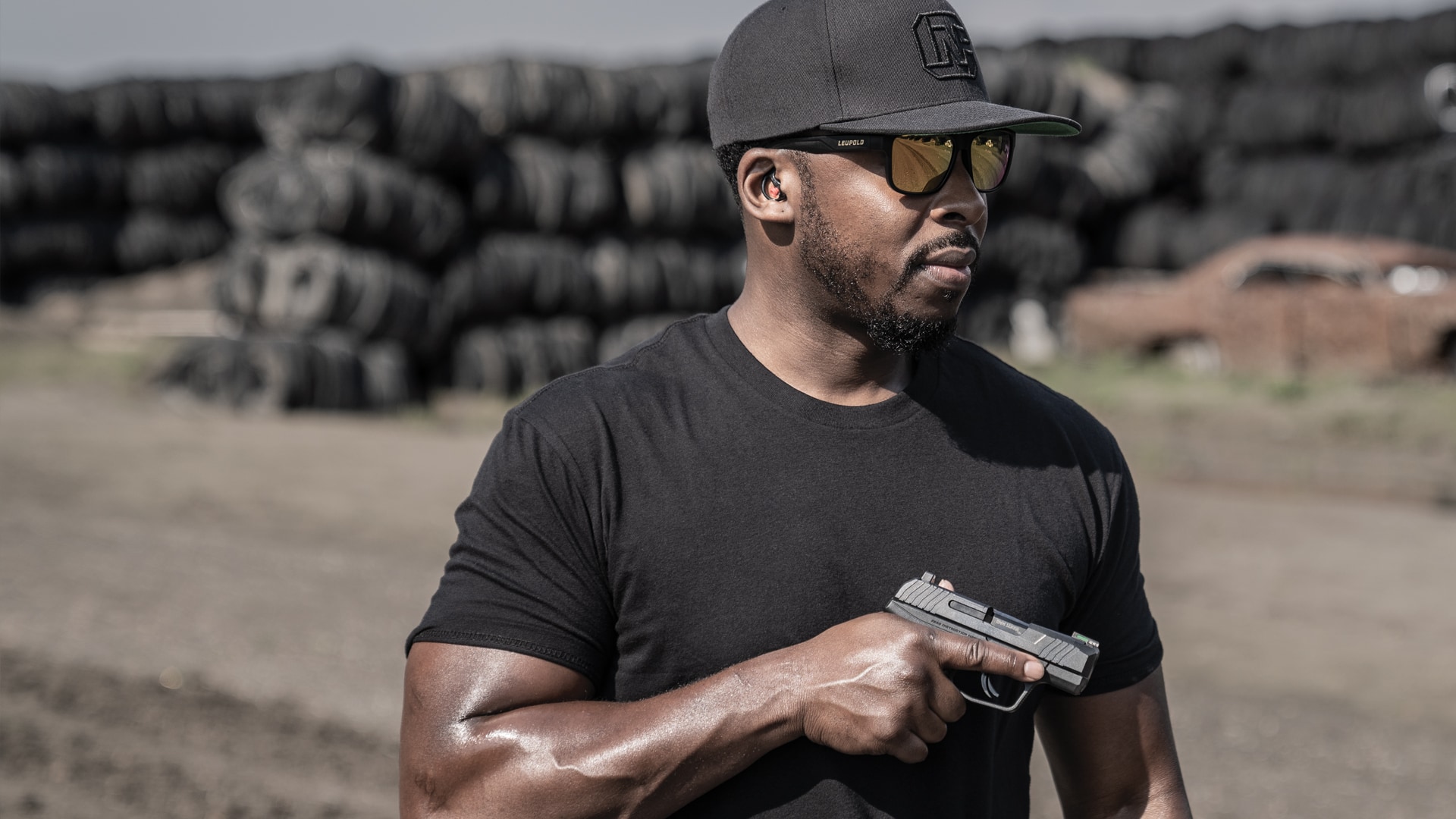
Quick Take: What the Ruger Max-9 Is (and Why People Like It)
The Ruger Max-9 is a striker-fired, micro-compact 9mm designed for concealed carry. The big appeal is simple: it stays thin and easy to carry, while still offering “real-world” capacity and an optic-ready slide on many versions. Ruger also offers multiple configurations—some with a manual thumb safety, some without, and even an option packaged with the Ruger ReadyDot micro reflex sight—so you can match the setup to your comfort level and training habits.
In a market packed with small 9mm carry pistols, the Max-9 stands out by trying to balance three things at once:
- Carry comfort (thin profile, manageable weight)
- Modern features (optics-ready capability on most models)
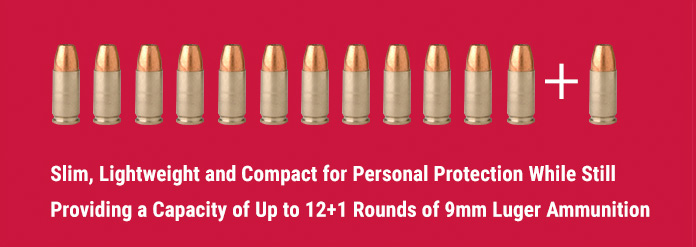
- Capacity (10- and 12-round magazine options depending on model)
Official product page: Ruger MAX-9 models & details
Ruger Max-9 Specs (Common Models)
Because Ruger sells multiple variants, always verify the exact model number before you buy. Here are commonly referenced specs for a standard 3.20″ barrel optic-ready configuration (model-dependent):
| Caliber | 9mm Luger |
|---|---|
| Barrel length | 3.20″ (common models) |
| Overall length | 6.00″ (common models) |
| Slide width | 0.95″ (common models) |
| Weight (unloaded) | 18.4 oz (common models) |
| Capacity | 10+1 or 12+1 (model/mag dependent) |
| Action | Striker-fired |
| Optic-ready | Yes on most models (verify the exact variant) |
Reference spec sheet (example): Model 3500 spec sheet
Ergonomics & Carry Comfort
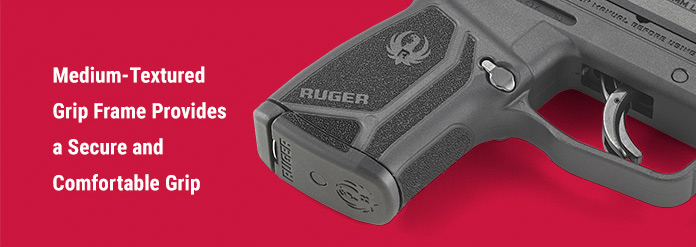
A carry pistol can have incredible features and still lose you on one thing: comfort. The Max-9’s thin profile helps it disappear under a t-shirt or hoodie, and the grip texture is designed to stay planted without feeling like sandpaper against your skin. In practical terms, that can matter more than any spec sheet—because if a pistol is uncomfortable, people stop carrying it.
Here’s what I like about the Max-9’s “carry feel” approach:
- Thin slide helps reduce printing and hot spots in the waistband.
- Micro-compact height can be easier to conceal than taller double-stacks.
- Grip texture aims for control without shredding clothing or skin.
Is the Grip Too Small?
With micro-compacts, the usual trade-off is grip length. Most shooters will get a comfortable hold with the 12-round magazine (or any baseplate that adds a little room). If you have larger hands, you may still find your pinky searching for space on the shorter setup. The good news: this is exactly why many owners keep both magazine sizes—shorter for deep concealment, longer for range time and practice.
Trigger & Shootability
Micro-compacts can be snappy, and that can make triggers feel “worse” than they are—because recoil and grip space exaggerate every little movement. The Max-9 is built around a striker-fired trigger system intended to be consistent, with a clean break and reset (again, model-dependent and always influenced by shooter technique).
What matters for a carry pistol trigger isn’t just how it feels in a store. It’s how it performs under repetition:
- Consistency: Does it feel the same from shot to shot?
- Reset: Is it easy to find during controlled pairs?
- Practical accuracy: Can you keep tight groups at realistic distances?
If you’re new to micro-compacts, expect an adjustment period. You’ll usually get the best results by focusing on a locked-in grip, a smooth press, and a small amount of follow-through—rather than trying to “outrun” the trigger right away.
Sights & Visibility
Many Max-9 configurations come with a high-visibility front sight setup (often a bright front paired with a drift-adjustable rear). This is a big deal on a small pistol, because short sight radius magnifies alignment mistakes.
Here’s the practical question: Can you pick up the front sight fast in mixed lighting? For carry use, that’s the whole game. If your eyes snap to the front sight quickly, your speed and precision improve—especially on first-shot hits.
Optics-Ready: What It Means on the Max-9
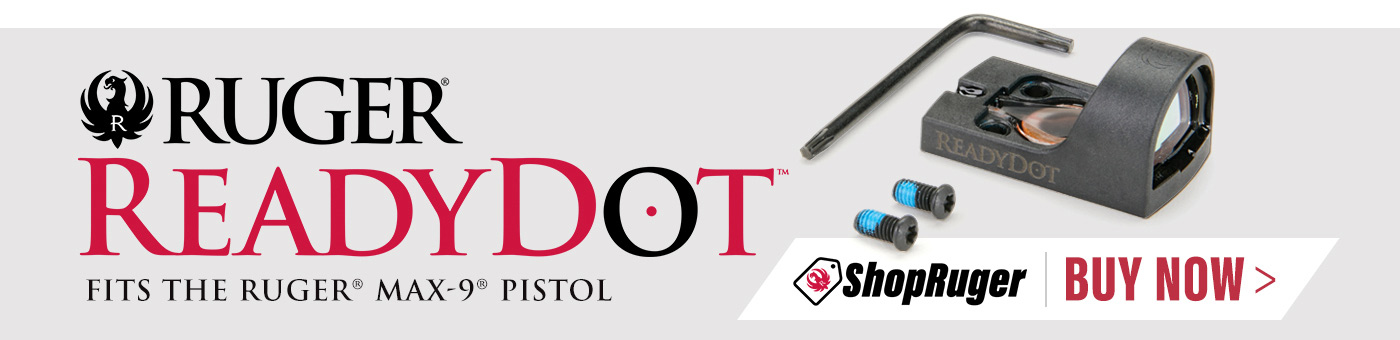
One of the most important modern upgrades in the carry world is a micro red dot. Many Max-9 models are cut to accept micro red dots with a JPoint / Shield-pattern footprint (always confirm compatibility before buying an optic). This is useful if you want:
- Faster target acquisition once you’re trained on a dot
- Better performance in low contrast lighting (when irons blend in)
- Easier focus for shooters whose eyes don’t love front sights anymore
Ruger’s optics overview: MAX-9 optics compatibility list
Dot vs. Irons on a Micro-Compact
A dot can be a huge advantage, but it’s not “free performance.” Plan on a real learning curve: presentation consistency, tracking the dot under recoil, and keeping the lens clean. If you don’t want that training commitment, the Max-9’s iron-sight setup may be the simplest and most reliable route.
Manual Safety vs. No Manual Safety (Pro Model)
Ruger offers variants with and without a manual thumb safety. This choice is personal and should match your training and comfort level. A manual safety can be reassuring for some carry methods, while others prefer fewer external controls.
If you’re deciding between versions, ask yourself:
- Will I train consistently to swipe the safety off every time?
- Is my carry method more likely to benefit from an external safety?
- Do I prefer a simpler draw-and-press workflow?
Whichever route you choose, commit to it. Mixing platforms and controls without consistent practice is where people get sloppy.
Reliability & Everyday Practicality
In this size category, reliability comes down to two big things: consistent ammo function and consistent shooter technique. Micro-compacts can be less forgiving of weak grip compared to larger pistols. The Max-9’s job is to run cleanly and predictably, and your job is to bring a stable grip and proper maintenance.
For best results, keep your carry setup boring and proven:
- Use quality range ammo for practice and confirm function.
- Pick a reputable defensive load and test enough to trust it.
- Replace worn magazines and springs as needed over time.
Holsters: The Make-or-Break Part of Carry
Even the best carry pistol feels bad with the wrong holster. Your holster should:
- Fully cover the trigger guard
- Hold the pistol securely (no shifting or wobble)
- Match your carry position (appendix, strong side, etc.)
- Support your belt and body type (comfort matters)
Helpful starting point: Ruger’s MAX-9 holster finder on the official product page can help narrow down compatible options based on your preferences. See MAX-9 holster resources
Maintenance & Ownership Notes
Carry pistols live a hard life: sweat, lint, dust, temperature swings, and daily movement. That means basic maintenance matters.
Simple Routine (Practical, Not Fussy)
- Weekly: Quick wipe-down, especially around the slide and grip.
- Monthly: Inspect the optic (if installed), screws, and lens; check sights and magazine condition.
- After range trips: Clean and lightly lubricate per the manual.
Official manuals: Ruger MAX-9 instruction manuals (select your model)
Pros & Cons
Pros
- Carry-friendly size with a thin profile
- Strong feature set for the category (optic-ready on most variants)
- Capacity options that make sense for real-world carry
- Multiple configurations (manual safety, no manual safety, optic packages)
Cons
- Micro-compact recoil still requires training and grip discipline
- Variant confusion: model numbers and features can differ—verify before buying
- Holster/optic selection requires extra research to ensure proper fit and compatibility
Who Should Buy the Ruger Max-9?
The Max-9 is a strong choice if you want a slim 9mm that’s comfortable enough to carry consistently—and you like the idea of having an optic-ready platform without jumping to a larger pistol. It’s especially appealing for:
- Everyday carriers who value comfort and concealment
- Minimalist setups that still want modern options
- Dot-curious shooters who may add a micro red dot later
If you prefer a softer shooting experience, consider spending more time with compact (slightly larger) pistols before committing to a micro-compact as your primary. Shootability and confidence matter.
FAQ: Ruger Max-9
Is the Ruger Max-9 optic-ready?
Many Max-9 models are optic-ready, with Ruger listing compatibility for JPoint and Shield-pattern micro red dots. Always confirm your exact model’s features before purchase.
What’s the difference between 10-round and 12-round versions?
Some models ship with 10-round magazines, others include a 12-round option (and some packages include both). Capacity can also be influenced by your state’s laws.
Is a manual safety necessary?
Not necessarily. Some shooters prefer a manual safety for peace of mind; others prefer fewer external controls. The best choice is the one you’ll train with consistently.
What’s the best way to carry a micro-compact comfortably?
Most comfort issues come down to holster design, belt support, and carry position. Start with a quality holster that matches your body type and daily routine, then adjust ride height and cant.
Final Verdict
The Ruger Max-9 is a practical, modern micro-compact 9mm built around what matters most for daily carry: comfort, capacity, and features that don’t feel gimmicky. If you choose the right variant, match it with a solid holster, and commit to consistent practice, it can be an excellent everyday option.
Safety note: Always follow local laws, seek professional training, and follow the manufacturer’s instructions for setup, maintenance, and safe handling.