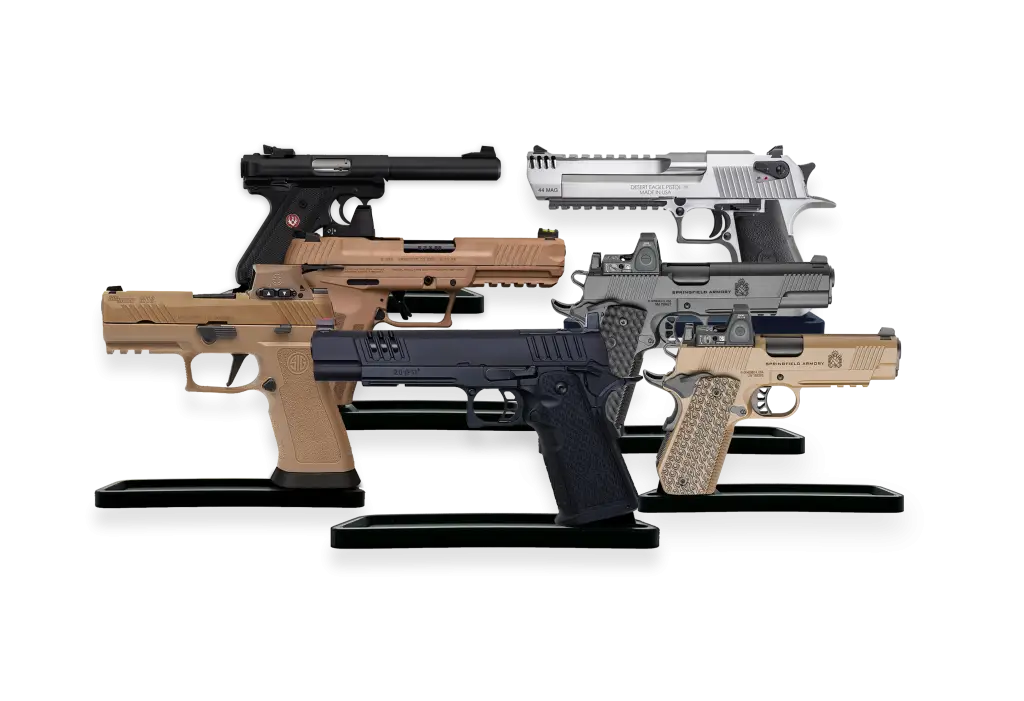







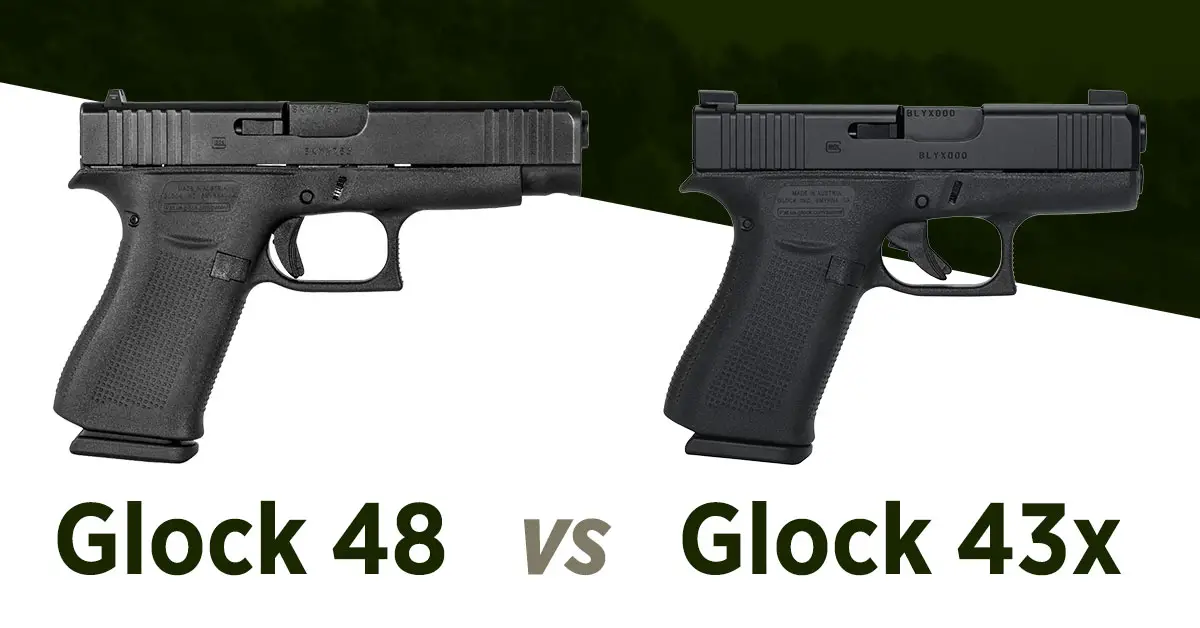

Two of the most talked-about slim 9mm options in the Glock lineup. Same family. Same general mission. Very different “feel” on the belt.

Why This Comparison Matters
If you’re shopping for a slim, carry-friendly Glock, the Glock 43X and Glock 48 usually end up on the same shortlist. They share the same “Slimline” DNA and a similar grip length, but the experience can be surprisingly different once you actually carry one all day.
In plain terms: the 43X is the shorter-slide option that tends to feel quicker and slightly easier to tuck away. The 48 is the longer-slide option that often feels steadier, a touch easier to shoot well, and sometimes even more comfortable for certain body types because of how it distributes weight.
This guide breaks down the real-world differences—size, comfort, shootability, holster considerations, and MOS (optic-ready) choices—so you can pick the one that fits your lifestyle, wardrobe, and priorities.
Quick Links (Official Product Pages)
At-a-Glance: Glock 48 vs 43X (What Changes, What Doesn’t)
The big picture: both models are built around a slim profile and a 10-round standard magazine capacity in factory configuration. What changes most is slide length (and therefore overall length), which influences concealment, comfort, and how the pistol tracks during recoil.
| Category | Glock 43X (MOS version noted) | Glock 48 (MOS / standard noted) |
|---|---|---|
| Role | Shorter-slide Slimline carry | Longer-slide Slimline carry (more “service-like” feel) |
| Barrel length | 3.41″ (43X MOS) | 4.17″ (48 / 48 MOS) |
| Overall length | Shorter overall package | 7.28″ (48) |
| Magazine capacity (factory) | 10-round standard | 10-round standard |
| Optic-ready option | MOS available | MOS available |
Note: Specs vary slightly by exact variant and region; always verify the exact model you’re buying on the official pages linked above.
The Real Difference: Slide Length (And Why It Changes Everything)
The 43X and 48 share a similar grip length, which is a big deal—because for many people, the grip is the part most likely to print. So if the grips are similar, why do they feel so different to carry?
The answer is the slide. The Glock 43X uses a shorter slide, while the Glock 48 stretches out with a longer slide and barrel. That extra length can sound like “harder to conceal,” but it can also mean:
- More stability in the waistband: the longer slide can anchor the pistol and reduce “tip-out” for some carry positions.
- Smoother recoil impulse: more length/weight up front can feel steadier for many shooters.
- Different comfort profile: depending on your torso length and how you sit, a shorter slide can be more comfortable—or it can shift more and poke in different spots.

Concealment: Which One Hides Better?
If you’re choosing purely on concealment, many people assume the 43X wins automatically because it’s shorter overall. In practice, it depends on how you carry:
Inside-the-waistband (IWB) & appendix carry (AIWB)
The 43X often feels easier to work with because there’s less slide length to manage—especially when sitting, bending, or driving. If your daily life involves lots of getting in and out of vehicles, shorter can be nicer.
But the 48 can surprise people in AIWB: the longer slide may help the grip “tuck” closer to the body for some builds, which can reduce printing. That’s why you’ll hear experienced carriers say, “The longer one actually hides better for me.”
Strong-side IWB (3–5 o’clock) and OWB cover garment
With strong-side carry, both can work extremely well. The 48 can feel more planted, while the 43X is often the “no drama” option that disappears under casual clothing.
Bottom line: if you can, try both in your preferred carry position with a quality holster. The winner is the one that stays stable, conceals cleanly, and doesn’t make you want to take it off halfway through the day.
Shootability: The “Easy to Carry” vs “Easy to Shoot” Trade
Here’s the classic trade-off in compact carry pistols: shorter tends to be a little easier to carry, and longer tends to be a little easier to shoot well—especially at speed.
Why the Glock 48 can feel steadier
The longer barrel/slide (4.17″) on the Glock 48 typically gives a steadier feel when you’re shooting strings of fire. Many shooters also like the slightly longer sight radius (with irons) and the way the front end tracks during recoil.
Why the Glock 43X feels quick and “light”
The Glock 43X (3.41″ barrel on the MOS version) is a shorter package. That can translate to a quick presentation and a pistol that feels lively in hand. If you prioritize minimal bulk and you want a slim carry that’s easy to live with, the 43X has a lot going for it.

MOS (Optic-Ready) Considerations: 43X MOS vs 48 MOS
If you want to run a micro red dot, the MOS versions are the straightforward path. Glock’s MOS variants are designed for specific micro-optics footprints, and the official pages note that adapter plates may not be included—so plan accordingly before you buy.
If you’re staying with iron sights, MOS is still not a bad idea for resale and flexibility, but it’s not mandatory. Choose MOS if you value the option to add an optic later without sending the slide out for milling.
Which MOS is the “better” optic host?
For most people, it’s not about which hosts better—it’s about which you shoot better once an optic is installed. The longer 48 MOS can feel a touch calmer and more stable; the 43X MOS keeps the whole setup shorter. If you’re building a slim optic-ready carry, either can be excellent—just match it to your comfort and concealment needs.
Holsters, Belts, and Comfort: The Hidden Deciders
People spend weeks debating 43X vs 48 and then accidentally sabotage the whole experience with a flimsy belt or a low-quality holster. Here’s the truth: your carry system matters as much as the pistol.
What to look for in a holster (high level)
- Secure retention that holds the pistol consistently.
- Comfortable contact points (no sharp edges digging in).
- Stable ride (doesn’t shift every time you sit or stand).
- Adjustability for ride height and cant (where applicable).
If you want to research styles, you can browse these guides (not endorsements—just starting points for understanding options):
Reliability and Maintenance: What You Should Expect
Glock’s reputation in this category is a big reason these two models stay popular. Both the 43X and 48 are designed around the same general operating system and share the “Glock feel” that many owners already know.
At a practical level, the reliability difference between the two is usually less important than:
- Using quality, factory-spec magazines
- Keeping the pistol clean and properly lubricated
- Choosing a carry setup that protects the trigger guard fully
- Practicing enough to run the pistol confidently under stress
If you want an official starting point for owner education, Glock’s site includes safety and care resources alongside the product pages.
Which One Should You Choose?
Here’s a simple decision guide. Not perfect—but it matches how most real buyers end up deciding after trying both.
Choose the Glock 43X if…
- You want the shorter Slimline package for daily comfort.
- You sit, drive, and move a lot during the day and want something that’s less “there.”
- You prefer a carry gun that feels quick on presentation.
- You want MOS capability in a shorter setup (look at 43X MOS).
Choose the Glock 48 if…
- You want a slim carry that feels a bit more like a compact “do-it-all” pistol.
- You prioritize shootability and a steadier feel during longer practice sessions.
- You want the longer slide to help stabilize the gun in the waistband (common for some body types).
- You want MOS capability with the longer-slide feel (see 48 MOS).
Buyer Checklist (Fast and Practical)
- Pick your carry position first (AIWB vs strong-side IWB vs OWB under a cover garment).
- Decide MOS or non-MOS (do you realistically want an optic in the next 6–12 months?).
- Budget for a real belt + holster (this is where comfort is won or lost).
- Handle both if possible—even 5 minutes in hand can reveal a preference.
- Confirm your local rules for purchase, transport, and carry.
FAQs: Glock 48 vs 43X
Is the Glock 48 harder to conceal than the 43X?
Not always. The 48 is longer, but some people find the longer slide helps the grip tuck closer to the body in certain carry positions. For others, the 43X is the clear winner—especially for comfort while sitting.
Do both use the same magazines?
They’re in the same Slimline family and the factory standard capacity is 10 rounds, but always confirm compatibility for your exact model and magazines before buying extras.
Is MOS worth it?
If you want the option to run a micro red dot now or later, MOS is usually worth the premium. If you know you’ll stay irons forever, non-MOS can be simpler.
Which one is better for new owners?
The better choice is the one you’ll carry consistently and practice with confidently. If you shoot the 48 better, that matters. If the 43X is the one you actually keep on you every day, that matters too.
Final Verdict: Slim Carry, Two Great Paths
The Glock 43X and Glock 48 are both excellent “slim carry” picks, and they’re popular for good reason. They’re not duplicates—think of them as two answers to the same question: “How do I get a Glock that’s easy to carry without feeling tiny in the hand?”
If you want the shortest, easiest-to-live-with Slimline feel, go 43X. If you want a slim carry that leans more toward shootability and stability, go 48.
And if you can only do one thing before buying: try each model in your preferred carry position with a quality holster. That quick test has ended more internet debates than any spec sheet ever will.