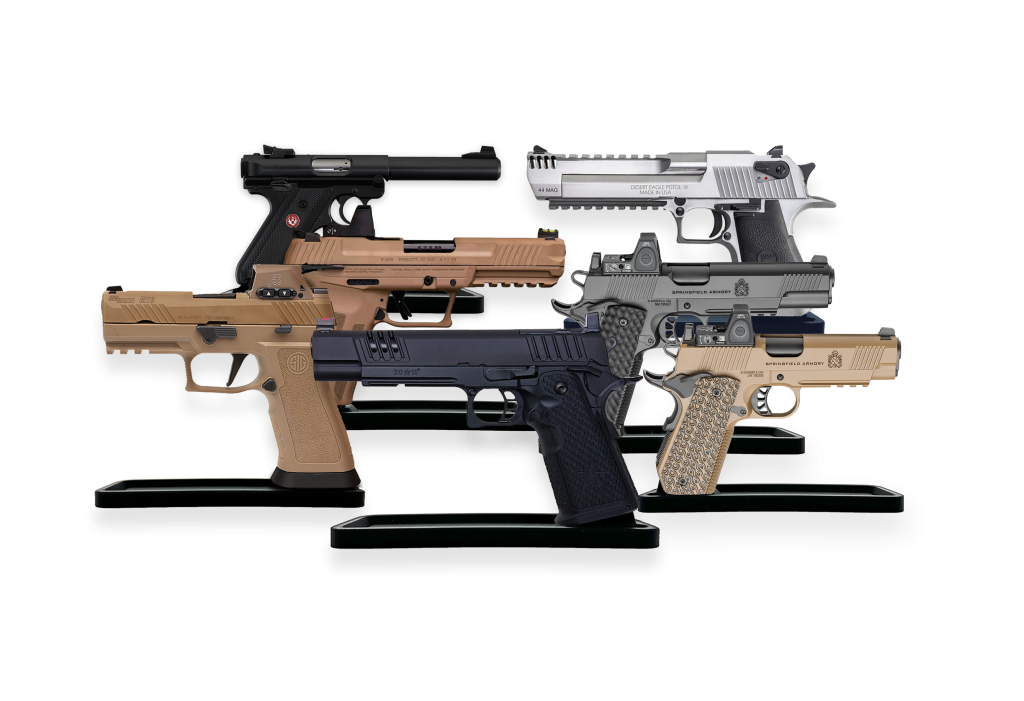






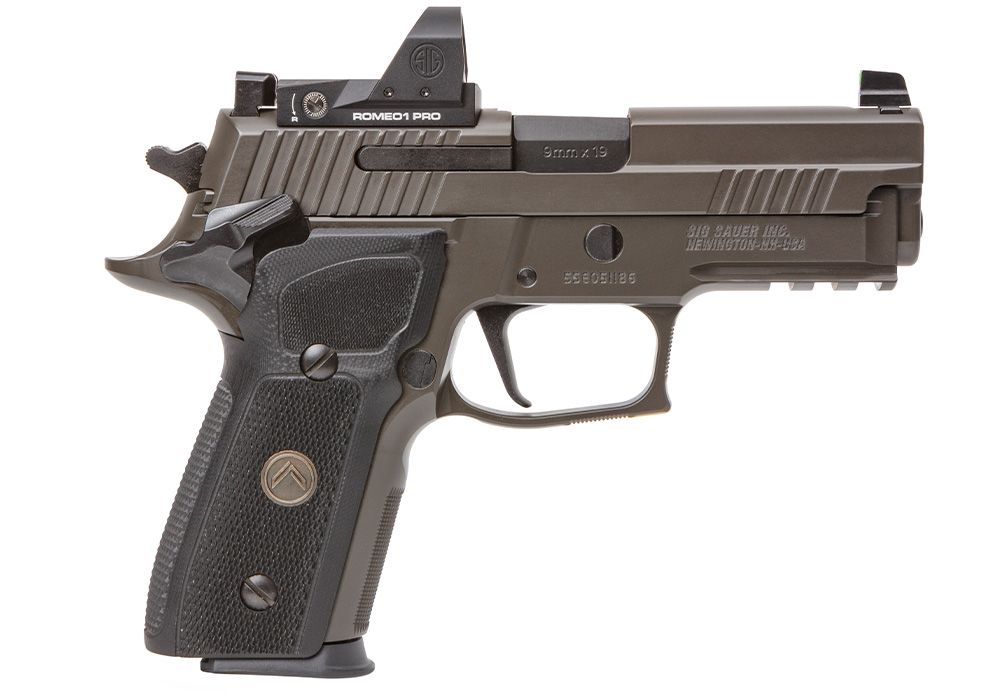

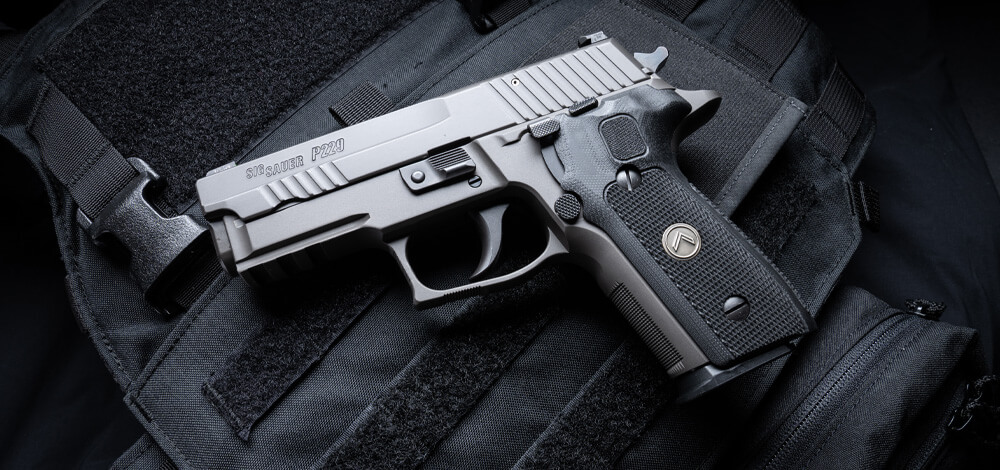
The Sig Sauer P229 has a rare reputation: it’s compact enough to carry, heavy enough to shoot well, and proven enough that professionals trusted it for decades. In a market full of polymer micro-compacts and optics-ready everything, the P229 still earns its keep as a do-it-all metal-frame pistol—especially for people who want a “full size feel” in a carry-friendly package.
Why the P229 Still Matters
The P229 sits in a sweet spot. It’s not a tiny “pocket” pistol, and it’s not a long-slide duty brick either. It’s a mid-size, double-stack design with the kind of balance that makes you want to shoot “just one more magazine” at the range—while still being realistic for everyday carry with a solid belt and holster.
For many owners, the P229 is the definition of a “one-pistol solution”: dependable, accurate, controllable, and built for years of real use. If you like metal frames, a confident recoil impulse, and a trigger system that rewards practice, the P229 is hard to ignore.
P229 at a Glance: What You’re Getting
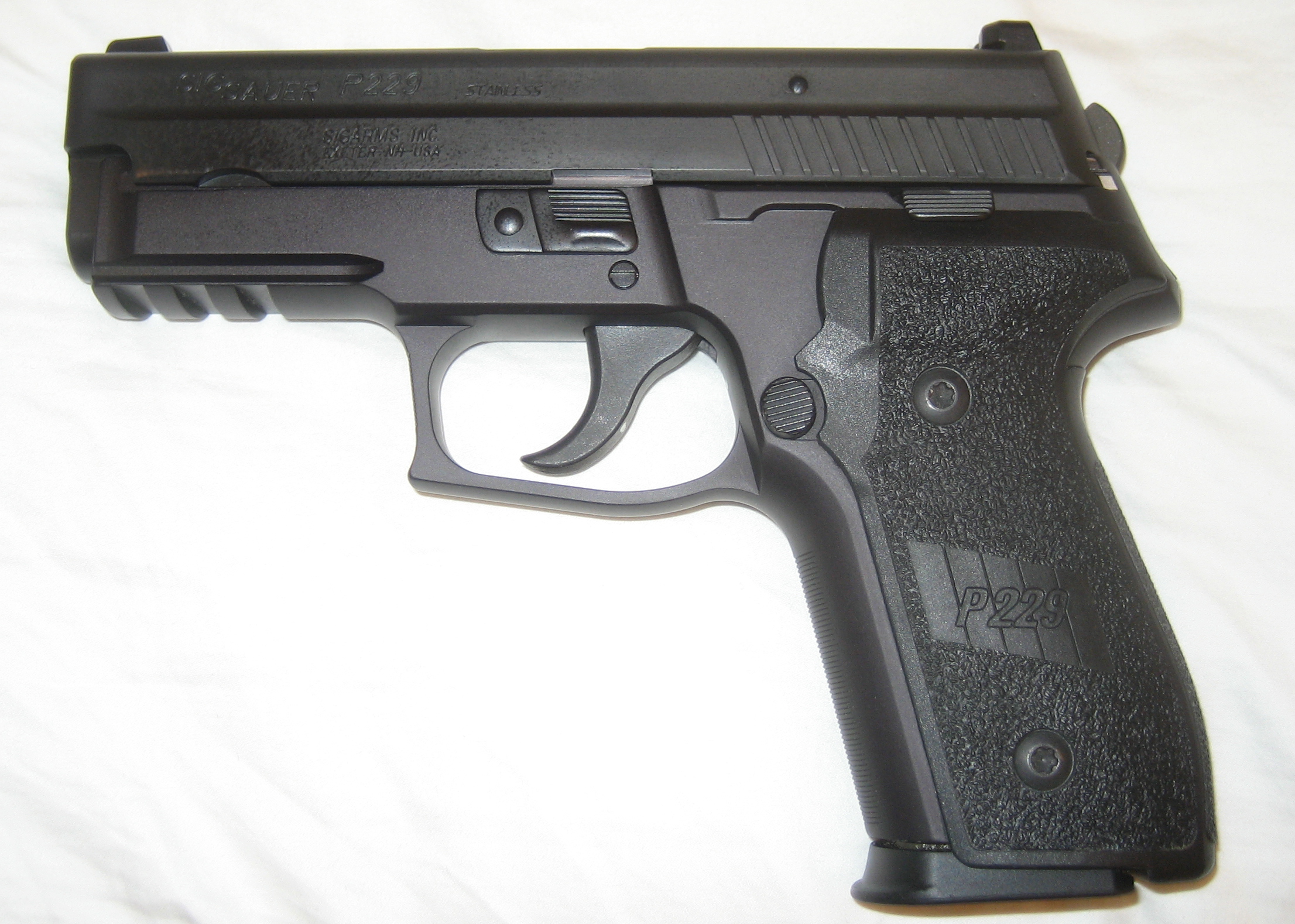
The modern P229 family includes several configurations, but the platform’s personality stays the same: an alloy frame paired with a stainless slide, a compact barrel length, and controls laid out for fast, repeatable handling. Many versions use a traditional DA/SA trigger system (double-action first pull, then single-action), typically with a decocker rather than a manual thumb safety.
Common caliber choices
- 9mm – the most common modern pick for controllability, cost, and availability.
- .40 S&W – historically tied to duty use and the platform’s early development story.
- .357 SIG – a high-velocity option that some agencies and enthusiasts still appreciate.
If your goal is “carry + range,” 9mm is usually the easiest path: softer recoil, typically quicker follow-ups, and more affordable practice. If you already have experience with .40 or .357 SIG and prefer those characteristics, the P229 is one of the sturdier-feeling hosts for them.
Full Size Carry: What That Actually Means
When people call the P229 a “full size carry” pistol, they’re usually talking about feel—not length. In the hand, the P229 shoots like a bigger pistol because the frame material and slide mass help it settle during recoil. But in the waistband, its shorter slide and barrel length can be noticeably more comfortable than a true full-size model, especially when sitting or driving.
Carry comfort comes down to three things
- Holster quality – a rigid holster that holds the pistol securely and distributes weight.
- Belt support – a real carry belt makes a bigger difference than most first-time buyers expect.
- Grip management – the grip is what tends to “print,” so grip length and clothing matter.
The P229 is heavier than many modern polymer options, so it rewards a proper setup. With the right belt and holster combination, that weight becomes a feature—not a problem—because it’s part of why the P229 is so pleasant to run at the range.
Range Performance: Where the P229 Shines
If you’re the kind of shooter who cares about consistency—repeatable grip, predictable recoil, and an action that feels like it’s running on rails—the P229 will make sense quickly. The platform’s “heft” helps reduce the snappy feel some people get with lighter pistols, and many owners find they can shoot tighter groups with less effort.
Accuracy: Practical, not finicky
The P229 tends to deliver strong real-world accuracy. It’s the kind of pistol that makes you look a little better than you are on a good day—especially in 9mm—because it tracks well and returns to target smoothly. That matters for range sessions, training, and any scenario where you want confident hits without fighting the gun.
Recoil and follow-ups
Recoil perception is personal, but the P229’s metal frame and slide mass usually translate into a “push” rather than a sharp snap, particularly in 9mm. For many shooters, that equals faster follow-up shots and less fatigue during longer range days.
The Trigger System: DA/SA, SRT, and Why It’s Loved
The P229’s DA/SA system is a big part of its identity. The first pull is longer and heavier (double-action), then the pistol transitions into a lighter single-action pull for subsequent shots. For some shooters, that “two-stage experience” is a downside. For others, it’s a feature that offers a deliberate first pull with excellent shootability after the first shot.
What to look for
- Comfortable reach in double-action – you should be able to press smoothly without shifting your grip.
- Reset feel – a shorter, more tactile reset can make controlled strings easier.
- Consistency – smooth is more important than “light,” especially for practical shooting.
Many P229 configurations highlight SIG’s Short Reset Trigger (SRT), which is widely appreciated for making the reset feel quicker and more positive. If you plan to train regularly or want the platform to feel more “performance-oriented,” an SRT-equipped model is worth prioritizing.
Modern Variants Worth Knowing
One reason the P229 remains relevant is the ongoing lineup: classic configurations, premium “enhanced” editions, and newer optics-capable options. Here are three that frequently come up when people shop the platform today.
P229 “Standard Issue” lineup
SIG’s current P229 family overview is the fastest way to see available configurations, compliance variants, and what’s in rotation. If you’re still deciding between classic and optics-ready builds, start here.
View the SIG Sauer P229 lineup
P229 PRO (optics-ready direction)
The P229 PRO is positioned as a modern upgrade: an optics-ready slide cut, X-RAY3 day/night sights, an accessory rail, and features aimed at contemporary carry preferences. If you want the P229 feel with a more current feature set, this is one of the most straightforward options.
P229 LEGION (premium feel and refinement)
The P229 LEGION line is often chosen by people who already know they like the platform and want a more refined experience—enhanced controls, premium finishes, and upgraded components. It’s also commonly associated with performance-oriented touches like front cocking serrations and an enhanced action.
Explore the P229 LEGION Compact
P229 Elite Compact (ergonomics + modern updates)
The Elite Compact variant is commonly tied to ergonomic improvements and performance-centric features like SRT, plus newer optics-ready availability depending on the specific release. If you want “classic SIG feel” with extra refinement, it’s a popular middle ground.
Check out the P229 Elite Compact
How to Choose the Right P229 for Your Needs
If your priority is everyday carry
- Pick a configuration you’ll actually carry: weight, finish, and holster availability matter.
- Plan for a quality belt: it turns a heavier pistol into a comfortable one.
- Consider an accessory rail if you want to run a compact light.
If your priority is range time and training
- Lean toward 9mm for high-volume practice and comfort.
- Prioritize SRT (or similar trigger features) if you like faster reset feel.
- Choose sights you can track: bright front sights or day/night sets can help in mixed lighting.
If you want “one pistol” to do both
The classic recommendation is a P229 in 9mm with a rail, quality sights, and a holster/belt setup you trust. From there, you can tailor the experience with grips, sights, and (if your model supports it) optics—without losing the platform’s original strengths.
Setup Tips That Improve the Experience
You don’t need a mountain of upgrades to make a P229 run well. Most improvements fall into “interface” categories—how the pistol interacts with your hands, eyes, and carry setup.
1) Grips: comfort equals control
If the grip texture doesn’t match your environment (sweaty hands, gloves, cold weather), you’ll feel it immediately. Many owners choose grippier panels or more ergonomic shapes to lock in a consistent draw and presentation.
2) Sights: see what you need, when you need it
Day/night sights can be a strong choice for defensive-minded setups, while a high-visibility front sight can help for faster range work. Models like the P229 PRO highlight X-RAY3 day/night sights as part of the package.
3) Holster and belt: the “hidden upgrade”
The P229 rewards commitment to fundamentals: a rigid holster, a stable belt, and a consistent placement. If you’ve ever carried a heavier metal pistol and thought, “This is too much,” there’s a good chance the belt or holster was the real problem—not the pistol.
Reliability and Longevity: Built for Real Use
The P229’s reputation wasn’t created by marketing—it was built by years of duty carry, training cycles, and high round counts. The design philosophy is straightforward: durable materials, robust components, and a track record that keeps it in the conversation even as trends change.
SIG’s own historical timeline highlights that production of the P229 began in the early 1990s, originally in .40 S&W, and the platform has continued evolving since then. That long service life is part of why many buyers still trust it today.
Safety and Training Notes (Read This)
Responsible ownership matters more than model choice. Whatever you pick, follow safe handling rules, store it securely, and train in a way that matches your real-life use. If you’re new to DA/SA, spend time mastering a smooth first press and a clean transition to single-action. That’s where the P229 really rewards practice.
If you’re unsure about carry methods, holster selection, or how a decocker-based DA/SA system fits your experience level, consider a reputable class and hands-on coaching. A small investment in training can dramatically improve confidence, comfort, and performance.
Bottom Line: Who the P229 Is For
The Sig Sauer P229 is for the person who wants a compact pistol that shoots like something larger. It’s for the buyer who values confidence-inspiring weight, a proven platform, and a trigger system that feels “serious” and deliberate. And it’s for anyone who wants a carry option that doesn’t feel like a compromise when they spend real time at the range.
Whether you choose a classic model, a refined Elite variant, a premium LEGION, or a modern optics-ready PRO, the core appeal stays the same: dependable performance, shootable ergonomics, and a design that has earned its reputation the old-fashioned way—by delivering.