







We appreciate you sharing this:







Categories:
Reliability, recoil, accuracy, ergonomics, and real-world range impressions—plus what to watch for before you buy.
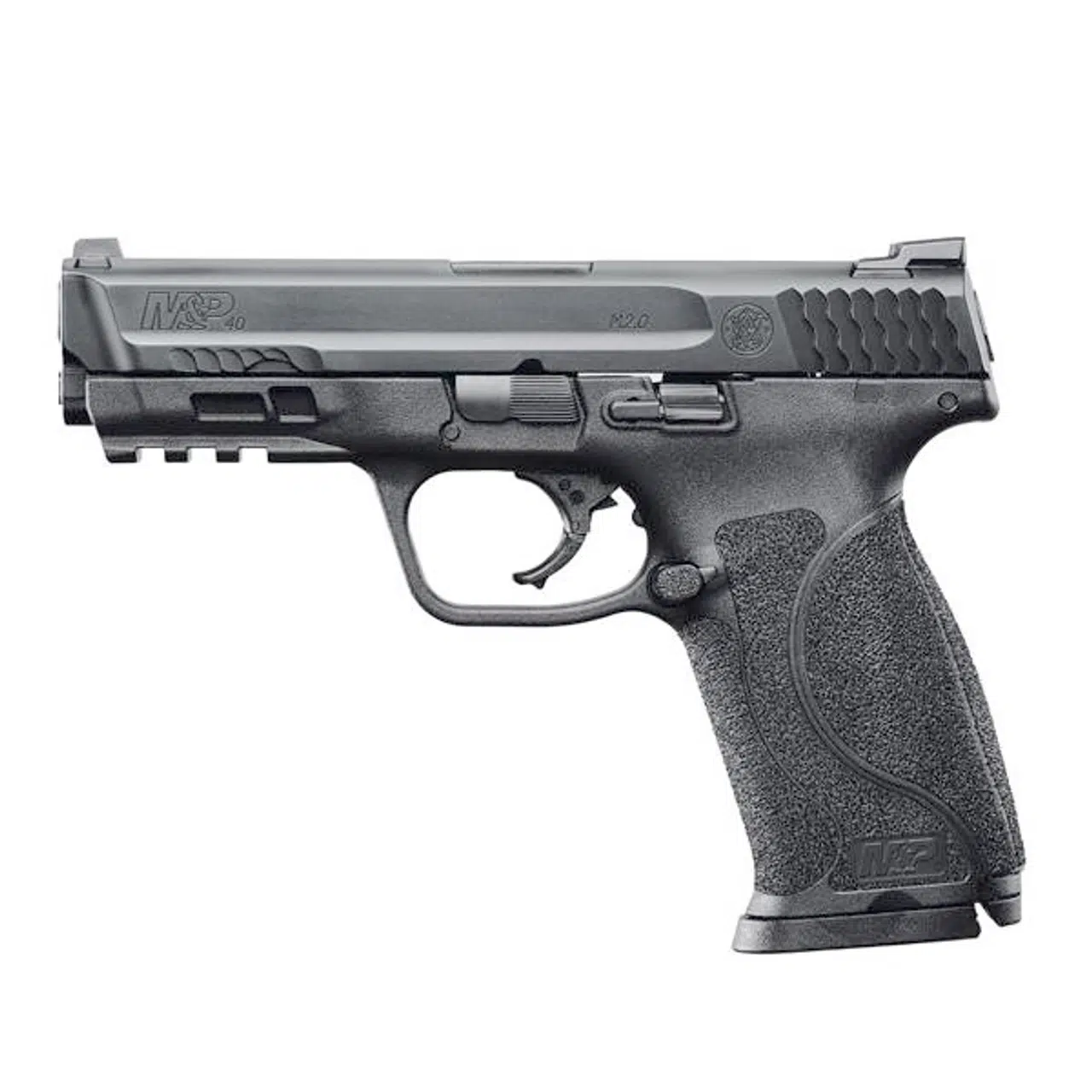
“M&P 10” can refer to a few different Smith & Wesson products depending on context. The M&P 10mm is commonly associated with the 10mm Auto pistol line, while M&P40 is the commonly used naming for the .40 S&W versions in the M&P pistol family. This review is written for the M&P platform chambered in .40 S&W—the one most people mean when they say “M&P .40.”
If you actually meant the M&P 10mm pistol or the M&P10 rifle line, don’t worry—many of the ergonomics and design themes still translate, but the recoil and role are very different.
The .40 S&W has been around for decades and remains popular with shooters who want a “middle lane” between 9mm and .45 ACP. In practical terms, it offers a snappier recoil impulse than 9mm and typically a higher capacity than many .45 setups (model-dependent).
Today, 9mm dominates the mainstream market for cost and shootability, but .40 still has a loyal following—especially for folks who already stock .40, like the feel of its recoil, or simply prefer the cartridge’s personality at the range.
The M&P family has built a reputation around three core priorities: durability, straightforward handling, and practical accuracy. Whether you’re looking at a compact or full-size configuration, the overall experience tends to be consistent: a comfortable grip, predictable controls, and a slide-and-barrel setup designed for high round counts.
One reason the M&P line stays popular is the way it fits a wide range of hand sizes. The grip shape is generally friendly and secure, and the texture is designed to help you keep control without feeling like sandpaper. If you’ve ever picked up a pistol that felt “blocky,” the M&P often feels more natural—especially in the palm and at the tang.
The control layout is simple and tends to be easy to learn. That matters because .40 S&W can be more demanding in recoil than 9mm. Anything that helps you stay consistent—repeatable grip, predictable reach to controls—shows up as better performance on paper and a more enjoyable range day.
Let’s address the big question: How does an M&P in .40 S&W feel? In most setups, .40 has a faster “snap” compared to 9mm. It’s not just “more recoil”—it’s the timing of the recoil impulse that many shooters notice first.
In the M&P platform, the recoil is typically very manageable, but it rewards good fundamentals. If your grip is loose or inconsistent, .40 will expose it sooner than 9mm. The upside: once you dial in your grip and stance, the gun tends to track predictably and your confidence grows quickly.
For controlled pairs and moderate-speed strings, the M&P generally holds up well—especially in full-size configurations where you get more grip surface and a longer sight radius. Compact models can still run great, but they’re naturally a bit less forgiving because you have less real estate to hold onto.
If you like the character of .40 S&W, the M&P is a strong match. If you’re recoil-sensitive or want ultra-fast follow-up shots with minimal effort, you may prefer 9mm—no shame in that at all.
The M&P line is built as a practical accuracy platform: it’s designed to be consistent, not finicky. With quality ammo and solid fundamentals, most shooters can produce tight, repeatable groups at typical range distances.
The biggest accuracy limiter is usually not the barrel—it’s the shooter adapting to .40’s recoil timing and getting a clean trigger press without anticipating the shot. If you’re coming from 9mm, give yourself a couple of range sessions to settle in.
Many shooters describe modern M&P triggers as more refined than early generations. Even so, the trigger feel varies by specific model, year, and configuration. The important question isn’t whether it feels like a custom competition trigger—it’s whether you can press it cleanly and predictably.
For .40 S&W, a predictable trigger matters because it helps you avoid “snatching” the shot as recoil builds. A clean press equals better hits and a much more enjoyable day on the range.
The M&P family is known for being durable and dependable when kept in reasonable condition—proper lubrication, clean magazines, and quality ammunition. For most owners, reliability comes down to three practical things:
If you’re running .40, it’s also smart to pay attention to your grip consistency. Limp-wristing can cause issues in many semi-autos, and .40’s recoil impulse can exaggerate it.
This platform shines for:
If your main goal is low-cost practice and maximum comfort, 9mm will usually be cheaper and easier. But if you enjoy .40, the M&P setup is a very solid way to run it.
Here’s a non-technical, real-world comparison for most shooters:
| Cartridge | Recoil feel | Typical training cost | Why people choose it |
|---|---|---|---|
| 9mm | Softest / easiest | Often lowest | Easy to shoot well; widely available |
| .40 S&W | Snappy / energetic | Often mid | “Best of both worlds” feel; personal preference |
| .45 ACP | Slower push | Often higher | Classic feel; larger bullet diameter |
If you want to improve your experience without turning this into a science project, stick to practical add-ons that improve consistency and comfort.
If you don’t already have quality range protection, start here:
Holster selection is highly personal and must be safe and compatible with your exact model. Start with reputable makers:
Keep it simple—quality cleaning gear and a consistent routine:
Always follow local laws, range rules, and safe handling practices. Store your equipment responsibly and securely. If you’re new, consider formal instruction from a qualified trainer—safe habits make everything else easier.
It’s not “hard,” but it’s typically snappier than 9mm. Most people adapt quickly with a consistent grip and a few focused range sessions.
In general, yes—especially with quality magazines and reputable ammunition, plus routine maintenance.
Full-size is often easier to control and more comfortable for longer sessions. Compact can be great too, but it may feel snappier due to less grip area and often a shorter slide.
Recoil timing. .40 tends to “snap” more, which can affect speed and consistency until you adapt.
Not necessarily. “M&P10” is often used for other products (including a 10mm pistol or an AR-style rifle line). For .40, people typically mean “M&P40.”
If you enjoy .40 S&W and want a dependable, comfortable platform that’s easy to live with, the M&P family is a strong pick. It’s not trying to be a boutique competition rig—it’s built for practical shooting, consistent range performance, and long-term durability.
The key is being honest about what you want: if you value low recoil and low-cost practice, 9mm may fit better. If you like a cartridge with more snap and a distinct feel, an M&P in .40 is a satisfying choice that can perform extremely well.
